
What is “vibe coding”? It’s not a formal methodology you’ll find in a textbook. Instead, think of it as a state of high-trust, high-context flow that experienced teams tap into. Like a seasoned jazz band improvising, each member understands the structure so well they can create something new together, intuitively.
This guide is for leaders and engineers in Web3, AI, and carbon sectors looking to build teams that can outpace the competition. We’ll explore how vibe coding works, where it came from, and how you can cultivate it to drive rapid innovation and secure market leadership.
What Does Vibe Coding Mean for Development Teams?
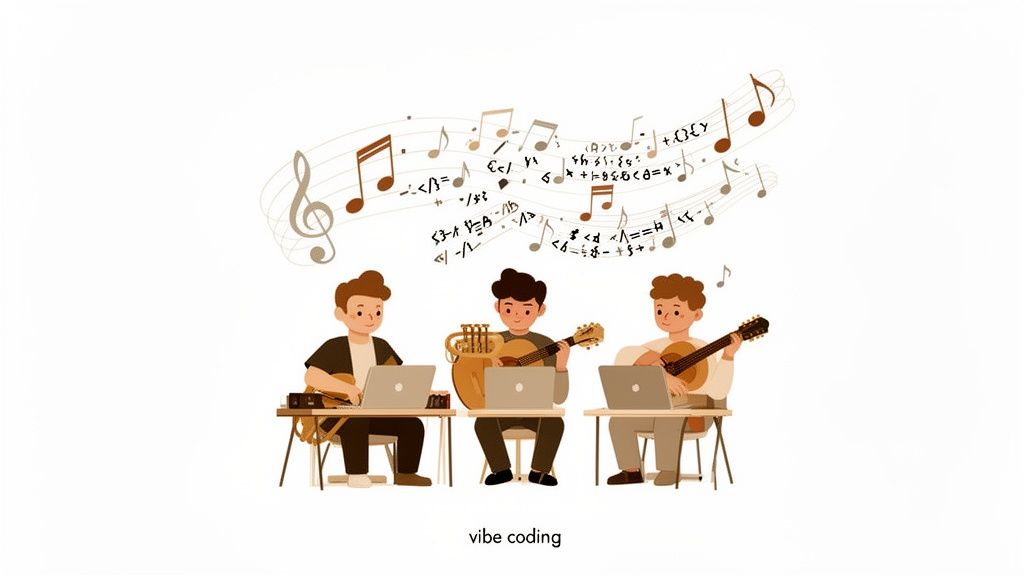
At its heart, vibe coding describes a development culture where engineers are so in sync with the project’s architecture and goals that their communication feels almost telepathic. It prioritizes shared intuition over detailed spec sheets, enabling teams to skip endless meetings and exhaustive documentation to build, iterate, and solve complex problems with incredible speed.
This agility provides a massive competitive advantage, especially in fast-paced sectors like Web3 and AI where the landscape changes daily. A team operating on “vibe” can pivot instantly when new information emerges or patch a critical vulnerability without the red tape that paralyzes larger, more bureaucratic organizations.
What are the core components of vibe coding?
This intuitive workflow isn’t magic; it’s built on a solid foundation of specific cultural and technical elements working in concert. Vibe coding relies on three key pillars:
- Deep Shared Context: Everyone on the team understands the why behind the what. They are aligned with the product vision, user needs, and business goals, empowering them to make smart, autonomous decisions.
- High Psychological Safety: This is non-negotiable. Engineers must feel safe to experiment, propose unconventional ideas, and even fail without fear of blame. This trust is the bedrock of rapid innovation.
- Technical Excellence and Alignment: The team consists of highly skilled professionals who agree on coding standards and architectural principles. This baseline alignment reduces friction and makes contributing to the codebase feel seamless.
In essence, vibe coding emerges from a mature, high-trust environment. It’s what happens when procedural roadblocks are removed for a team of experts who are completely aligned, allowing them to enter a state of collective flow and just build.
Where Did Vibe-Driven Development Come From?
Vibe-driven development isn’t a new trend. Its origins trace back to the high-stakes environments of early-stage startups and groundbreaking open-source projects. In these settings, small, tightly-knit teams had a simple mission: out-build and outmaneuver larger, better-funded competitors.
Survival depended on raw speed, synergy, and a shared, almost unspoken understanding of what needed to be done. Formal processes and management layers were not just slow; they were a death sentence. This pressure-cooker environment forced a different way of working—one built on trust and lightning-fast collaboration. This was vibe coding in its original form.
Why is vibe coding critical in Web3 and AI?
Today, the fast-moving worlds of Web3, AI, and carbon sector technology have created the perfect incubator for this approach. These fields are defined by constant change, complex problems, and the need for breakneck-speed iteration.
- Rapid Iteration: AI models require constant fine-tuning. Web3 protocols must react instantly to market shifts or new security threats.
- Complex Problem-Solving: Building a DeFi platform or a sophisticated AI agent often means working without a map.
- Adapting to Breakthroughs: A new research paper can change the game overnight. Teams must be able to pivot on a dime.
This relentless pace means traditional, waterfall-style development cannot keep up. Vibe coding has emerged as a powerful operational model because it champions the exact qualities needed to win on these new frontiers: agility, autonomy, and deep team cohesion.
How does vibe coding relate to team synergy?
At its core, vibe-driven development is the next evolution of team synergy—the magic that happens when a group of talented individuals moves from simply working together to achieving a state of collective flow. This state is built on a foundation of psychological safety, empowering people to take risks, and a powerful, shared vision that guides every decision.
This isn’t about abandoning discipline; it’s about internalizing it. Structure comes from shared principles and automated guardrails, not rigid ceremonies. This frees teams to focus their energy on creative problem-solving, making vibe coding less of a trend and more of a strategic weapon for building the future.
The Three Pillars of a High-Vibe Engineering Culture
A high-vibe engineering culture doesn’t happen by accident. It is intentionally engineered by leadership to unlock a sustainable, high-velocity state of development where teams just click.
These pillars are not independent; they reinforce one another, creating an environment where innovation can happen safely, quickly, and consistently.
Pillar 1: Radical Trust and Psychological Safety
It all starts with radical trust. This is the absolute core. It’s about creating an atmosphere of psychological safety where engineers feel they can experiment, throw out wild ideas, and yes, even fail, without getting blamed. When the fear of negative consequences is gone, developers are free to take the smart risks that lead to real breakthroughs.
This trust is the very foundation of rapid innovation. It fosters open communication, brutally honest feedback, and a collective hunger to solve ambiguous problems—a must-have in frontier tech like Web3 and AI.
Pillar 2: Deep Shared Context
Next up is deep, shared context. A high-vibe team doesn’t just know what they’re building; they know why. This goes way beyond a Jira ticket. It means every single person on the team has a crystal-clear understanding of the product vision, the user’s pain points, and the ultimate business goals.
When everyone shares this context, developers can make autonomous decisions that are naturally aligned with the project’s north star. You cut out the need for micromanagement and endless clarification meetings, letting the team move faster and as a single, cohesive unit.
This is exactly how vibe coding emerges from the chaotic frontiers of new technology, where context is everything.
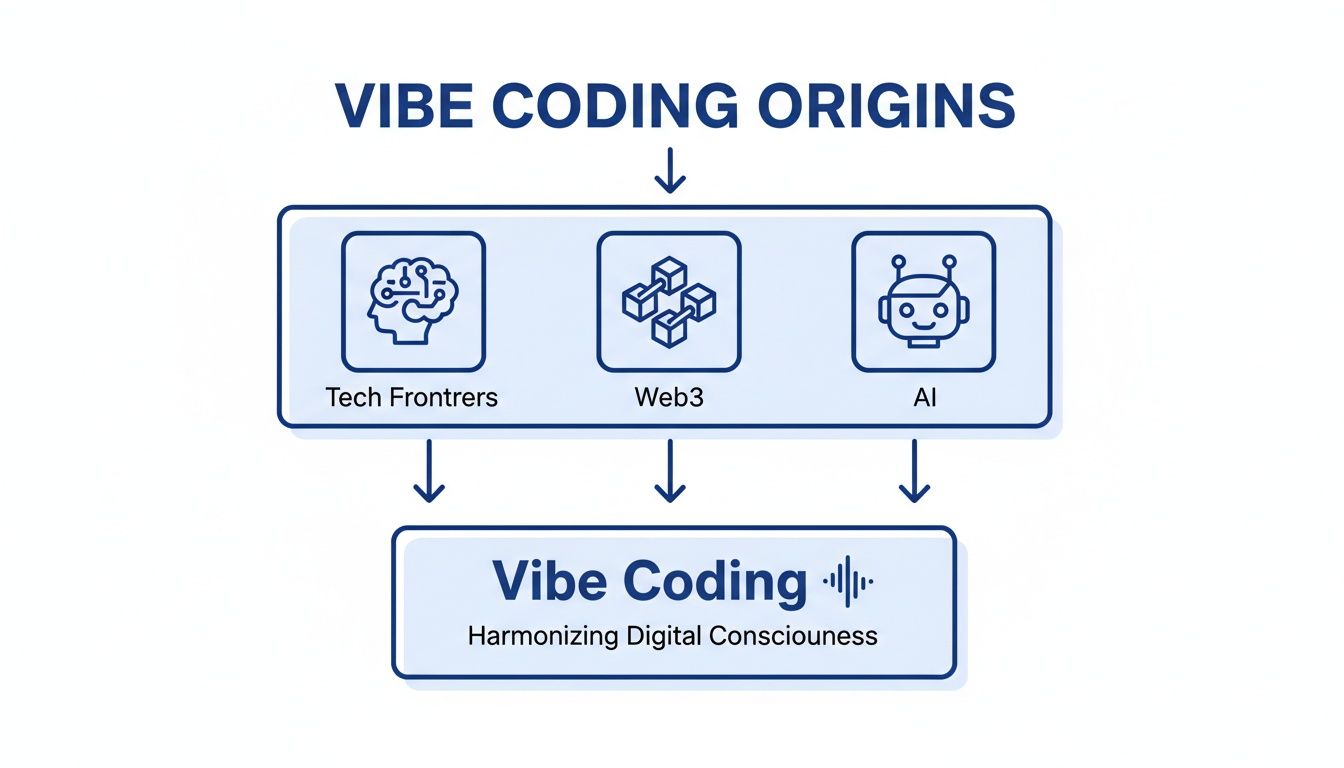
The flowchart here really drives the point home: as tech like Web3 and AI gets more complex, this kind of intuitive, context-driven teamwork becomes the key advantage.
Pillar 3: Automated Guardrails and Tooling
The final pillar is all about automated guardrails. Vibe coding isn’t chaos; it’s disciplined freedom. And that freedom is only possible because of rock-solid technical systems that act as a safety net for fast-paced development and experimentation.
Here’s what that safety net looks like in practice:
- Continuous Integration/Continuous Deployment (CI/CD): Fully automated pipelines that test and deploy code reliably, killing off manual drudgery and human error.
- Comprehensive Testing Suites: A deeply ingrained culture of automated testing (unit, integration, end-to-end) that gives devs the confidence to refactor and innovate without breaking things.
- DevSecOps Practices: Building security into every single step of the development lifecycle, so you can protect the project without slamming the brakes on progress.
Keeping this culture alive, especially in the hyper-competitive AI and data science worlds, also means having solid talent retention strategies for AI teams in place. These automated systems are the invisible architecture holding up the entire vibe coding culture, giving teams the power to move at lightning speed while keeping quality and security locked down.
Vibe Coding in Action: Web3 & AI Use Cases
Theory is one thing, but seeing vibe coding in action is where you grasp its real power. Let’s dive into a couple of real-world scenarios where this approach isn’t just a perk—it’s the critical ingredient for success in the high-stakes worlds of Web3 and AI.
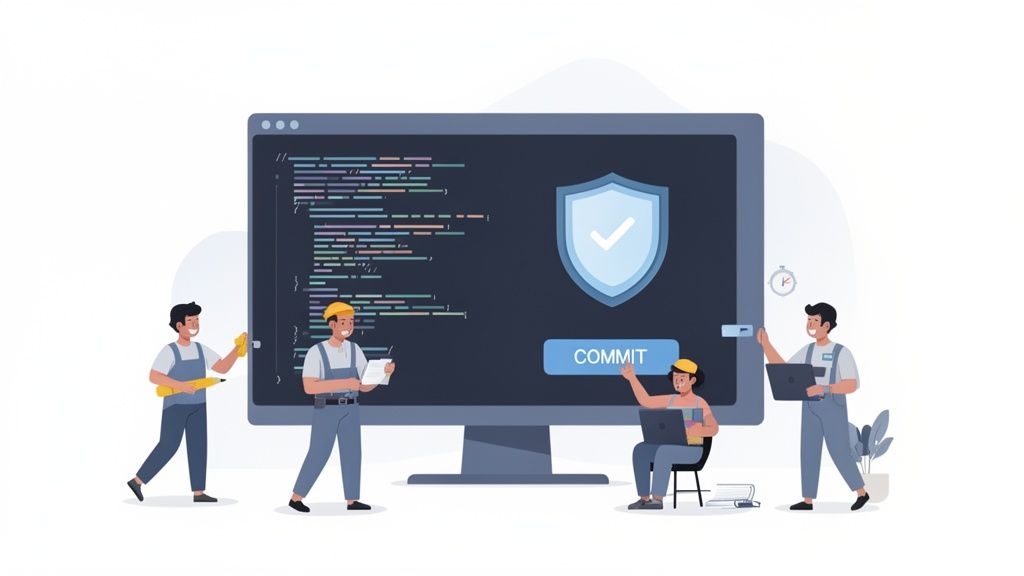
These examples show just how much is possible when a team built on trust, deep context, and solid tooling can cut through ambiguity and ship solutions with incredible speed.
Scenario 1: The DeFi Emergency Patch
Imagine a top Decentralized Finance (DeFi) protocol discovers a critical vulnerability in a core smart contract. Millions in user funds are at risk, and every second counts. A traditional, process-heavy team would get bogged down in emergency meetings, layers of approvals, and multi-stage sign-offs.
A high-vibe team moves differently.
The moment the alert hits a secure channel, the core developers swarm the problem. There’s no formal delegation; each engineer knows the codebase so intimately they just know which piece of the puzzle to grab. One dev starts drafting a patch, another is already simulating its impact on a forked network, and a third is prepping the multi-sig wallet for deployment.
Their communication is short, sharp, and effective—mostly code snippets and quick confirmations. They trust each other’s expertise without question, which allows them to work in parallel and compress the timeline dramatically. The patch gets developed, tested, and deployed in a fraction of the time, securing the protocol before a single asset is lost.
This isn’t chaos. It’s a highly synchronized, rapid response made possible by deep shared context and radical trust.
Scenario 2: The AI Product-Market Fit Sprint
Now, consider an AI startup racing to find product-market fit for a new generative model. Early user feedback is lukewarm, and the pressure is on to iterate before the funding runway shortens. A rigid Agile framework might force them to wait for the next sprint planning meeting just to reprioritize, costing them precious weeks.
A team that runs on vibe coding adapts on the fly.
They’re all absorbing user feedback from a shared channel. A product-minded engineer immediately starts prototyping a new feature. At the same time, a data scientist begins retraining a model based on the fresh insights, while the backend dev refactors an API to support the potential new direction.
This fluid, dynamic process works because of a few key elements:
- Decentralized Decision-Making: Engineers are empowered to act on what they learn without waiting for a top-down directive.
- Tight Feedback Loops: The entire team is plugged directly into user feedback, letting them feel the pulse of the market in real time.
- Automated Guardrails: Rock-solid CI/CD and testing pipelines give them the confidence to ship multiple updates a day without breaking anything.
They move as one, guided by a shared mission: solve the user’s problem. This iterative flow helps them lock down market traction far faster than competitors stuck in bureaucratic cycles. For a look at the kind of talent driving these breakthroughs, check out our guide on the best AI builders in 2025 you can’t miss.
In both Web3 and AI, vibe coding is a massive accelerator. It empowers teams to ship secure, innovative products at a pace that ultimately defines who leads the market.
How to Cultivate a Vibe-Driven Development Team
Building a team that runs on vibe coding isn’t an accident; it’s a deliberate act of leadership. It means looking past traditional hiring metrics and focusing on an environment where deep collaboration, trust, and shared context can grow organically. You’re not just finding developers to close tickets. You’re assembling a cohesive unit that solves problems almost intuitively.
It all starts with hiring. Instead of optimizing for raw coding speed, look for engineers with high emotional intelligence, a collaborative spirit, and a genuine curiosity about the product’s vision. These are the people who will add to the team’s shared context, not just draw from it. To dive deeper into effective team structures, it’s worth learning more about how to build high-performing teams in tech.
How do you onboard for deep context?
Once you’ve got the right people, onboarding is the next make-or-break moment. A standard checklist of tools and processes won’t cut it. To build a vibe-driven culture, you have to onboard for context.
This means setting aside serious time to immerse new hires in the “why” behind the code. Pair them with senior engineers, not just for technical questions, but so they can absorb the unwritten rules, communication quirks, and historical decisions that shaped the project. The mission is to shrink the time it takes for them to go from a new face to a deeply integrated team member who truly gets it.
How do you adapt team rituals and tooling?
Your daily routines and the tools you use can either fuel or kill a high-vibe environment. It’s time to take a hard look at them.
- Stand-ups: Ditch the robotic status updates. Turn your daily stand-ups into genuine sync-ups. Encourage real talk about blockers, celebrate the small wins, and constantly reinforce the team’s shared goals to build that cohesion.
- Tool Selection: Pick tools that get out of the way and promote a state of flow. This covers everything from collaborative coding environments to communication platforms that prioritize rich, real-time interaction over slow, asynchronous text.
The right tooling is like an invisible force multiplier. It fades into the background, letting developers focus on creative problem-solving instead of battling clunky processes. This is especially true in fast-moving sectors.
Take blockchain in India, for example. Adoption is exploding, projected to hit 46% by 2026 as it rewires entire industries. In 2024 alone, India’s Web3 ecosystem saw over 1,200 startups raise $462 million in funding, moving past pilots and into production-ready systems. This kind of growth demands teams that can build securely and at speed—the very essence of vibe coding. You can find more on India’s real-world blockchain use on economictimes.com.
How do you build a DevSecOps foundation?
Finally, a strong DevSecOps culture is the bedrock of vibe coding. This isn’t just about technology; it’s a cultural shift that creates the psychological safety net developers need to innovate without fear.
When automated security and testing are baked directly into the CI/CD pipeline, engineers have the confidence to move fast without constantly worrying about breaking things. This automated trust is what allows a team to maintain both velocity and security. Bringing in specialized talent can fast-track this shift, which is why many teams explore IT resource augmentation to get the right DevSecOps expertise onboard.
How Blocsys Delivers High-Vibe Web3 & AI Teams
Building a vibe-driven team from the ground up is a serious investment in culture and trust, but it takes time. For organizations that need to move at market speed, Blocsys offers a clear solution. We provide pre-vetted, high-synergy development squads that operate with the implicit understanding and technical depth you need from day one.
Our expertise in full-stack blockchain development, AI integration, and hardened security protocols means you get the velocity of a high-vibe culture combined with the essential guardrails of enterprise-grade project management. We help you build, scale, and execute effectively.
Plug Into an Existing High-Vibe Ecosystem
Why spend months trying to build cohesion from scratch? With Blocsys, you bypass that entire process. Our teams are already synchronized, letting you focus on what really matters: building the future, faster. We bring a ready-made vibe coding environment directly to your most critical projects.
This is especially vital in markets that are growing at an explosive pace. Take India’s Web3 landscape—it’s expanding dramatically. Crypto user growth is projected to hit 123.35 million by the end of 2026, and enterprise blockchain adoption is set to reach 46%. With over 1,200 Web3 startups raising significant funding in 2024, the demand for fast, secure development has never been higher. You can read more about India’s projected blockchain trends on suncrypto.in.
We provide the technical horsepower and collaborative synergy required to capitalize on this growth, ensuring your project doesn’t just launch but leads. Our approach combines the agility of vibe-driven development with the discipline of enterprise-level execution.
In this complex field, choosing the right partner is everything. For more insights on what to look for, you might find our analysis of the top blockchain talent providers useful. Blocsys is here to help you build, scale, and execute, turning ambitious Web3 and AI concepts into market-ready realities.
FAQ: Common Questions About Vibe Coding
Here are concise answers to common questions about adopting a vibe coding approach, designed for founders, product owners, and engineering leads.
Is vibe coding just unstructured chaos?
No. Vibe coding is disciplined freedom, not chaos. While it prioritizes flow over rigid processes, it requires a strong foundation of senior talent, mutual respect, and robust technical guardrails like automated testing and CI/CD pipelines. The team has autonomy because underlying systems provide a powerful safety net.
Can vibe coding work for remote teams?
Yes, but it requires a deliberate investment in communication and culture. Successful remote teams intentionally create shared context and trust through high-bandwidth tools like constant video calls and collaborative coding environments. They also establish rituals like daily syncs to strengthen team bonds and maintain alignment.
Is vibe coding suitable for large enterprises?
While it originated in startups, the principles of vibe coding can be applied within large enterprises, typically in smaller, autonomous “squads” or “pods.” These teams are shielded from corporate bureaucracy and empowered to operate with high trust and deep context on specific, high-stakes projects, blending startup agility with enterprise resources.
How do you measure the success of a vibe-driven team?
Success is measured by outcomes, not outputs. Instead of tracking lines of code or tickets closed, focus on key business metrics: speed of iteration, product-market fit, system resilience, security posture, and customer satisfaction. High-performing vibe-driven teams consistently deliver high-quality results that move these core metrics.
Ready to build, scale, and execute your Web3 or AI vision with a team that’s already in sync? Blocsys delivers high-synergy development squads that operate on a foundation of deep technical expertise and collaborative flow from day one. Connect with our experts to accelerate your roadmap.
