
The financial world is evolving at a remarkable pace. Decentralized fund management — encompassing DeFi asset management, crypto fund management, and on-chain asset management — is fundamentally reshaping how investors allocate capital. Traditional structures rely heavily on intermediaries, lengthy approval processes, and restricted access. However, blockchain asset management and DeFi investment platforms now offer a more open, transparent, and efficient alternative. Moreover, tokenized investment funds and advanced crypto portfolio management tools are enabling anyone to participate in sophisticated strategies once reserved exclusively for institutional players.
Understanding Decentralized Fund Management
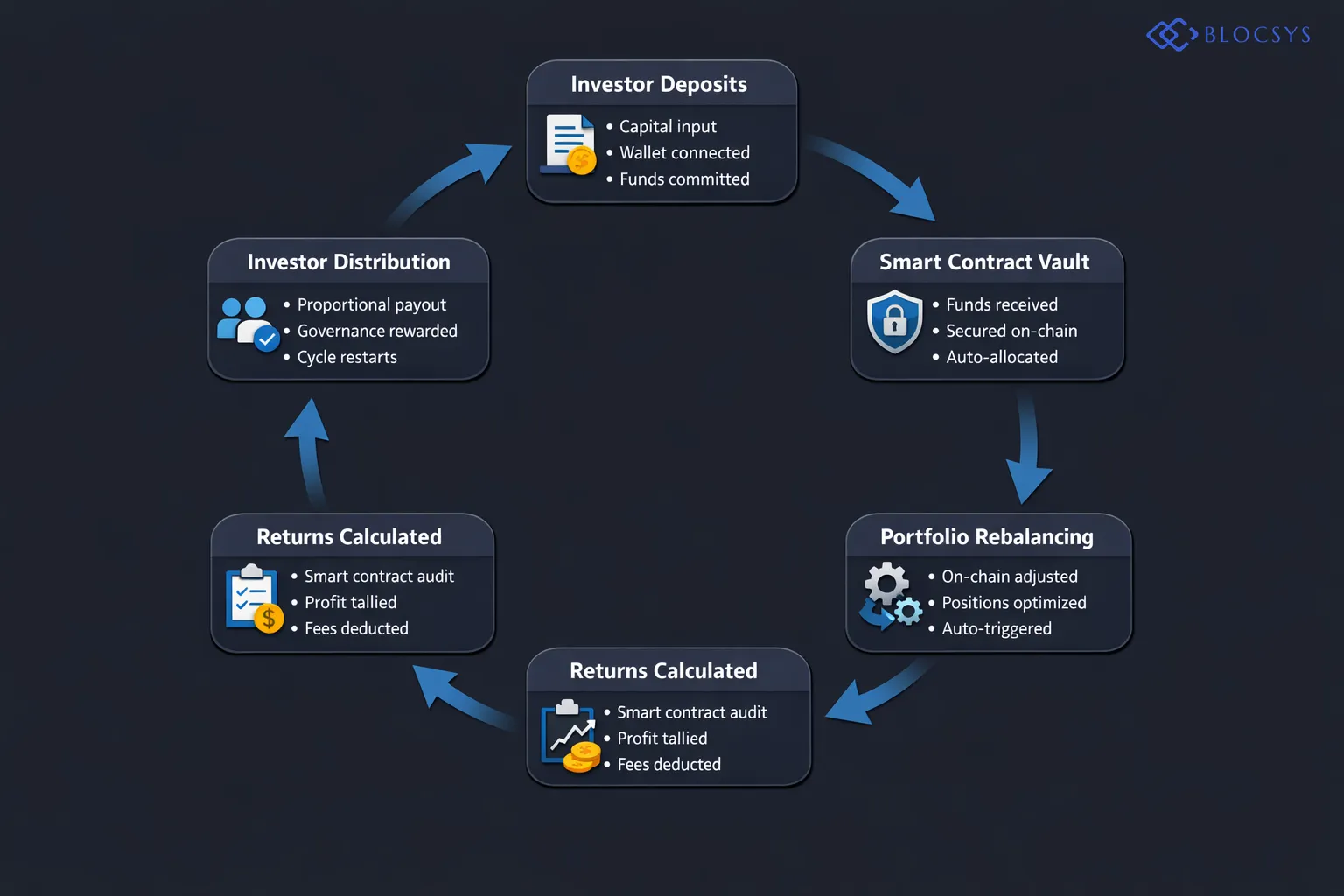
At its core, decentralized fund management removes the need for traditional financial intermediaries. Instead of relying on banks, brokers, or fund administrators, investors interact directly with smart contracts on public blockchain networks. These self-executing contracts handle capital allocation, fee distribution, and portfolio rebalancing automatically. Therefore, the entire process becomes more efficient and far less dependent on costly human oversight.
In a conventional fund, a single manager makes all key investment decisions. Decentralized models, however, often distribute governance power among token holders. Consequently, investors gain direct influence over how their capital is deployed. This fundamentally shifts the power dynamic in modern asset management.
How DeFi Asset Management and On-Chain Systems Work
DeFi asset management platforms operate on public blockchains like Ethereum, Solana, or Avalanche. Smart contracts govern the rules of each fund, including investment strategies, fee structures, and withdrawal conditions. Furthermore, all transactions are permanently recorded on-chain, making them fully auditable by anyone at any time without requiring trust in a central authority.
Smart Contracts and Automation
Smart contracts are the operational backbone of decentralized fund management. They automatically execute predefined investment logic without any human intervention required. Additionally, they eliminate the risk of human error, bias, or mismanagement in fund operations. Platforms like Yearn Finance use smart contracts to optimize yield across multiple DeFi protocols simultaneously and automatically.
Automation also reduces operational costs significantly. Traditional funds charge high management fees to cover substantial administrative overhead. However, smart contracts perform these same functions at a fraction of that cost. Therefore, a greater share of returns flows directly back to investors rather than intermediaries.
Tokenized Investment Funds Explained
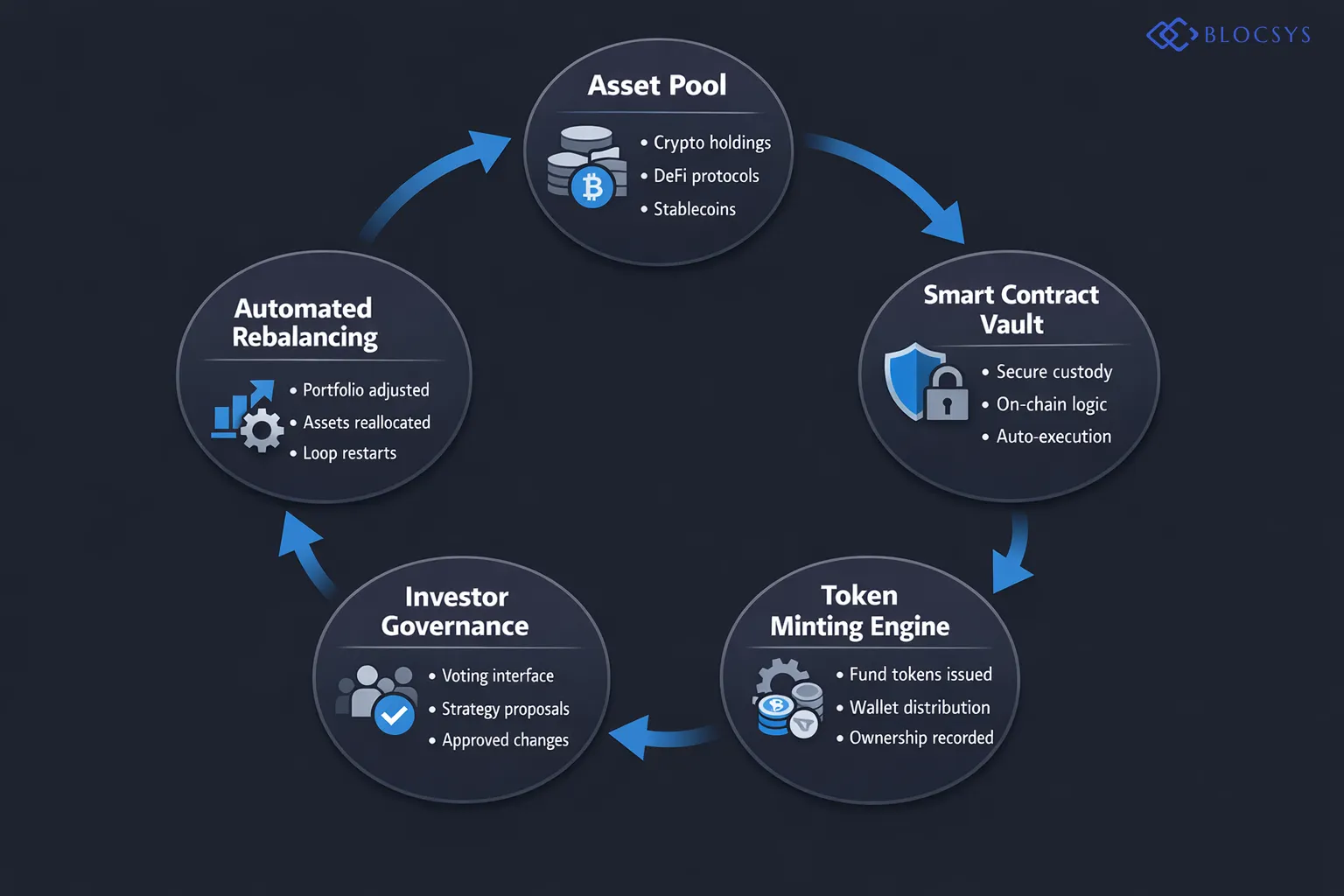
Tokenized investment funds represent ownership shares as digital tokens recorded on a blockchain. Each token corresponds to a proportional stake in the fund’s underlying assets. Consequently, investors can buy, sell, or transfer their positions with remarkable ease. Furthermore, tokenization enables fractional ownership, dramatically lowering the minimum investment threshold and opening access to a global audience.
These tokens also carry governance rights in many protocols. Holders vote on key decisions, such as strategy changes or fee adjustments. This structure makes decentralized asset management far more democratic than traditional closed-door fund models. Learn more about how tokenized assets work in our dedicated in-depth guide.
Key Benefits of Blockchain Asset Management
Decentralized fund management offers several compelling advantages over traditional finance. These benefits are attracting both retail and institutional investors to the DeFi ecosystem at an accelerating rate.
- Transparency: All fund activities are visible on-chain, eliminating hidden fees or undisclosed conflicts of interest.
- Accessibility: Anyone with a crypto wallet can invest, regardless of their geographic location or net worth.
- Lower costs: Smart contract automation removes the need for expensive intermediaries and administrative layers.
- Composability: DeFi fund platforms integrate seamlessly with other protocols to stack and maximize returns.
- Self-custody: Investors retain full control of their assets, significantly reducing counterparty risk.
Risks to Consider in DeFi Fund Platforms
Despite its many advantages, decentralized fund management carries genuine risks that every investor must understand. Smart contract vulnerabilities remain a significant concern across the industry. Hackers have previously exploited coding bugs in DeFi protocols, resulting in substantial investor losses. Therefore, always review independent audit reports before committing capital to any DeFi fund platform.
Regulatory uncertainty also poses meaningful challenges. Governments worldwide are still developing legal frameworks for crypto portfolio management and DeFi investment platforms. Consequently, sudden regulatory changes could impact the legality or functionality of certain protocols overnight. Additionally, the inherent volatility of crypto assets can cause sharp, unexpected swings in fund value.
Liquidity risk deserves attention as well. Some DeFi fund platforms lock assets for fixed periods, limiting an investor’s ability to exit a position quickly. Furthermore, oracle failures — where external data feeds supply incorrect price information to smart contracts — can trigger unintended and harmful fund behaviors.
The Future of Decentralized Asset Management
The growth trajectory of decentralized asset management shows no signs of slowing down. Institutional players are increasingly exploring DeFi fund platforms for their transparency, efficiency, and programmability. Moreover, advances in layer-2 scaling solutions are reducing transaction costs substantially, making these platforms accessible to a much broader audience of investors worldwide.
Regulatory clarity will likely accelerate mainstream adoption significantly. As governments establish clearer guidelines, more traditional investors will feel confident entering the DeFi space. Additionally, the convergence of artificial intelligence with on-chain asset management promises to unlock even more sophisticated, adaptive investment strategies in the years ahead.
Ultimately, decentralized fund management represents a profound shift in how the world approaches investing and wealth management. Therefore, understanding its mechanics, benefits, and risks is essential for any forward-thinking modern investor. Explore our guide on DeFi investment strategies to take your next confident step into this transformative financial frontier.
Frequently Asked Questions
What is decentralized fund management?
Decentralized fund management removes traditional financial intermediaries like banks, brokers, and fund administrators. Instead, investors interact directly with smart contracts on public blockchain networks, which handle capital allocation, fee distribution, and portfolio rebalancing automatically. Governance power is also often distributed among token holders rather than concentrated in a single fund manager.
How do DeFi asset management platforms actually work?
These platforms run on public blockchains such as Ethereum, Solana, or Avalanche, where smart contracts govern investment strategies, fee structures, and withdrawal conditions. Investor capital flows into a smart contract vault, is automatically deployed across protocols, and returns are calculated and distributed proportionally on-chain. All transactions are permanently recorded, making the process fully auditable without needing to trust a central authority.
What role do smart contracts play in this process?
Smart contracts serve as the operational backbone, automatically executing predefined investment logic without human intervention. This eliminates risks of human error, bias, or mismanagement while significantly cutting operational costs compared to traditional funds. Platforms like Yearn Finance use this automation to optimize yield across multiple DeFi protocols simultaneously.
What are tokenized investment funds?
Tokenized investment funds represent ownership shares as digital tokens on a blockchain, with each token corresponding to a proportional stake in the fund’s underlying assets. This enables fractional ownership, easy transferability, and lower minimum investment thresholds, opening access to a global audience. Many of these tokens also carry governance rights, letting holders vote on strategy changes or fee adjustments.
What are the main benefits of blockchain asset management?
Key advantages include full on-chain transparency, accessibility for anyone with a crypto wallet, lower costs through smart contract automation, composability with other DeFi protocols, and self-custody that keeps investors in control of their assets. Together, these benefits are drawing both retail and institutional investors into the DeFi ecosystem.
What risks should investors consider with DeFi fund platforms?
Smart contract vulnerabilities are a genuine concern, as coding bugs have previously been exploited by hackers, resulting in investor losses. Regulatory uncertainty also poses challenges since governments are still developing legal frameworks for crypto and DeFi investment platforms, and crypto asset volatility can cause sharp swings in fund value. Additionally, some platforms lock assets for fixed periods, creating liquidity risk that limits an investor’s ability to exit quickly.
