
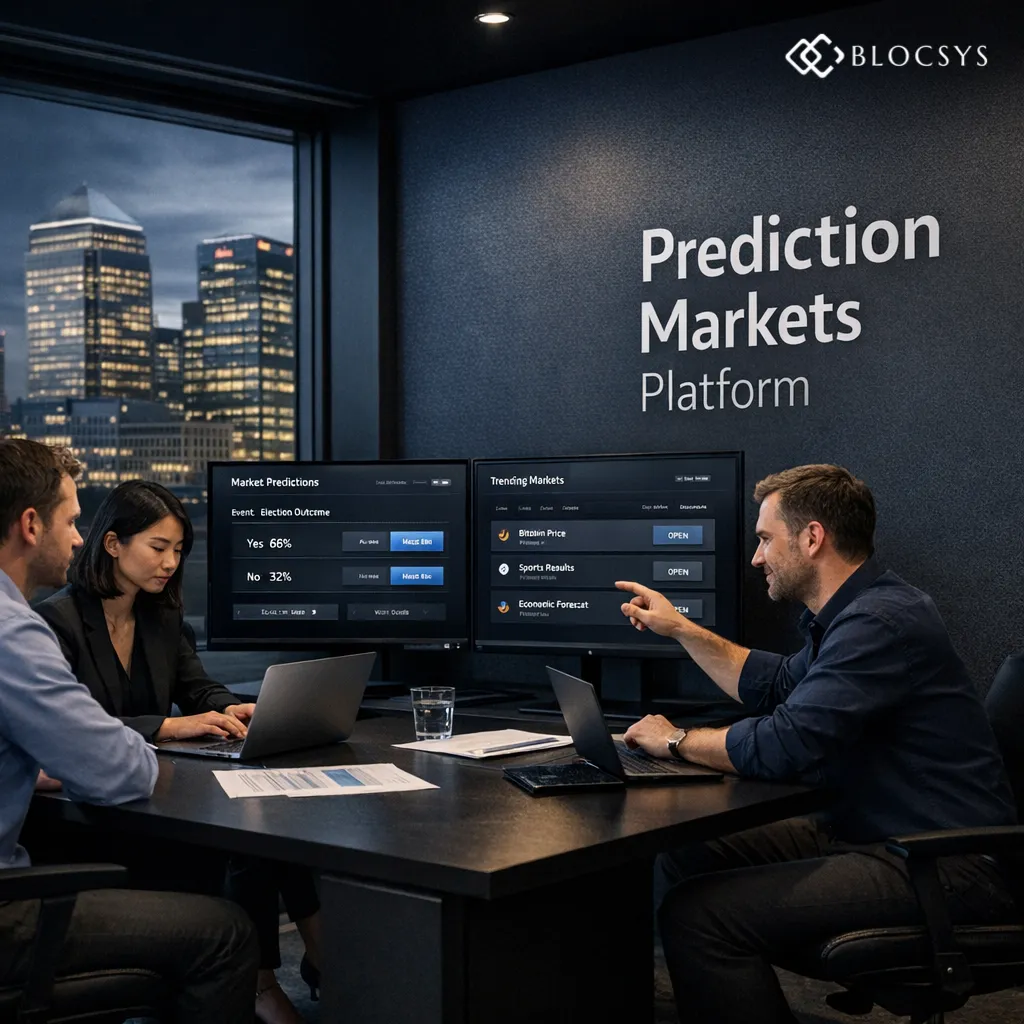
The demand for prediction markets during wartime in 2026 isn’t just a niche trend; it’s the result of a perfect storm where geopolitical turmoil meets accessible Web3 technology. This guide is for traders, investors, and platform developers in the Web3, crypto, and AI sectors seeking to understand why these markets are exploding and how to navigate the opportunities. We’ll provide a deep dive into the drivers, technology, and strategic considerations, offering a clear outlook for the next 12–24 months.
What is Driving the 2026 Surge in Wartime Prediction Markets?
The year 2026 has been a turning point for prediction markets. Once seen as novelties for political enthusiasts, they’ve now become essential tools for financial hedging and raw information gathering. This surge isn’t a coincidence—it’s being driven by two powerful forces: escalating geopolitical instability and the maturation of user-friendly Web3 platforms.
A prediction market is a platform where users trade contracts based on the outcome of future events. The prices of these contracts represent the collective belief, or “wisdom of the crowd,” about the probability of an event occurring. During wartime, these markets provide a real-time, financially-backed consensus on high-stakes geopolitical outcomes.
The Role of Technology and Geopolitics
The accessibility of today’s prediction platforms, many of which are built on blockchain and enhanced with AI, has dramatically lowered the barrier to entry for traders around the globe. Smart contracts automate payouts securely, while the blockchain’s immutable ledger builds inherent trust into the system.
This technological backbone allows markets to react to world events in real-time, creating a fast-moving, dynamic environment for speculation. We saw a clear example of this in early 2026 amid rising tensions from U.S.-Israel strikes on Iran. Prediction markets in India lit up with activity, with trading volumes on platforms like Kalshi and local crypto exchanges jumping an incredible 450% from January to February. This amounted to over ₹2,800 crore ($340 million) in war-related wagers alone.
This spike was largely fuelled by Indian traders aiming to capitalise on the volatility, placing bets on everything from Iran’s regime stability to the future of its nuclear negotiations. You can find more insights on how the market reacted to these geopolitical events on axios.com.
By converting uncertain future events into tradable assets, prediction markets offer a unique mechanism for risk management and information aggregation. They provide a real-time, financially weighted consensus on what the future might hold—a valuable signal in times of conflict.
These platforms are quickly becoming indispensable for a whole new class of participants, from institutional investors to everyday retail traders. They’re using them for a few key reasons:
Hedging Economic Risk: Businesses and investors use these markets to offset potential losses from conflict-related shocks, such as wild currency fluctuations or broken supply chains.
Information Discovery: The “wisdom of the crowd” generates valuable, real-time sentiment data that is often far more responsive than traditional polling or expert analysis.
Speculative Opportunity: Volatility creates opportunity. Traders who believe they have a better read on how events will play out can profit directly from their accurate forecasts.
The table below breaks down the key factors accelerating this demand.
Core Drivers of Prediction Market Growth in 2026
DriverDescriptionImpact on DemandGeopolitical VolatilityPersistent global conflicts and diplomatic tensions create a continuous stream of high-stakes, tradable events.Increases the number of relevant markets and attracts users seeking to hedge against or speculate on real-world outcomes.Web3 AccessibilityUser-friendly platforms built on blockchain lower the barrier to entry, offering secure, transparent, and automated trading.Expands the user base beyond crypto natives to include traditional traders, investors, and even corporations.Information AsymmetryThe belief that one possesses superior insight or information about a future event.Drives speculative trading, as individuals and institutions bet on their ability to predict outcomes more accurately than the market average.Desire for Real-Time DataThe “wisdom of the crowd” reflected in market prices provides a live, financially-backed signal of public sentiment.Creates demand from journalists, analysts, and decision-makers who use the data as a supplementary source of intelligence.
The growth trajectory for prediction markets is steep. Over the next 12-24 months, expect to see greater integration with AI for enhanced analytics, more sophisticated financial instruments (e.g., options on event contracts), and a significant push by both startups and enterprise players to capture this expanding market, particularly in the Web3 and crypto sectors.
How Geopolitical Conflict Creates New Market Opportunities
War has always moved markets, but prediction markets are fundamentally changing how traders engage with conflict.
Geopolitical conflict, by its very nature, pumps a constant stream of uncertainty and high-stakes events into the global system. In the past, traders could only speculate on the ripple effects—like oil prices swinging after a skirmish or currencies dropping on sanction news. Prediction markets let you bypass the secondary noise. They allow traders to take direct financial positions on the catalysts themselves, turning abstract headlines into tradable outcomes.
This represents a paradigm shift from passive news consumption to active market participation, creating distinct opportunities for those in the crypto and Web3 space.
From Headlines to High-Alpha Strategies
The relentless 24/7 news cycle becomes a live feed of trading opportunities. This creates a fertile ground for what traders call high-alpha strategies—approaches designed to generate returns that aren’t tied to the S&P 500’s daily mood swings. You’re profiting from being right about a specific geopolitical event, whether the broader market is up or down.
For example, you could buy contracts on the probability of a ceasefire being signed by a specific date. Or speculate on whether a critical shipping lane will remain open. The value of these contracts is directly linked to real-world developments, not just fuzzy market sentiment.
Geopolitical conflict turns information into a tradable asset. The core function of these markets is to price the probability of future events, creating a real-time, financially-backed consensus that is often more reactive than traditional analysis.
This creates a clear opening for anyone with specialised knowledge. A regional political analyst, a defence expert, or a sophisticated data scientist can monetise their insights by accurately forecasting the results of diplomatic talks or the impact of military manoeuvres.
The recent 2026 conflict involving Iran is a perfect case study. As U.S. strikes fuelled regional instability in February 2026, India’s geopolitical prediction markets went into overdrive. Trading volume exploded to ₹4,500 crore ($550 million)—a staggering 610% jump in just one month. This activity captured 22% of all global war-related trading, a remarkable share given India’s politically neutral stance. The boom was largely driven by savvy Indian crypto natives betting on outcomes like the probability of regime change in Iran, which hit 47% on aggregated platforms.
For a deeper analysis of these market trends, you can explore more insights about geopolitical prediction markets at casino.org.
The Psychology of Trading on Conflict
At its core, trading on conflict taps into a fundamental human desire to make sense of chaos and manage risk. During wartime, this instinct goes into hyperdrive, drawing more participants and liquidity into the market.
Several key psychological drivers are at play:
Hedging Exposure: A business with a supply chain running through a conflict zone isn’t just watching the news; they’re facing real financial risk. Prediction markets offer a direct way to hedge against specific negative outcomes, like a port closure or a trade embargo.
Information Monetisation: Anyone who believes they have an edge—whether through deep research, local sources, or better analytical models—is drawn to the chance to profit from that unique insight.
Active Participation: For many, these markets are also a compelling way to engage with major world events. Instead of just passively observing, they can take a stake, which is a powerful motivator in itself.
What is the Technology Powering Modern Prediction Markets?
The recent explosion in prediction markets, particularly during times of war, isn’t just a fascinating social phenomenon. It’s driven by a powerful stack of technologies working together to create platforms that are secure, transparent, and incredibly responsive. For any founder or product team looking to enter this space, understanding what’s under the hood is non-negotiable.
At the very foundation is blockchain technology. Think of it as the ultimate source of truth. Every single trade, position, and outcome is etched into a permanent, decentralised ledger. This completely removes the need for a central middleman to verify what happened, creating a trustless environment where users know the rules can’t be bent and the records can’t be faked.
This direct line from real-world events to market activity is what makes these platforms so compelling.
As the diagram shows, geopolitical conflict and the uncertainty it creates are the direct fuel for new market opportunities on these platforms.
The Role of Smart Contracts and AI
Sitting on top of the blockchain are smart contracts. These are the automated rule-keepers of the market. They are self-executing pieces of code that hold and release funds based on conditions you define upfront—for example, paying out all winnings once a trusted data feed, or oracle, confirms a specific outcome. This automation is what ensures payouts are fast, fair, and free from bias, which is absolutely critical when dealing with high-stakes geopolitical events. Getting this right hinges on sophisticated oracle design, a complex but vital topic you can explore in our guide to decentralised prediction market oracle design.
Artificial intelligence is the final piece of the puzzle. The sophistication of these platforms is driven by the same kind of technology found in the top AI business intelligence tools, which are used to process and make sense of massive, unstructured data streams. AI algorithms are put to work in several key areas:
Dynamic Odds Calculation: AI models constantly sift through real-time news feeds, social media chatter, and trading activity to adjust market probabilities on the fly.
Risk Management: For the platform itself, AI is a lifeline. It monitors the platform’s total financial exposure and liquidity, helping to head off catastrophic losses during periods of extreme volatility.
Compliance and Security: AI-powered systems are trained to spot and flag suspicious trading patterns, helping to fight market manipulation and keep the field level for everyone.
Building for Scale and Stability
The technology powering a wartime prediction market needs to be enterprise-grade, period. These platforms are built for pressure, often seeing huge spikes in trading volume and user sign-ups the moment a major global event unfolds. A backend that can scale on demand isn’t just a nice-to-have; it’s essential for survival. The same goes for a resilient infrastructure that guarantees uptime when it matters most.
For founders, the real challenge isn’t just plugging in these technologies. It’s about weaving them together into an experience that feels seamless. You can have the best blockchain and AI on the planet, but if the platform is slow, confusing, or feels untrustworthy, users will walk. Success comes from a holistic approach that blends rock-solid engineering with intuitive, human-centric design.
How is the Profile of Prediction Market Traders Evolving?
Prediction markets are no longer a niche playground for political junkies and early crypto adopters. The user base has expanded dramatically, evolving into a sophisticated ecosystem of professional traders, institutional players, and a new wave of informed retail participants.
This shift signals a fundamental change in how these markets are perceived—moving from speculative entertainment to a serious financial tool. We’re seeing a clear evolution from casual wagers to data-driven financial strategies, backed by a significant rise in both active traders and the size of the positions they are willing to take.
This trend points to growing confidence in these platforms as legitimate instruments for risk management, especially as global uncertainty continues to shape markets.
The Rise of the Professional Trader
A key driver behind this transformation is the influx of professional DeFi traders and institutional capital. These users approach the market with an entirely different mindset, viewing event contracts not as simple bets but as a distinct asset class.
During periods of conflict, these markets function much like traditional derivatives. They allow traders to hedge exposure to specific geopolitical risks—from sudden inflation spikes to critical supply chain disruptions—with a precision that is hard to match.
For these professionals, prediction markets offer a direct and highly efficient way to act on a real-world event. It cuts through the complexity of using options or futures contracts tied to secondary assets, providing clean exposure to a specific outcome.
The modern prediction market trader increasingly treats event contracts as financial instruments for strategic hedging and speculation. They are capitalising on the convergence of information and finance, turning their insights on geopolitical events into quantifiable positions.
This professionalisation is playing out in real-time. In markets like India, we saw a fascinating trend emerge during the 2026 Iran conflict, where sports and war betting began to converge on integrated platforms. Total notional volumes skyrocketed to ₹3,700 crore ($450 million) by the end of Q1, a staggering 520% increase from 2025.
This explosive growth was fuelled by new apps that used crypto and blockchain to provide seamless global access. In fact, on Polymarket-inspired Indian apps, 35% of wagers shifted from elections to war-related scenarios right after the initial strikes. Average position sizes also ballooned by 210% to ₹45,000 per user—a clear signal that these contracts were being treated as serious financial assets, not just casual gambles. You can explore more data on these market dynamics from Kitces.com.
The lines between sports, finance, and geopolitics are blurring, drawing a much wider audience than ever before. This convergence is creating a more liquid and dynamic environment, making prediction markets during war an incredibly powerful tool for both information discovery and financial strategy.
How to Navigate The Complex Regulatory And Ethical Landscape
The explosive growth of prediction markets during war is forcing a difficult conversation around regulation and ethics. While these platforms can offer incredible insight, they operate in a high-stakes arena where the line between valuable data and potential misuse is incredibly fine. Any serious discussion has to tackle these hurdles head-on.
Regulators worldwide are scrambling to keep up, trying to figure out exactly how to classify these event-based contracts. Are they financial derivatives? Information markets? Or simply a new form of gambling? The answer changes depending on the jurisdiction, creating a messy, fragmented legal map for both operators and their users.
The morality of profiting from conflict is a central ethical dilemma. While proponents argue these markets provide valuable real-time data and hedging tools, critics raise valid concerns about the potential to incentivise or normalise tragic events.
For any business looking to enter this space, this isn’t just a side issue—it’s a core strategic consideration. The platforms that last will be those that build robust ethical frameworks into their DNA, moving far beyond simple legal compliance to earn long-term trust.
Building Compliance Workflows From Day One
Regulation shouldn’t be seen as a roadblock. It’s a sign of a maturing market, and getting ahead of it with proactive compliance is the only way for serious platforms to ensure their own longevity. The key challenges are clear:
Market Manipulation: The risk of coordinated groups trying to artificially swing prices, either to spread misinformation or create false narratives, is a constant threat.
Anonymity and Accountability: The decentralised, often anonymous nature of these platforms makes it tough to enforce accountability when bad actors emerge.
Information Security: The integrity of the oracles—the data feeds that determine market outcomes—is everything. If users can’t trust the results, the entire system falls apart.
Tackling these problems requires a sophisticated, tech-forward approach. Many platforms are now integrating AI-powered compliance workflows to monitor trading activity in real time, automatically flagging strange patterns that could signal manipulation.
For anyone aiming to build a secure system, a deep dive into the architecture of a Web3 betting and prediction platform is a crucial first step. In the end, the platforms that win will be those that treat security and ethics as core features, not as afterthoughts.
How Blocsys Builds Next-Generation Prediction Platforms
The sudden explosion of prediction markets during wartime has completely rewritten the playbook for success. To meet the incredible demand of 2026, platforms can’t just be functional—they must be ironclad secure, endlessly scalable, and designed with intelligent compliance from day one. At Blocsys, we specialise in engineering the production-grade infrastructure that fintechs and exchanges need to dominate this high-stakes arena.
We know a winning platform is far more than just code; it’s a complete, self-sustaining ecosystem. Our entire approach is centred on delivering the core components that define next-generation prediction markets, helping organizations in the Web3, blockchain, and AI sectors build, scale, and execute effectively.
From Concept to Production-Ready Infrastructure
Our process starts with architecting for resilience. We design systems that can absorb the wild volatility of war-related markets, managing unpredictable spikes in user activity and trading volume without a single drop in performance or security. We solve the industry’s toughest challenges by integrating sophisticated, battle-tested technologies.
Success in 2026 isn’t about launching another functional platform. It’s about delivering an enterprise-grade solution that commands user trust. That means a laser focus on AI-driven security, fully transparent smart contracts, and seamless tokenisation of assets—the three pillars of our development philosophy.
Our core delivery areas include:
Scalable Blockchain Systems: We engineer high-throughput backend infrastructure to guarantee stability during peak trading, eliminating downtime and preventing lost opportunities.
AI-Driven Compliance and Security: We build intelligent workflows that proactively hunt for market manipulation and ensure you stay ahead of evolving regulations, protecting both your platform and its users.
Seamless Asset Tokenisation: Our expertise makes creating and integrating tokenised assets incredibly smooth, delivering the deep liquidity and flexibility that modern traders now expect.
When building these sophisticated platforms, understanding the capabilities of advanced AI Agent Platforms is valuable for automating complex data processing tasks.
Blocsys brings the technical firepower and strategic insight you need to build and scale in this fast-moving sector. For a deeper dive into our services, you can find more information in our guide to prediction market software development. Whether you’re an established exchange or a disruptive startup, our team is ready to help you build a secure, compliant, and massively scalable prediction platform built for what’s next.
How Meta’s Entry Into Prediction Markets Signals the Industry’s Next Growth Phase
The growing interest in the meta prediction market trend highlights how prediction markets are evolving from niche blockchain platforms into mainstream digital products. Recent reports that Meta is developing its own prediction market application demonstrate the increasing confidence that major technology companies have in crowd-driven forecasting and event-based trading platforms. During periods of geopolitical uncertainty and global conflicts, users increasingly rely on prediction markets to assess potential outcomes, monitor market sentiment, and make informed decisions based on collective intelligence. Modern prediction market platforms are also integrating AI-powered analytics, automated liquidity management, and blockchain infrastructure to improve forecasting accuracy, enhance transparency, and create more efficient trading environments. As enterprise adoption accelerates, businesses looking to launch secure and scalable forecasting ecosystems can leverage Prediction Market Platform Development solutions to build next-generation platforms with smart contracts, decentralized architecture, and real-time market intelligence.
Frequently Asked Questions
Are Prediction Markets on War Legal in 2026?
The legality of prediction markets on war is fragmented and varies by jurisdiction. There is no global “yes” or “no” answer. In the U.S., the CFTC has historically been resistant to such markets, often classifying them as illegal gambling. However, platforms in other regions may operate under different rules. As of 2026, many decentralized platforms exist in a legal grey area, and traders should be aware of the risks and consult local regulations.
How Does AI Improve a Prediction Market Platform?
Artificial intelligence is core to modern prediction markets. It enhances platforms by automating dynamic odds calculation based on real-time data, managing platform liquidity and financial exposure, and powering security systems. AI algorithms monitor for market manipulation and suspicious activity, ensuring a fairer and more stable trading environment for users in the crypto and Web3 space.
What Is the Difference Between a Prediction Market and Stock Trading?
While both involve financial speculation, they are fundamentally different. Stock trading involves buying partial ownership in a company, with its value tied to business performance. Prediction markets involve buying ‘shares’ in the outcome of a specific event. The contract has a binary outcome (e.g., yes/no) and its value is a direct reflection of the market’s perceived probability of that outcome, not the long-term value of an enterprise.
Blocsys helps fintechs, exchanges, and digital asset businesses build the production-ready blockchain and AI-powered platforms needed to lead in this high-growth sector. If you are looking to build, scale, or secure a next-generation prediction platform, connect with our team for expert guidance.
