A blockchain developer is a highly specialized software engineer who designs, builds, and maintains applications and systems on decentralized networks. They architect everything from core blockchain protocols to the decentralized applications (dApps) and smart contracts that power Web3, DeFi, AI, and carbon markets. For organizations aiming to innovate in these sectors, hiring the right blockchain developer is the critical first step to turning a vision into a secure, scalable reality. This guide provides a complete framework for understanding the role, identifying top talent, and making a successful hire.
What is a Blockchain Developer?
A blockchain developer is an architect of trust in a digital, decentralized world. Instead of building on traditional centralized servers, they construct infrastructure on a foundation of cryptographic security and immutable transparency. Their work is essential for bringing concepts like decentralized finance (DeFi), asset tokenization, and transparent carbon credit systems to life.
While the term is broad, the role typically splits into two key specializations. Understanding this distinction is crucial for any organization looking to build in the Web3 space, as it defines the scope of their project and the talent required to execute it.
What Are the Two Main Types of Blockchain Developers?
Not all blockchain developers perform the same functions. The role is divided based on which layer of the technology stack they operate on. This separation ensures that both the foundational network and the applications built upon it are robust, secure, and efficient.
Here is a clear breakdown of the two main categories:
- Core Blockchain Developers: These are the engineers who build and maintain the blockchain network itself. They work on the foundational protocol, designing consensus mechanisms (like Proof-of-Work or Proof-of-Stake), enhancing network security, and managing the core infrastructure that allows the distributed ledger to function. They typically work in low-level languages like Rust, Go, or C++.
- Blockchain Software Developers (dApp Developers): This is the more common specialization. These developers build applications that run on top of existing blockchain networks like Ethereum or Solana. Their primary focus is writing smart contracts, developing user-facing decentralized apps, and integrating backend systems with the blockchain.
A Core Developer builds the highway system, ensuring it's fast, secure, and can handle traffic. A dApp Developer then builds the houses, shops, and destinations that people actually use along that highway.
Why is This Role Crucial for Enterprise and Startup Success?
For any business venturing into Web3, a blockchain developer is a strategic asset, not just a coder. Their core function is to translate complex business logic into immutable, automated code capable of handling high-value transactions without intermediaries.
From creating tokenization platforms for real-world assets (RWA) to building decentralized trading systems or transparent carbon tracking solutions, their expertise directly impacts a project's security, scalability, and market viability. As organizations increasingly adopt blockchain, the ability to write secure, gas-efficient, and reliable smart contracts has become a non-negotiable requirement for innovation and a key differentiator between enterprise-grade solutions and startup experiments.
What Does a Blockchain Developer Do Day-to-Day?
A blockchain developer's day is a meticulous process of architectural design, iron-clad security analysis, and collaborative problem-solving. Long before writing any code, they are deep in the blueprinting phase, mapping the intricate rules of a smart contract or protocol. This involves translating complex business needs—like the terms of a decentralized financial product or the governance rules for a new token—into a deterministic, logical framework. They must anticipate every possible scenario and user interaction to eliminate loopholes, making this the most critical stage of the entire workflow.
Once the logic is validated, the coding begins. This is an intensely focused task because the code they write is immutable and often controls millions of dollars in assets. Every function must be optimized for gas efficiency to keep transaction costs low for users, a constant balancing act on networks like Ethereum.
The Cycle of Development, Testing, and Security
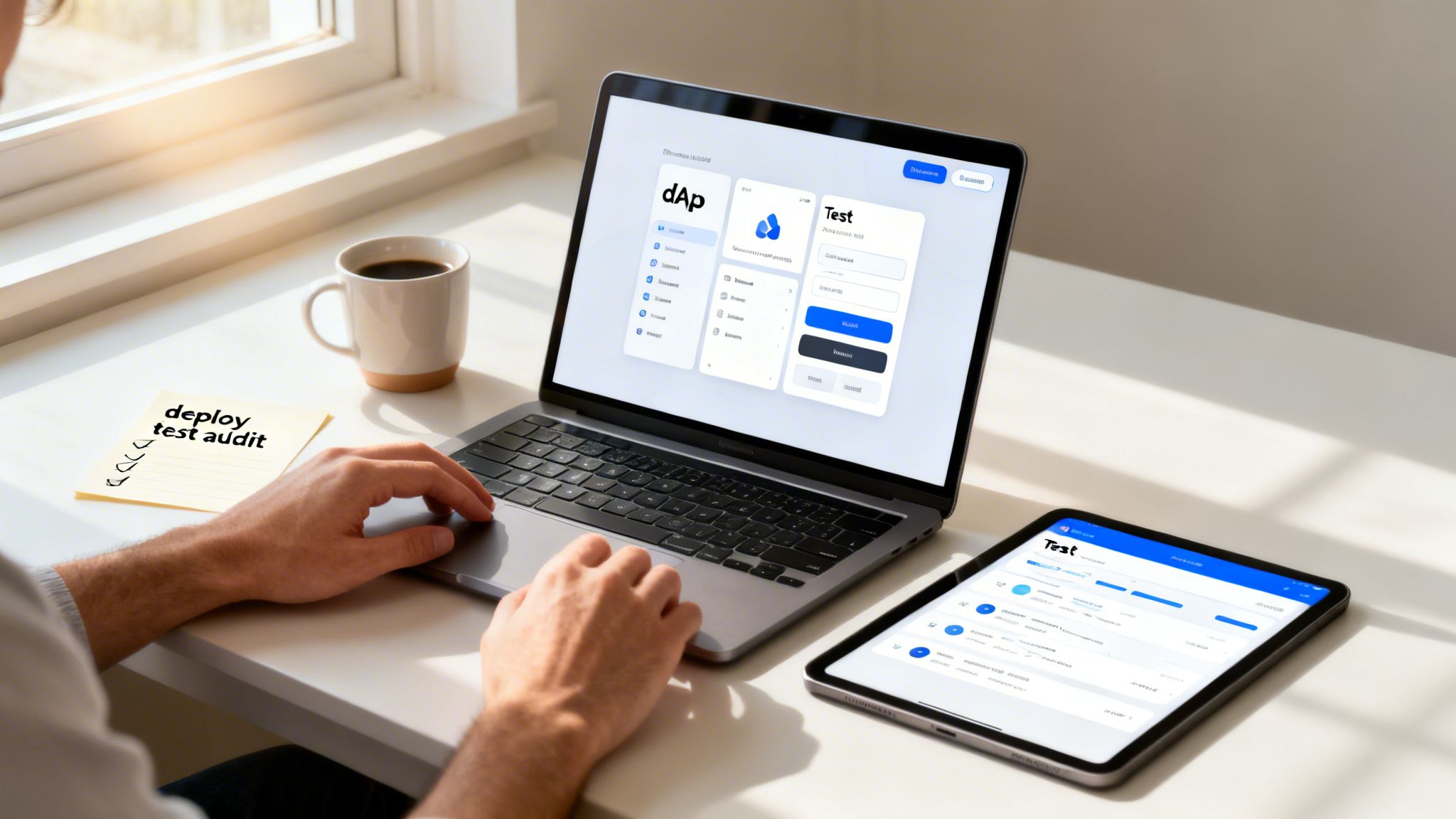
A developer’s day follows a strict loop: code, test, audit, repeat. In traditional software, a bug can be patched with an update. In blockchain, a flaw can lead to catastrophic, irreversible financial loss. This fundamental difference shapes their entire work process.
Their daily routine typically involves several key activities:
- Writing Unit and Integration Tests: Developers build exhaustive test suites simulating everything from a typical user signing a transaction to a sophisticated, hostile attack. Frameworks like Hardhat or Foundry are indispensable tools.
- Peer Code Reviews: Team collaboration is paramount. Developers meticulously review each other's code, hunting for logical errors, security vulnerabilities, or gas inefficiencies that a lone developer might miss.
- Security Audits: They are in constant communication with external security auditors, preparing code for intense scrutiny and implementing the recommended fixes. This security-first mindset is a non-negotiable part of the job.
For a blockchain developer, "done" doesn't mean the code works. It means the code is proven to be secure, efficient, and resilient against every known attack vector. The stakes are simply too high for anything less.
Building the Broader Ecosystem and dApp Infrastructure
The job extends beyond the smart contract. A blockchain developer is also responsible for building the entire infrastructure that allows users to interact with the protocol. Their tasks often include traditional software development, but with a unique blockchain focus.
An afternoon might be spent on:
- Developing dApp Frontends: Crafting user-friendly interfaces with libraries like Ethers.js or Web3.js to bridge a standard web application to the blockchain back-end.
- Integrating Crypto Wallets: Ensuring a seamless and secure connection with wallets like MetaMask or Phantom, which serve as the user's gateway to the decentralized web.
- Creating and Managing Digital Assets: Writing scripts to deploy and manage tokens, whether they are fungible (ERC-20) or non-fungible (NFTs, or ERC-721s).
Finally, a crucial and often overlooked task is documentation. Clear, detailed documentation is the lifeblood of any open-source project. Developers must document their code, APIs, and protocol architecture so that others can understand, audit, and build upon it, fueling community growth and separating professional-grade projects from amateur ones.
What is the Modern Blockchain Developer Tech Stack?
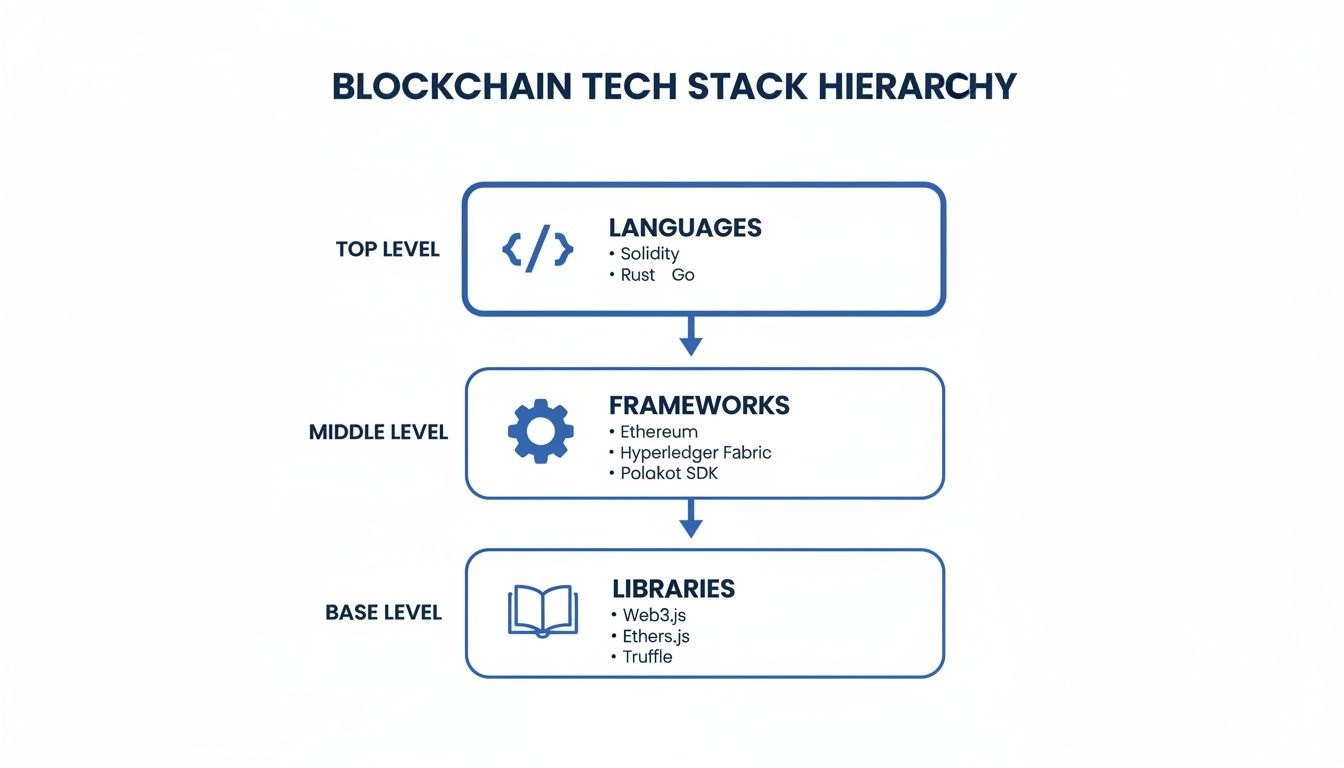
What separates a great blockchain developer from a good one is their command of a specific and constantly evolving tech stack. For founders and CTOs, understanding these tools is a practical checklist for vetting candidates and ensuring your team can build secure, scalable platforms for DeFi, RWA tokenization, or complex carbon analytics. A developer's toolkit is an ecosystem of technologies that must work together seamlessly. This stack can be understood in three layers: languages, frameworks, and libraries.
What are the Key Programming Languages?
The choice of programming language is dictated by the blockchain ecosystem. While backend languages like Go or Python are common for off-chain services, on-chain development is dominated by a few key languages designed for creating secure, deterministic smart contracts.
- Solidity: The undisputed leader for Ethereum and all EVM-compatible chains. Its JavaScript-like syntax makes it relatively accessible. Solidity powers the vast majority of today's DeFi protocols, NFTs, and dApps.
- Rust: Known for its performance and memory safety, Rust is the language of choice for high-performance blockchains like Solana, Polkadot, and Near. Its strict compiler helps prevent common bugs before deployment, making it ideal for systems where security and speed are paramount.
The decision between Solidity and Rust is a foundational architectural choice that directly impacts the available talent pool, user base, and the performance limits of an application.
Which Smart Contract Frameworks are Essential?
Writing smart contracts from scratch is inefficient and risky. Modern developers rely on powerful frameworks that provide tools to compile, test, deploy, and debug their code. These frameworks are the workshops where raw code is forged into production-ready applications.
A great blockchain developer doesn't just write code; they build resilient systems. Frameworks like Hardhat and Foundry are indispensable because they enforce a discipline of rigorous testing and security, turning good code into auditable, institutional-grade infrastructure.
- Hardhat: A flexible and extensible environment favored by the Ethereum community. It is known for its powerful plugin system, advanced debugging features, and a local Ethereum network for rapid testing.
- Foundry: A newer, Rust-based toolkit celebrated for its incredible speed and native Solidity testing. It allows developers to write tests directly in Solidity, a feature many find more intuitive.
Mastery of at least one of these frameworks is non-negotiable for any serious blockchain engineer, especially when dealing with complex patterns. For a deeper dive, explore our guide on understanding proxy contracts in Solidity.
Essential Tech Stack for Blockchain Developers
| Category | Technologies | Primary Use Case |
|---|---|---|
| Programming Languages | Solidity, Rust | Writing the on-chain logic for smart contracts. |
| Smart Contract Frameworks | Hardhat, Foundry, Truffle | Compiling, testing, deploying, and debugging smart contracts. |
| Blockchain Interaction | Ethers.js, Web3.js | Connecting front-end applications to the blockchain. |
| Development Environments | VS Code with extensions | Writing and managing code efficiently. |
| Local Blockchains | Ganache, Anvil, Hardhat Network | Simulating a blockchain locally for rapid development and testing. |
| Security & Auditing Tools | Slither, Mythril, Echidna | Analysing smart contracts for vulnerabilities before deployment. |
This table represents the day-to-day toolkit. A developer's fluency across these categories is a strong indicator of their ability to deliver a robust, secure, and user-friendly product.
Which Libraries are Used for Blockchain Interaction?
Smart contracts reside on the blockchain, but users interact with them through familiar websites and apps. This connection is powered by specialized libraries that act as a bridge between an application's front-end and a blockchain node. These libraries enable a standard web app to read data from the blockchain, listen for on-chain events, and prompt users to sign transactions from their crypto wallets.
The two most common libraries in the Ethereum ecosystem are:
- Ethers.js: Lightweight, comprehensive, and respected for its reliability and clean design. It is the go-to for building robust dApps where security is a top priority.
- Web3.js: The original Ethereum JavaScript library, with a massive community and a long history. It is often used in projects requiring broad compatibility or maintaining legacy codebases.
A developer's skill with these libraries directly impacts the end-user experience, enabling the seamless wallet connections and real-time data updates expected from high-quality decentralized applications.
What is the Average Blockchain Developer Salary?
Understanding compensation is key to attracting and retaining top talent in a highly competitive field. A blockchain developer's salary reflects the intense demand for specialists who can build secure, decentralized systems. This section provides a data-driven overview of what to expect, helping organizations budget effectively and recognize the value of this expertise. The financial rewards are significant, driven by explosive growth in sectors like DeFi, fintech, and RWA tokenization.
How Do Experience and Location Impact Compensation?
A developer's salary is primarily determined by two factors: years of experience and geographic location. A senior architect with a proven track record of deploying secure smart contracts will command a much higher salary than a junior developer. Similarly, compensation in Western markets differs significantly from rates in global talent hubs.
For a broader perspective on tech pay scales, this engineering salary guide provides a solid baseline for how seniority and specialization affect compensation worldwide.
The right talent is an investment, not an expense. A top-tier blockchain developer can prevent security vulnerabilities that might cost millions, making their higher salary a strategic decision for risk mitigation and long-term project success.
A Focus on India: A Global Talent Hub
India has rapidly become a premier hub for blockchain talent, offering world-class skills at a competitive cost. As of 2026, average blockchain developer salaries in India range from ₹3 lakhs to ₹22 lakhs per year. A developer with one year of experience commands around ₹7.1 lakhs, a mid-level professional earns ₹10.1 lakhs, and seniors with over five years of experience average ₹16.5 lakhs annually.
Role-specific averages include ₹10 lakhs for a Blockchain Engineer, up to ₹25 lakhs for an Architect, and ₹11.4 lakhs for a Smart Contract Developer. Compared to the US average of $157,939, Indian salaries are approximately 60% lower, presenting a significant strategic advantage.
This cost-efficiency does not imply a sacrifice in quality. The talent pool in regions like India is highly skilled, with proven expertise in building complex systems for:
- Decentralised perpetual trading platforms.
- RWA tokenization protocols for precious metals.
- Advanced carbon analytics and reporting systems.
This combination of top-tier expertise and competitive compensation makes staff augmentation or partnering with specialized firms a powerful strategy for accessing the precise skills needed without the high overheads of other markets.
Why is Demand for Blockchain Developers Surging?
The incredible demand for skilled blockchain developers is a direct result of a paradigm shift in how industries approach digital ownership, finance, and data transparency. Businesses are moving beyond experimentation and are now building mission-critical infrastructure on-chain. This leap from theory to production has ignited an urgent, global need for engineers who can build secure and scalable systems.
This surge is most evident in sectors where blockchain offers a clear disruptive advantage. DeFi is reshaping finance, supply chains are using blockchain for immutable tracking, and the environmental sector is leveraging it for transparent carbon tokenization.
The Rise of Global Talent Hubs
As demand skyrockets, companies are searching globally for elite engineering talent. This has highlighted several key regions with deep expertise in blockchain development. India, in particular, has emerged as a powerhouse. As of 2025, the country is home to over 60,000 engineers working on blockchain projects, representing 11% of the global Web3 talent pool—third behind the United States and China. You can explore more data on developer activity to see the full scope of this growth.
The global distribution of talent is a strategic advantage for the entire ecosystem. It allows innovative companies, regardless of their location, to tap into a worldwide network of skilled developers ready to build complex systems like perpetual trading engines or RWA tokenisation platforms.
This talent concentration is fueled by significant investment. With over 900 Web3 startups attracting nearly $1.3 billion in funding, India's ecosystem is expanding rapidly, further amplifying the need for developers skilled in Solidity, Rust, and secure dApp architecture.
How Does This Surge Benefit Your Organization?
This growing global talent pool offers a direct strategic advantage for any company building decentralized products. Access to a worldwide network of developers enables you to source the exact expertise your project requires, whether for complex DeFi protocols or intricate carbon asset tracking systems. This makes team building more flexible and often provides significant cost advantages without compromising quality.
For organizations in competitive markets, this access is critical. It allows them to:
- Accelerate Timelines: Tap into a ready supply of skilled engineers to shorten development cycles and get to market faster.
- Access Specialized Skills: Find developers with niche expertise in institutional-grade security, cross-chain swaps, or specific Layer 2 scaling solutions.
- Optimize Budgets: Leverage global talent to build high-quality systems more cost-effectively, freeing up capital for product growth and market penetration.
Ultimately, the surging demand for blockchain developers signals industry maturation. For founders and CTOs, understanding these market dynamics and knowing where to find top talent is the first step toward building a successful and scalable on-chain future.
How to Hire the Right Blockchain Developer
Finding and securing top-tier blockchain talent requires a deliberate, focused strategy. Unlike hiring for traditional software roles, you are vetting an architect of immutable systems where a single mistake can have permanent, costly consequences. This section provides a practical framework for navigating this challenging hiring landscape. The process begins long before posting a job ad, starting with a razor-sharp definition of the role and the specific problems the developer needs to solve.
How to Define the Role and Source Candidates
Precision is crucial when defining the role. Your job description must do more than list technologies; it must clearly articulate the real-world challenges the candidate will face. Instead of simply requesting "Solidity" experience, describe the mission: "Design and implement gas-efficient, secure smart contracts for an RWA tokenization platform."
Once the role is clear, you need to find these specialists. While traditional job boards are a start, the best talent is often found elsewhere:
- Niche Job Boards: Platforms like Web3.career and CryptoJobsList are purpose-built for the industry.
- Protocol Communities: Engage in the Discord servers or forums of respected protocols.
- Hackathons and Open-Source Contributions: Scout talent at events like ETHGlobal or by reviewing code contributions to projects like OpenZeppelin.
Learning how to effectively work with recruitment agencies can also provide a significant edge, as they often have networks of pre-vetted candidates.
What Should the Interview Process Cover?
A robust interview process for a blockchain developer must evaluate their understanding of security, architecture, and the core economic principles of decentralized systems.
A great interview doesn't just ask "Can you code this?" It asks "Can you foresee all the ways this could fail?" This security-first mindset is the most valuable trait in a blockchain developer.
Your interview flow should blend theoretical questions with hands-on challenges to evaluate both foundational knowledge and real-world problem-solving ability.
Essential Interview Questions to Ask:
- Conceptual Understanding: "Explain the risks of
delegatecall. When would you use it, and what precautions would you take?" - Security Mindset: "Describe a common smart contract vulnerability like reentrancy. How would you design a contract to prevent it?"
- Gas Optimization: "A contract you've written is too expensive. What are the first three things you would check to reduce its gas consumption?"
- Architectural Design: "Walk me through how you would architect a simple staking contract. What are the key functions, state variables, and events?"
For projects with specific needs, digging into the right questions is vital. You might be interested in our guide on top blockchain talent providers for more insights.
How to Evaluate Portfolios and Make the Right Hire
A candidate’s portfolio is their proof-of-work. Look for clean, well-documented GitHub repositories with extensive test coverage—aim for 100% on core contracts. Two polished, production-grade projects are far more impressive than ten incomplete experiments.
When you're ready to make a decision, you have three main options: hire an individual freelancer, build an in-house team, or partner with a specialized engineering firm. A freelancer is ideal for small, defined tasks. An in-house team offers long-term alignment but requires significant investment. A specialized firm provides immediate access to a coordinated team of experts, reducing timelines and risk. Choose the model that best fits your project’s scale, budget, and long-term vision.
Build Your Vision with a Specialized Blockchain Partner
Hiring the right blockchain developer or building a team from scratch can derail your project, consuming valuable time and resources. Partnering with a specialized engineering firm offers a more direct path to success, providing instant access to a coordinated team of experts who live and breathe decentralized infrastructure.
This approach is about embedding deep, institutional-grade expertise into your project from day one. Instead of hoping a new hire understands the nuances of DeFi or RWA tokenization, you get a team that has already built and secured these systems in live environments. This dramatically reduces execution risk and closes the gap between a great idea and a scalable, production-ready system.

Why Partner with Blocsys for Your Blockchain Development?
A specialized partner like Blocsys brings a battle-tested process for building complex on-chain products. Whether you’re creating decentralized equity-traded funds (dETFs), perpetual trading platforms, or carbon analytics systems, early architectural choices are critical. We design for security and scalability from the very first line of code.
Our engagement models are designed for flexibility:
- End-to-End Project Delivery: We take full ownership of the development lifecycle, from product strategy and protocol architecture to deployment and ongoing maintenance.
- Dedicated Team Augmentation: We integrate our expert engineers directly into your existing team, providing the specific skills needed to overcome key technical hurdles. Learn more about our approach to IT resource augmentation.
Choosing the right partner means you're not just hiring developers; you're adopting a proven system for execution. This allows your core team to focus on vision and growth, confident that the technical foundation is being built to the highest standards.
The demand for specialized talent is surging, especially in global hubs like India. The country's blockchain developer ecosystem is set for massive growth as institutional crypto adoption takes hold, with projections showing over $115 billion in assets will be managed via regulated products by 2026. This trend creates an unprecedented need for expert engineers. By tapping into this global talent pool, we give our clients access to top-tier skills. Discover more about India's institutional crypto surge and its impact.
At Blocsys Technologies, we help organizations build, scale, and execute their vision with confidence. Our team of expert blockchain developers specializes in creating secure, production-ready decentralized infrastructure for the most demanding use cases in finance, AI, and environmental markets.
If you're ready to move from concept to a live, scalable system, let's connect. Schedule a consultation with our team to discuss your project and discover how our expertise can accelerate your success.