
Building a blockchain startup in 2026 is not for the faint-hearted. Blockchain startup regulatory challenges have grown more complex than ever, as governments worldwide race to create enforceable frameworks for crypto assets and decentralized protocols. Whether you are launching a DeFi platform, an NFT Marketplace Built on Blockchain, or a token-based business, the regulatory maze can slow your growth or shut you down entirely. However, founders who understand the landscape early gain a significant competitive edge. If you are exploring Blockchain Development for your next venture, compliance must sit at the core of your architecture from day one. This roadmap will help you navigate the key challenges, requirements, and practical steps to build a compliant Web3 business in 2026. For a broader perspective on the obstacles facing new entrants, the Crypto & Blockchain Startup Challenges: The Complete Founder’s Guide to Building in Web3 (2026) offers essential context every founder should read first.
Why Blockchain Startup Regulatory Challenges Are Intensifying in 2026
The regulatory environment for crypto has shifted dramatically. Therefore, what worked for startups in 2021 or even 2023 no longer applies. Governments across the EU, the US, UK, Singapore, and the UAE have all released or revised major crypto frameworks in recent years. Additionally, enforcement actions have increased in both frequency and severity. Consequently, founders can no longer treat compliance as an afterthought they will address after product-market fit.
Moreover, the stakes are higher now. Regulators are not just targeting exchanges. They are also scrutinizing DeFi protocols, NFT platforms, and stablecoin issuers. Furthermore, cross-border operations add another layer of complexity. A startup registered in one jurisdiction may still face regulatory action in another if it serves users there. Therefore, understanding jurisdictional reach is critical from the very beginning.
The Global Regulatory Patchwork
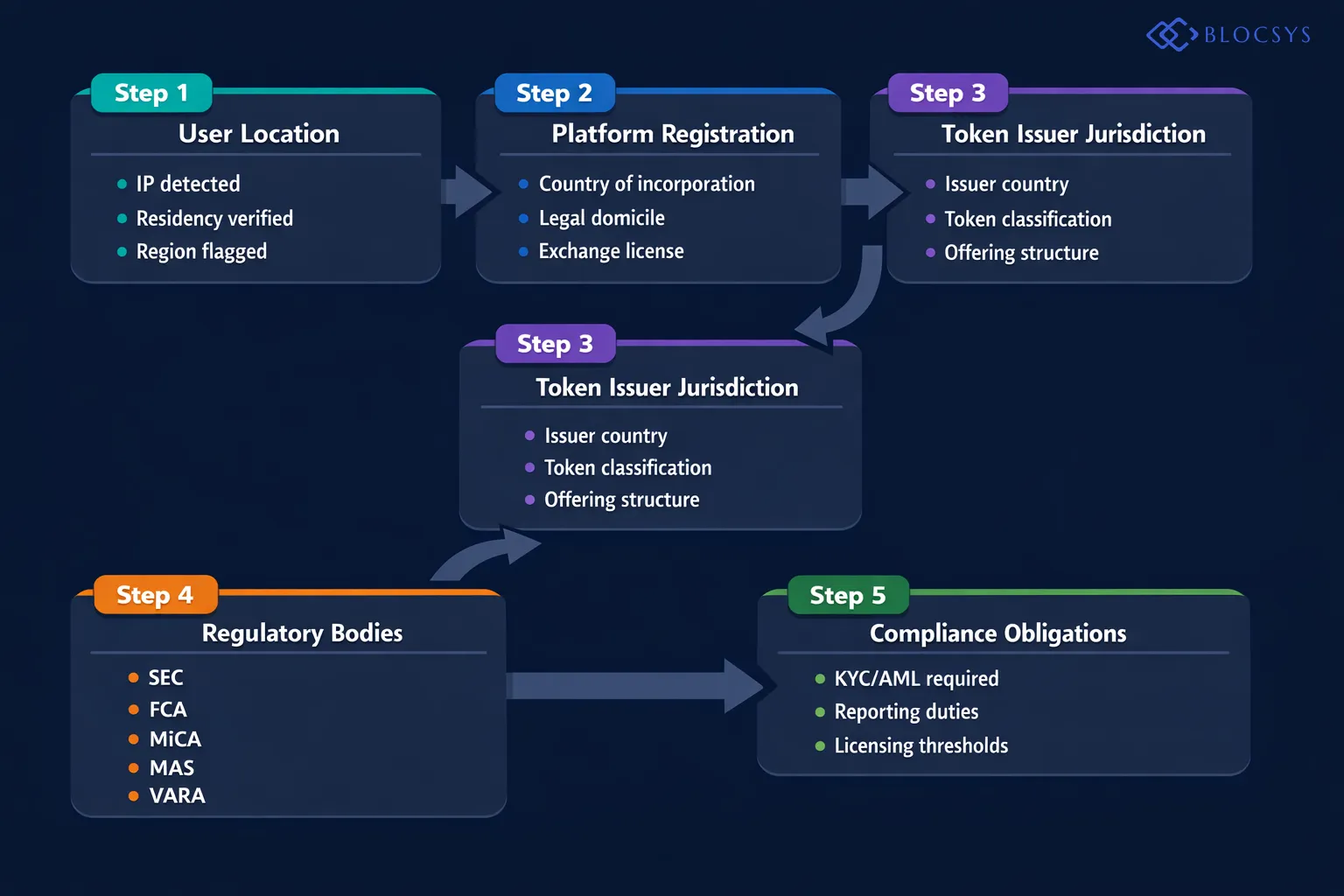
No single global standard governs blockchain startups today. Instead, each jurisdiction applies its own rules. The EU’s Markets in Crypto-Assets regulation now covers most token categories. However, the US still relies on a fragmented mix of SEC, CFTC, and FinCEN guidance. Singapore enforces the Payment Services Act, while the UAE has built crypto-friendly but structured frameworks through VARA. Consequently, founders must map their user base and operational footprint carefully to determine which rules apply to their specific business model.
The Speed of Legislative Change
Regulatory frameworks are evolving faster than most startups can track. Therefore, a compliance strategy that was valid twelve months ago may already be outdated. Furthermore, proposed legislation in Congress and ongoing consultations in the UK and Australia could reshape requirements throughout 2026. Additionally, enforcement agencies are increasingly collaborating across borders. Consequently, a startup cannot assume that operating offshore provides full protection from domestic regulatory reach.
Navigating Crypto Compliance Challenges as a New Entrant
Crypto compliance challenges fall into several distinct categories. However, three areas create the most friction for early-stage startups: anti-money laundering obligations, know-your-customer requirements, and token classification. Each of these carries significant legal and operational weight. Therefore, understanding them in depth is essential before you write a single line of smart contract code or accept your first user.
“The biggest mistake I see founders make is building the product first and asking about compliance second. By the time they seek legal advice, their architecture has already baked in structural problems that cost hundreds of thousands of dollars to fix — if they can be fixed at all.” — Elena Marchetti, Web3 Regulatory Counsel and former fintech compliance officer
AML and KYC Obligations
Most jurisdictions now classify crypto businesses as virtual asset service providers. Consequently, they must comply with AML and KYC rules similar to those applied to traditional financial institutions. Therefore, your platform needs identity verification workflows, transaction monitoring systems, and suspicious activity reporting processes. Additionally, the FATF Travel Rule requires VASPs to share sender and recipient information for transactions above certain thresholds. Failing to implement these controls exposes your startup to heavy fines and potential criminal liability.
Token Classification and Securities Law
Token classification remains one of the most contested areas in crypto law. Furthermore, getting it wrong can result in your token being deemed an unregistered security — a finding that can derail your entire project. The Howey Test still guides US classification decisions, while MiCA introduces its own categories including e-money tokens, asset-referenced tokens, and utility tokens. Therefore, founders must conduct a thorough legal analysis before any public token offering. Additionally, engaging a securities lawyer with specific crypto experience is not optional — it is essential. See our Institutional-Grade Crypto Token Launchpad resource for technical implementation context that supports compliant token issuance.
Crypto Startup Licensing: What You Actually Need
Crypto startup licensing requirements vary significantly by jurisdiction and business model. However, most founders underestimate how many licenses they may actually need. Therefore, mapping your planned activities to regulatory categories is one of the first steps in any serious compliance roadmap. Moreover, some jurisdictions require licenses before you can accept a single user or process one transaction. Consequently, licensing must form part of your pre-launch planning — not a post-launch scramble.
Key Licensing Categories to Understand
Common license types include exchange licenses, custodial wallet licenses, payment services licenses, and investment services authorizations. Furthermore, if your platform facilitates derivatives trading, you may also need a derivatives dealer license. Additionally, some jurisdictions require separate licenses for each distinct activity. Therefore, a platform offering spot trading, staking, and custody may need three distinct licenses within the same country. This complexity drives up both cost and time-to-market. However, the cost of operating without proper licensing is far greater over the long run.
Choosing the Right Jurisdiction for Your Startup
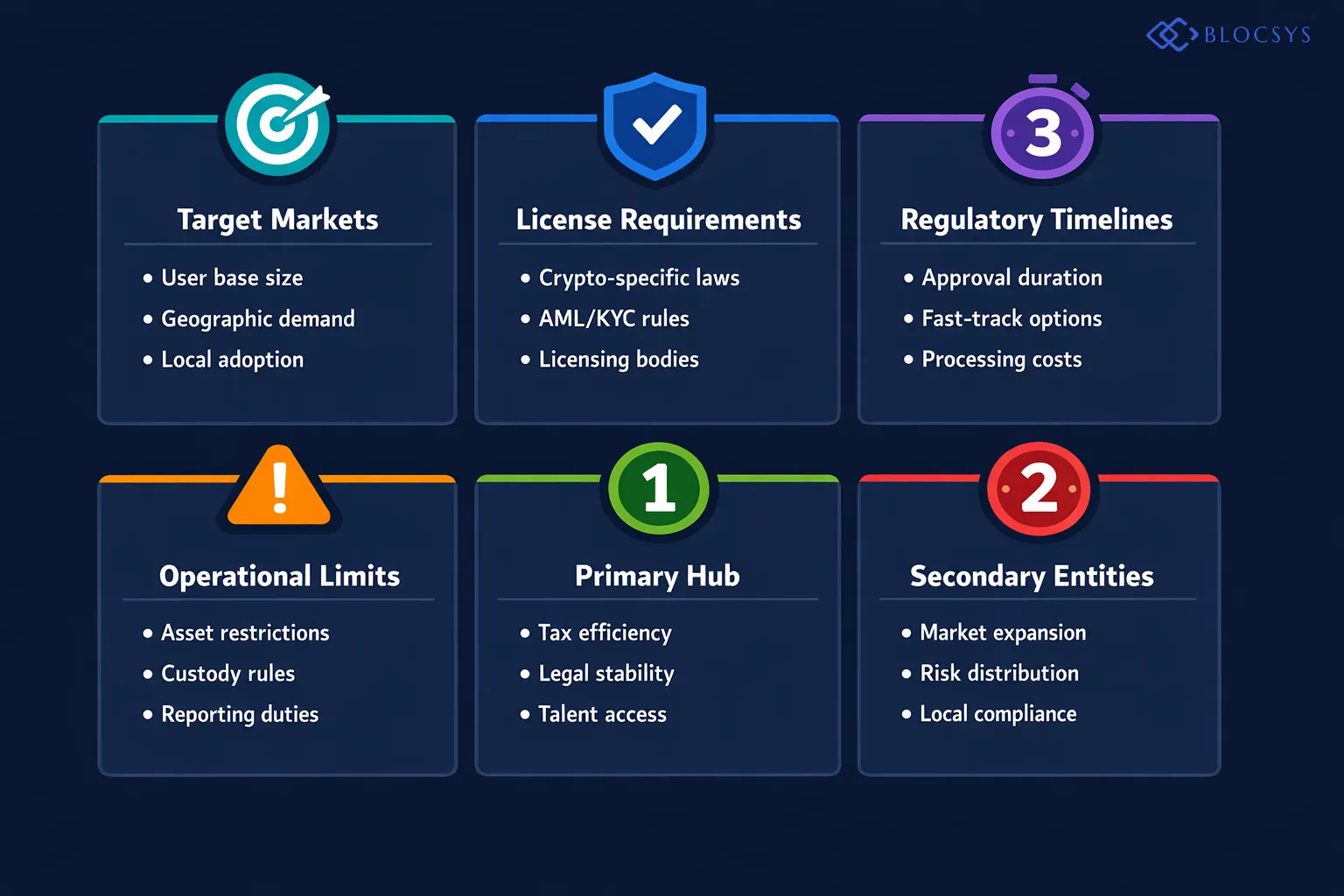
Jurisdiction selection is a strategic decision that requires balancing regulatory clarity, cost, speed-to-license, and market access. The UAE and Singapore continue to attract crypto startups with structured but business-friendly frameworks. Additionally, some EU member states offer faster MiCA onboarding pathways for compliant applicants. However, a jurisdiction that is easy to license in may limit your access to certain regulated markets. Consequently, many founders establish a primary entity in a crypto-friendly jurisdiction while maintaining separate entities for high-value markets like the EU or US. The capital implications of this multi-entity structure are explored in our article on Crypto Startup Funding Challenges: How to Raise Capital in a Tough Web3 Market (2026).
Web3 Legal Problems You Must Address Before Launch
Beyond licensing and AML, web3 legal problems cover a wide range of issues that many founders overlook entirely. Furthermore, many of these problems are unique to decentralized systems and have no clear precedent in traditional commercial law. Therefore, founders must work with legal counsel who understands both the technology and the rapidly evolving legal frameworks. Additionally, addressing these issues before launch is far less expensive than resolving them after a dispute or regulatory inquiry has already begun.
Smart Contract Liability
Smart contracts execute automatically. However, they do not eliminate legal liability for the teams that deploy them. If a smart contract bug causes user losses, the founding team may face civil claims and regulatory action. Additionally, regulators may argue that an exploited contract violated consumer protection laws. Therefore, smart contract audits are not just a technical best practice — they are a legal necessity. Furthermore, founders should explore insurance products specifically designed for smart contract risk. Our article on Web3 Startup Technical Challenges: Solving Scalability, Security, and Smart Contract Risks covers the technical side of this issue in comprehensive detail.
DAO Governance and Legal Entity Structures
Decentralized autonomous organizations present a distinctive set of web3 legal problems that founders routinely underestimate. Therefore, founders must determine early whether their DAO needs a legal wrapper. Without one, DAO members may face unlimited personal liability for the organization’s actions. Additionally, some jurisdictions now recognize DAO-specific legal structures, including Wyoming and the Marshall Islands. Furthermore, unincorporated DAOs may struggle to open bank accounts, sign contracts, or participate in regulatory processes. Consequently, structuring your DAO correctly from the start protects both the project and its individual contributors.
“Regulators are not trying to kill Web3. They are trying to understand it. Founders who engage proactively — who show up with clear structures, compliant processes, and documented controls — consistently get better outcomes than those who treat regulators as adversaries.” — James Okafor, Partner at a blockchain-focused law firm and former SEC fintech advisor
Building Your Practical Compliance Roadmap for 2026
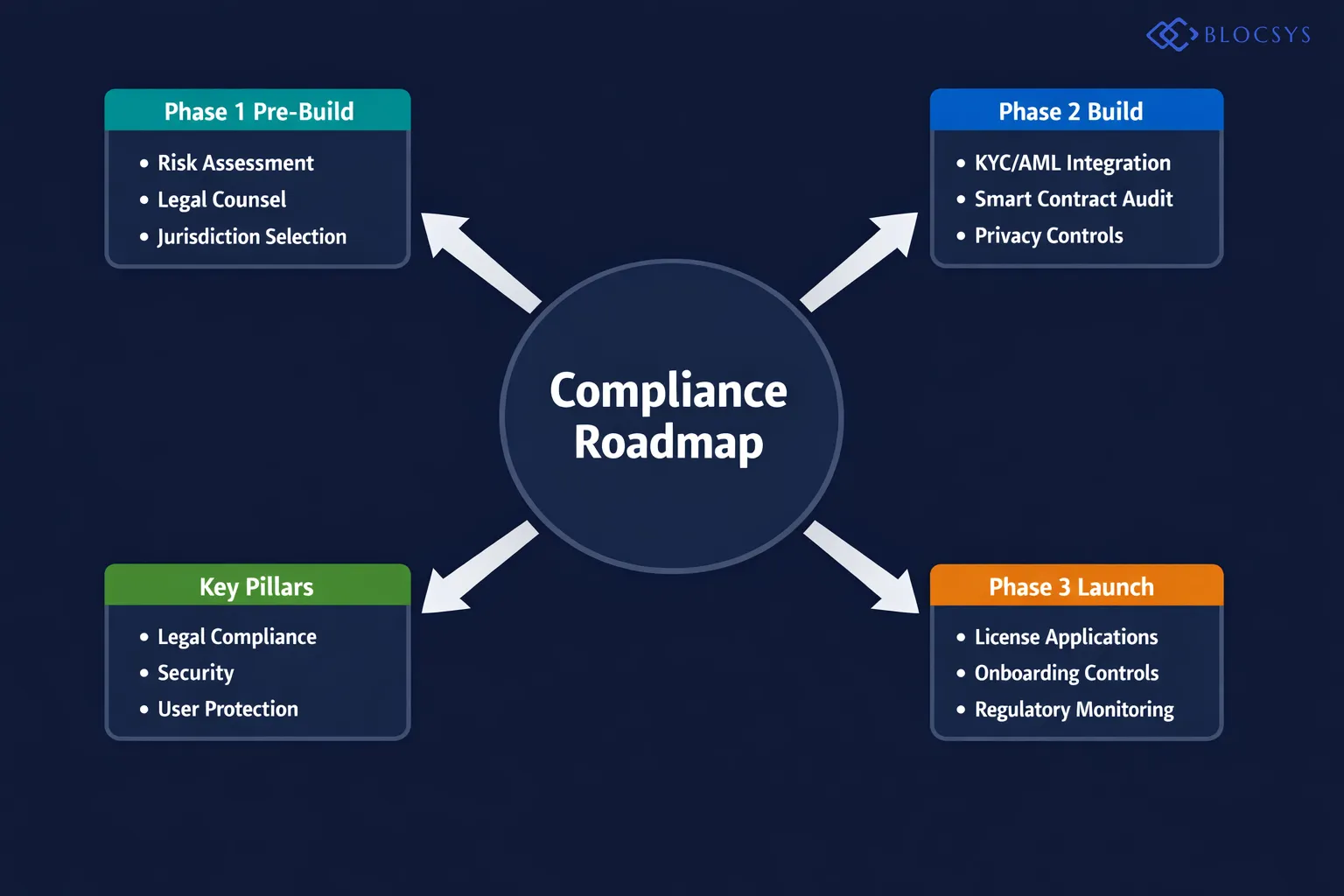
A compliance roadmap turns abstract regulatory requirements into concrete, actionable steps. Therefore, every blockchain startup should build one before writing code, before fundraising, and certainly before onboarding users. Moreover, a documented compliance program signals credibility to investors, partners, and regulators alike. Additionally, it creates a scalable foundation that grows with your business. Consequently, investing in compliance infrastructure early is one of the highest-return activities a founder can undertake in today’s environment.
Step One: Conduct a Regulatory Risk Assessment
Start by mapping every planned activity to its regulatory classification in each target jurisdiction. Therefore, you need to identify which rules apply to your token model, your user interactions, and your data practices. Additionally, assess the licensing requirements for each activity and jurisdiction combination you plan to enter. Furthermore, identify the highest-risk areas — typically token issuance, custody, and cross-border transactions. Consequently, this assessment becomes the foundation for every subsequent compliance decision your team makes.
Step Two: Engage Specialized Legal Counsel Early
General corporate lawyers are not sufficient for blockchain compliance work. Therefore, engage counsel with specific experience in crypto regulation within each of your target jurisdictions. Additionally, consider hiring a Chief Compliance Officer or fractional compliance advisor as your team scales. Moreover, legal counsel should review your whitepaper, token structure, marketing materials, and terms of service before any public launch. Consequently, early legal engagement prevents the structural mistakes that later cost founders millions to unwind. For strategies on attracting the right compliance talent, explore our guide on Blockchain Startup Talent Challenges: How to Build and Retain a World-Class Web3 Team in 2026.
Step Three: Integrate Compliance Into Your Technology Stack
Compliance should not exist only in documents and policies. Therefore, integrate KYC and AML tooling directly into your onboarding flows from day one. Additionally, use on-chain analytics tools to monitor transactions for suspicious patterns in real time. Furthermore, implement access controls and data localization features to comply with privacy regulations like GDPR and CCPA. Consequently, your platform will be audit-ready from the first day of operations rather than scrambling to retrofit controls after a regulatory inquiry lands on your desk. Partnering with an experienced team for your Blockchain Development ensures these compliance features are architected correctly from the very beginning.
Compliance Is Your Competitive Advantage
Blockchain startup regulatory challenges are real, complex, and constantly evolving. However, they are not insurmountable for founders who plan proactively. Moreover, startups that build compliance into their foundation from day one are better positioned to raise capital, attract institutional partners, and scale across multiple markets simultaneously. Additionally, a well-structured compliance program reduces legal risk while building genuine trust with users and regulators. Furthermore, as the market matures, compliant projects will capture the institutional capital that currently sits on the sidelines waiting for regulatory clarity. Consequently, treating compliance as a strategic asset — not a cost center — is the mindset that separates successful Web3 founders from those who stall or shut down.
Therefore, take the insights from this roadmap and begin applying them today. Moreover, explore the full scope of challenges facing Web3 builders in the Crypto & Blockchain Startup Challenges: The Complete Founder’s Guide to Building in Web3 (2026). Additionally, understanding how regulatory issues intersect with user adoption is equally critical — our article on Crypto Startup Market Challenges: Overcoming User Adoption and Trust Barriers in Web3 (2026) explores that dimension in depth. Furthermore, for secure document-based compliance workflows, our Blockchain Document Verification System for Secure Digital Proof offers a practical infrastructure solution worth exploring.
Frequently Asked Questions
Here are direct answers to the questions we hear most often about blockchain startup regulatory challenges.
What is the biggest regulatory risk for a blockchain startup in 2026?
Token misclassification is currently the highest-risk area for most founders. If your token is deemed an unregistered security, you face enforcement action, forced refunds to investors, and potential criminal liability for founders.
Therefore, conduct a formal legal analysis of your token structure before any public issuance, presale, or fundraising activity. This single step prevents the most common and most costly compliance failure in the space.
Do I need a license to launch a DeFi protocol?
It depends on your protocol’s design, fee structure, and user base. However, regulators in the EU, US, and UK are increasingly arguing that even “decentralized” protocols require licensing if a founding team retains meaningful control or earns fees from the protocol’s operation.
Therefore, work with legal counsel to assess whether your protocol triggers VASP obligations in your target markets before you deploy to mainnet. The “it’s fully decentralized” argument is no longer a reliable regulatory defense on its own.
What does MiCA mean for crypto startups targeting EU users?
MiCA is now the primary regulatory framework for crypto asset service providers operating in the EU. Consequently, it requires licensing, detailed consumer protection disclosures, and minimum capital requirements for most token issuers and exchange operators.
Furthermore, non-EU startups serving EU users must comply with MiCA or face enforcement action regardless of where they are incorporated. Therefore, EU market access requires a formal MiCA compliance strategy and typically a licensed EU entity or authorized representative.
How early should I engage a crypto compliance lawyer?
Engage legal counsel before you finalize your token model or begin any public fundraising activity. Moreover, most of the most expensive compliance mistakes are structural — baked into the core design of the project in ways that are very difficult to reverse after launch.
Therefore, early engagement is far cheaper than remediation. Additionally, institutional investors and regulated partners increasingly require documented legal due diligence before committing capital or resources to a Web3 project in 2026.
Can a blockchain startup operate globally from a single jurisdiction?
Not effectively in most cases. However, you can minimize complexity by choosing a primary jurisdiction that offers broad market access and clear, favorable regulations for your specific business model. Consequently, many founders adopt a hub-and-spoke structure — one primary entity in a crypto-friendly jurisdiction plus targeted licenses for specific high-value regulated markets.
Therefore, your jurisdiction strategy should form part of your initial business plan and funding model, not an afterthought you address once you start receiving regulatory letters from foreign authorities.
Ready to move beyond theory and build an intelligent platform that delivers real-world value? Blocsys Technologies specialises in engineering enterprise-grade AI and blockchain solutions for the fintech, Web3, and digital asset sectors. Connect with our experts today to discuss your vision and chart a clear path from concept to a secure, scalable reality.