
The rise of blockchain technology has fundamentally changed how people invest. Today, decentralized fund management and DeFi asset management offer powerful alternatives to traditional finance. Developers and entrepreneurs can now launch a fully functional crypto fund management solution using smart contracts. This guide walks you through building an on-chain asset management platform from concept to deployment. Whether you’re exploring tokenized investment funds, a DeFi investment platform, or a comprehensive blockchain asset management strategy, smart contracts make it achievable.
Understanding Decentralized Fund Management and DeFi Asset Management
Traditional investment funds rely heavily on intermediaries such as brokers, custodians, and banks. However, decentralized asset management removes these middlemen entirely. Smart contracts automate fund operations transparently on the blockchain. Therefore, investors gain greater control, lower fees, and real-time visibility into fund performance.
Furthermore, blockchain asset management enables trustless participation. Investors don’t need to blindly trust a fund manager. Instead, they verify the fund’s rules directly in the smart contract code. This transparency is a core advantage of a DeFi fund platform over traditional alternatives.
How Smart Contracts Power On-Chain Asset Management
Smart contracts are self-executing programs stored on the blockchain. They enforce investment rules automatically without human intervention. Moreover, they handle deposits, withdrawals, fee distributions, and rebalancing logic. Platforms like Ethereum provide foundational infrastructure for deploying such contracts.
Additionally, smart contracts eliminate fraud risk from misallocated assets. Every transaction records on an immutable ledger. Consequently, auditors and investors can verify fund activity at any time. This accountability drives growing adoption of crypto portfolio management solutions built on DeFi.

Steps to Build a DeFi Investment Platform with Smart Contracts
Building a fully functional DeFi investment platform requires careful, methodical planning. However, the process follows a clear sequence of steps. Therefore, breaking it into phases makes the entire journey manageable for any development team.
Step 1 — Choose the Right Blockchain
Ethereum remains the most popular choice for DeFi fund platforms. However, alternatives like Solana, Avalanche, and BNB Chain offer faster transactions and lower gas fees. Moreover, your choice depends on your target audience and fund strategy complexity. Evaluate each network’s security, liquidity depth, and developer ecosystem thoroughly before committing.
Step 2 — Define Your Fund Structure
Next, determine your fund’s investment mandate clearly. Will it focus on DeFi tokens, blue-chip assets, or a diversified basket? Furthermore, decide how investors participate — through direct deposits or by purchasing fund tokens. Tokenized investment funds typically issue ERC-20 tokens representing each investor’s share of net asset value.
Additionally, set clear rules for management fees, performance fees, and minimum investment thresholds. Embedding these parameters directly into the smart contract ensures full transparency. Consequently, investors always know exactly what costs they incur.
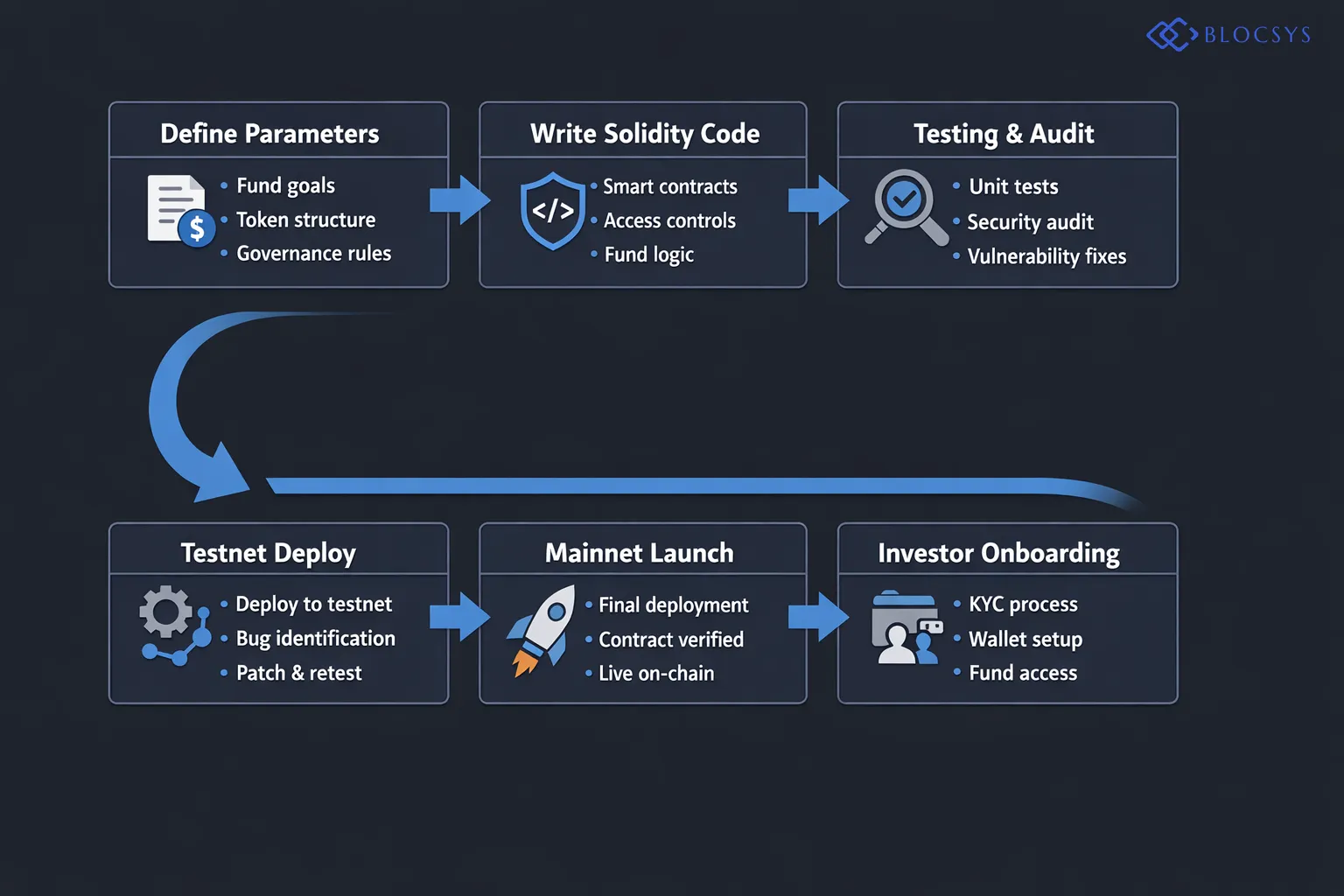
Step 3 — Write, Audit, and Deploy Smart Contracts
Solidity is the primary language for Ethereum smart contracts. However, developers targeting Solana write contracts in Rust instead. Write modular contracts covering deposits, strategy execution, and withdrawals. Furthermore, integrate oracles like Chainlink to bring accurate off-chain price data on-chain reliably.
Before deploying, conduct a thorough third-party security audit. Audit firms identify vulnerabilities that malicious actors could exploit. Moreover, always deploy on a testnet first. Consequently, you test fund mechanics without risking real investor capital.
Managing Tokenized Investment Funds and Crypto Portfolio Management
After deployment, active management of your crypto portfolio management platform begins immediately. Smart contracts automate many routine operational tasks. However, a governance layer also helps the community steer key investment decisions. Therefore, many DeFi funds integrate on-chain voting mechanisms for greater decentralization.
Rebalancing and Automated Strategy Execution
Automated rebalancing keeps the fund aligned with its stated mandate. Additionally, integrating with decentralized exchanges like Uniswap allows the contract to swap assets programmatically. Moreover, strategies execute at preset intervals or trigger based on live market conditions. This automation sharply distinguishes on-chain asset management from traditional fund structures.
Furthermore, building a transparent investor dashboard strengthens trust considerably. Participants monitor holdings, performance metrics, and fee accrual in real time. Explore how to build a DeFi dashboard to complement your fund platform effectively and professionally.
Security and Compliance Considerations
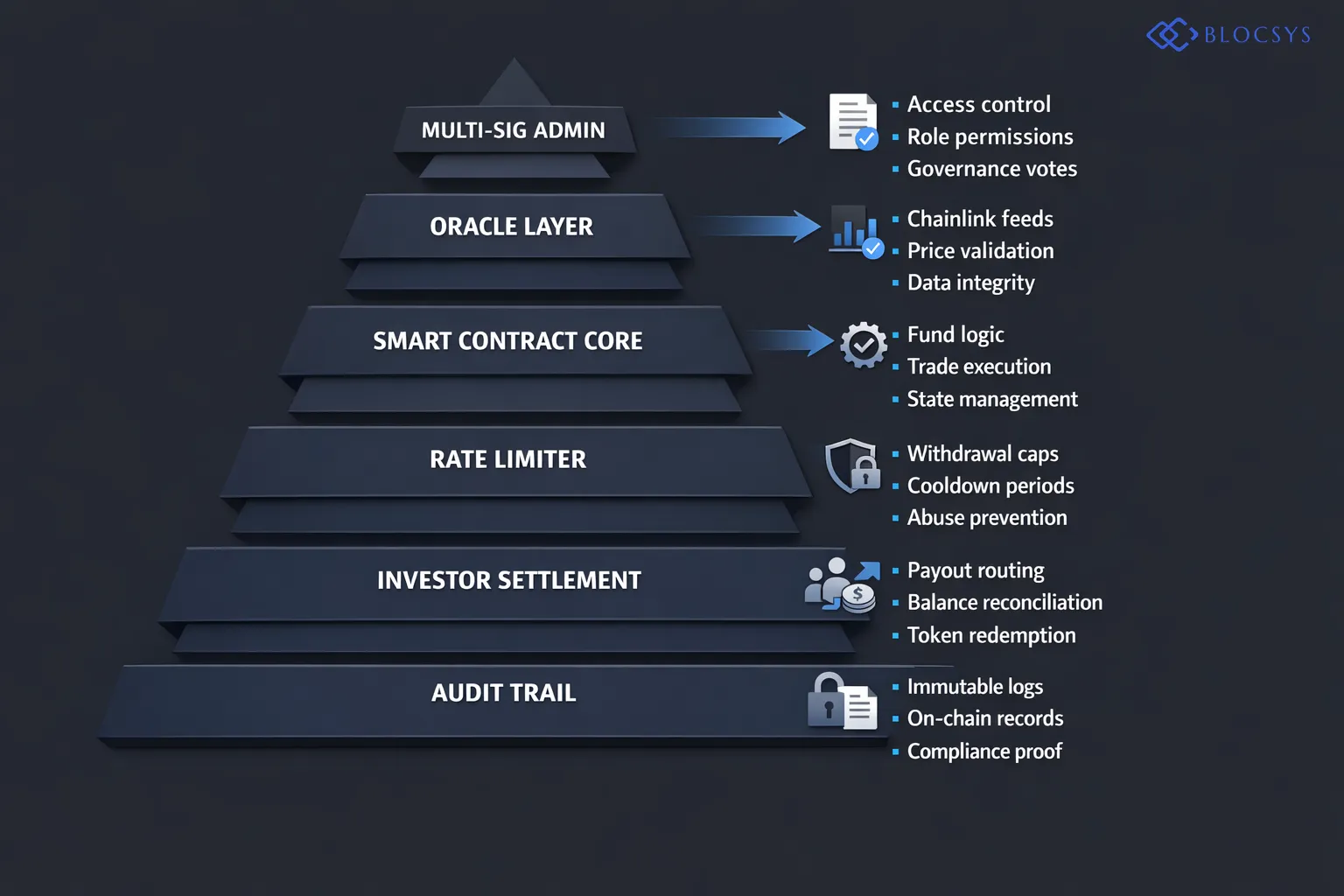
Security is non-negotiable in blockchain asset management. Always implement multi-signature controls for critical administrative functions. Moreover, set withdrawal rate limits to prevent flash loan attacks. Additionally, research KYC and AML requirements in your jurisdiction before opening access to institutional investors or public participation.
The Future of Decentralized Asset Management
The landscape of decentralized asset management continues evolving at a remarkable pace. Institutions increasingly explore DeFi for yield generation and portfolio diversification. Furthermore, improving regulatory clarity in many jurisdictions is opening doors for compliant DeFi fund platforms. Consequently, the next wave of crypto funds will likely blend traditional compliance frameworks with blockchain transparency.
Smart contracts will also grow significantly more sophisticated over time. Additionally, cross-chain interoperability will allow funds to access liquidity across multiple blockchains simultaneously. Therefore, building with modularity today prepares your platform for tomorrow’s rapidly expanding opportunities. Explore smart contract security best practices to keep your fund resilient as the ecosystem matures.
In summary, launching a crypto investment fund using smart contracts is more accessible than ever before. However, success demands careful design, rigorous auditing, and a transparent governance model. Therefore, approach each step methodically to build a fund that both investors trust and regulators respect.