The modular blockchain investment thesis represents one of the most consequential structural shifts in crypto infrastructure since Ethereum’s launch. Investors globally are paying close attention. Furthermore, this thesis challenges the long-held dominance of monolithic blockchains and argues that specialization creates far greater long-term value. Understanding this framework is therefore essential for any serious capital allocation to the blockchain space in 2026.
What Is the Modular Blockchain Investment Thesis?
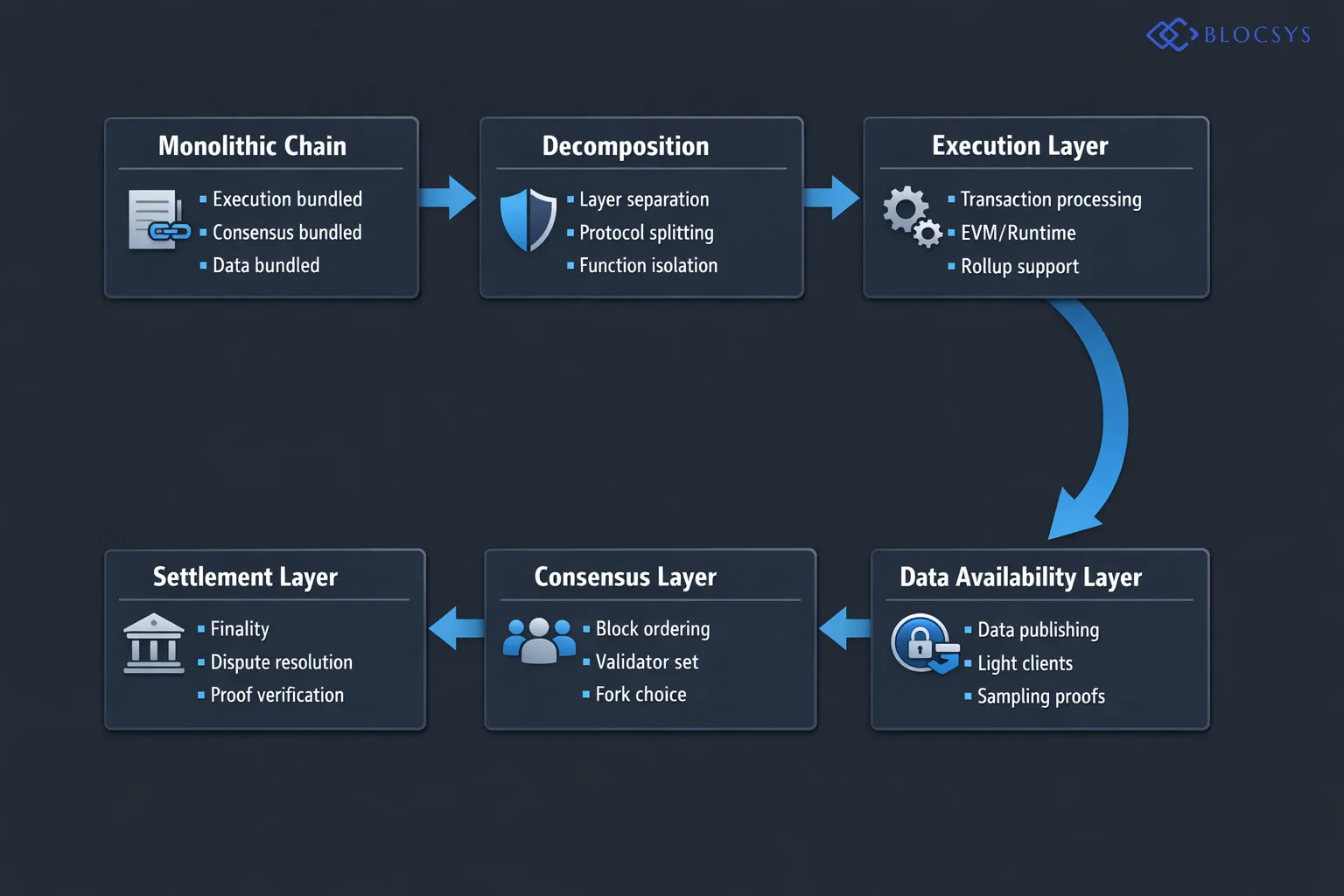
At its core, the modular blockchain investment thesis holds that separating blockchain functions into specialized layers unlocks efficiency and scalability. Traditional monolithic blockchains handle execution, consensus, settlement, and data availability within a single protocol. However, this bundled approach creates performance bottlenecks and limits how fast these networks can grow. Modular systems solve this by distributing each function across dedicated, independently optimized layers.
This architectural philosophy mirrors what happened in traditional enterprise software decades ago. Moreover, purpose-built systems consistently outperform general-purpose alternatives at scale. Consequently, modular blockchains can process far higher transaction volumes at significantly lower costs. Investors who grasp this dynamic early can position portfolios well ahead of broader market recognition.
From Monolithic to Modular — A Structural Shift
Monolithic blockchains bundle all core functions into one tightly coupled protocol. Therefore, improving one dimension often degrades another, creating painful trade-offs for developers. Ethereum’s gas fee spikes during peak demand illustrate this constraint clearly. Additionally, modular architectures allow each layer to scale independently without compromising the performance of adjacent layers.
Celestia pioneered the concept of a standalone data availability layer, inspiring an entire generation of infrastructure builders. Furthermore, rollup networks like Arbitrum and Optimism demonstrate what execution-layer specialization can achieve in practice. These projects validate the modular approach with real adoption data and growing developer ecosystems.
Core Components of the Modular Blockchain Stack
Understanding the individual components helps investors identify precisely where value accumulates. Moreover, each layer carries a distinct risk-reward profile worthy of independent analysis. The four primary layers — execution, settlement, consensus, and data availability — each present unique and investable opportunities for portfolio construction.
Execution, Settlement, Consensus, and Data Availability
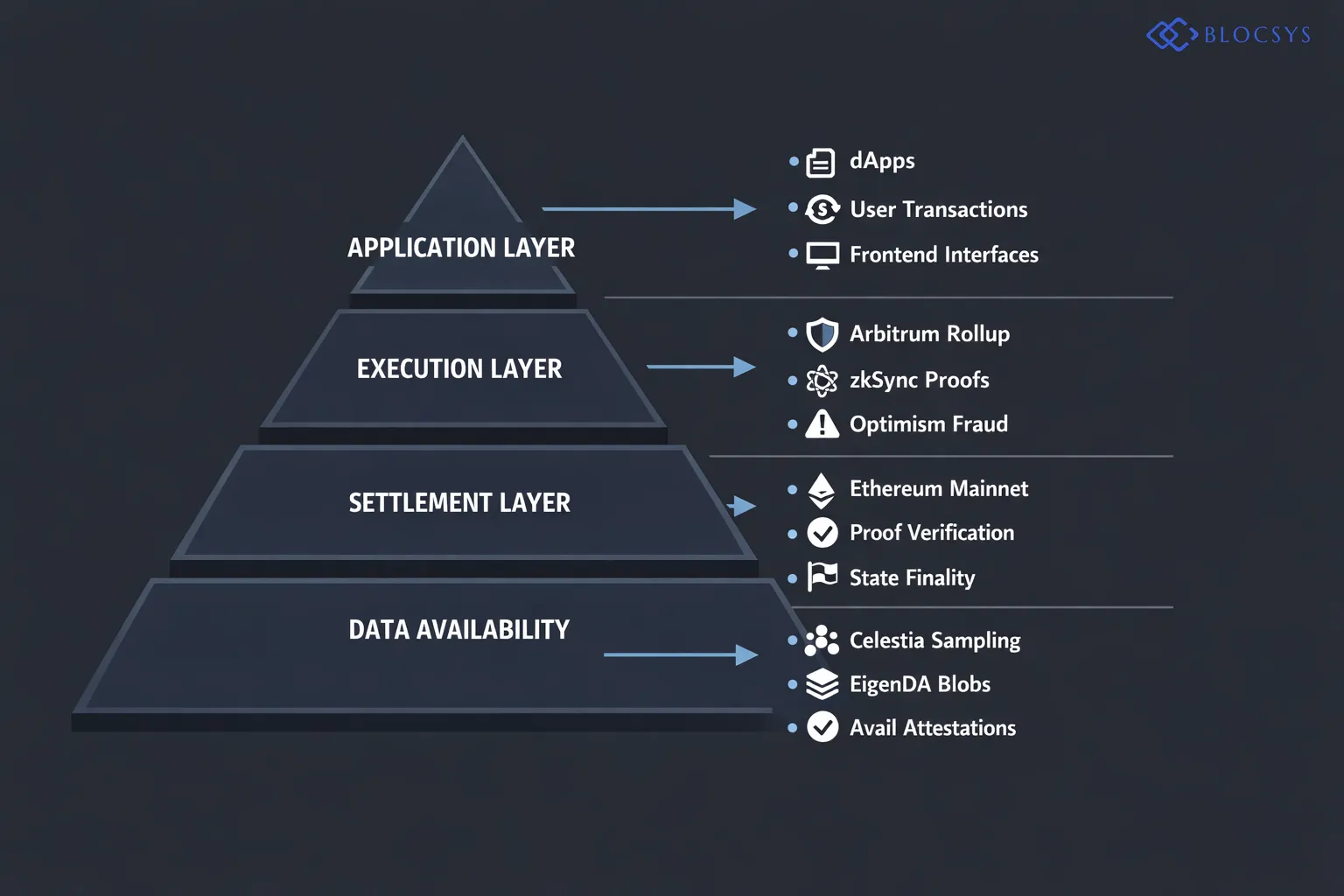
The execution layer processes transactions and runs smart contract logic. Rollups like Arbitrum and zkSync actively dominate this segment today. Additionally, the settlement layer serves as the ultimate source of cryptographic truth. Ethereum currently fills this role for the majority of major rollup ecosystems globally.
The consensus layer ensures validators agree on the canonical state of the network. Furthermore, the data availability layer guarantees that transaction data remains accessible for independent verification after the fact. Projects like EigenDA, Avail, and Celestia compete aggressively in this fast-growing segment. Therefore, investors should monitor adoption metrics across these networks with serious rigor.
Why Specialization Drives Long-Term Value
Specialization creates compounding economic efficiencies at every layer of the stack. Moreover, dedicated teams, tooling, and deep liquidity flow toward layers that clearly define their core function. This focused development accelerates innovation far faster than bundled monolithic systems can. Additionally, competition between layer providers continuously reduces costs for developers and end users alike.
Explore our related analysis on Layer 2 scaling solutions to better understand how rollup economics connect to the broader modular vision and where value ultimately settles.
Investment Opportunities Across the Modular Stack
The modular blockchain investment thesis creates multiple distinct investable verticals within a single macro narrative. Furthermore, each layer offers differentiated exposure and responds to different on-chain catalysts. Sophisticated investors therefore build diversified positions spanning execution infrastructure, data availability networks, and settlement layers simultaneously.
Data Availability — The Most Undervalued Layer
Data availability is arguably the segment with the highest asymmetric upside in the current cycle. Additionally, demand for affordable and reliable data availability grows with every new rollup and application-specific chain deployed. Celestia, EigenDA, and Avail are the leading competitors fighting for this growing market. Consequently, early investors in this layer may capture significant returns as rollup adoption scales globally.
Ethereum’s official data availability documentation provides essential foundational reading for any investor evaluating this segment rigorously before committing capital.
Rollup Ecosystems and Execution Layer Infrastructure
Rollup ecosystems represent another high-conviction area within the broader modular stack. Moreover, frameworks like the OP Stack and Arbitrum Orbit now enable thousands of application-specific chains to launch with minimal overhead. Therefore, infrastructure providers powering these rollups benefit from compounding network effects as the ecosystem expands. L2Beat tracks rollup activity and security models with transparent, real-time data that every serious investor should monitor.
For a competitive landscape breakdown, explore our guide on rollup ecosystems and app-chains and how leading frameworks are positioning for the next wave of adoption.
Risks Every Modular Blockchain Investor Should Understand
Every investment thesis carries inherent risks that demand honest evaluation. However, modular systems introduce a distinct layer of complexity that monolithic chains avoid entirely. Smart contract vulnerabilities across multiple interacting layers are harder to detect and mitigate proactively. Consequently, security auditing costs are higher, and exploits can cascade across layers in unexpected and damaging ways.
Additionally, liquidity fragmentation presents a real structural challenge across the modular ecosystem. Assets spread across dozens of rollups reduce capital efficiency and create friction for everyday users. Moreover, bridges between layers introduce additional attack surfaces that adversaries actively target. Investors should therefore incorporate these systemic risks thoughtfully into their portfolio sizing and risk management decisions.
Building a Portfolio Around the Modular Thesis
A well-constructed portfolio aligned with the modular blockchain investment thesis deliberately balances exposure across multiple layers. Additionally, pairing higher-risk early-stage data availability tokens with more established rollup infrastructure meaningfully reduces single-layer concentration risk. Therefore, a layered allocation strategy reflects the underlying architectural logic of the thesis itself, creating natural diversification.
Active monitoring of on-chain metrics remains critical for staying ahead in this rapidly evolving space. Furthermore, indicators like rollup transaction volume, data availability throughput, and total value locked provide actionable real-time signals of genuine adoption. Consequently, disciplined investors can rebalance allocations as the modular landscape matures and dominant winners emerge at each layer. The thesis is structurally sound, the timing is compelling, and the opportunity for patient capital remains substantial.