
Decentralized autonomous organizations now control billions of dollars in on-chain assets. However, many lack the structured frameworks needed to protect and grow those funds. Effective dao treasury management strategies determine whether a protocol achieves long-term sustainability or collapses under financial pressure. Furthermore, a well-managed treasury builds community confidence and funds continuous development. Understanding these strategies is therefore essential for any DAO serious about scaling responsibly.
Why DAOs Need a Deliberate Treasury Strategy
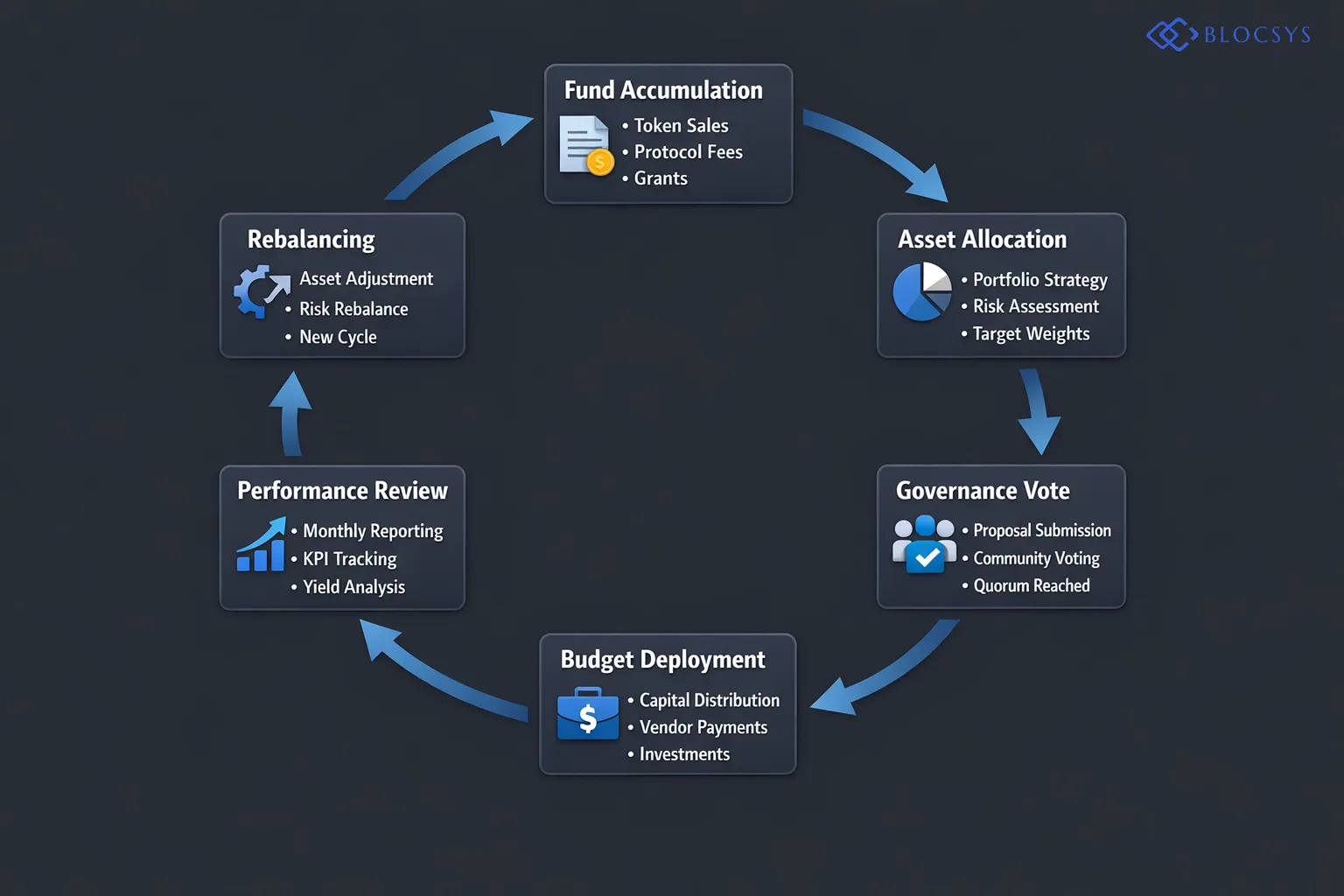
Many DAOs accumulate substantial funds through token sales, protocol fees, and ecosystem grants. However, holding assets without a clear plan exposes the organization to unnecessary risk. Consequently, treasuries concentrated in a single native token can lose 90% of their value during bear markets. Additionally, without proper governance, funds can become misallocated or locked indefinitely. A proactive approach therefore protects both the protocol and its broader community.
Moreover, institutional partners increasingly evaluate a DAO’s financial health before collaborating. Strong treasury management signals operational maturity. Additionally, it directly impacts a DAO’s ability to attract talented contributors, secure partnerships, and raise future capital. Therefore, building a deliberate financial strategy early pays compounding dividends over time.
Core DAO Treasury Management Strategies
Implementing sound dao treasury management strategies requires a multi-layered approach. First, DAOs should analyze their financial runway and monthly operational costs. Then, they can build a diversified portfolio balancing growth and stability. Furthermore, clear spending frameworks and on-chain governance mechanisms ensure consistent accountability across all financial decisions.
Asset Diversification
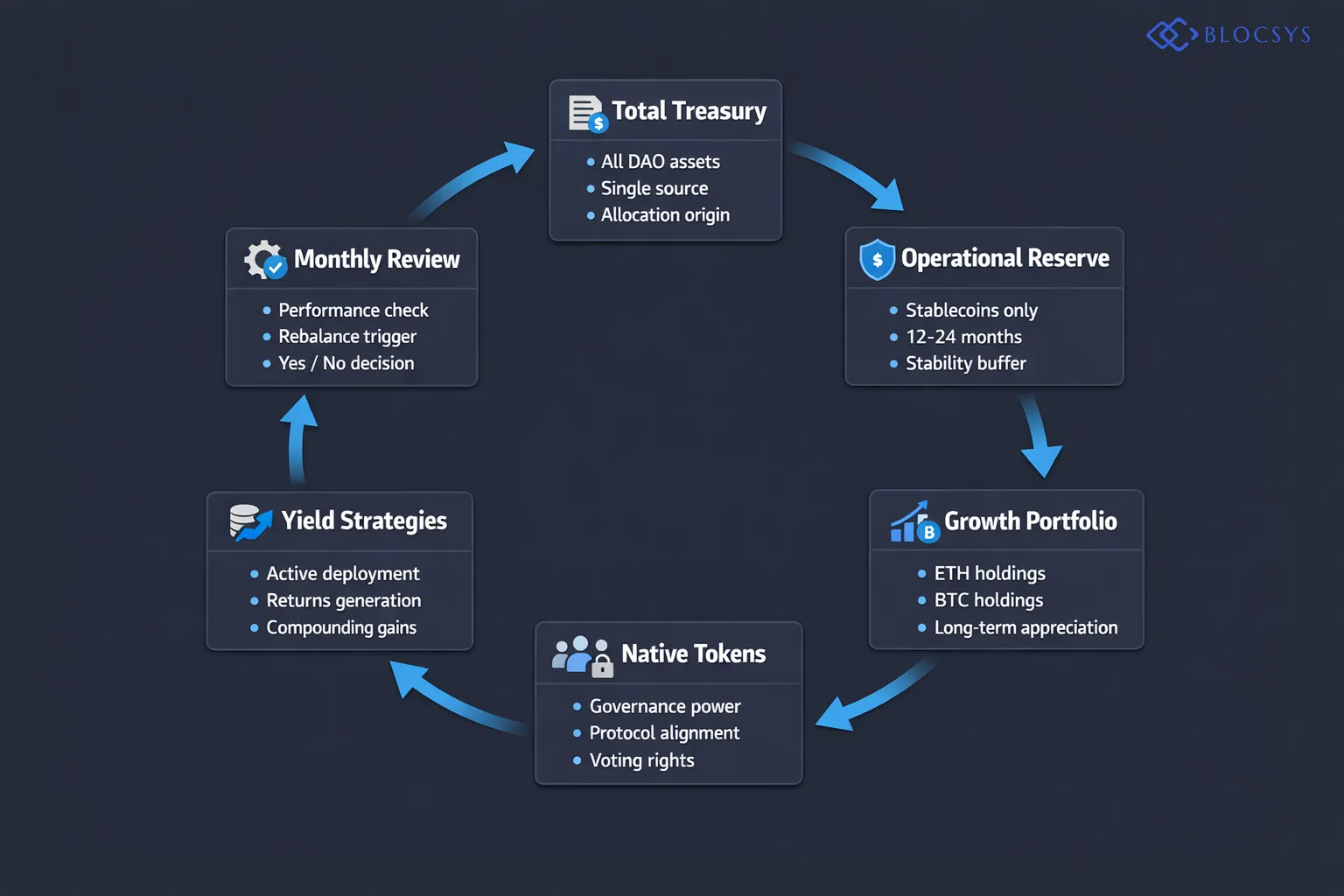
Diversification stands as one of the most critical strategies for any DAO treasury. Holding only native governance tokens creates extreme exposure to price swings. Therefore, many DAOs convert a portion of holdings into stablecoins like USDC or DAI. Additionally, allocating assets across blue-chip cryptocurrencies such as ETH reduces correlated risk. Consequently, a diversified portfolio provides a stable financial foundation throughout market downturns.
Several leading protocols, including Uniswap, actively manage multi-asset treasuries. Moreover, DAOs can explore yield-bearing instruments to generate passive income from idle reserves. This approach maximizes capital efficiency without sacrificing essential liquidity. You can also explore DAO governance best practices to align financial decisions with community values.
Liquidity Management
Maintaining adequate liquidity ensures a DAO meets operational expenses at all times. Furthermore, illiquid treasuries struggle to respond quickly to market opportunities or emergencies. DAOs should therefore designate a dedicated portion of reserves as an operational buffer. Typically, a 12-to-24-month runway held in stablecoins provides sufficient financial security. Additionally, reviewing liquidity ratios monthly helps teams stay ahead of potential shortfalls before they become critical.
Governance and Transparency in Treasury Operations
Effective governance forms the backbone of responsible treasury management. Consequently, DAOs must establish clear on-chain voting processes for all major financial decisions. Furthermore, transparent reporting builds community confidence and reduces the risk of fund misuse. Many DAOs therefore use dedicated governance forums and snapshot tools to facilitate structured, auditable proposals.
On-Chain Voting for Budget Allocation
On-chain voting ensures every spending decision reflects genuine community consensus. Additionally, smart contract-based execution removes human error from the disbursement process. DAOs should therefore define quorum thresholds and voting periods before any funds move. Moreover, tiered governance structures separate routine expenses from major strategic investments. This approach balances operational speed with decentralized oversight.
Tools like Tally help DAOs manage on-chain governance proposals with precision and transparency. Furthermore, integrating multi-signature wallets adds a critical security layer to every disbursement. Additionally, regular public treasury reports keep the broader community informed and engaged with financial decisions.
Risk Management and Security Protocols
Risk management protects a treasury from both internal mismanagement and external threats. Therefore, DAOs should conduct regular smart contract audits before deploying any new financial mechanism. Additionally, implementing multi-signature wallets prevents dangerous single points of failure. Consequently, funds remain secure even if one key holder faces compromise. Moreover, diversifying custody solutions across hardware wallets and institutional custodians further reduces overall exposure.
Insurance and Hedging Strategies
DAOs increasingly explore decentralized insurance protocols to protect treasury assets against smart contract exploits. Furthermore, hedging strategies using options or structured products can offset downside risk on large token positions. However, these instruments require specialized knowledge and careful risk modeling. Therefore, many DAOs form dedicated finance committees or engage professional treasury managers. Learn more about DeFi risk management to build a comprehensive protection framework for your organization.
Tools and Platforms for Smarter Treasury Management
Several dedicated platforms help DAOs implement robust treasury strategies efficiently. Llama offers treasury analytics, payment workflows, and portfolio tracking designed specifically for on-chain organizations. Additionally, Gnosis Safe remains the industry standard for multisig treasury custody. Furthermore, integrating on-chain accounting tools provides real-time visibility into spending patterns and asset allocation. Consequently, DAOs that leverage these platforms operate with far greater precision and institutional credibility.
Moreover, automated rebalancing tools help maintain target asset allocations without constant manual intervention. Therefore, even smaller DAOs can implement institutional-grade treasury practices efficiently. Combining the right toolset with strong community governance ultimately defines long-term financial success for any decentralized organization.
Frequently Asked Questions
Why do DAOs need a deliberate treasury strategy?
DAOs often accumulate large sums through token sales, protocol fees, and grants, but holding these assets without a plan exposes them to unnecessary risk. Treasuries concentrated in a single native token can lose 90% of their value during bear markets. A deliberate strategy also signals operational maturity, helping DAOs attract contributors, secure partnerships, and raise future capital.
What is asset diversification in DAO treasury management?
Asset diversification means avoiding overexposure to a single native governance token by spreading holdings across stablecoins like USDC or DAI and blue-chip cryptocurrencies such as ETH. This reduces correlated risk and provides a stable financial foundation during market downturns. DAOs can also explore yield-bearing instruments to generate passive income from idle reserves.
How much liquidity should a DAO treasury hold?
A DAO should designate a dedicated operational buffer, typically a 12-to-24-month runway held in stablecoins, to cover expenses and respond to opportunities or emergencies. Illiquid treasuries struggle to react quickly when needed. Reviewing liquidity ratios monthly helps teams identify potential shortfalls before they become critical.
How does on-chain voting improve treasury governance?
On-chain voting ensures spending decisions reflect genuine community consensus, while smart contract-based execution removes human error from disbursements. DAOs should define quorum thresholds and voting periods before funds move, and tiered governance structures can separate routine expenses from major strategic investments. Tools like Tally help manage these proposals with precision and transparency.
How can DAOs manage treasury risk and security?
DAOs should conduct regular smart contract audits before deploying new financial mechanisms and use multi-signature wallets to prevent single points of failure. Diversifying custody across hardware wallets and institutional custodians further reduces exposure. Some DAOs also explore decentralized insurance protocols and hedging strategies, often through dedicated finance committees or professional treasury managers.
