
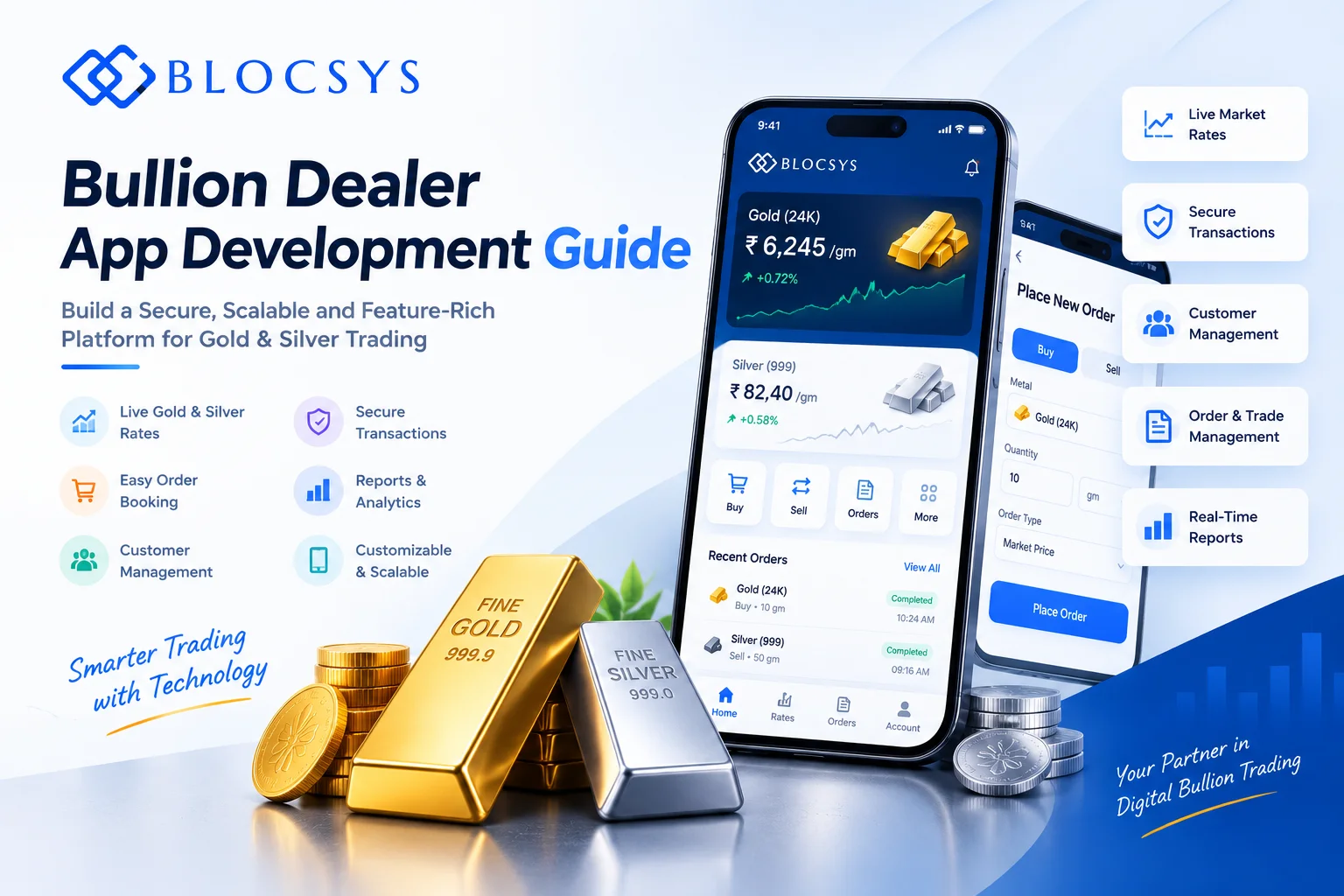
Bullion Dealer App Development: Features, Benefits and Complete Development Guide
Walk into any bullion market in India, and you’ll still see deals closing over phone calls, physical ledgers and years of trust built face to face. That’s how gold and silver trading has worked for decades. But as customer expectations shift and wholesale networks grow, many dealers are now exploring bullion dealer app development to bring structure to pricing, orders and inventory without abandoning the relationships that built their business.
This isn’t about replacing your trading floor with an app. It’s about giving your customers, wholesale partners and internal team a faster, more transparent way to interact with your business. Whether you run a retail bullion counter, a wholesale trading desk, or both, understanding what goes into building this kind of software helps you make a smarter investment decision.
Introduction – Why Bullion Dealers Are Exploring App Development
Bullion businesses in India have traditionally relied on in-person visits, broker calls and manual billing. Prices move fast, and when a wholesale customer calls to confirm a rate, every minute of delay matters. That’s exactly where digital tools start making sense.
A well-built application can show live rates, confirm stock availability and let regular customers place orders without waiting on hold. Additionally, it gives you a running record of transactions instead of scattered registers and WhatsApp messages. None of this replaces your core trading expertise — it just removes friction from the parts of the business that eat up time.
Bullion dealers don’t need generic retail software. They need systems built around how gold and silver actually move through their business — purity, weight, live rates and trust-based wholesale relationships all at once.
What Is Bullion Dealer App Development and How Does It Work?
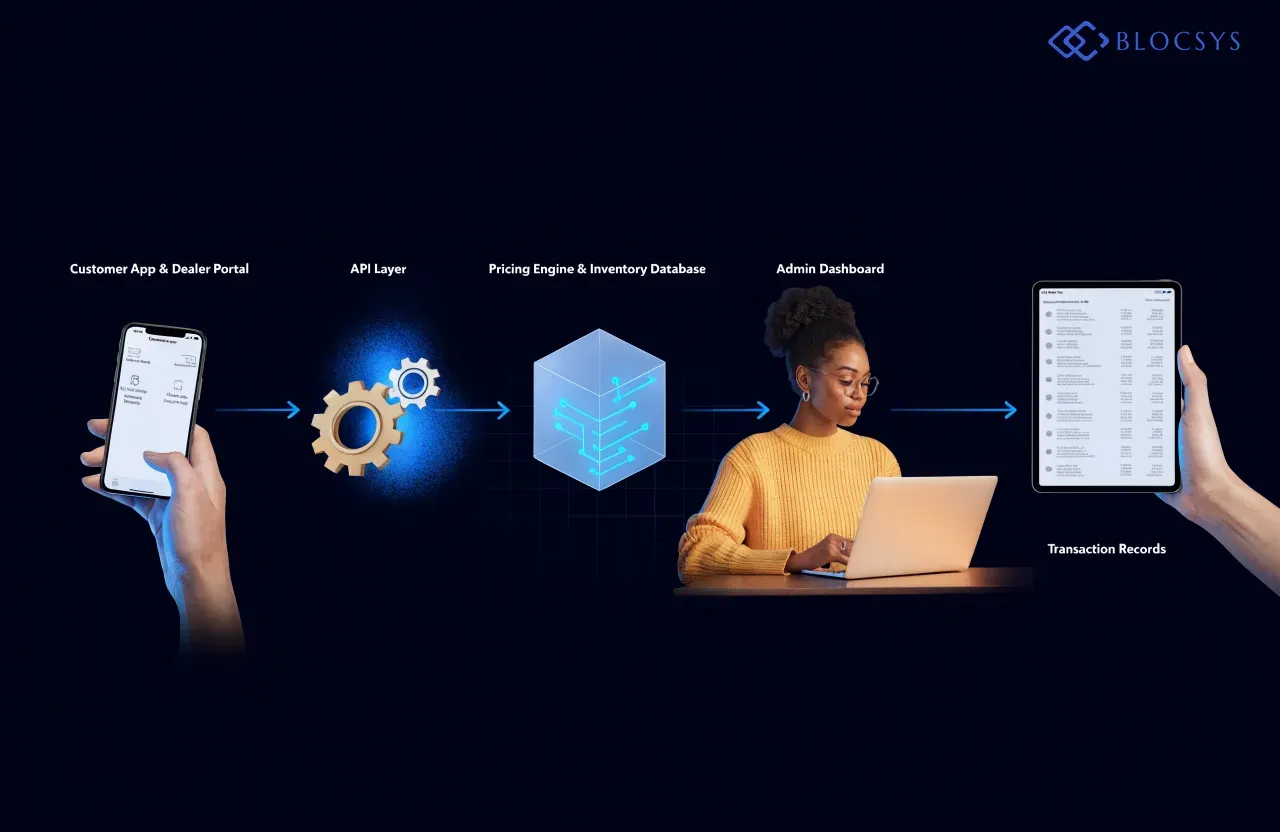
Bullion dealer app development is the process of building custom software that lets a bullion business manage pricing, inventory, customer orders and transactions through a mobile or web application. It works by connecting a customer-facing interface, an order management backend and a pricing engine, so everyone sees consistent, real-time information.
In practice, a customer or business partner opens the app, checks the current gold or silver rate per gram, views available stock and places an order. Behind the scenes, the application records that order, updates inventory and notifies your admin team. Consequently, you get a digital trail of every transaction instead of relying purely on memory or paper.
Customer-Facing App vs Internal Bullion Management Software
A customer-facing application focuses on price visibility, ordering and account history for buyers. Internal bullion management software, on the other hand, handles stock levels, purity records, supplier data and staff access. Many dealers eventually need both, connected through a shared backend.
Why Should Bullion Dealers Invest in Custom App Development?
Dealers invest in custom software mainly to reduce manual coordination work. When wholesale customers can check rates and place orders directly, your team spends less time on repetitive phone confirmations. Furthermore, a centralised system means every sale, purchase and stock adjustment lives in one place rather than across multiple notebooks and spreadsheets.
Custom development also means the app fits your actual business model instead of forcing you into someone else’s workflow. If you deal primarily in bars and coins of specific purity levels, your software should reflect that — not a generic retail template. That said, an app alone won’t guarantee more sales or lower costs; it simply gives you better tools to run operations you already understand.
Types of Applications Bullion Dealers Can Develop
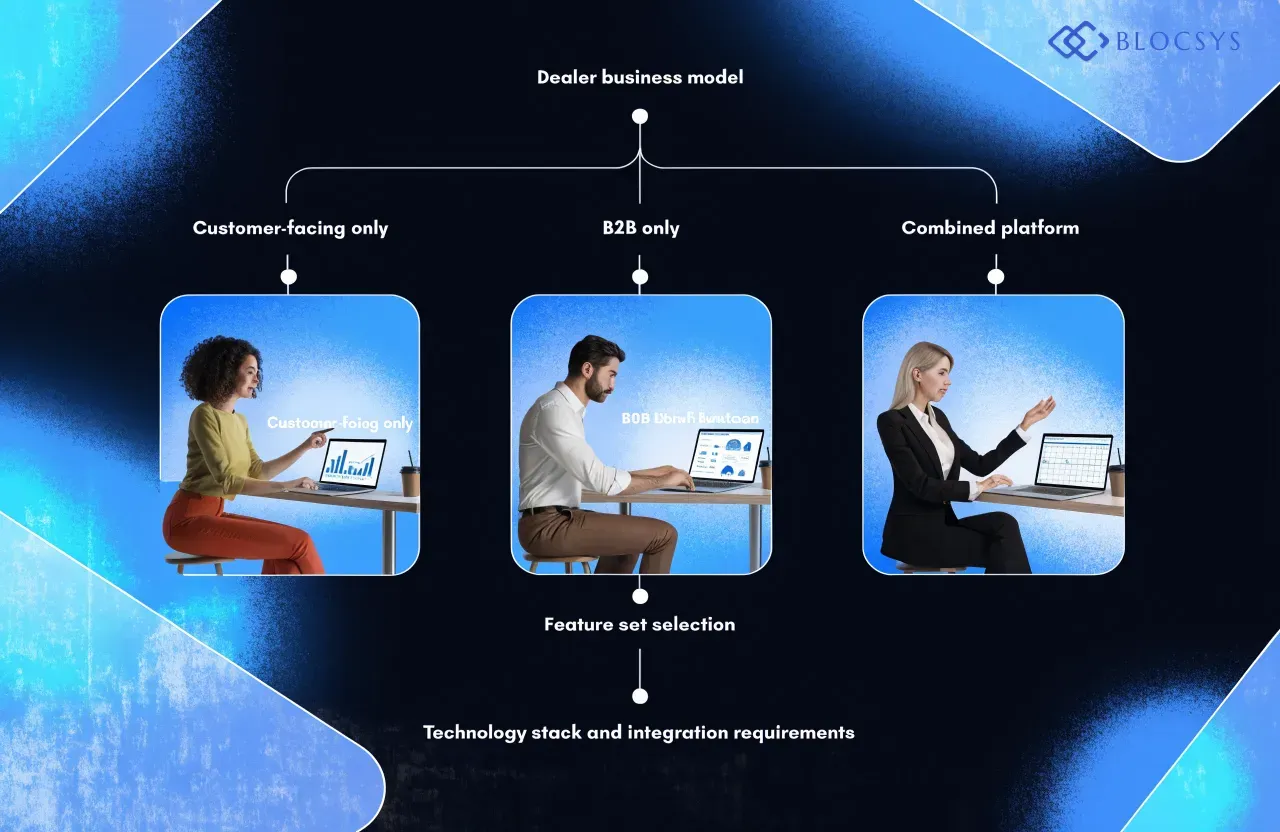
Not every bullion business needs the same kind of application. Your choice depends on whether you serve retail customers, wholesale partners, or both.
- Customer-facing trading application: Lets retail buyers check prices, place orders and view purchase history.
- B2B dealer portal: Built for wholesalers and business partners who need negotiated pricing and bulk order booking.
- Internal inventory management system: Tracks stock, purity and movement without customer-facing features.
- Combined dealer management platform: Brings customer ordering, wholesale trading and inventory control into one connected system.
Smaller dealers often start with a simpler customer or wholesale app, then expand into a full platform as operations grow. There’s no single right answer — it depends on how your business actually trades.
Essential Features of a Bullion Dealer Application
A functional bullion dealer application needs features that address both customer convenience and internal operations.
Customer and Dealer Facing Features
- Customer and wholesale dealer registration with verification
- Customer account management with saved details and order preferences
- Live gold and silver price display, updated per gram or per kilogram
- Product and inventory availability shown before order placement
- Purchase and sale request workflows for retail and wholesale buyers
- Transaction history and digital receipts
- Push notifications for price changes and order updates
Administrative and Operational Features
- Admin dashboard for managing pricing, stock and users
- Wholesale order booking and approval workflows
- Business reporting on sales, purchases and stock movement
- Role-based access for staff and branch-level permissions
Each feature should map back to a real task your team already performs. If a feature doesn’t save time or add clarity, it probably doesn’t belong in version one.
Gold and Silver Inventory Management in Bullion Trading Apps
Gold inventory tracking software within a bullion app records what stock you hold, by product type, weight and purity, and updates that record every time a sale, purchase or transfer happens. This matters because bullion inventory isn’t uniform — a 10-gram bar and a 1-kilogram bar need separate tracking even at the same purity.
Silver inventory management works similarly but often involves larger volumes and different packaging units. When a customer places an order through the app, available stock should reduce automatically, and your admin team should see updated numbers instantly rather than at day’s end.
Dealer-Managed Inventory vs Custodian-Backed Digital Holdings
It’s worth separating two different models here. A dealer-managed platform tracks physical stock sitting in your own vault or store. A custodian-backed digital gold application, by contrast, manages customer holdings that are backed by metal stored with a third-party custodian. These are built very differently, and confusing the two during development leads to the wrong architecture.
Live Gold and Silver Price Integration for Bullion Dealers
Live gold price integration works by pulling rate data from a market data provider or your own configured pricing source, then applying your business spread before displaying the final rate to customers. Most Indian dealers price gold and silver per gram, though kilogram-based rates are common for larger wholesale transactions.
Your pricing engine needs to account for purity differences — 24K, 22K, 18K gold and varying silver grades each carry separate rates. Additionally, every price shown to a customer should carry a timestamp, since bullion rates can move within minutes. Reference points like LBMA price data or MCX futures are commonly used by Indian dealers as a base before applying local spreads, though the exact formula varies by business.
Not every dealer prices the same way, so your app’s pricing engine should be configurable rather than hardcoded to one formula.
B2B Order Booking and Wholesale Transaction Management
A wholesale gold trading platform allows business customers to log in, view their negotiated pricing, check stock and place bulk orders without calling your desk every time. Order booking typically includes quantity, weight, purity and delivery preference, followed by a confirmation step from your team.
Unlike a retail purchase flow, B2B bullion trading platform workflows usually involve credit terms, approval steps and order status tracking across multiple stages — placed, confirmed, dispatched, delivered. Therefore, wholesale ordering needs more flexibility than a simple one-click retail checkout.
This is where digital gold and silver app development becomes relevant for dealers who serve both retail buyers and wholesale partners from the same platform, since each group needs a distinct experience built on shared backend data.
Payment, Customer and Business System Integrations
Bullion applications often need to connect with payment gateways for order settlement, customer verification tools for KYC compliance and notification services for order alerts. Beyond that, inventory and ERP integration lets your existing accounting or stock software stay in sync with app-based transactions instead of requiring double entry.
However, integration needs vary by business. A dealer using Tally for accounting has different integration requirements than one running a custom ERP. Consequently, it’s important to map your existing software environment before development begins, rather than assuming every provider supports every bullion business category.
Mobile App, Web Platform and Admin Dashboard Requirements
Most bullion dealer platforms need more than a single mobile app. Android and iOS apps serve customers who want quick access to prices and orders on the go. A web portal suits wholesale partners who place larger, more detailed orders from a desktop. Meanwhile, an admin dashboard gives your internal team control over pricing, stock and reporting.
Here’s why a connected platform matters: if your mobile app and web portal run on separate backends, your inventory and pricing data can drift out of sync. A shared backend keeps everything — app, web, and dashboard — reading from the same live data.
Technology and Architecture Behind Bullion Dealer App Development
Bullion trading platform architecture generally includes a frontend (mobile and web), a backend handling business logic, a database storing transactions and inventory, and API integrations for pricing and payments. Authentication controls who can access customer accounts, dealer portals and admin tools separately.
The backend manages order processing, inventory updates and transaction records, while the database maintains accurate, timestamped history of every price change and trade. This structure needs to support secure access, reliable pricing updates and room for future expansion as your customer base grows.
Where Blockchain Fits — And Where It Doesn’t
Blockchain integration can support use cases like digital ownership records or smart contract-based settlement, but it isn’t mandatory for every bullion dealer application. Many dealers run successful platforms without it. It’s a tool to consider for specific requirements, not a default building block.
Security and Operational Considerations for Bullion Trading Applications
Secure authentication, role-based access permissions and encrypted customer data protect your platform from unauthorised access. Transaction records and inventory audit trails give you a reliable history to resolve disputes or reconcile stock discrepancies. API security and regular backups further reduce operational risk.
That said, software security is only one part of the picture. Physical security, custody arrangements and metal verification remain your business’s responsibility and sit outside what any application can control. The app protects your data; your vault and processes protect your metal.
Bullion Dealer App Development Services Offered by Blocsys
Blocsys works as a technology development company offering digital gold and silver app development services for bullion dealers, gold wholesalers, silver traders and precious metal businesses. The scope typically covers custom application development for Android and iOS, web platforms for wholesale customers, and backend systems that tie everything together.
Beyond the core app, this includes admin dashboard development for managing pricing and stock, inventory and custodian integrations depending on your business model, and payment gateway integration for order settlement. Blockchain capabilities are available where a dealer’s specific use case calls for them, such as digital ownership tracking.
Whether you run a jeweller-managed inventory model or need custodian-backed digital holdings for customers, the development approach is shaped around which model actually fits your operations — not the other way around.
How Much Does Bullion Dealer App Development Cost?
Development cost depends on several factors: whether you need both Android and iOS apps, a web portal, an admin dashboard, and how complex your inventory and pricing requirements are. A simple customer-facing app with live pricing costs less than a combined platform with wholesale order booking, ERP integration and custom reporting.
Additionally, third-party costs like pricing API subscriptions, payment gateway fees, hosting and ongoing maintenance sit separately from the one-time development cost. Treat these as recurring operational expenses rather than part of the build budget. Exact figures vary significantly by scope, so it’s best to get a tailored estimate once your feature list is defined. Tools like a software development cost estimator can help you get a preliminary sense of scale before detailed scoping.
How to Choose the Right Bullion App Development Company
Look for a development partner who understands precious metal business workflows, not just generic e-commerce patterns. Ask about their experience with backend architecture, pricing API integration and inventory management specifically for bullion or similar regulated trading businesses.
Furthermore, check their approach to security, scalability and long-term technical support, since bullion platforms need reliable maintenance as your business grows. Before you approach any vendor, define your own operational requirements clearly — what you trade, how you price, and who your customers are. That clarity makes every conversation with a development partner more productive.
Why Choose Blocsys for Bullion Dealer App Development?
Blocsys positions itself as a technology partner for bullion dealers and precious metal businesses planning to digitise operations through custom digital gold and silver app development. The focus stays on building mobile and web applications, backend systems and admin dashboards that match how your business actually trades.
This includes inventory and custodian integrations suited to your model, payment integration for order settlement, and blockchain development where a specific use case genuinely calls for it. Rather than offering a fixed template, the development process works around your pricing method, customer categories and existing systems.
Planning to digitise your bullion business with a custom application for gold and silver inventory, pricing and order management? Connect with Blocsys to discuss your requirements and explore a suitable development approach.
Conclusion – Build a Custom Bullion Dealer Application for Your Business
Custom bullion dealer app development gives your business a structured way to manage pricing, inventory, wholesale orders and customer accounts, without losing the relationship-driven approach that’s always defined this trade. The right platform reflects how you actually trade — your purity ranges, your pricing method and your customer mix.
Ultimately, the goal isn’t to digitise for its own sake. It’s to remove the friction points that slow your team down. Start by mapping your current workflows, then build software around them rather than adapting your business to fit someone else’s software.
Frequently Asked Questions
Here are direct answers to the questions we hear most often about bullion dealer app development.
What is bullion dealer app development?
It’s the process of building custom software that helps bullion businesses manage pricing, inventory, customer orders and transactions through a mobile or web application tailored to their trading model.
What features should a bullion trading application include?
At minimum, live pricing, inventory visibility, order placement, customer account management, transaction history and an admin dashboard for business oversight.
Can a bullion dealer app manage gold and silver inventory?
Yes. It can track stock by product type, weight and purity, updating automatically as orders are placed and fulfilled.
Can bullion trading apps display live gold and silver prices?
Yes, through integration with market pricing sources or configured internal rates, combined with your own business spread.
Can an application support B2B bullion orders and wholesale transactions?
Yes. A dealer portal can handle negotiated pricing, bulk order booking, approval workflows and order status tracking for wholesale partners.
Can bullion dealer applications integrate with existing ERP or inventory systems?
In many cases, yes, though the exact integration depends on which ERP or accounting software you currently use.
What is the difference between bullion trading software and a digital gold app?
Bullion trading software manages a dealer’s physical inventory and wholesale operations, while a digital gold app typically manages customer holdings backed by a custodian.
How much does bullion dealer app development cost?
It depends on scope — platforms, features and integrations all affect the final cost. A tailored estimate is more reliable than a general figure.
How long does it take to develop a bullion dealer application?
Timelines vary based on feature complexity and integrations; simpler apps take less time than combined platforms with wholesale and ERP connectivity.
Can Blocsys develop a custom bullion dealer application?
Yes, Blocsys offers digital gold and silver app development services covering mobile, web, backend and admin dashboard development for bullion dealers.
Ready to move beyond theory and build an intelligent platform that delivers real-world value? Blocsys Technologies specialises in engineering enterprise-grade AI and blockchain solutions for the fintech, Web3, and digital asset sectors. Connect with our experts today to discuss your vision and chart a clear path from concept to a secure, scalable reality.
