
Building a successful Web3 company in 2026 demands more than a great idea or solid funding. Blockchain startup talent challenges have become one of the most pressing obstacles founders face today. From competing with well-resourced tech giants for Solidity engineers to retaining key developers who receive constant competing offers, the war for Web3 talent is relentless. Understanding these dynamics is your first step — and partnering with specialists in Blockchain Development can provide a meaningful competitive edge. For broader context on every challenge facing Web3 founders, the Crypto & Blockchain Startup Challenges: The Complete Founder’s Guide to Building in Web3 (2026) is essential reading.
The Scale of Blockchain Startup Talent Challenges in 2026
Global demand for blockchain professionals continues to outpace supply by a significant margin. Active blockchain developers represent less than 0.3% of the total software development workforce. Furthermore, the skills required in Web3 are highly specialized — deep expertise in cryptography, consensus mechanisms, and smart contract security is genuinely rare.
Startups face an uphill battle. They compete not only against other crypto-native firms but also against well-funded enterprises entering the blockchain space. However, the challenge isn’t simply about quantity. Quality matters equally. A single poor hire in a small team can slow development cycles and create technical debt that costs far more to resolve later.
Understanding the Blockchain Developer Shortage
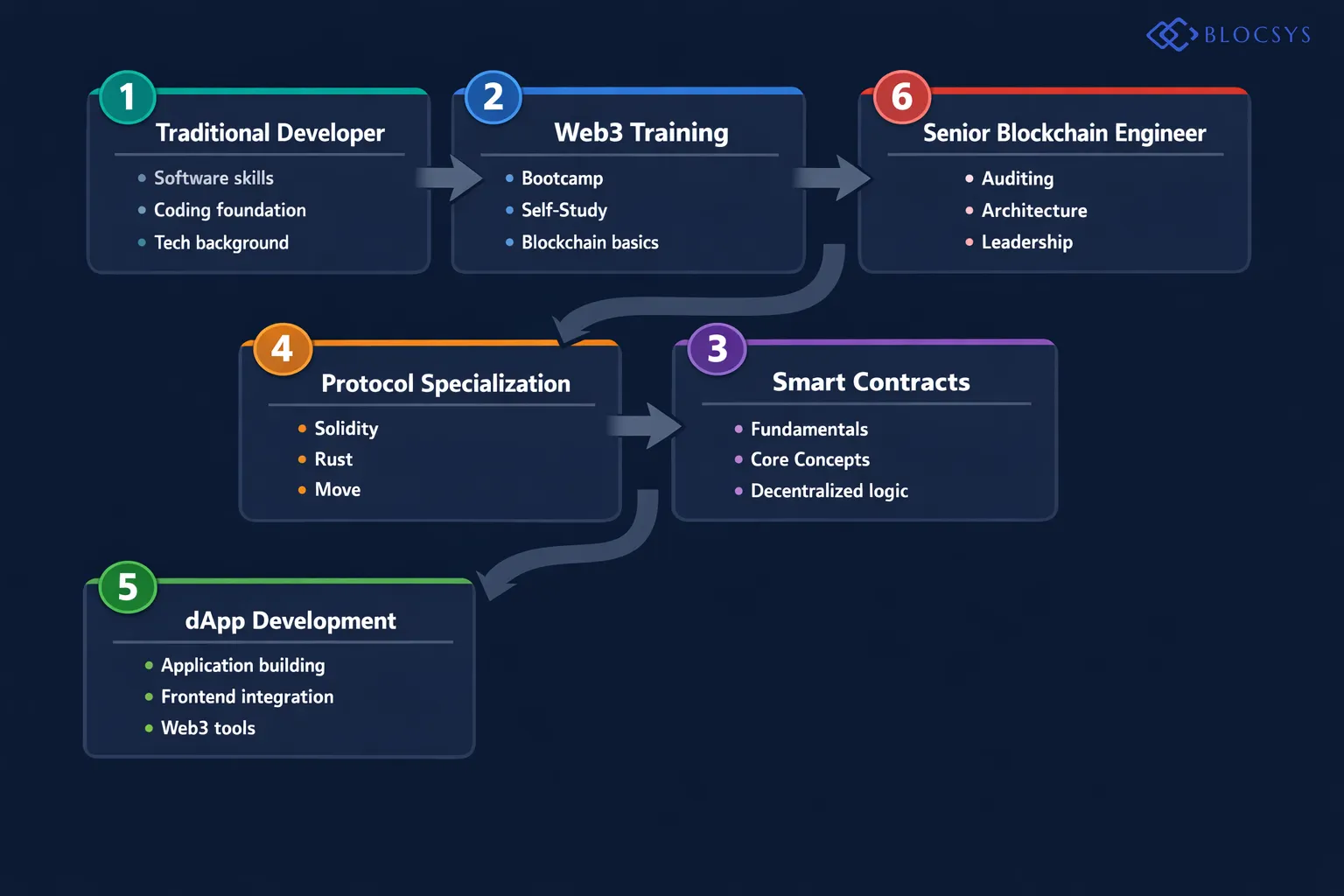
The blockchain developer shortage has several root causes. First, formal education systems have been slow to integrate blockchain curricula. Most experienced developers are self-taught or have transitioned from traditional software engineering backgrounds. Additionally, the skills gap between Web2 and Web3 is substantial — developers must learn entirely new paradigms, from decentralized consensus to immutable storage logic.
Consequently, the talent pool grows slowly even as demand surges. New Layer 1 and Layer 2 ecosystems each require distinct developer communities, which fragments an already limited talent base. Moreover, the rapid pace of protocol evolution means even experienced blockchain engineers must continuously upskill to remain relevant and effective.
“The biggest hiring mistake Web3 startups make is treating blockchain development like traditional backend engineering. The mindset, the security awareness, and the system design principles are fundamentally different. You’re not just hiring a coder — you’re hiring someone who understands trustless systems at a philosophical level.” — Senior Blockchain Architect, DeFi Infrastructure Firm
Crypto Startup Hiring Problems: What’s Really Going Wrong
Many founders underestimate how different crypto startup hiring problems are from conventional tech recruiting. Traditional job boards and standard recruiting funnels rarely reach the right candidates. The best blockchain developers often work anonymously on GitHub, contribute to open-source protocols, or network exclusively within Discord communities and hackathons.
Additionally, compensation expectations in Web3 are complex. Developers expect equity, tokens, and sometimes governance rights alongside competitive salaries. Startups without a clear tokenomics model often struggle to construct compelling offers. This challenge is especially acute for early-stage teams without a live token or established track record.
The Competition Is Global and Intense
Web3 is borderless by design, which means your hiring competition is global. A promising Rust developer in Eastern Europe simultaneously receives offers from protocols in San Francisco, Singapore, and Zug. Therefore, startups must compete on more than salary alone. Culture, mission alignment, and technical autonomy frequently become the deciding factors.
Moreover, many developers have experienced crypto market volatility firsthand. They’re skeptical of vague roadmaps and unproven teams. Consequently, your ability to demonstrate technical credibility, a clear product vision, and adequate runway directly affects your hiring success rate.
Culture and Mission Matter More Than Ever
Developers who choose Web3 careers do so deliberately. They believe in decentralization, financial sovereignty, or the transformative potential of smart contracts. Therefore, your startup’s mission must be genuine and clearly articulated. Developers will scrutinize your whitepaper, your GitHub commit history, and your founders’ public statements before accepting an offer.
Furthermore, toxic or chaotic work cultures spread quickly in the tightly-knit Web3 community. A single negative review or a critical public thread can significantly damage your recruiting pipeline. Building a transparent, healthy culture from day one isn’t optional — it’s a direct hiring strategy.
Regulatory uncertainty also creates hiring anxiety among prospective team members. Many developers actively avoid projects with unclear legal standing. Reviewing Blockchain Startup Regulatory Challenges: A Practical Compliance Roadmap for 2026 can help you demonstrate regulatory seriousness to candidates who care about long-term project viability.
Web3 Team Building: A Strategic Framework
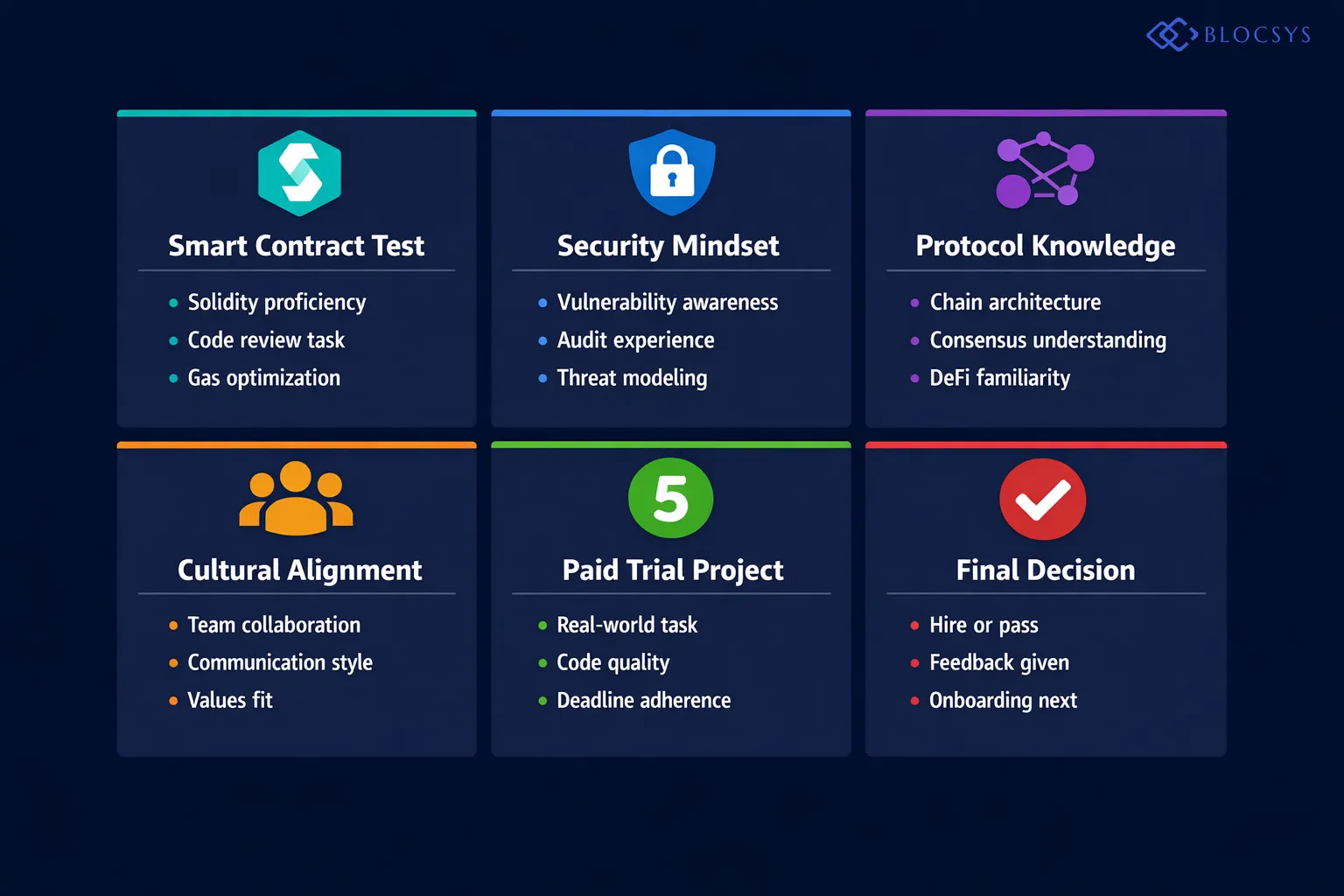
Effective web3 team building requires a fundamentally different approach than traditional startup hiring. You cannot simply post a job listing and wait for qualified applicants. Instead, you must build visibility and credibility within the communities where top talent already gathers and contributes.
Sponsoring hackathons, contributing to open-source protocols, and publishing technical content are all powerful recruiting tools. Additionally, working with specialists who understand the nuances of crypto hiring — such as those at Hire Blockchain Developers — can dramatically shorten time-to-hire for critical engineering roles.
Define Roles Around Your Protocol Stack
Generic job descriptions consistently fail in Web3. Instead, define every role around your specific technology stack. Are you building on Ethereum, Solana, or a custom chain? Do you need Solidity, Rust, or Move expertise? The more specific you are, the more effectively you attract developers who are genuinely qualified and passionate about your project.
Furthermore, clearly distinguish between protocol-level engineering and application-layer development. These require different skill sets and entirely different candidate profiles. Combining both requirements in a single job post creates confusion and deters strong applicants on both ends of the spectrum.
Build a Talent Pipeline Before You Need It
The worst time to hire is when you desperately need someone. Therefore, start building relationships with developers months before roles need to be filled. Engage with contributors to protocols your project depends on. Offer bounties for bug fixes or minor feature contributions. This approach creates a warm pool of candidates who already understand your codebase and culture.
Additionally, consider partnering with Web3 bootcamps and developer education programs to access emerging talent. Mid-level developers with strong fundamentals and deep motivation frequently outperform senior engineers who lack genuine enthusiasm for your specific domain.
“Stop looking for unicorns and start building them. The smartest Web3 teams in 2026 invest in developer education and internal upskilling programs. They hire for potential — not just credentials — and create clear growth pathways that keep engineers engaged for years, not months.” — Head of Talent, Tier-1 Web3 Infrastructure Protocol
Retaining Your Web3 Team for the Long Haul
Retention is arguably harder than recruiting in Web3. Developers receive constant inbound interest from other protocols, projects, and DAOs. However, the teams that keep their best people share several traits: clear growth paths, genuine technical autonomy, and compensation structures that align developer success directly with project success.
Token Compensation Done Right
Token-based compensation can be a powerful retention tool — but only when structured correctly. Vesting schedules, cliff periods, and token utility must all be clearly explained from the outset. Developers who don’t fully understand their compensation often feel undervalued, even when the offer is genuinely competitive.
Moreover, founders should be transparent about token supply, dilution risk, and liquidity timelines. Developers are financially sophisticated — they will model out the economics independently. Consequently, honest and detailed token compensation discussions build trust rather than skepticism or anxiety.
Remote-First, Async-First Operations
The best Web3 talent is distributed globally. Therefore, building a remote-first, async-first culture isn’t merely a perk — it’s essential for accessing the full available talent pool. Clear documentation, well-defined communication protocols, and regular virtual team syncs help maintain cohesion across time zones without creating meeting fatigue.
Additionally, offering developers meaningful technical autonomy keeps engagement high. Micromanagement actively drives away the self-directed, independent engineers that Web3 projects naturally attract. Give your team real ownership over architectural decisions and technical direction wherever possible.
Teams navigating technical complexity beyond people management should also explore Web3 Startup Technical Challenges: Solving Scalability, Security, and Smart Contract Risks — because unresolved technical problems frustrate engineers and accelerate attrition.
Scaling Your Team Without Losing Cohesion
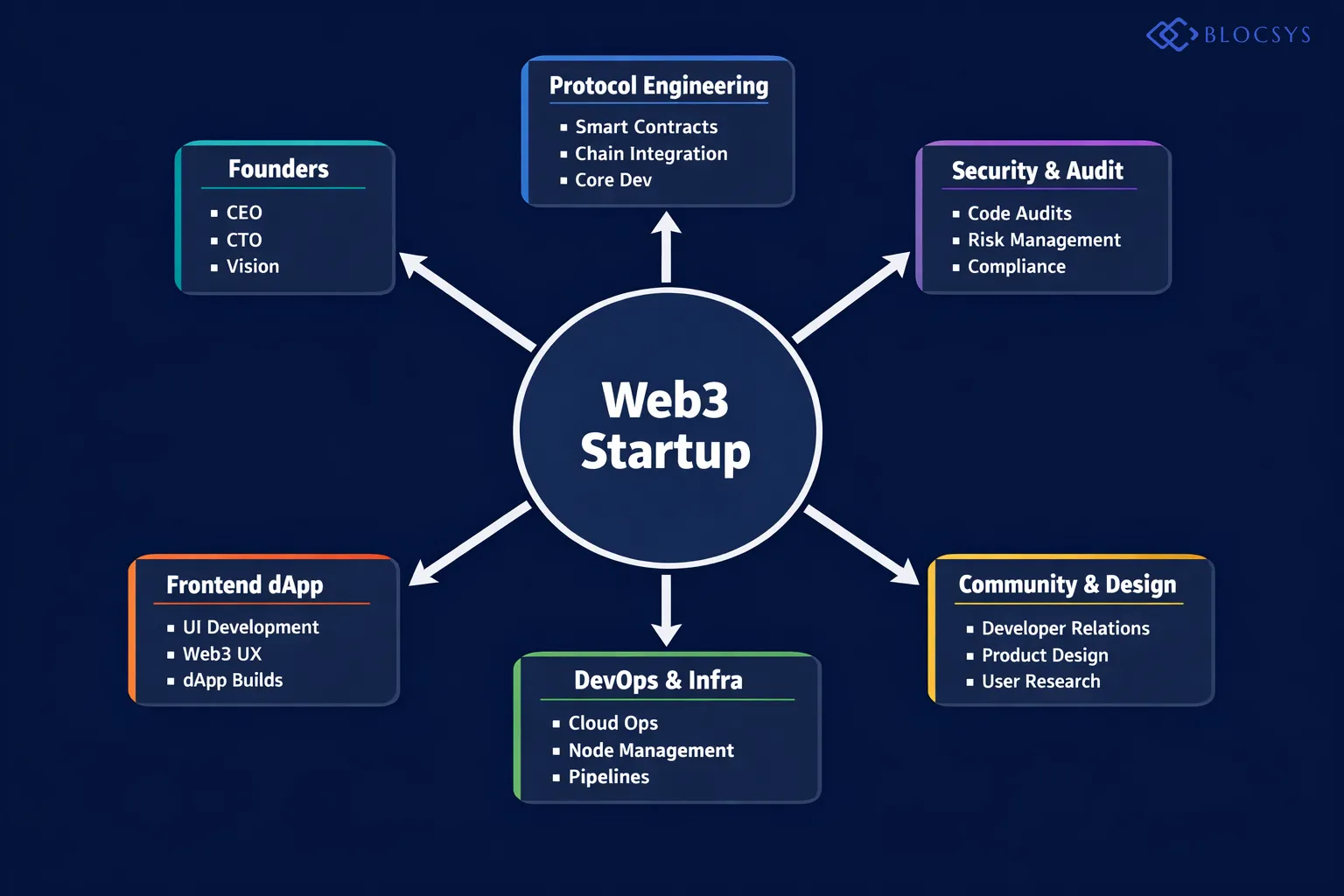
Once your founding team is in place, sustainable scaling becomes the next challenge. Many Web3 startups experience hypergrowth after a successful token launch or major partnership announcement. However, hiring too quickly creates cultural dilution and coordination overhead that slows progress. Consequently, growth should follow a structured plan rather than reactive urgency.
Consider fractional or part-time experts for specialized needs like zero-knowledge proof development or formal smart contract verification. These roles don’t always require full-time headcount. Furthermore, building a contributor DAO around your project can organically expand your talent pool while distributing ownership in alignment with core Web3 values.
For founders managing runway to support a growing team, Crypto Startup Funding Challenges: How to Raise Capital in a Tough Web3 Market (2026) provides practical guidance on capital strategy that directly supports your ability to compete for top-tier talent.
As you refine your hiring and retention strategy, make sure your technical infrastructure evolves in parallel. Exploring solutions like a Blockchain Document Verification System for Secure Digital Proof can help your team focus on higher-value engineering challenges rather than reinventing common infrastructure components.
Frequently Asked Questions
Here are direct answers to the questions we hear most often about blockchain startup talent challenges.
How long does it typically take to hire a qualified blockchain developer?
On average, hiring a senior blockchain developer takes between eight and sixteen weeks. The timeline is longer than traditional tech hiring because the talent pool is smaller and strong candidates receive multiple competing offers simultaneously.
Reducing time-to-hire requires proactive pipeline building, strong community visibility, and a compelling employer brand. Working with recruiting specialists focused on Web3 engineering can cut this timeline significantly for critical roles.
Should we pay blockchain developers in tokens, stablecoins, or fiat?
Most experienced Web3 developers prefer a hybrid model: a base salary in fiat or stablecoins for financial stability, combined with token-based upside linked to a clear vesting schedule. Offering tokens as the entire compensation package is risky and frequently deters top-tier talent.
Transparency about token economics, dilution risk, and vesting cliffs is essential. Developers who genuinely understand and believe in your token model are far more likely to accept offers and remain motivated over the long term.
What skills are most in demand for blockchain startups in 2026?
Smart contract development in Solidity and Rust, zero-knowledge proof engineering, cross-chain protocol design, and smart contract security auditing rank among the most sought-after skills. Additionally, developers with deep experience on Layer 2 networks and rollup architectures are in extremely high demand across the ecosystem.
Full-stack dApp developers who can bridge smart contract logic with modern frontend frameworks are also increasingly valuable, particularly for consumer-facing applications where user experience drives adoption.
How do we compete with larger companies for blockchain talent?
Startups can compete effectively by offering mission alignment, technical autonomy, and token upside that larger firms simply cannot match. Many top Web3 developers actively prefer startups because the technical challenges are more interesting and the ownership stakes are substantially larger.
Additionally, building genuine community credibility through open-source contributions, conference participation, and consistent technical content signals that your team is serious. Developers want to join projects they respect — not just projects that pay the highest salaries.
Is it worth hiring developers without blockchain experience but with strong general programming skills?
Yes, under the right conditions. Developers with strong backgrounds in distributed systems, cryptography, or low-level programming in C++ or Rust can transition into blockchain roles effectively. The key is pairing them with experienced mentors and providing structured ramp-up time with realistic milestones.
However, for security-critical roles — particularly smart contract development and auditing — demonstrated experience matters significantly. Placing inexperienced developers into high-stakes protocol work without proper oversight creates serious and costly technical risk.
As you continue building your strategy, revisit the Crypto & Blockchain Startup Challenges: The Complete Founder’s Guide to Building in Web3 (2026) for a comprehensive view of every dimension of building in Web3 today. And when you’re ready to accelerate with expert technical support, explore our Blockchain Development services — built specifically to help startups like yours move faster and build smarter from day one.
Ready to move beyond theory and build an intelligent platform that delivers real-world value? Blocsys Technologies specialises in engineering enterprise-grade AI and blockchain solutions for the fintech, Web3, and digital asset sectors. Connect with our experts today to discuss your vision and chart a clear path from concept to a secure, scalable reality.