
Choosing the right fundraising instrument can define your Web3 project’s future. Therefore, understanding the nuances of safe vs saft web3 fundraising is critical for both founders and early-stage investors. Both tools emerged from the startup world, yet they serve fundamentally different purposes in the blockchain economy. Moreover, evolving regulations make selecting the right structure more important than ever before.
What Are SAFEs and SAFTs?
Before comparing the two instruments, founders should understand their origins and intended applications. Additionally, knowing the legal basis of each tool helps clarify which situation calls for which agreement. Both SAFEs and SAFTs simplify early fundraising, but they target different asset classes entirely.
The Simple Agreement for Future Equity (SAFE)
Y Combinator introduced the SAFE in 2013 as a lightweight alternative to convertible notes. Furthermore, it removes the debt component, making it significantly more founder-friendly. A SAFE grants investors the right to receive equity during a future priced funding round. Consequently, it eliminates complicated interest rates and maturity dates. Traditional tech startups have widely adopted this instrument. You can review the original SAFE templates through Y Combinator’s official documents page.
The Simple Agreement for Future Tokens (SAFT)
The SAFT framework appeared specifically for blockchain projects in 2017. However, it mirrors SAFE’s structure while targeting future token distributions instead of company equity. Investors gain the right to receive tokens once a functional network launches. Therefore, SAFTs became a popular compliance strategy during the ICO boom. The framework treats pre-launch tokens as securities under U.S. law. The SEC’s official digital assets guidance provides essential regulatory context for any team considering this route.
Safe vs SAFT Web3 Fundraising: Key Differences
Understanding the core distinctions helps founders pick the appropriate instrument. Moreover, investors benefit from knowing exactly what rights they hold under each agreement. The differences span legal classification, asset delivery, and regulatory treatment. Consequently, each structure suits a different stage of project development and token maturity.
Legal and Regulatory Considerations
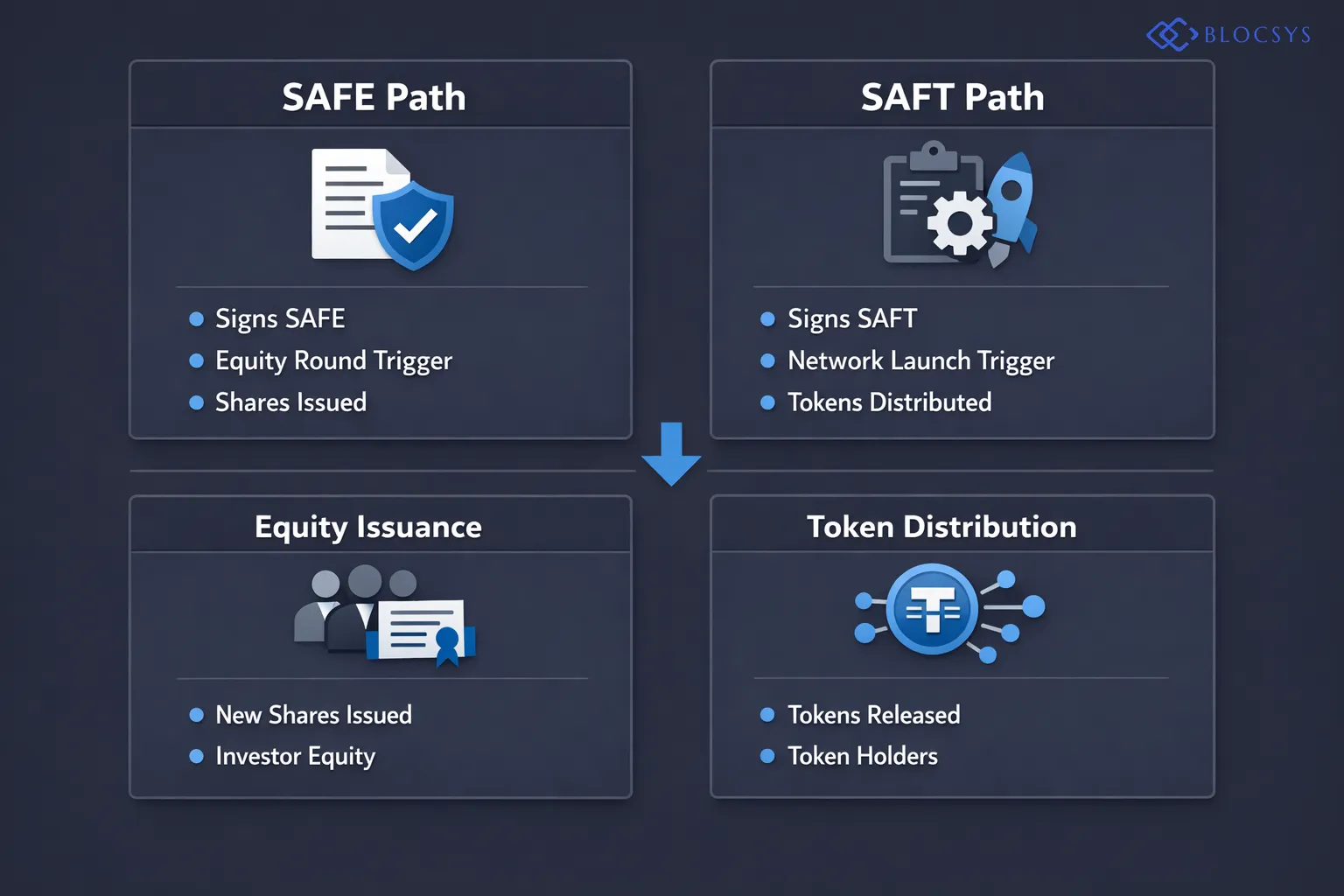
SAFEs convert into equity shares when a later priced funding round occurs. However, SAFTs convert into tokens upon network launch. This distinction carries enormous regulatory weight. Furthermore, the SEC views pre-functional tokens as securities, meaning SAFTs demand strict securities law compliance. By contrast, SAFEs follow well-established equity investment rules. Therefore, SAFTs require more rigorous legal structuring to avoid enforcement actions. Explore our Web3 regulatory compliance guide for detailed advice on navigating these requirements.
Investor Rights and Protections
SAFEs grant investors future ownership stakes in the company itself. Additionally, they frequently include pro-rata rights and most-favored-nation clauses. SAFTs, however, grant rights to utility tokens rather than company equity. Therefore, SAFT holders may carry fewer protections if the project never successfully launches its network. Moreover, token value tends to be more speculative than equity in an established company. Founders must communicate these differences clearly and transparently from the very start.
Which Fundraising Structure Fits Your Project?
Selecting between these instruments depends on your project’s structure, goals, and token model. Furthermore, your current development stage plays a crucial role in the decision. Both instruments can complement each other within a broader fundraising strategy. However, clarity on your token roadmap is essential before committing to either path.
When to Choose a SAFE
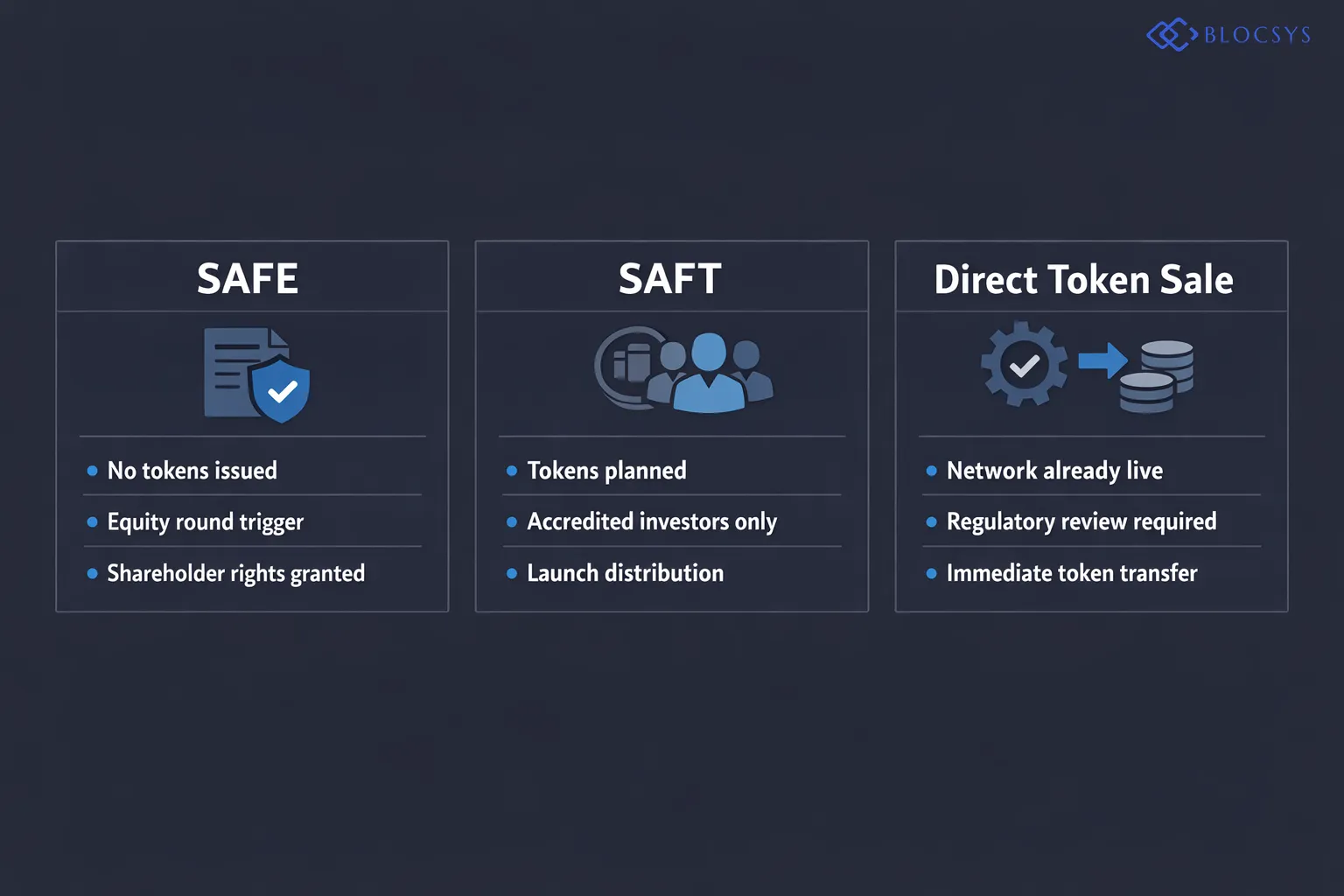
SAFEs work best for Web3 companies that also maintain traditional equity structures. Additionally, if your token model remains undefined, a SAFE provides valuable flexibility. Investors receive company equity rather than speculative digital assets. Therefore, this structure particularly appeals to traditional venture capitalists entering the Web3 space. Moreover, SAFEs carry well-established legal precedent, which significantly reduces uncertainty for all parties involved.
When to Choose a SAFT
SAFTs suit projects with a clear token utility model and a credible launch roadmap. Furthermore, they attract crypto-native investors who specifically prefer token exposure over equity ownership. However, your legal team must verify that the SAFT complies with applicable securities regulations. Consequently, SAFTs typically require accredited investors under Regulation D exemptions in the United States. Projects using SAFTs must also demonstrate a genuine and achievable path to token functionality. Coin Center offers valuable policy resources at coincenter.org to help teams stay informed.
Risks and Final Considerations for Founders
Both instruments carry inherent risks that founders must evaluate carefully before fundraising. Moreover, the rapidly evolving regulatory landscape adds complexity to both structures. SAFTs face the greatest scrutiny today, as global regulators continue reviewing token classifications. Therefore, working with experienced blockchain legal counsel is non-negotiable for any team pursuing either path. Additionally, founders should consider how their choice affects future funding rounds, community trust, and long-term token economics. Transparency with investors builds lasting credibility and reduces post-launch disputes significantly. Ultimately, the right instrument aligns with your legal posture, investor base, and long-term vision. Read our complete Web3 fundraising strategies overview to plan your next raise with confidence.
Frequently Asked Questions
What is the main difference between a SAFE and a SAFT?
A SAFE grants investors the right to receive company equity during a future priced funding round, while a SAFT grants investors the right to receive tokens once a functional network launches. SAFEs convert into equity shares, whereas SAFTs convert into tokens tied to network launch. This distinction carries significant regulatory weight for Web3 projects.
When should a Web3 project use a SAFE instead of a SAFT?
A SAFE works best for Web3 companies that also maintain traditional equity structures or whose token model is not yet defined. It offers valuable flexibility and appeals to traditional venture capitalists entering the Web3 space. SAFEs also carry well-established legal precedent, reducing uncertainty for all parties.
When is a SAFT the right choice for fundraising?
SAFTs suit projects with a clear token utility model and a credible launch roadmap, attracting crypto-native investors who prefer token exposure over equity ownership. However, legal teams must verify compliance with applicable securities regulations. SAFTs typically require accredited investors under Regulation D exemptions in the United States.
Are SAFTs subject to more regulatory scrutiny than SAFEs?
Yes. The SEC views pre-functional tokens as securities, meaning SAFTs demand strict securities law compliance, while SAFEs follow well-established equity investment rules. As a result, SAFTs require more rigorous legal structuring to avoid enforcement actions, and they face the greatest scrutiny as regulators continue reviewing token classifications.
What rights and protections do investors have under each instrument?
SAFE investors gain future ownership stakes in the company, often including pro-rata rights and most-favored-nation clauses. SAFT holders instead receive rights to utility tokens rather than equity, which may carry fewer protections if the project never successfully launches its network. Token value also tends to be more speculative than equity in an established company.
Can a project use both a SAFE and a SAFT?
Yes, both instruments can complement each other within a broader fundraising strategy. The right choice depends on the project’s structure, goals, and token model, as well as its current development stage. Founders should have clarity on their token roadmap before committing to either path.
