

The convergence of artificial intelligence and distributed ledger technology is no longer a distant vision. AI and blockchain integration has become one of the most transformative forces reshaping industries in 2026. Businesses across finance, healthcare, logistics, and beyond are actively leveraging this powerful combination to build smarter infrastructure. If you want to stay competitive, understanding these shifts is critical — start by exploring the expertise available at Blocsys. For a broader industry perspective, our comprehensive guide on Top Blockchain Trends in 2026: The Future of Web3, DeFi, and Enterprise Adoption sets the full strategic context.
The Rise of AI and Blockchain Integration in 2026
Blockchain technology trends in 2026 point clearly toward one direction: intelligent automation built on decentralized infrastructure. AI brings predictive capabilities, pattern recognition, and autonomous decision-making to the table. Blockchain, meanwhile, provides immutable records, transparent governance, and trustless execution. Together, they create systems that are smarter, faster, and far more secure than either technology alone.
Furthermore, the demand for emerging blockchain technologies 2026 has surged as enterprises seek greater resilience and efficiency. Organizations are not simply adopting blockchain for novelty anymore. They are integrating AI to make those blockchain systems genuinely intelligent and adaptive in real time.
Why These Two Technologies Complement Each Other
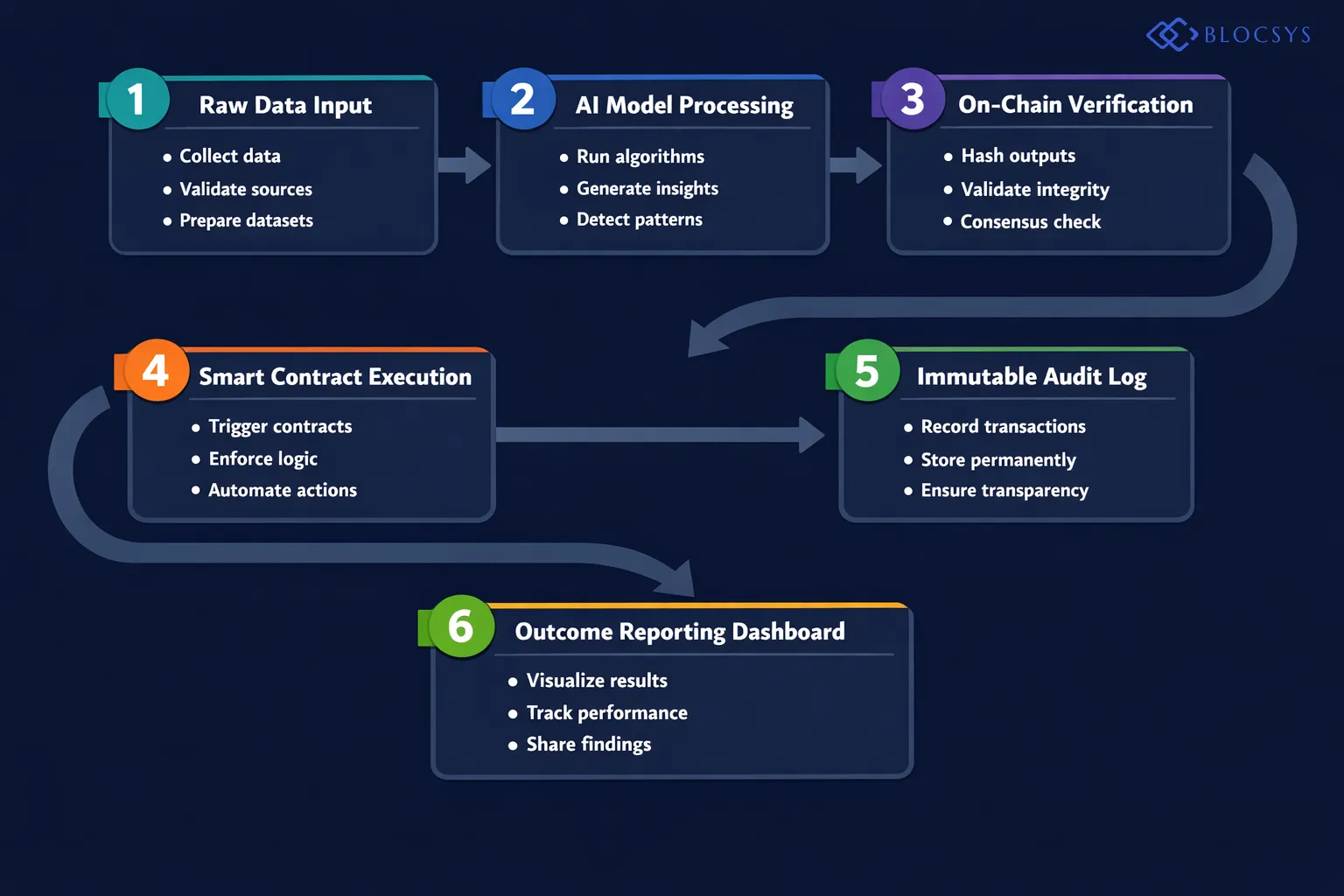
AI algorithms require vast, reliable datasets to perform well. Blockchain provides exactly that — tamper-proof, auditable data streams that AI models can trust implicitly. Additionally, AI can analyze on-chain data to detect anomalies, predict market movements, and optimize smart contract execution in real time. This synergy is driving a new generation of decentralized applications across every sector.
Moreover, blockchain adds a layer of accountability to AI systems that has long been missing. Every decision an AI makes can be logged immutably on-chain. Consequently, organizations gain unprecedented visibility into automated processes, satisfying both regulatory requirements and stakeholder trust simultaneously.
Key Blockchain Technology Trends Shaping 2026
Several major blockchain technology trends are converging this year. Understanding them helps businesses make smarter investment and development decisions. From modular designs to zero-knowledge proofs, the technical evolution is accelerating rapidly and reshaping what is possible.
Modular Blockchain Architecture
Modular blockchain architecture has fundamentally changed how developers build decentralized systems. Instead of monolithic chains that handle everything, modular designs separate execution, settlement, and data availability layers. Therefore, each layer can be optimized independently, resulting in dramatically higher throughput and greater flexibility. Learn more about this shift in our dedicated guide on Modular Blockchain Architecture in 2026: Why It’s the Future of Scalable Networks.
ZK Proofs and Layer 2 Scaling Solutions
ZK proofs blockchain applications have matured significantly in 2026. Zero-knowledge proofs now power privacy-preserving transactions, identity verification, and scalable computation across multiple chains. Layer 2 scaling solutions have also reached enterprise-grade reliability, processing thousands of transactions per second at minimal cost. These innovations are making blockchain genuinely practical for mass adoption.
Additionally, developers are integrating AI to optimize ZK proof generation, dramatically reducing computational overhead. This is a prime example of how AI and blockchain integration creates compounding technological advantages that neither field achieves independently.
“In 2026, AI is no longer a bolt-on addition to blockchain networks — it is becoming the cognitive layer that makes decentralized systems truly autonomous. The organizations that understand this convergence will define the next decade of digital infrastructure.” — Senior Blockchain Architect, Enterprise Web3 Platforms Advisory Group
How AI Strengthens Blockchain Security and Efficiency
Security remains the number one concern for organizations evaluating blockchain implementation trends. Fortunately, AI dramatically strengthens this area. Machine learning models continuously monitor network activity, flagging suspicious patterns before they escalate into costly breaches. Consequently, decentralized networks become far more resilient against sophisticated and evolving attack vectors.
AI-Powered Smart Contracts
Traditional smart contracts execute predefined logic rigidly and without flexibility. However, AI-powered smart contracts can adapt their behavior based on real-time data inputs. For example, an AI-enhanced DeFi protocol can dynamically adjust collateral ratios in response to sudden market volatility. Therefore, these systems reduce risk while simultaneously improving capital efficiency. Explore broader innovations in our article on Latest Innovations in Blockchain Technology 2026: Breakthroughs You Can’t Afford to Miss.
Decentralized Identity and Fraud Prevention
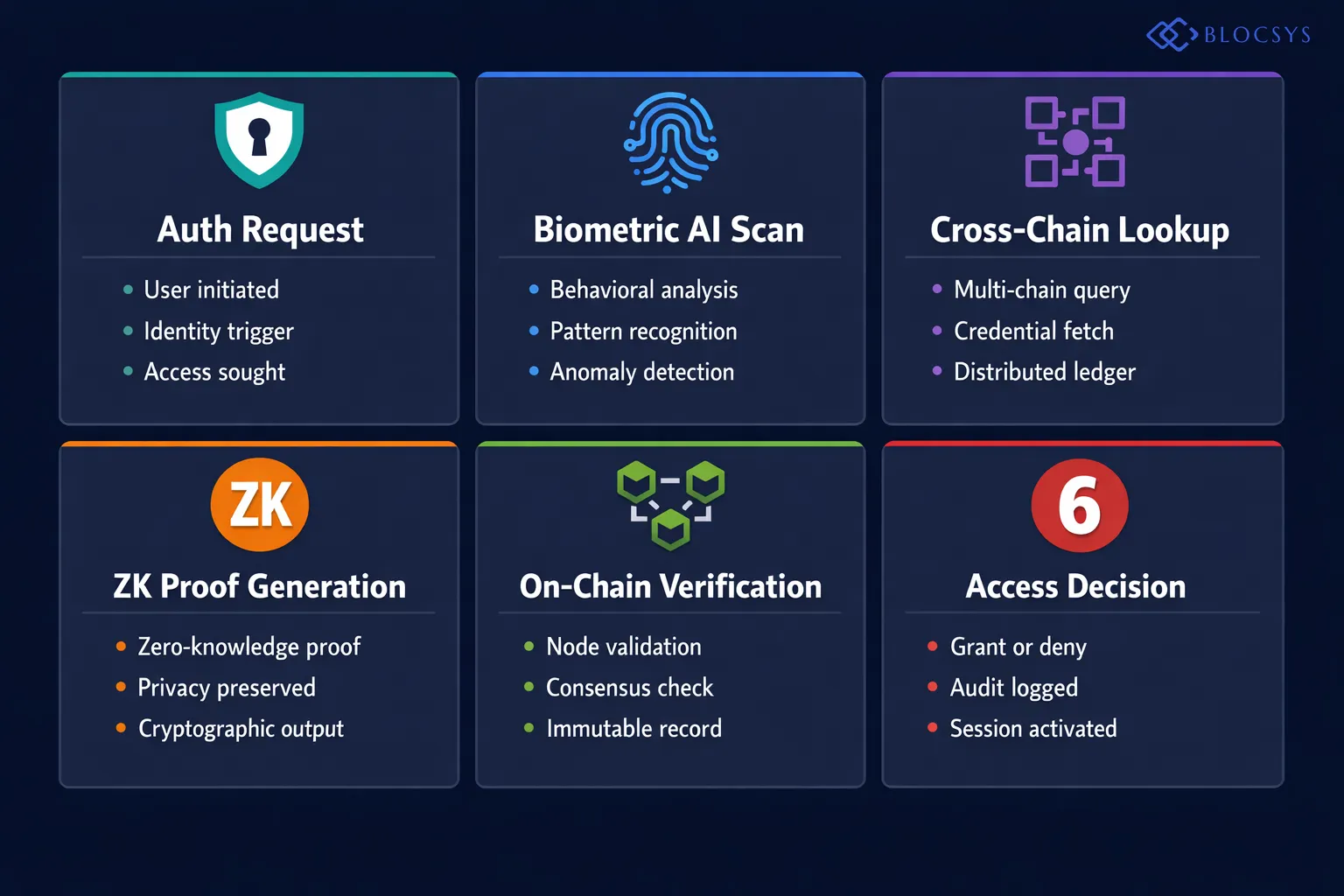
Decentralized identity blockchain solutions are gaining serious enterprise traction in 2026. AI models verify identities by analyzing behavioral biometrics and cross-chain credential histories in real time. Furthermore, these systems operate without centralized servers, eliminating dangerous single points of failure. Fraud detection rates have improved significantly as a result, particularly across financial services and high-volume e-commerce platforms.
Real-World Applications of AI and Blockchain Fusion
The most compelling proof of AI and blockchain integration lies in real-world production deployments. Across industries, organizations are moving decisively beyond proof-of-concept. The results are already measurable, meaningful, and commercially significant. To explore the full breadth of applications, visit Blocsys and connect with specialists who understand both the technology and the business context.
Blockchain for Supply Chain 2026
Blockchain for supply chain 2026 has evolved far beyond simple track-and-trace functionality. AI now predicts supply disruptions by analyzing weather data, shipping delays, and demand signals — all recorded transparently on-chain for every stakeholder. Additionally, smart contracts automatically trigger reorders and release payments when predefined inventory thresholds are met. This reduces human intervention and dramatically accelerates operational cycles. Discover more real-world examples in our overview of Blockchain Use Cases 2026: Real-World Applications Transforming Every Industry.
Real World Assets Tokenization
Real world assets tokenization is one of the most exciting blockchain trends 2026 presents. Physical assets — real estate, commodities, infrastructure projects — are being tokenized on-chain, unlocking fractional ownership and global liquidity at unprecedented scale. AI enhances this process by performing automated valuations, assessing risk profiles, and intelligently matching investors with suitable asset tokens. Moreover, this approach democratizes investment opportunities previously reserved for institutional players alone.
“Tokenization of real-world assets, combined with AI-driven risk assessment, is fundamentally rewriting the rules of capital markets. We are witnessing the creation of a truly programmable global economy, and it is happening faster than most analysts predicted.” — Chief Innovation Officer, Blockchain for Finance Industry Consortium
Enterprise Adoption and Emerging Blockchain Technologies in 2026
Enterprise blockchain solutions 2026 have moved firmly into the mainstream. Large corporations, financial institutions, and governments are all accelerating their blockchain development trends with serious organizational commitment. The focus has decisively shifted from experimentation to scalable, production-grade deployment. For strategic guidance on navigating this journey, explore our detailed analysis of Enterprise Blockchain Solutions 2026: Leading Use Cases and Adoption Strategies.
Enterprise Web3 Platforms
Enterprise web3 platforms are giving businesses the infrastructure to deploy blockchain solutions without building everything from scratch. These platforms offer pre-built modules covering identity management, regulatory compliance, smart contracts, and advanced data analytics. Furthermore, AI layers embedded within these platforms enable automated compliance checking and intelligent real-time reporting. Consequently, enterprises can deploy sophisticated blockchain applications in weeks rather than months or years. Additionally, teams exploring the decentralized web frontier should review our perspective on Web3 Trends 2026: How the Decentralized Web Is Reshaping Digital Ownership.
DAO Governance Trends 2026
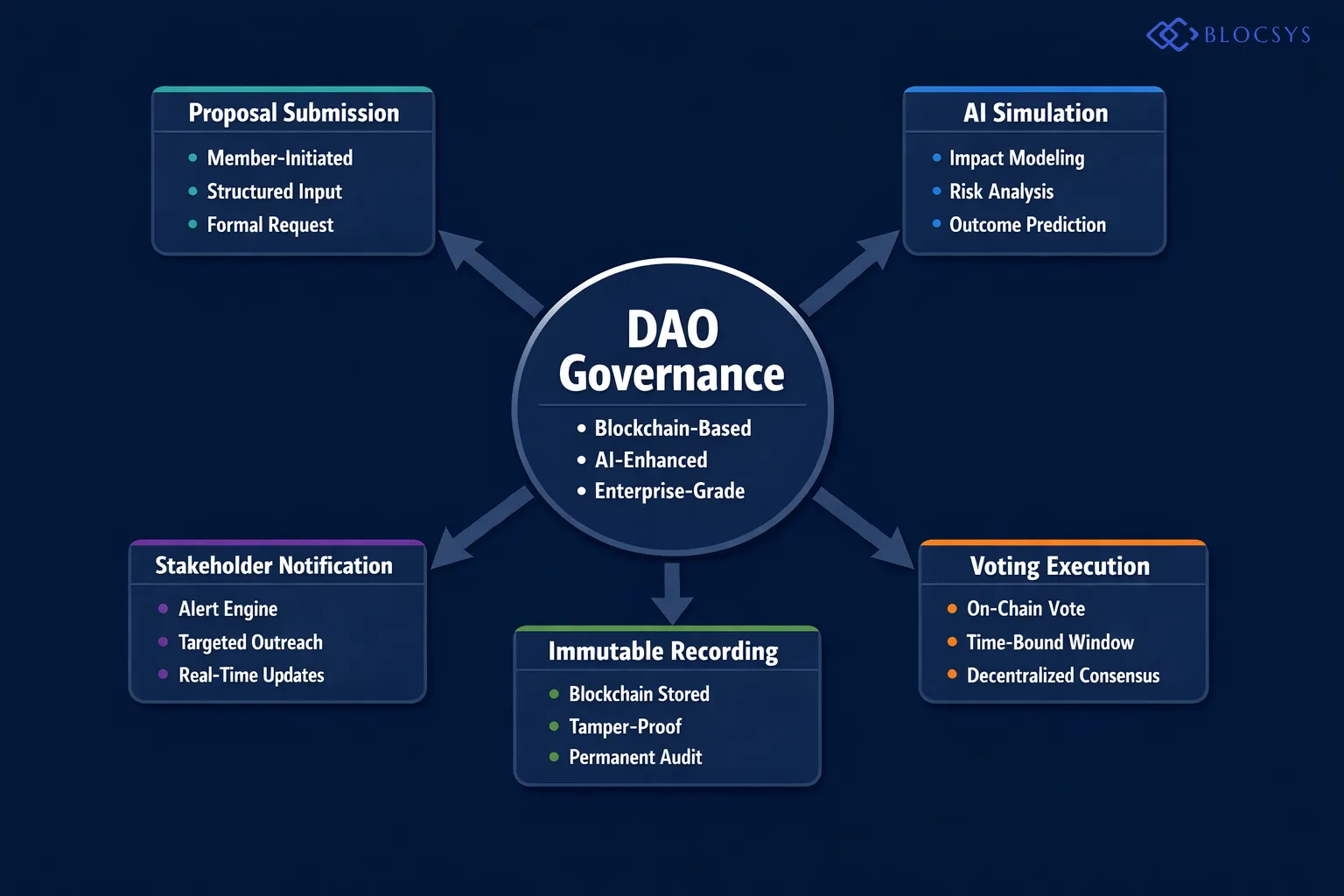
DAO governance trends 2026 reflect a maturing, more sophisticated understanding of decentralized collective decision-making. AI is now used to analyze governance proposals, simulate downstream outcomes, and flag potential conflicts before votes are cast. Therefore, decentralized organizations make faster and better-informed decisions than ever before. Additionally, AI-assisted governance reduces voter apathy by surfacing the most relevant proposals based on each token holder’s historical participation patterns and stated priorities.
Blockchain Interoperability and Institutional Adoption in 2026
Blockchain interoperability trends represent another critical frontier in 2026. Enterprises demand seamless communication between different blockchain networks as a baseline requirement. Cross-chain protocols powered by AI routing algorithms are making this a practical reality. Assets, data, and smart contract calls now flow between Ethereum, Solana, and enterprise chains without significant friction or manual intervention.
Meanwhile, institutional adoption blockchain has accelerated dramatically throughout the year. Major banks, asset managers, and insurance firms are not simply exploring blockchain anymore — they are building core business infrastructure on it. The combination of regulatory clarity, mature tooling, and AI-enhanced security has finally given institutions the confidence to commit fully. Read our in-depth analysis of Institutional Adoption of Blockchain in 2026: Trends, Challenges, and Opportunities to understand what is driving this historic shift.
Web3 development trends are also evolving alongside these institutional moves. Developers now have access to powerful AI-assisted coding tools that dramatically accelerate smart contract development and automated security auditing. Furthermore, blockchain consulting services have become essential for enterprises navigating this complex and rapidly shifting landscape. If you are evaluating technology partners, our guide on Blockchain Consulting Services in 2026: How to Choose the Right Partner for Your Business offers practical, proven frameworks. Additionally, crypto trends 2026 reflect growing institutional participation — our detailed review of Crypto Trends 2026: What Investors and Developers Need to Know Right Now breaks down every major development clearly.
In summary, AI and blockchain integration is today’s most powerful competitive advantage — not a future possibility. Organizations that embrace this convergence now will build infrastructure that is more secure, more efficient, and far more intelligent than anything competitors can easily replicate. Return to our pillar resource, Top Blockchain Trends in 2026: The Future of Web3, DeFi, and Enterprise Adoption, for the complete strategic picture. When you are ready to act, the team at Blocsys is ready to help you design and build what comes next.
Frequently Asked Questions
Here are direct answers to the questions we hear most often about AI and blockchain integration in 2026.
What is AI and blockchain integration, and why does it matter in 2026?
AI and blockchain integration refers to combining artificial intelligence — including machine learning, predictive analytics, and autonomous agents — with decentralized blockchain networks to create systems that are simultaneously intelligent, transparent, and tamper-proof.
In 2026, this matters because enterprises need both the reliability of blockchain and the adaptive intelligence of AI. Neither technology alone can meet modern demands for speed, security, and scalability at enterprise scale.
What are the top emerging blockchain technologies in 2026?
The top emerging blockchain technologies 2026 include modular blockchain architecture, ZK proofs, AI-powered smart contracts, decentralized identity systems, and real-world asset tokenization. Additionally, cross-chain interoperability protocols and Layer 2 scaling solutions have reached enterprise maturity this year.
These technologies are not experimental. They are actively deployed in production environments across finance, supply chain, and healthcare globally, delivering measurable business outcomes.
How does AI specifically improve blockchain security?
AI improves blockchain security by continuously monitoring network activity for anomalies, predicting potential attack vectors before exploitation, and automating rapid incident response. Machine learning models detect unusual transaction patterns far faster than any human analyst team could.
Furthermore, AI enhances smart contract security by automatically scanning code for vulnerabilities prior to deployment. This significantly reduces the risk of costly exploits that have historically damaged trust in decentralized systems.
What are the strongest blockchain business use cases for enterprises in 2026?
The strongest enterprise blockchain use cases in 2026 include supply chain traceability, tokenized financial instruments, decentralized identity verification, cross-border payment automation, and AI-enhanced compliance management. Additionally, DAO governance frameworks are gaining real traction in corporate decision-making structures.
The key to success is selecting use cases where blockchain’s transparency and immutability directly solve a real, measurable business pain point — rather than deploying it simply because the technology is available.
How do I choose the right blockchain consulting partner in 2026?
Choosing the right blockchain consulting partner requires evaluating their hands-on experience with enterprise deployments, their understanding of AI integration, and their proven track record navigating regulatory compliance. Avoid firms that offer generic strategy advice without deep technical implementation expertise.
Look for partners who understand both the technical architecture and the broader business strategy dimensions of blockchain. Our guide on Blockchain Consulting Services in 2026 provides a detailed evaluation framework to help you make a confident, well-informed decision.
Ready to move beyond theory and build an intelligent platform that delivers real-world value? Blocsys Technologies specialises in engineering enterprise-grade AI and blockchain solutions for the fintech, Web3, and digital asset sectors. Connect with our experts today to discuss your vision and chart a clear path from concept to a secure, scalable reality.
