Real-World Asset Tokenization Readiness: What Businesses Must Prepare Before Launch
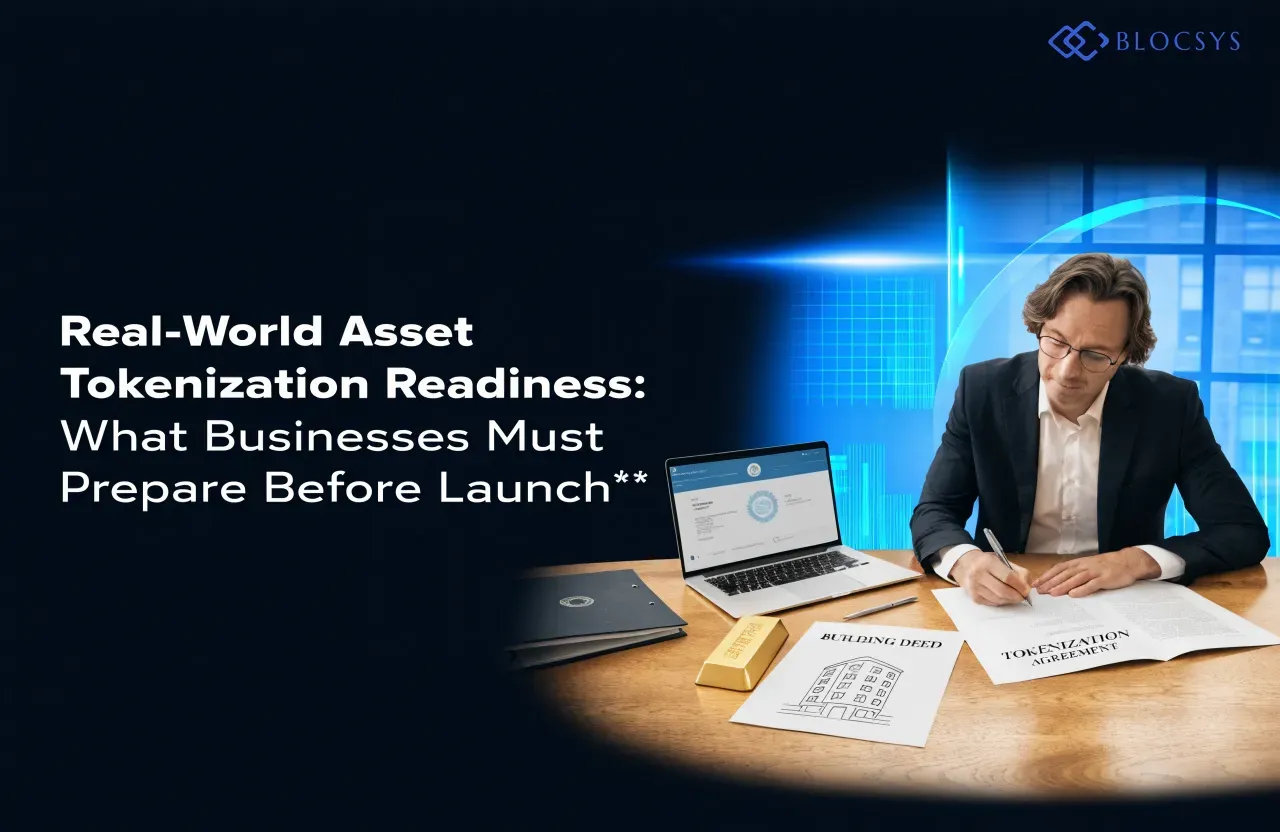
Tokenizing a building, a bond, or a basket of invoices sounds simple on a slide deck. It isn’t. Real-world asset tokenization readiness is the actual work that happens before a single token gets minted, and most of it has nothing to do with blockchain code. Businesses weighing real world asset tokenization need to know if they’ve genuinely achieved RWA tokenization launch readiness before they commit budget, legal counsel, and reputation to a public offering. This article walks through what that readiness actually looks like, asset by asset, decision by decision.
Why Readiness, Not Just Technology, Decides Success
Here’s the uncomfortable truth: a working smart contract doesn’t mean a project is ready to launch. Tokens are easy to create. Proving legal ownership, verifying investor eligibility, and keeping records aligned with an underlying asset are much harder. Consequently, most tokenization failures trace back to gaps in legal structure or operations, not code.
RWA tokenization launch readiness means your asset, ownership documentation, business model, compliance posture, and technical stack have all been validated independently. Skip one, and the whole structure wobbles. We’ve seen teams rush token design while ownership paperwork sat unresolved. That’s backwards.
Therefore, this guide treats readiness as a sequence: asset first, legal structure second, business model third, compliance fourth, technology fifth, and operations last. Each stage builds on the one before it.
Assessing Whether Your Asset Is Suitable for Tokenization
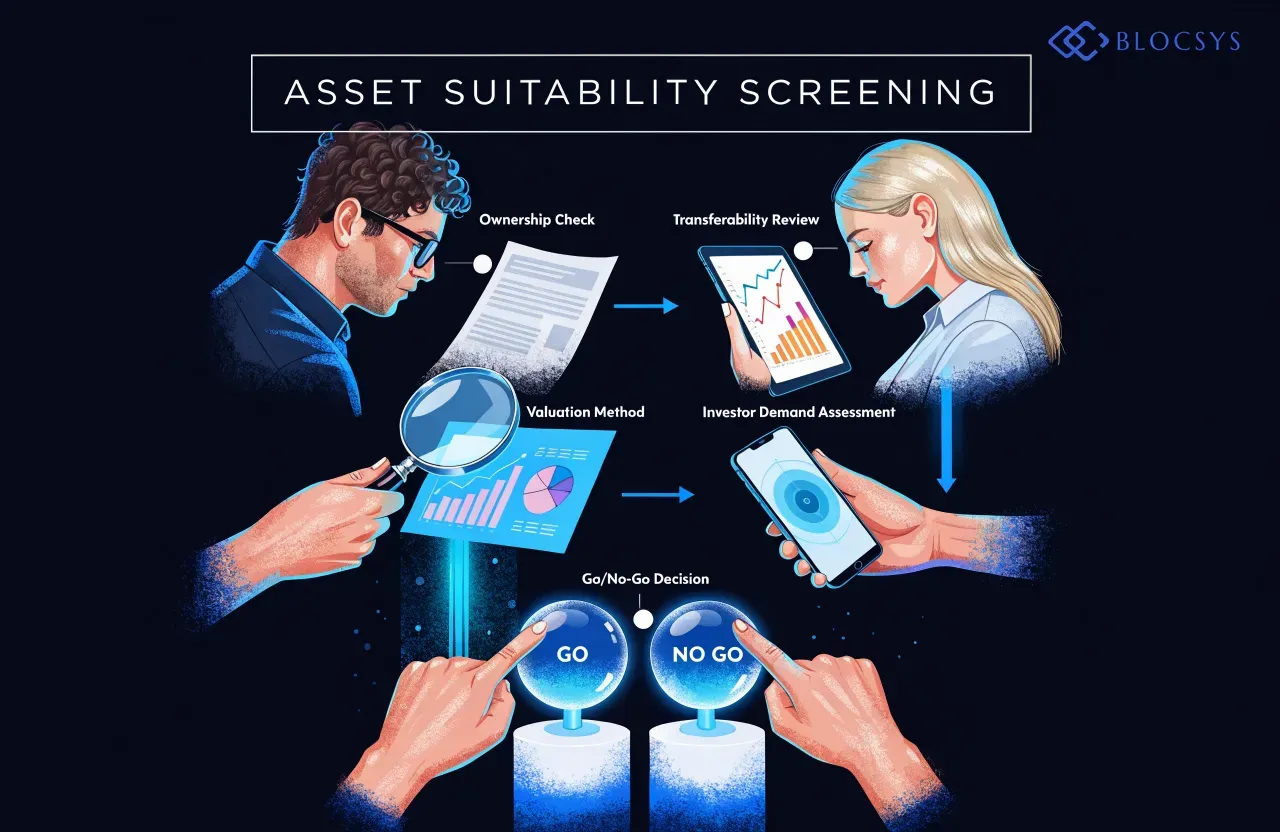
Not every asset belongs on-chain. Before anything else, ask whether the asset has clear ownership, is legally transferable, and can be valued consistently. A commercial property with a clean title and recent appraisal is a far easier candidate than a disputed inheritance claim or an asset tied up in pending litigation.
Consider four practical filters:
- Ownership clarity: is title or legal interest documented and verifiable?
- Transferability: can the asset’s rights legally move between parties without excessive friction?
- Valuation reliability: is there a consistent, defensible method to price it over time?
- Investor demand and liquidity rationale: does fractionalizing this asset actually solve a distribution or liquidity problem?
Hypothetical example: a mid-size private credit fund holding a diversified loan book may be well suited, since loan performance data already exists and investor appetite for yield products is established. A single piece of raw, undeveloped land with no income stream and uncertain zoning, however, may struggle to attract token buyers regardless of blockchain design.
Moreover, economic feasibility matters as much as legal feasibility. If the cost of structuring, auditing, and maintaining the token exceeds the liquidity benefit, tokenization isn’t worth pursuing yet. That’s a business call, not a technical one.
The biggest mistake we see isn’t bad technology choice, it’s businesses tokenizing an asset before they’ve proven anyone actually wants fractional exposure to it. Demand validation should happen before contract design, not after.
Establishing Ownership, Legal Rights and the Tokenization Structure
This is where real-world asset tokenization readiness gets tested hardest. A token is a digital representation. It is not, by itself, a legal claim on an asset unless a structure is built to make it so. Businesses must establish how the token connects to actual rights: equity interest, debt claim, revenue share, or something else entirely.
Typically this requires a special purpose vehicle (SPV), trust, or similar legal wrapper that holds the underlying asset and issues tokens representing interests in that wrapper. The legal agreements, not the smart contract, define what a token holder can actually claim. Get this wrong, and token holders may have no enforceable rights at all.
RWA Tokenization Requirements for Ownership Documentation
Among the core RWA tokenization requirements, ownership documentation sits at the top. Title deeds, loan agreements, custodial statements, or fund documents need to be current, verified, and ideally reviewed by independent legal counsel before any token design work starts. Incomplete documentation here doesn’t just delay launch, it can invalidate the entire offering later.
Additionally, transfer restrictions need defining upfront. Will tokens be freely tradable, or restricted to accredited investors on an approved secondary venue? That decision shapes smart contract logic, so legal structure should come before engineering, not after.
Defining the Business Model and Investor Requirements
What’s the actual goal here? Raising capital, improving liquidity, reducing settlement friction, or expanding investor access all lead to different structures. A fund manager seeking broader distribution for an existing private fund has different needs than a real estate developer raising new project capital.
Define your target participants early: institutional investors, accredited individuals, or, in limited jurisdictions, retail participants. This decision drives disclosure obligations, minimum investment thresholds, and the onboarding flow you’ll need to build or buy.
Also plan for ongoing issuer obligations. Who manages redemptions, distributions, and reporting after launch? Many teams plan the raise but not the five years of servicing that follow. That gap shows up fast once tokens are live.
Preparing for RWA Tokenization Compliance Requirements
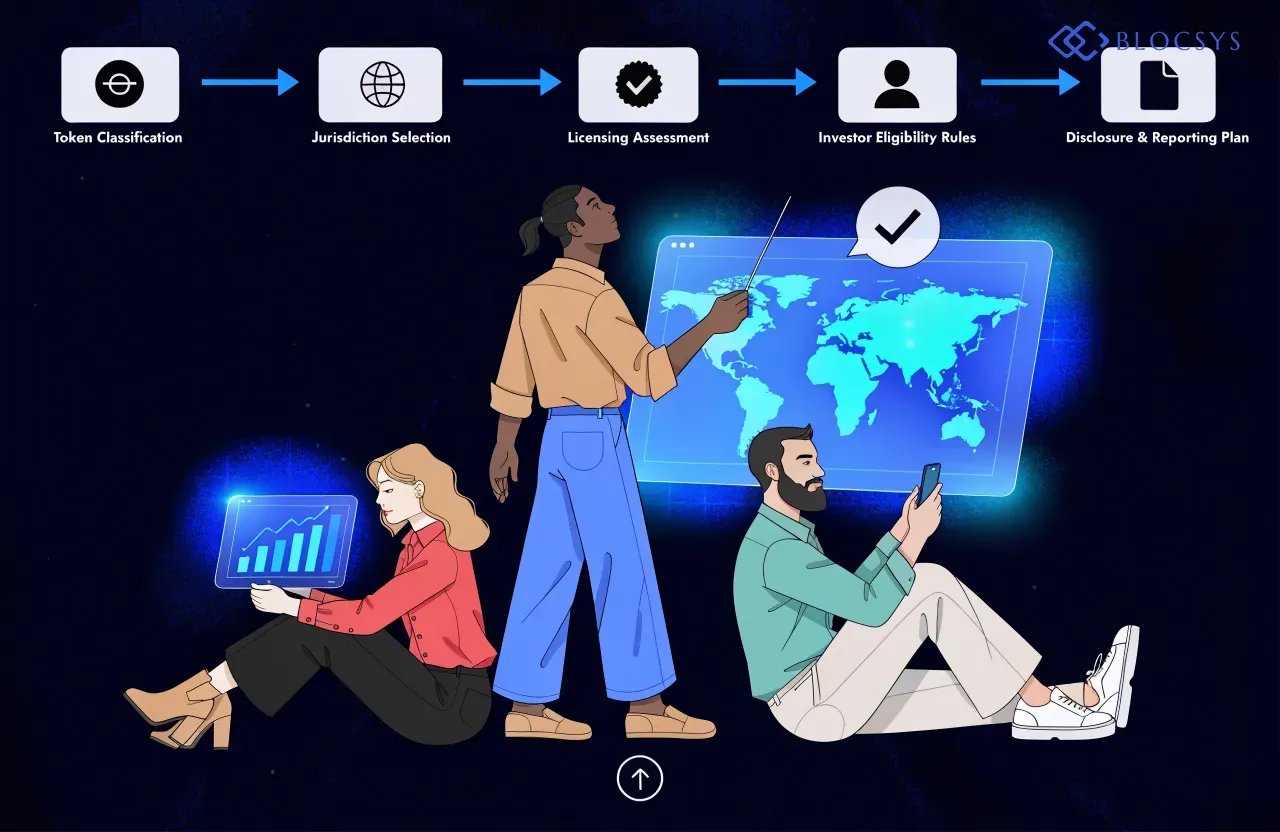
RWA tokenization compliance requirements vary by jurisdiction and by how the token is classified. In the United States, the Securities and Exchange Commission applies the Howey test to determine whether a token qualifies as a security, which then triggers registration or exemption requirements under the Securities Act of 1933. The UK’s Financial Conduct Authority similarly assesses tokens under its regulated activities framework, and security-like tokens generally fall under existing financial promotion and prospectus rules.
In the UAE, the Dubai Financial Services Authority and Virtual Assets Regulatory Authority maintain distinct regimes depending on whether the token is a security-type instrument or a virtual asset, so jurisdiction within the UAE itself matters. Singapore’s Monetary Authority of Singapore regulates tokenized securities under the Securities and Futures Act, while Germany applies its Electronic Securities Act (eWpG) framework alongside EU-level MiCA provisions for certain crypto-assets.
These examples illustrate that regulatory treatment is never universal. Consequently, businesses should engage local securities counsel early rather than assuming one jurisdiction’s approach transfers elsewhere.
Investor Eligibility and Identity Verification
Most offering structures require KYC and AML checks before token issuance, plus accreditation verification where the offering targets accredited or professional investors. These checks typically get embedded into onboarding and, in some designs, directly into transfer-restricted smart contracts. Don’t treat this as optional paperwork, regulators treat it as core to the offering’s legitimacy.
Disclosure and ongoing reporting obligations also depend on structure. A registered security offering generally carries continuing disclosure duties; an exempt private placement carries lighter but still real obligations. Map these out before launch, not during an audit.
Selecting the Technology and Tokenization Infrastructure
Once legal and compliance groundwork is set, technology choices become clearer rather than harder. Evaluate blockchain architecture against your actual needs: transaction finality, cost per transaction, and whether a public or permissioned network fits your investor base and regulatory posture.
Token standards matter too. ERC-20 fits fungible interests; ERC-1400 or similar security-token standards support transfer restrictions and compliance hooks natively. Smart contract development should follow legal structure, encoding the rights and restrictions already defined, not inventing new ones.
Ask vendors direct questions: has the platform undergone independent smart contract audits? What’s the incident response process? Can it integrate with your custody provider, KYC vendor, and cap table system? Weak answers here are a red flag, regardless of how polished the demo looks.
Scalability and ongoing vendor support deserve equal weight. A platform that handles your pilot issuance well may not handle secondary trading volume or multi-asset expansion later. Ask about that trajectory now, while you still have leverage in vendor negotiations.
Planning Custody, Security and Ongoing Operations
Digital asset custody isn’t a one-time setup, it’s an ongoing responsibility. Businesses need clear answers on who holds private keys, how multi-signature or institutional custody arrangements work, and what happens if a key holder becomes unavailable. These aren’t edge cases; they’re operational certainties over a multi-year token lifecycle.
Permissions and transaction controls need equal planning. Who can mint, burn, freeze, or approve transfers? Build clear role-based access rather than leaving admin functions concentrated in one wallet. Recordkeeping matters too, regulators and auditors will expect a clear trail connecting on-chain events to off-chain legal records.
Lifecycle events deserve a plan before launch: dividend or interest distributions, redemptions, corporate actions, and eventual wind-down. Incident response planning, covering smart contract bugs, custody breaches, or oracle failures, should exist in writing, not get improvised after something breaks.
Evaluating Costs, Risks and RWA Tokenization Launch Readiness
Budgeting for tokenization goes well beyond development fees. Legal structuring, independent audits, custody arrangements, KYC/AML tooling, ongoing compliance reporting, and platform maintenance all carry recurring costs. Underestimating these is one of the most common readiness failures we encounter.
Risk categories to resolve before launch include regulatory risk (classification changing or enforcement action), counterparty risk (custodian or administrator failure), technical risk (contract vulnerabilities), and market risk (insufficient investor demand post-launch). None of these disappear once tokens go live; they just become harder to manage retroactively.
A Compact Pre-Launch Readiness Checklist
- Asset documentation and ownership verified independently
- Legal structure defined, with token-holder rights clearly documented
- Business model and target participants confirmed
- Applicable RWA tokenization compliance requirements mapped by jurisdiction
- Technology platform, token standard, and smart contract audits completed
- Custody, key management, and permission controls established
- Reporting, recordkeeping, and lifecycle event processes documented
- Full budget and risk assessment signed off by stakeholders
Work through this list honestly. Gaps here are exactly what separates genuine RWA tokenization launch readiness from a rushed launch waiting to go wrong. If you can’t check every box, that’s not failure, it’s useful information about what still needs attention before implementation begins.
Platforms built for asset tokenization can help operationalize many of these items, but no platform substitutes for the legal and business groundwork covered above.
Conclusion: Turning Tokenization Readiness into an Implementation Plan
Real-world asset tokenization readiness isn’t a single milestone, it’s a cumulative state built across legal, business, compliance, and technical workstreams. Businesses that confirm ownership rights, define investor eligibility, map jurisdictional compliance requirements, and plan custody and operations before writing a single smart contract put themselves in a far stronger position.
RWA tokenization launch readiness, ultimately, comes down to discipline: validating each layer before moving to the next, rather than assuming technology will paper over gaps in the foundation.
If you’re evaluating whether your asset, legal structure, and operational plan are ready for launch, Blocsys’s real-world asset tokenization services can help assess your readiness and map the implementation path that fits your specific asset and jurisdiction.
Frequently Asked Questions
Here are direct answers to the questions we hear most often about RWA tokenization launch readiness.
What is real-world asset tokenization?
It’s the process of representing ownership or economic rights in a physical or financial asset, such as real estate or private credit, as digital tokens on a blockchain. The token’s legal meaning depends entirely on the structure behind it.
What should a business prepare before tokenizing an asset?
Verified ownership documentation, a defined legal structure, a clear business model, mapped compliance requirements, suitable technology, and an operational plan for custody and reporting. Missing any of these undermines launch readiness.
Which assets may be suitable for tokenization?
Assets with clear title, reliable valuation methods, and genuine investor demand, such as income-producing real estate, private credit portfolios, or fund interests. Assets with disputed ownership or unclear valuation are generally poor candidates.
Why are legal ownership and asset documentation important?
A token doesn’t create ownership by itself. Without verified documentation and a proper legal wrapper, token holders may have no enforceable claim on the underlying asset at all.
What legal and regulatory requirements should businesses evaluate?
Securities classification, licensing obligations, investor eligibility rules, disclosure duties, and reporting requirements, all of which vary by jurisdiction and asset type. Local securities counsel should confirm specifics before launch.
What technology is needed for RWA tokenization?
A suitable blockchain architecture, an appropriate token standard, audited smart contracts, and integrations with custody, KYC, and cap table systems. Technology choices should follow legal structure, not precede it.
How should businesses evaluate tokenization platform security?
Check for independent smart contract audits, documented incident response processes, role-based permission controls, and a track record of secure integrations. Weak or vague answers from a vendor are a warning sign.
What role do custody and asset administration play?
Custody determines who controls keys, approves transfers, and manages lifecycle events like redemptions or distributions. Clear custody arrangements and access controls are essential for ongoing security and investor trust.
What costs should businesses consider before launching?
Legal structuring, audits, custody services, compliance tooling, platform development, and ongoing operational and reporting costs. Many businesses underestimate recurring costs after the initial launch.
How can a business determine whether it is ready to launch an RWA tokenization project?
By working through a readiness checklist covering asset documentation, legal structure, compliance mapping, technology validation, and operational planning. Genuine RWA tokenization launch readiness means every item is resolved, not assumed.
Ready to move beyond theory and build an intelligent platform that delivers real-world value? Blocsys Technologies specialises in engineering enterprise-grade AI and blockchain solutions for the fintech, Web3, and digital asset sectors. Connect with our experts today to discuss your vision and chart a clear path from concept to a secure, scalable reality.