
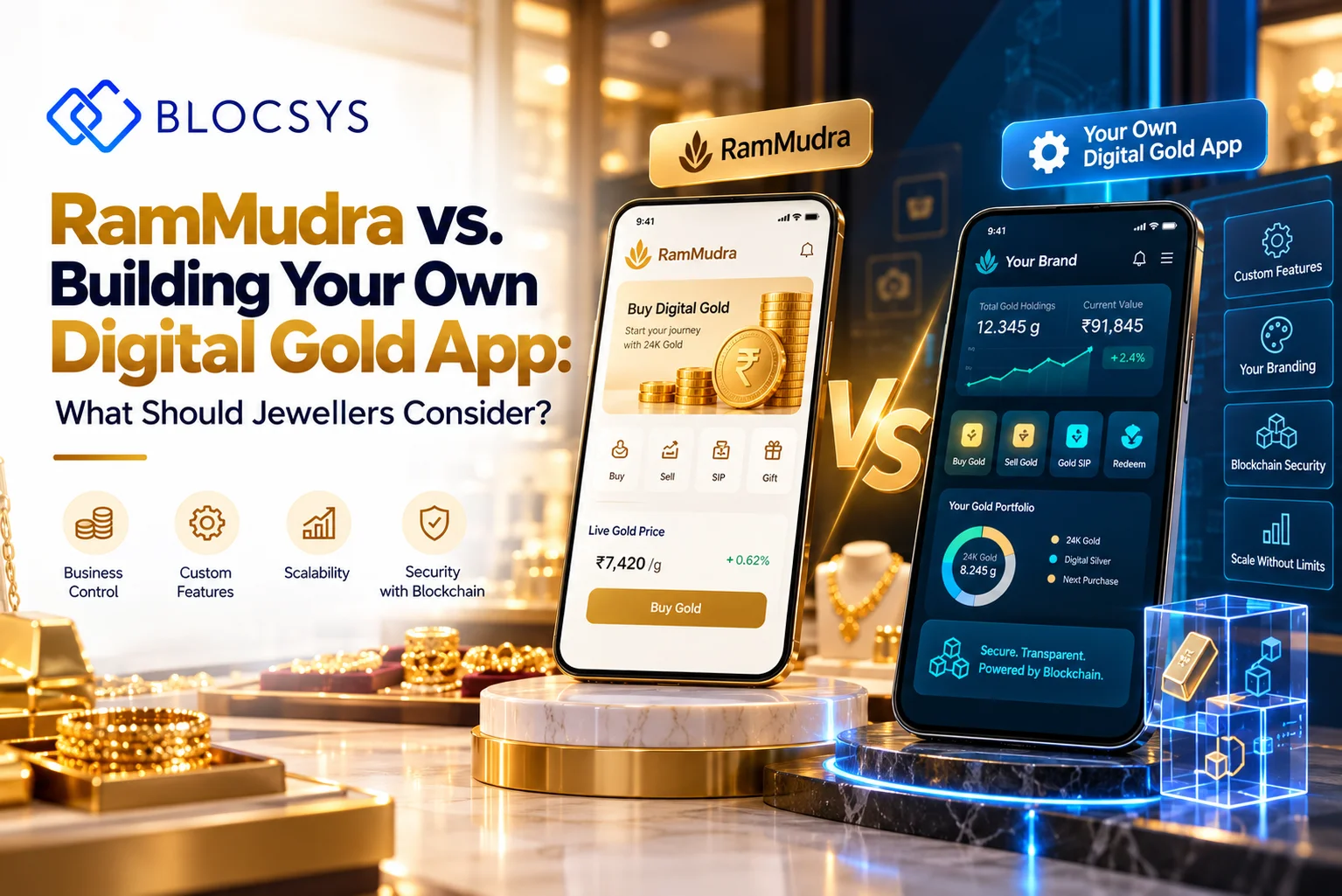
RamMudra vs. Building Your Own Digital Gold App: What Should Jewellers Consider?
Should you sign up with an existing provider like RamMudra, or invest in custom digital gold app development under your own brand? Honestly, it depends on your budget, your branding needs, your internal tech resources, and how much control you want over the customer experience. Both paths can work. Neither is automatically right for every jeweller. This article walks through what RamMudra appears to offer, what custom digital gold app development actually involves, and how to decide between the two without guessing.
If you already know you want a branded, fully owned platform, you can explore digital gold and silver app development services directly. But let’s first work through the comparison properly, because this decision affects your business for years, not months.
What Should Jewellers Know About RamMudra?
RamMudra positions itself as a digital gold and savings platform aimed at retail users in India, built around small, recurring gold purchases. Before you consider it as a business partner, you need to separate what’s publicly confirmed from what still needs a direct conversation with the provider.
Here’s what matters: a platform’s public marketing rarely covers the commercial terms a jeweller actually needs. Onboarding requirements, revenue-sharing arrangements, white-labelling options (if any exist), data access, and contract exit terms are usually negotiated privately. We haven’t found official, verifiable documentation confirming whether RamMudra offers a white-label or co-branded arrangement for jewellery businesses specifically.
So, if a jeweller is evaluating RamMudra as a possible channel partner rather than a competitor, several things need direct verification:
- Whether jewellers can integrate or co-brand with the platform, and under what commercial terms
- What fees apply at onboarding and ongoing, including transaction charges
- Who holds the underlying gold, and what redemption process customers get
- Whether customer data and relationship ownership stay with the jeweller or the platform
- What happens if the jeweller wants to exit the arrangement later
None of this makes RamMudra unsuitable. It simply means a jeweller shouldn’t assume terms that aren’t publicly documented. Ask directly, get it in writing, and compare it against the alternative: building your own digital gold platform development project from the ground up.
What Does Building Your Own Digital Gold App Involve?
Custom digital gold app development isn’t just “hiring a coder to build an app.” It’s a structured project with several moving parts, and jewellers considering this route should understand each one before committing budget.
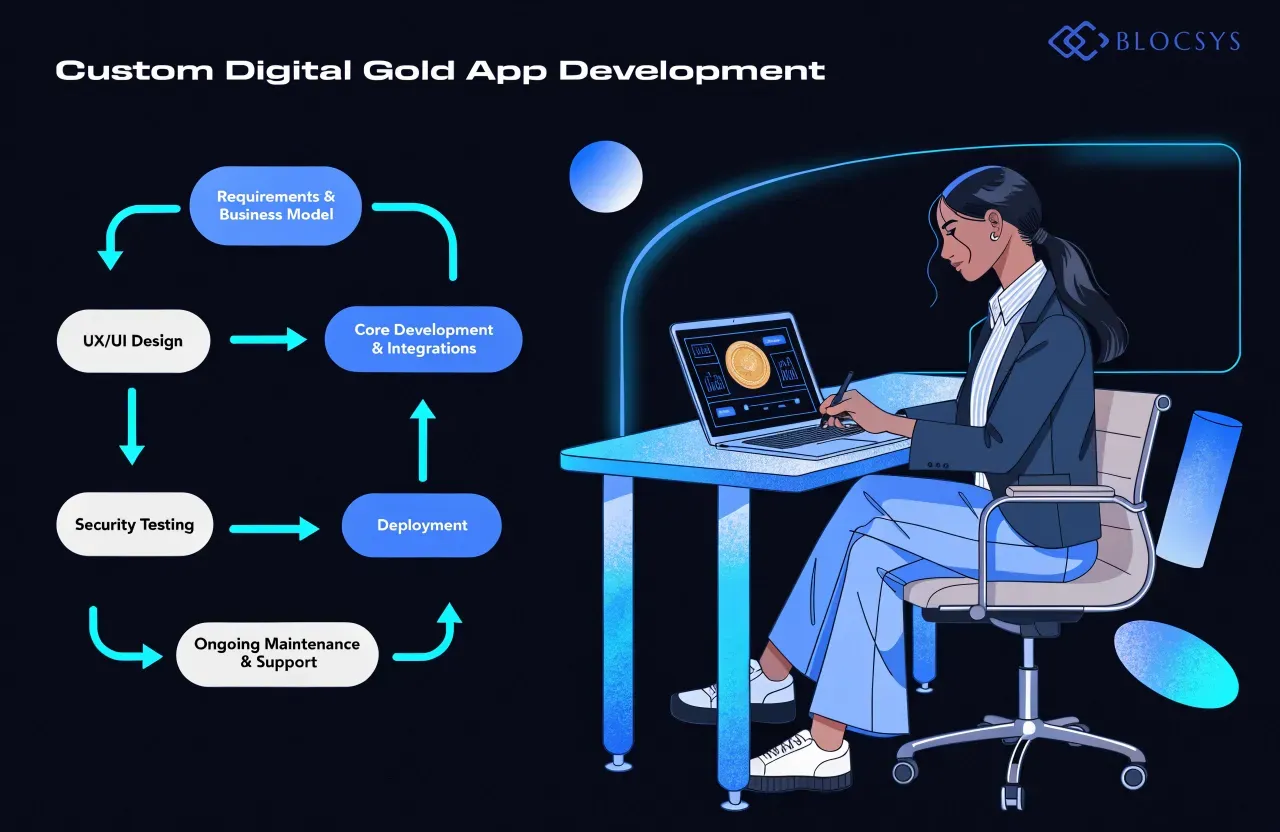
Requirements Planning and Business Model Design
First comes defining what the app actually needs to do. Will customers buy digital gold in small denominations? Will you offer silver too? Do you need physical redemption, doorstep delivery, or vault storage tie-ups? These decisions shape the entire build, and they’re business decisions first, technical ones second.
Importantly, commissioning a custom digital gold app doesn’t automatically mean you’re licensed to operate a gold investment product. The software and the underlying gold business are two separate things. A development partner builds the platform; the legal structure, custody arrangement, and regulatory compliance around digital gold sales are the jeweller’s responsibility, often requiring advice from a qualified legal or financial professional.
Core Technical Components
A typical custom gold investment app includes real-time pricing feeds, secure payment gateways, a customer wallet or portfolio dashboard, KYC verification, and admin tools for the business to manage inventory, pricing margins, and transactions. Many jewellers also want blockchain-based tokenization, which creates a verifiable digital record tied to each gold unit purchased, giving customers transparent proof of what they own.
The biggest mistake jewellers make isn’t picking the wrong vendor — it’s skipping the requirements stage and jumping straight to “build me an app like X.” A platform built around someone else’s business model rarely fits your margins, your vault arrangements, or your customer base.
Integrations, Testing, and Deployment
Beyond the core build, most jewellery businesses want integrations with their existing point-of-sale systems, accounting software, CRM, and inventory management. Testing covers security, load handling, and payment reliability before launch. After deployment, someone still needs to monitor servers, patch vulnerabilities, and handle app store updates. This is where the “ongoing responsibility” conversation starts, and it’s one jewellers frequently underestimate.
RamMudra vs. a Custom Digital Gold App: Key Differences
Let’s put the comparison side by side. Note that several RamMudra-specific cells are marked “verify with provider” because we couldn’t confirm them through official sources.
| Decision factor | Existing solution such as RamMudra | Custom digital gold app | What the jeweller should verify |
|---|---|---|---|
| Brand identity | Likely platform-branded unless a co-branded option exists | Fully your brand, from app name to UI | Ask if white-labelling is offered and at what cost |
| Feature flexibility | Standard feature set defined by provider roadmap | Features built around your exact workflow | Can specific business requests be added, and how fast |
| Customer relationship | Verify with provider who “owns” the customer record | Jeweller controls customer data and communication, within applicable data protection rules | Who can access, export, and contact customers directly |
| Initial investment | Possibly lower upfront, verify onboarding fees | Higher upfront, covers discovery through deployment | Get itemized quotes on equivalent scope for both |
| Ongoing costs | Recurring platform or transaction fees, verify structure | Hosting, maintenance, and support costs you manage or outsource | Total cost over 3-5 years, not just month one |
| Time to launch | Potentially faster if terms are straightforward | Longer, dependent on scope and integrations | Realistic timeline for your specific requirements |
| Operational responsibility | Shared or provider-managed, verify split | Jeweller (or chosen vendor) manages administration and support | Who handles customer complaints and reconciliation |
| Ownership and exit | Dependent on contract terms, verify exit clauses | Jeweller typically owns the code and IP per contract | Confirm source code ownership and data portability |
The pattern here is pretty clear. Existing platforms trade some control for faster, lower-friction access. Custom digital gold app development trades speed for ownership and flexibility. Neither trade is automatically better; it depends on what your business actually needs right now.
Cost Considerations: Existing Solution vs. Custom Development
We won’t invent numbers here, because real quotes depend on scope. However, understanding the cost components helps you compare apples to apples.
For custom digital gold app development, costs typically break down into: discovery and requirements workshops, UI/UX design, core app development (iOS, Android, and sometimes web), third-party integrations (payment gateways, KYC providers, pricing feeds), security testing, deployment, and then ongoing hosting, maintenance, and feature support. A simple app with fewer integrations costs less than a multi-branch platform with blockchain tokenization, portfolio analytics, and accounting integrations.
For an existing solution, you’d need to verify: onboarding or setup fees, recurring subscription or revenue-share charges, per-transaction fees, minimum volume commitments, and contract lock-in periods. Some platforms charge little upfront but take a cut of every transaction indefinitely, which can exceed custom development costs over several years.
Therefore, always request quotations on equivalent assumptions. Ask a custom development vendor for a 3-year total cost of ownership estimate, and ask an existing platform provider for the same timeframe including all transaction fees. Comparing a quick upfront number against a true multi-year cost is where most businesses get misled.
Does the Platform Give Transparent, Good-Quality Information to Support Investment Decisions?
This is the question retail investors actually ask before trusting any digital gold app, and it deserves a direct answer. A trustworthy platform needs to show real-time gold pricing, clear breakdowns of making charges or fees, and a transparent record of what the customer actually owns.
Blockchain-based tokenization helps here. It creates a verifiable, timestamped record tied to each unit of gold purchased, which customers can check themselves rather than trusting a static balance on a screen. Combine that with portfolio management tools that let investors track holdings over time, and the information gap shrinks significantly.
Whichever platform a jeweller chooses to use or build, this transparency requirement doesn’t go away. Customers worry about data breaches, unclear ownership, and vague regulatory standing. Addressing those concerns through visible, real-time information is what actually drives adoption, not flashy design alone.
When Should a Jeweller Choose an Existing Solution?
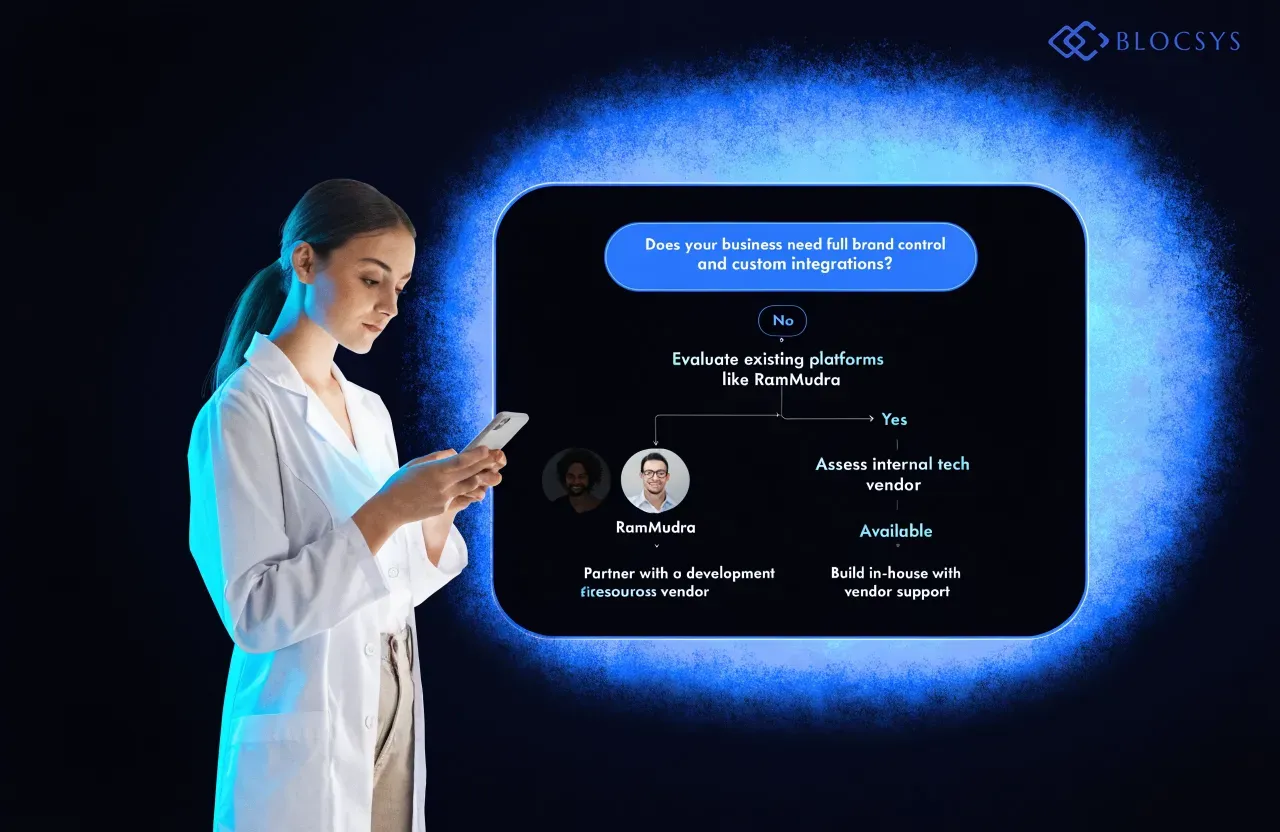
An existing platform makes sense when your business has limited internal technology resources and wants to test customer appetite for digital gold before committing serious capital. If you’re an independent jeweller with one or two stores, and you’re unsure whether your customers even want a digital gold option, starting with an existing solution reduces risk.
It also fits businesses that don’t need deep customization. If your workflow is simple — buy, sell, redeem — and you don’t need tight integration with existing inventory or accounting systems, an existing platform’s standard feature set may be enough.
When Does Custom Digital Gold App Development Make Sense?
Custom digital gold app development starts making sense once branding, specific workflows, or long-term product plans matter more than speed to market. Let’s walk through three realistic, hypothetical scenarios.
Scenario 1: The Independent Jeweller Testing the Waters
A single-store jeweller wants to offer digital gold but doesn’t want to manage a large technology project. Here, an existing solution or a lighter-scope custom build makes more sense than a full custom gold investment app with every possible feature. The trade-off: less flexibility, but far less operational burden.
Scenario 2: The Growing Jewellery Chain
A chain with multiple branches wants a branded customer experience and integration with its existing POS and accounting systems. This jeweller should ask: can an existing platform even support multi-branch inventory reconciliation? If not, a custom digital gold platform development project becomes the more practical route, despite the higher upfront investment.
Scenario 3: The Business With a Long-Term Product Vision
A bullion dealer plans to expand into tokenized gold savings schemes, loyalty-linked digital gold, and eventually silver. This business has workflows that don’t fit a generic platform. Custom digital gold app development gives them room to add features over years without renegotiating someone else’s roadmap.
In each case, the “right” answer depends on stated assumptions, not a universal rule. A practical decision checklist helps:
- What’s your available budget for year one and year three combined?
- How soon do you need to launch?
- Do you need full brand control, or is co-branding acceptable?
- Do you have internal staff who can manage a tech platform, or will you need ongoing vendor support?
- Do you plan to expand into more products, branches, or gold-adjacent services later?
Questions to Ask Before Making a Decision
Whichever direction you lean toward, ask these questions before signing anything:
- Exactly what does the pricing include, and what triggers extra charges?
- Who owns the customer data, and can it be exported if we switch providers?
- What security measures protect transactions and customer information?
- Who’s responsible for patching, backups, and uptime after launch?
- What happens to our customers’ access if we want to exit the contract?
- Can the platform integrate with our existing accounting and inventory tools?
- Who holds the physical gold, and what’s the redemption process?
- If we build custom, do we own the source code outright?
These questions apply whether you’re talking to RamMudra, another existing platform, or a custom digital gold app development vendor. Get written answers, not verbal assurances.
Jewellers rarely regret asking too many questions before signing a technology contract. They regret discovering, two years in, that they don’t actually own their customer list or their app’s source code.
How Blocsys Can Help With Custom Digital Gold and Silver App Development
Blocsys Technologies Pvt Ltd works with jewellers, bullion dealers, gold mining companies, refineries, and fintechs on digital gold platform development. The focus is on supporting digital gold and silver buying and selling, real-time pricing, secure transactions, portfolio management, and blockchain-based tokenization for verifiable ownership records.
What this means practically: a jeweller exploring custom digital gold app development can discuss their specific requirements — branding, integrations, workflow, and scale — and get a scope tailored to their business rather than a one-size-fits-all package. Blocsys also brings experience from related tokenization work, including equity tokenization platform development and corporate bond tokenization platform development, which share underlying technology with gold tokenization.
For jewellers concerned about verifiable customer onboarding and document authenticity, Blocsys’s work on a blockchain document verification system is also relevant, since KYC and proof-of-ownership documentation often sit alongside a digital gold app’s core functionality.
If you’re weighing an existing provider against building your own, a direct conversation about scope and cost is the fastest way to get clarity. You can review the digital gold and silver app development page and reach out with your specific requirements.
Conclusion: Which Option Fits Your Jewellery Business?
There’s no universal winner between RamMudra and a custom-built platform. If you want speed, lower upfront commitment, and you’re comfortable with a provider’s existing terms, an existing solution could work, provided you verify the unanswered questions first. If you want full brand control, tailored workflows, and a platform that grows with your business over years, custom digital gold app development is worth serious consideration.
Base your decision on your budget, your timeline, your internal resources, and your long-term plans, not on which option sounds more modern. Whichever direction fits, make sure you ask the hard questions before committing. And if custom development looks like the right fit, discuss your specific requirements with a team that builds these platforms for a living.
Frequently Asked Questions
Here are direct answers to the questions we hear most often about choosing between RamMudra and custom digital gold app development.
Should a jeweller use RamMudra or build a custom digital gold app?
It depends on your branding needs, budget, and internal resources. If speed and lower upfront cost matter most, an existing platform may fit. If brand control and tailored workflows matter more, custom digital gold app development is worth evaluating.
What should jewellers verify before choosing RamMudra?
Verify onboarding and transaction fees, who holds customer data, white-labelling options if any, physical gold custody and redemption terms, and exit clauses. These details aren’t always public, so ask the provider directly.
What are the advantages of building a branded digital gold app?
You control the brand experience end to end, can design features around your actual workflow, and typically own customer relationships and data, subject to your contract with your development vendor.
Is a custom digital gold app more expensive than using an existing solution?
Upfront, often yes. Over several years, it depends on the existing platform’s recurring and transaction fees. Compare total cost of ownership over 3-5 years, not just the initial price.
How much does it cost to develop a digital gold app in India?
Costs vary widely based on features, integrations, and platforms targeted. There’s no fixed figure; request a detailed quotation based on your specific scope from a development vendor.
Can a jeweller customize the features and branding of a digital gold app?
Yes, with custom digital gold app development, branding and features are built around your requirements. With an existing platform, customization depends on what the provider allows contractually.
Who controls customer data when a jeweller uses an existing digital gold platform?
This varies by provider and isn’t always publicly documented. Confirm directly with the platform whether you can access, export, or independently contact your customers.
How long does it take to build a custom digital gold app?
Timelines depend on scope, integrations, and testing requirements. A simpler app takes less time than one with multi-branch support and blockchain tokenization. Ask your vendor for a project-specific timeline.
What technology and operational responsibilities come with a custom digital gold app?
You, or your chosen vendor, handle hosting, security patching, backups, customer support, and feature updates after launch. Clarify this division of responsibility before the project starts.
How can Blocsys help a jeweller plan a custom digital gold and silver app?
Blocsys discusses your specific business requirements, maps out the feature and integration scope, and builds a platform around digital gold and silver buying, pricing, transactions, and blockchain-based tokenization. Reach out through the digital gold and silver app development page to start that conversation.
Does the platform give transparent, good-quality information to support investment decisions?
Trustworthy platform shows real-time gold pricing, clear fee and making-charge breakdowns, and transparent record of what customer owns. Blockchain tokenization helps here, gives verifiable timestamped record customer can check, not static balance on screen. Pair with portfolio tracking tools, information gap shrinks a lot. This requirement applies whether you use RamMudra or build custom.
Ready to move beyond theory and build an intelligent platform that delivers real-world value? Blocsys Technologies specialises in engineering enterprise-grade AI and blockchain solutions for the fintech, Web3, and digital asset sectors. Connect with our experts today to discuss your vision and chart a clear path from concept to a secure, scalable reality.
