
Why Digital Gold Is the Future of Jewellery Business: The Role of Blockchain Technology
Digital gold business opportunities for jewellers are growing fast, and here’s why that matters right now. Customers want smaller gold purchases, instant access, and digital proof of what they own. Jewellers who ignore this shift risk losing younger, digitally active buyers to fintech apps. Blockchain technology, meanwhile, gives digital gold platforms a way to record transactions that’s harder to tamper with. Together, these two forces are reshaping how Indian jewellers think about growth. If you’re a jewellery business owner wondering whether digital gold deserves your attention, you’re asking the right question. Businesses exploring digital gold and silver app development are essentially betting on this changing customer behaviour, and the bet isn’t unreasonable.
How Is Digital Gold Changing the Traditional Jewellery Business?
Your regular customer doesn’t always walk in during Akshaya Tritiya or a wedding season. Many want to buy gold the way they buy mutual funds, little by little. That’s the real shift happening in jewellery retail today.
Digital gold doesn’t replace the showroom experience. However, it adds a new entry point for customers who aren’t ready to visit a store or spend a large amount upfront. A customer can buy gold worth fifty rupees from their phone, then walk into your store months later to redeem it for jewellery. That’s a customer relationship you wouldn’t have had otherwise.
Moreover, digital gold lets you reach customers outside your city. A jeweller in Surat can serve a buyer in Guwahati without opening a branch there. Consequently, your brand’s reach grows without the real estate cost. This is the practical shift, not a replacement of physical retail, but an extension of it.
What Is Digital Gold and How Does It Work?
Digital gold is a service where customers buy fractional amounts of gold online, and the provider holds equivalent physical gold on their behalf. Think of it as buying a share of a gold bar instead of the whole thing.
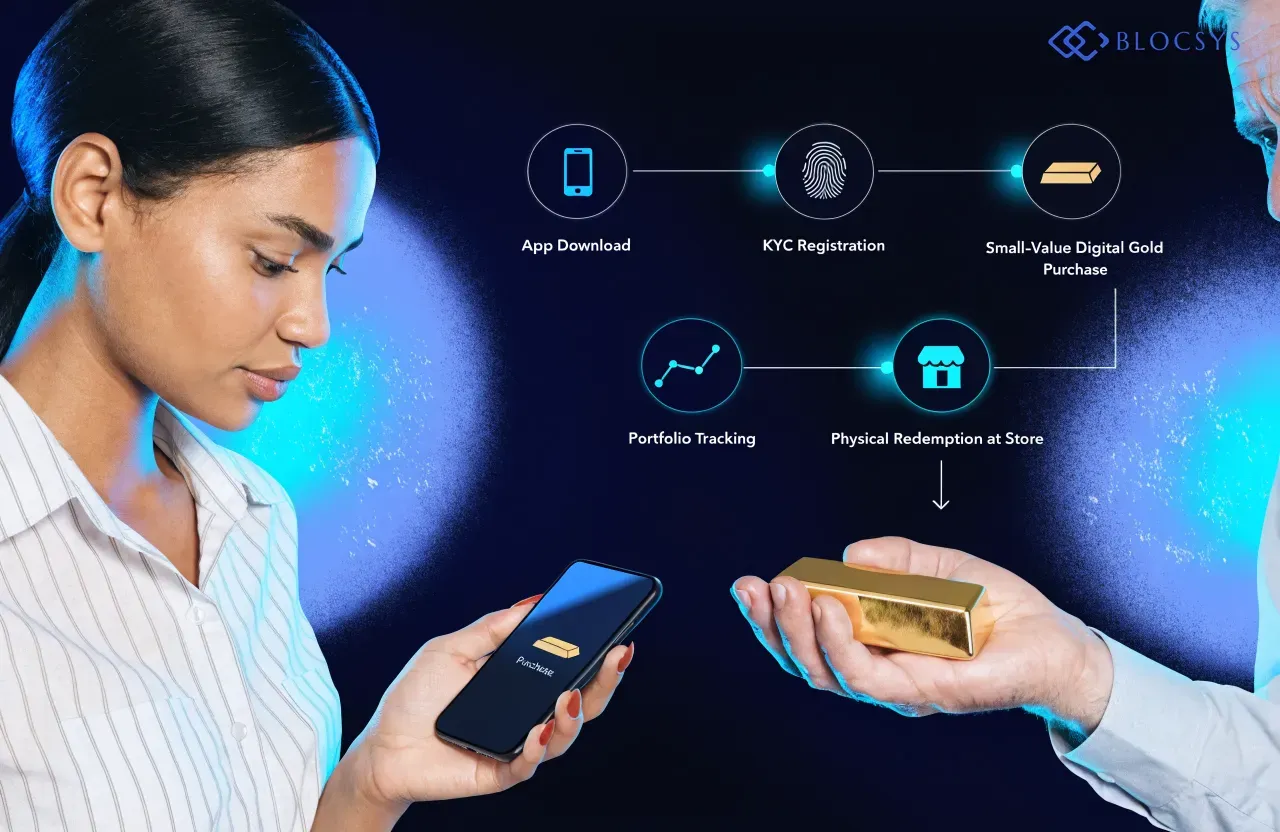
Here’s how it typically works. A customer registers on an app, deposits money, and buys gold at the live market rate. The platform records this as a digital balance in grams. Behind that balance, a custodian stores physical gold, usually in insured vaults, matching what customers have purchased.
When a customer wants their gold, they can usually sell it back for cash or redeem it as physical gold or jewellery, depending on the provider’s terms. Therefore, the model only works if the operator sources real gold reliably and reconciles digital balances against actual vault stock regularly. That’s an operational commitment, not just a coding project.
A digital gold app without a dependable gold sourcing and custody arrangement is just a wallet balance with no substance behind it. The technology is the easy half; the gold supply chain is where businesses actually succeed or fail.
Exploring Digital Gold Business Opportunities for Jewellers
So, where’s the actual opportunity? Digital gold business opportunities for jewellers show up in a few concrete ways, not as a vague “go digital” promise.
First, there’s customer retention. A branded app keeps your customer inside your ecosystem instead of sending them to a third-party fintech platform for small gold purchases. Second, there’s cross-selling. A customer who’s been accumulating digital gold for a year is a warm lead for a jewellery purchase, an SIP-style scheme, or a festive offer. Third, digital gold supports a recurring revenue habit, similar to a savings plan, which keeps customers engaged between big purchases.
Consider an independent jeweller in a tier-2 city who notices younger customers asking about “online gold buying” instead of walking in for small gold coins. Introducing a simple digital gold option, tied to their own brand, lets that jeweller capture this demand instead of losing it to an app they don’t control. That’s a realistic digital gold business opportunity for jewellers, not a guaranteed revenue jump, but a genuine gap worth evaluating.
Growing jewellery chains face a different version of this. A chain with ten stores might want a unified digital channel that works across all locations, feeding customer data into one system. Here, digital gold business opportunities for jewellers look less like a side feature and more like a strategic second channel alongside physical retail.
The Role of Blockchain Technology in Digital Gold Platforms
Blockchain is a shared, distributed ledger. Multiple parties hold a copy of the same transaction record, and no single party can quietly alter it without the change being visible to others. That’s the plain-English version.
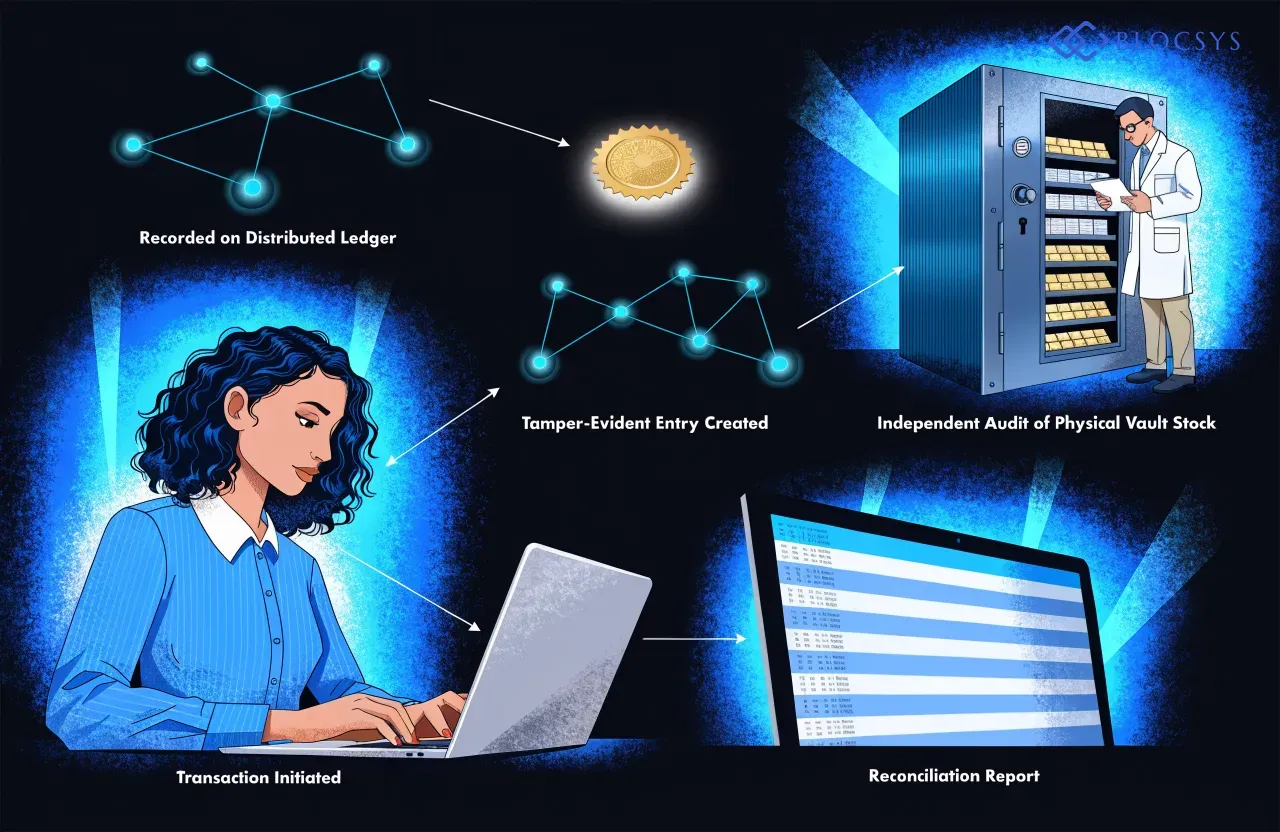
In digital gold platforms, blockchain can record each purchase, sale, or transfer as an entry on this ledger. Once written, altering that entry becomes difficult without detection, depending on how the network is designed. This is what people mean by “tamper-evident” records. Additionally, smart contracts, which are self-executing code on the blockchain, can automate specific workflows, such as releasing a redemption request once conditions are met.
Permissioned blockchain networks, where only approved participants can validate transactions, are generally more practical for a business-to-consumer gold platform than fully public networks, mainly because of privacy and regulatory comfort.
However, blockchain is a technology choice, not a mandatory one. Plenty of digital gold providers run without it, using secure databases instead. Businesses considering blockchain should evaluate it against their actual need for cross-party traceability, not add it because it sounds advanced.
How Blockchain Supports Transparency and Trust in Digital Gold
Customers buying digital gold want one thing above all: proof that their money bought something real. Blockchain helps with part of that question, not all of it.
A blockchain-based transaction ledger can show exactly when a purchase happened, at what price, and how the balance changed over time. This supports auditability, since the record can be reviewed independently without relying only on the operator’s internal database. Furthermore, reconciliation between digital balances and physical gold stock becomes easier to document when every transaction has a verifiable trail.
That said, here’s the limitation worth repeating: blockchain proves a transaction happened. It doesn’t prove that a physical gold bar sits in a vault somewhere. That verification still depends on reliable gold sourcing, third-party custody arrangements, and independent audits of physical stock. A business that treats blockchain as a substitute for proper gold custody is setting itself up for trouble. Similar reasoning applies to document-based proof systems; a tamper-proof document verification platform secures the record of a document, not the truth of what’s written inside it, and digital gold ledgers work the same way.
Essential Features for Jewellers Eyeing Digital Gold Business Opportunities
A digital gold app needs more than a buy button. Here’s what matters for a business-ready platform.
- Live gold and silver prices: Customers expect rates updated in near real time, matching market movements.
- Customer registration and KYC: Identity verification protects both the business and the customer.
- Buy and sell workflows: Smooth, low-friction transactions encourage repeat purchases.
- Portfolio tracking: Customers want to see their holdings grow over time, in grams and value.
- SIP or recurring purchase options: This supports the savings-habit model many customers prefer.
- Payment gateway integration: Reliable, secure payment processing is non-negotiable.
- Physical redemption workflow: Converting digital gold to jewellery or coins needs a clear process.
- Admin dashboard and reporting: You need visibility into transactions, reconciliation, and customer activity.
- Optional blockchain-based records: Useful where cross-party traceability adds real value.
Not every feature suits every business model. A small independent jeweller might start lean, with buying, selling, and redemption only, while a larger chain might need full reporting and multi-location administration from day one. Deciding what’s essential versus optional is part of planning any serious digital gold business opportunities for jewellers.
Business and Operational Challenges of Digital Gold Adoption
An app alone doesn’t make a digital gold business. Several operational pieces need to work in parallel.
Customer trust takes time to build, especially around a new purchasing habit. Gold sourcing and custody require dependable supplier and vault relationships; you can’t improvise this part. Pricing transparency matters too, since customers will compare your rates against market benchmarks and competitor apps. Redemption arrangements need clear terms, so customers know exactly what happens when they want physical delivery.
Additionally, reconciliation between digital records and vault stock has to happen regularly, not occasionally. Cybersecurity and data protection responsibilities grow once you’re holding customer money and personal information. Regulatory considerations around digital gold sales in India also need legal review specific to your business structure, since requirements can vary by how the offering is structured. Finally, ongoing technology maintenance and support costs continue well after launch; a platform isn’t a one-time expense.
How Can Jewellers Start Their Own Digital Gold Business?
Starting requires sequencing, not just enthusiasm. Here’s a practical path.
- Identify your target customer and the business model that fits them.
- Evaluate gold sourcing and custody partners you can trust.
- Define buying, selling, and redemption workflows clearly.
- Check applicable legal and regulatory requirements for your structure.
- Decide which application features you genuinely need.
- Choose a technology development approach and partner.
- Integrate payments and any other business systems.
- Test the app and the operating process together, not separately.
- Launch, then monitor and maintain the platform continuously.
Building the app is one step among many. It doesn’t, by itself, authorise a business to sell gold digitally; that depends on your operational and legal arrangements. Businesses exploring workflow automation around payments, reporting, and customer management might also look at broader AI powered solutions for business automation to reduce manual reconciliation work as volumes grow.
Why Custom Digital Gold App Development Matters for Jewellery Businesses
A white-label app gets you live faster. However, it often limits your branding, your feature choices, and your ability to integrate with systems you already use.
A custom-branded application gives you control over the customer journey, from the splash screen to the redemption flow. You decide which features matter to your customers, rather than accepting a generic package. You also get administrative control suited to your actual operations, not someone else’s assumptions about how a jeweller runs a business.
Custom development typically involves discovery sessions, UX and UI design, core app development, third-party integrations, testing cycles, deployment, and ongoing support. This takes real investment, both in money and time, and it comes with responsibilities for maintenance after launch. A short punchy truth: custom costs more upfront. But it pays off when your business has specific integration or branding needs that a template can’t satisfy.
Unlocking Digital Gold Business Opportunities for Jewellers with Blocsys
Blocsys is a blockchain and application development company that works with businesses exploring digital gold and silver platforms. Their digital gold and silver app development service covers features relevant to this space, including live price integration, buy-sell workflows, portfolio tracking, SIP options, payment gateway integration, admin reporting, and optional blockchain-based transaction records where a business wants that layer.
Blocsys doesn’t handle gold sourcing, custody, or regulatory authorisation; those remain the jeweller’s responsibility and require separate partnerships and legal review. What Blocsys brings is development expertise, including teams experienced in blockchain integration through offerings like dedicated blockchain engineering teams and related work such as Robinhood-style trading platform development, which translates into practical experience building secure, transaction-heavy applications.
If you’re seriously evaluating digital gold business opportunities for jewellers, a conversation with a development team that understands both the business model and the underlying technology is a reasonable next step, not a commitment.
Conclusion: Preparing Your Jewellery Business for the Future of Digital Gold
Let’s bring this together. The future of digital gold isn’t about replacing your showroom; it’s about adding a digital front door for customers who want flexibility. Why digital gold is future-relevant for jewellers comes down to changing buying habits, not hype. Blockchain technology can strengthen transaction traceability and record integrity, but it can’t replace proper gold sourcing, custody, and independent verification. Digital gold adoption in jewellery business contexts works best when the business model, operations, and technology all move together.
Digital gold business opportunities for jewellers are real, but they demand planning, not just an app. If you’re ready to explore what a custom-branded platform could look like for your business, discussing digital gold and silver app development with a team that understands the space is a sensible, low-pressure starting point.
Frequently Asked Questions
Here are direct answers to the questions we hear most often about digital gold business opportunities for jewellers.
What is digital gold, and how does it work?
Digital gold lets customers buy fractional gold online, with a provider holding equivalent physical gold on their behalf. Customers can sell it back or redeem it as physical gold, depending on the platform’s terms.
Does blockchain guarantee that digital gold is backed by physical gold?
No. Blockchain can make transaction records tamper-evident, but it doesn’t verify that physical gold actually exists in a vault. That verification still depends on sourcing, custody, and independent audits.
Can a jewellery business launch its own branded digital gold app?
Yes, through custom development. You’ll need a reliable gold custody partner, clear redemption terms, and a technology partner who can build and maintain the platform securely.
What features should a digital gold application include?
At minimum, live pricing, secure buy-sell workflows, portfolio tracking, payment integration, and redemption workflows. Larger businesses often add SIP options, admin reporting, and optional blockchain-based records.
What’s the biggest challenge in starting a digital gold business?
Most jewellers underestimate the operational side, gold sourcing, custody, reconciliation, and regulatory review, assuming the app is the hard part. It’s usually the easier half.
Ready to move beyond theory and build an intelligent platform that delivers real-world value? Blocsys Technologies specialises in engineering enterprise-grade AI and blockchain solutions for the fintech, Web3, and digital asset sectors. Connect with our experts today to discuss your vision and chart a clear path from concept to a secure, scalable reality.
