


How do smart contracts make DeFi possible?
⦁ Automation: Smart contracts eliminate the need for manual intervention, ensuring transactions are executed efficiently and accurately.
⦁ Transparency: Every transaction is recorded on a public blockchain, providing complete transparency and accountability.
⦁ Security: Built-in security features protect against fraud and unauthorized access.
⦁ Accessibility: DeFi is accessible to anyone with an internet connection, breaking down geographical barriers.
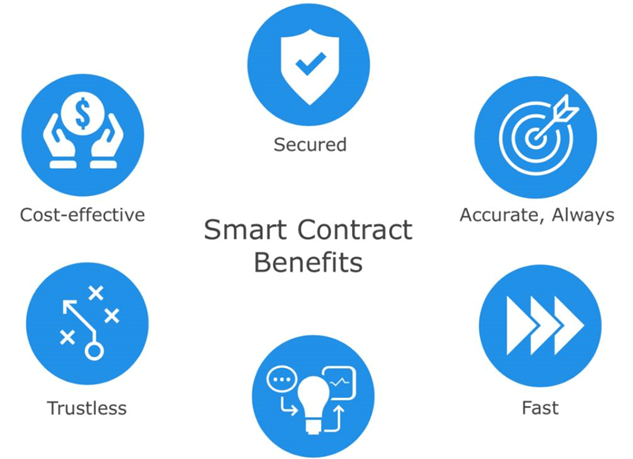
DeFi smart contracts are the backbone of Decentralized Finance (DeFi). They automate financial processes, eliminate intermediaries, and power DeFi applications like DEXs and lending platforms.
Here are some key benefits of smart contracts in DeFi:
⦁ Cost reduction: No middlemen, lower fees
⦁ Transparency and security: Inherits blockchain’s strengths
⦁ Efficiency and automation: Self-executing contracts
⦁ Accessibility: Open finance for everyone
However, there are also some challenges to consider:
⦁ Security vulnerabilities: Requires audits and best practices
⦁ Regulatory hurdles: Finding the right balance
⦁ User education: Building awareness and knowledge
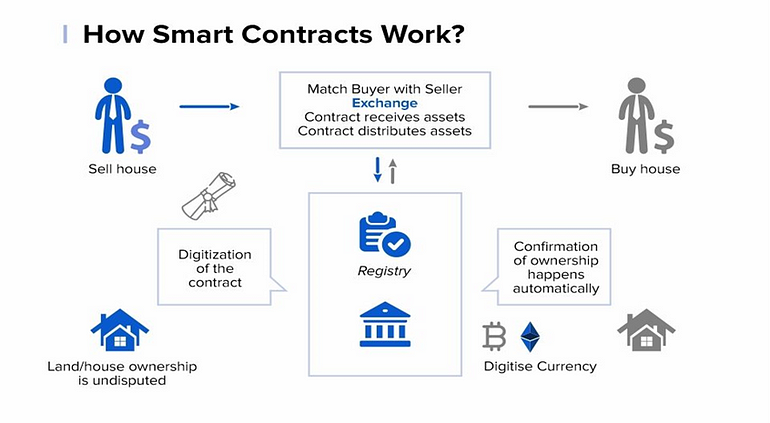
Real-Life Example: How Smart Contracts Work?
A Guide to DeFi Smart Contract Development
1. Define Your Goals: Clearly outline the purpose of your DeFi project and the specific functionalities you need.
2. Research and Plan: Conduct thorough research to understand the DeFi landscape, regulatory requirements, and potential challenges.
3. Create a Proof of Concept (POC): Develop a working prototype to test the feasibility of your ideas and gather feedback.
4. Build and Test: Develop the smart contract code, ensuring it adheres to best practices and security standards. Rigorously test the contract to identify and address potential vulnerabilities.
5. Deploy and Maintain: Once the contract is audited and approved, deploy it to the desired blockchain network. Provide ongoing maintenance and support to ensure its smooth operation.

Frequently Asked Questions
How do smart contracts make DeFi possible?
Smart contracts power DeFi by automating financial processes without manual intervention, recording every transaction transparently on a public blockchain, and applying built-in security features to guard against fraud and unauthorized access. They also make DeFi accessible to anyone with an internet connection, removing geographical barriers.
What are the key benefits of smart contracts in DeFi?
Smart contracts reduce costs by removing middlemen and lowering fees, inherit blockchain's transparency and security strengths, and enable efficiency through self-executing automation. They also make open finance accessible to everyone.
What challenges do DeFi smart contracts face?
Key challenges include security vulnerabilities that require audits and best practices, regulatory hurdles in finding the right balance, and the need for user education to build awareness and knowledge of the technology.
What are the steps to develop a DeFi smart contract?
Development starts with defining your project goals, followed by research and planning around the DeFi landscape and regulations. Next, teams create a proof of concept, build and rigorously test the contract code, and finally deploy and maintain it on the chosen blockchain network.
Why is testing important before deploying a DeFi smart contract?
Rigorous testing during the build phase helps identify and address potential vulnerabilities before deployment. Contracts should also be audited and approved prior to going live, with ongoing maintenance provided afterward to ensure smooth operation.
What applications rely on DeFi smart contracts?
DeFi smart contracts serve as the backbone of applications like decentralized exchanges (DEXs) and lending platforms. They automate financial processes and eliminate the need for intermediaries within these platforms.
