


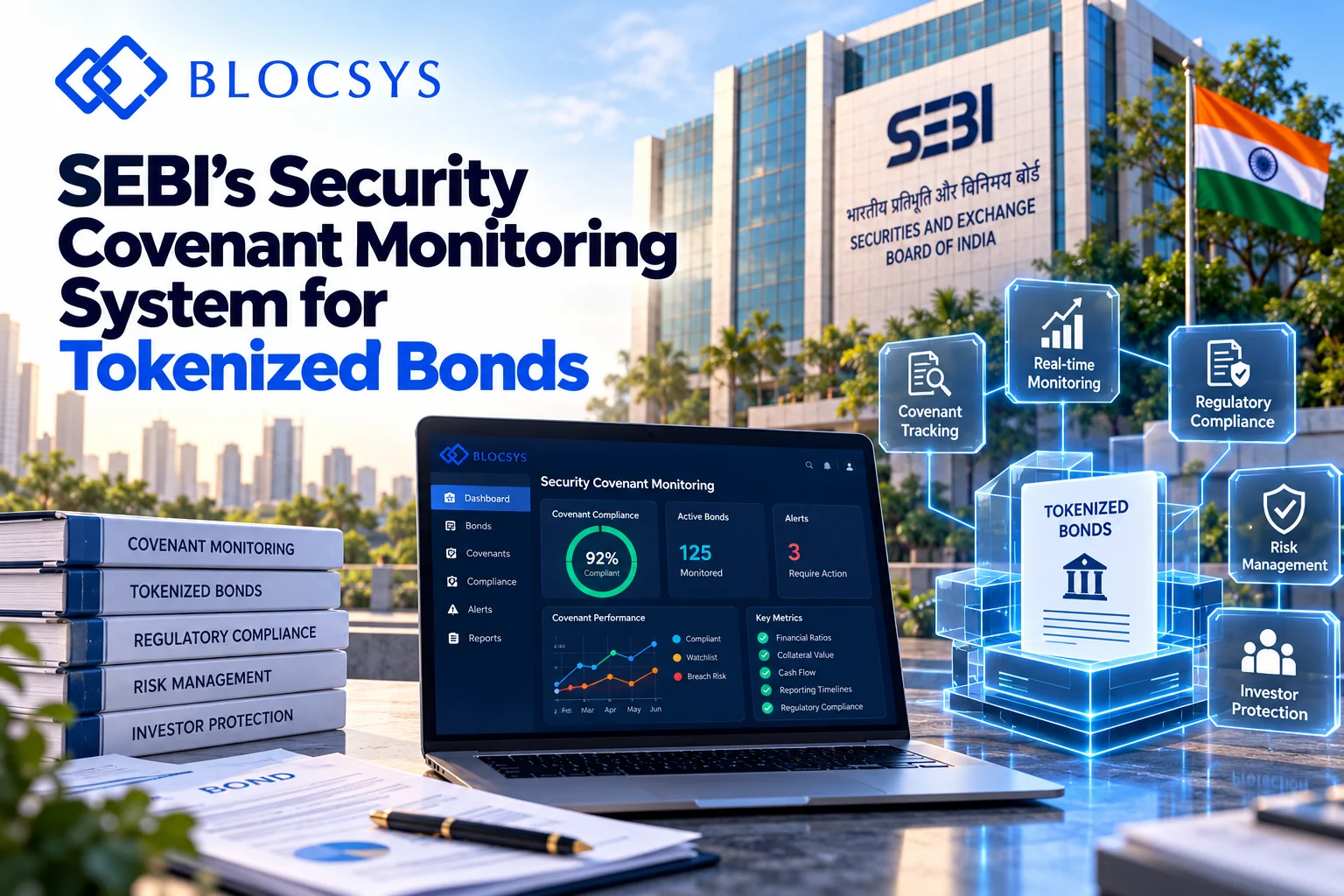
Integrating Tokenized Corporate Bonds with SEBI’s Security and Covenant Monitoring System
If you’re building or evaluating a tokenized corporate bond platform in India, you’ve likely asked one question first: how does this fit with the SEBI security and covenant monitoring system that depositories already run? The short answer is that the two systems serve different purposes and, as things stand, aren’t required to connect directly. The depository-hosted system meets a specific regulatory obligation around security creation, asset cover and covenant data. A tokenized bond platform is a separate layer that issuers or technology providers may build to represent bonds as digital tokens. Where they intersect is data consistency, not a mandated technical pipe. Before you design anything, you need clarity on scope, stakeholder roles and where a tokenized platform can genuinely add value. For a broader look at how tokenization, Demat infrastructure and CBDC settlement rails fit together, our Demat 2.0, Tokenization & CBDC Integration resource is a useful starting point.
What Does the SEBI Security and Covenant Monitoring System Actually Cover?
SEBI introduced this framework through its circular dated August 13, 2021, on “Security and Covenant Monitoring using Distributed Ledger Technology (DLT).” The circular required listed issuers of non-convertible debt securities to record security creation, asset cover and covenant details on a DLT-based system hosted jointly by the depositories, NSDL and CDSL. SEBI followed up with operational guidelines on March 29, 2022, covering onboarding, data fields, user roles and timelines. These requirements were later folded into SEBI’s consolidated master circulars for debenture trustees and for issuers of listed non-convertible securities.
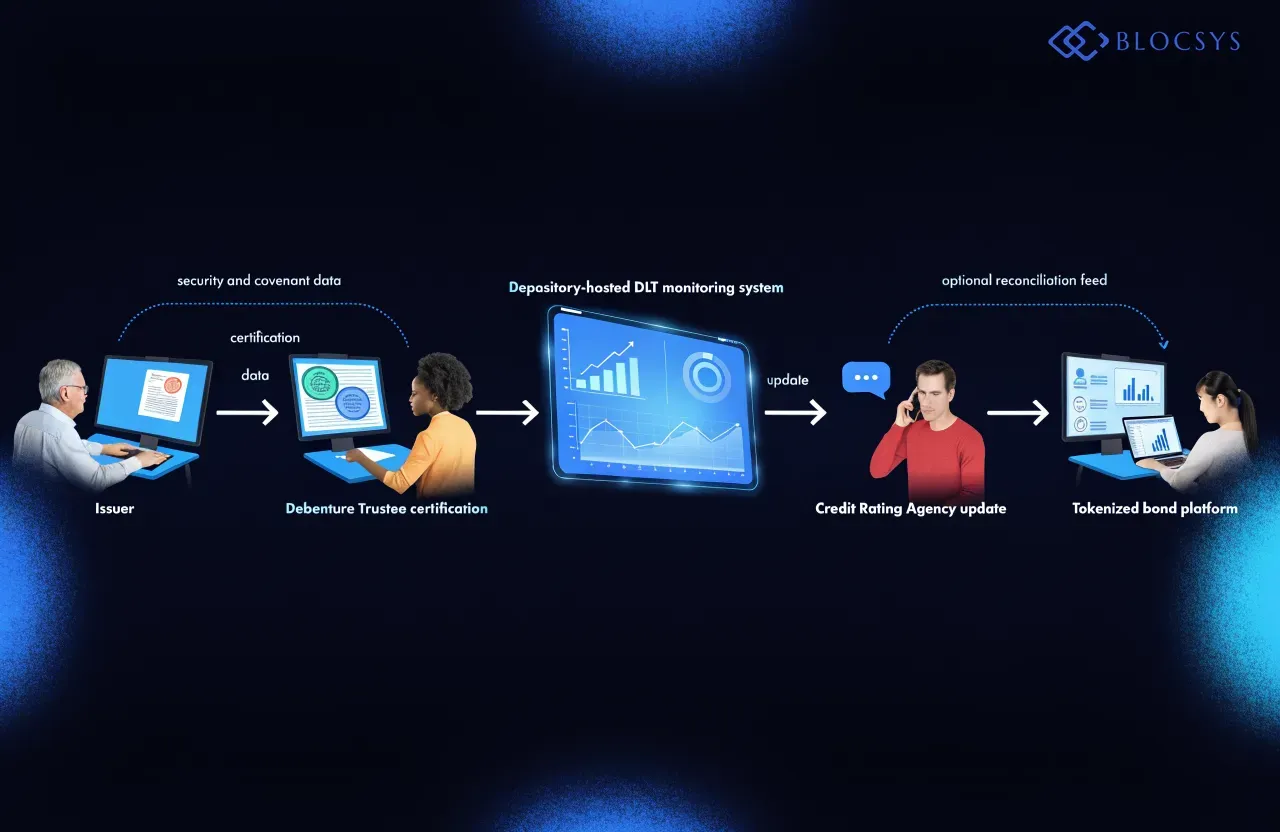
In practice, the system tracks four things: the assets charged in favour of debenture holders, the value of that security versus outstanding debt, financial and non-financial covenants tied to the issue, and the credit ratings assigned to the instrument. Debenture trustees certify asset cover, issuers submit underlying data, and credit rating agencies push rating updates into the same ledger. Consequently, regulators, trustees and rating agencies all work off one shared, append-only record instead of chasing spreadsheets and emails.
Why DLT Instead of a Conventional Database?
SEBI chose distributed ledger technology because multiple independent parties — the issuer, the trustee, the rating agency and the depository — need to see and attest to the same facts without one party unilaterally editing history. A DLT-based security and covenant monitoring system gives each participant a verifiable, time-stamped trail. That matters for a bond market where disputes over asset cover or covenant breaches can take months to resolve otherwise.
How Does a Tokenized Corporate Bond Platform Relate to the SEBI Security and Covenant Monitoring System?
Here’s the distinction that trips up most technology teams: the depository-hosted monitoring system is a regulatory record-keeping platform. A tokenized bond platform is an issuance, custody and trading layer, usually built on a separate permissioned or private ledger. Nothing in the SEBI circulars requires these two systems to be technically wired together. However, if an issuer tokenizes a bond that’s already subject to covenant monitoring, the underlying facts — asset cover, covenant compliance, credit rating — still need to stay accurate across both environments.
Think of it this way: the monitoring system is the regulator’s source of truth for security and covenant data. Your tokenization platform is a separate system of record for token ownership, transfer history and settlement. Where the two need to agree is on the facts about the bond itself, not on infrastructure. That’s an architecture decision, not a regulatory mandate.
Is Direct Integration Mandatory for Every Tokenization Platform?
No. SEBI’s circulars don’t instruct tokenization platforms to establish an API connection with the depository-hosted system. The mandatory obligation sits with issuers, debenture trustees and credit rating agencies to populate the monitoring system correctly, regardless of whether the bond is also tokenized elsewhere. A direct integration is an optional engineering choice some institutions may pursue to reduce manual reconciliation. Don’t treat it as a compliance checkbox it isn’t.
Most issuers get into trouble not because they skip the monitoring system, but because they treat their tokenization platform’s bond data as automatically in sync with it. The two need reconciliation discipline, not a shared database.
Stakeholder Responsibilities in Security and Covenant Monitoring
Every stakeholder plays a distinct role, and a tokenized bond platform needs to respect those boundaries rather than try to absorb them.
| Stakeholder | Regulatory Responsibility | Relevance to a Tokenized Platform |
|---|---|---|
| Issuer | Provides asset and charge data, certifies financial statements supporting asset cover | Source of truth for bond terms token metadata must mirror |
| Debenture Trustee | Verifies and certifies asset cover, monitors covenant compliance | May need read access to confirm tokenized bond terms match certified data |
| Credit Rating Agency | Updates ratings on the monitoring system | Rating changes should propagate to any investor-facing tokenized bond interface |
| Depository (NSDL/CDSL) | Hosts the DLT-based monitoring system, manages access | Operates independently of any separate tokenization ledger |
| Technology Provider | No direct regulatory role | Builds and maintains the tokenized platform and any reconciliation layer |
Notice that the technology provider’s job is support infrastructure, not regulatory compliance. That’s an important line to hold when you’re scoping a build-or-buy decision with a blockchain consulting partner.
Designing the Integration Architecture: Data Exchange Between Systems
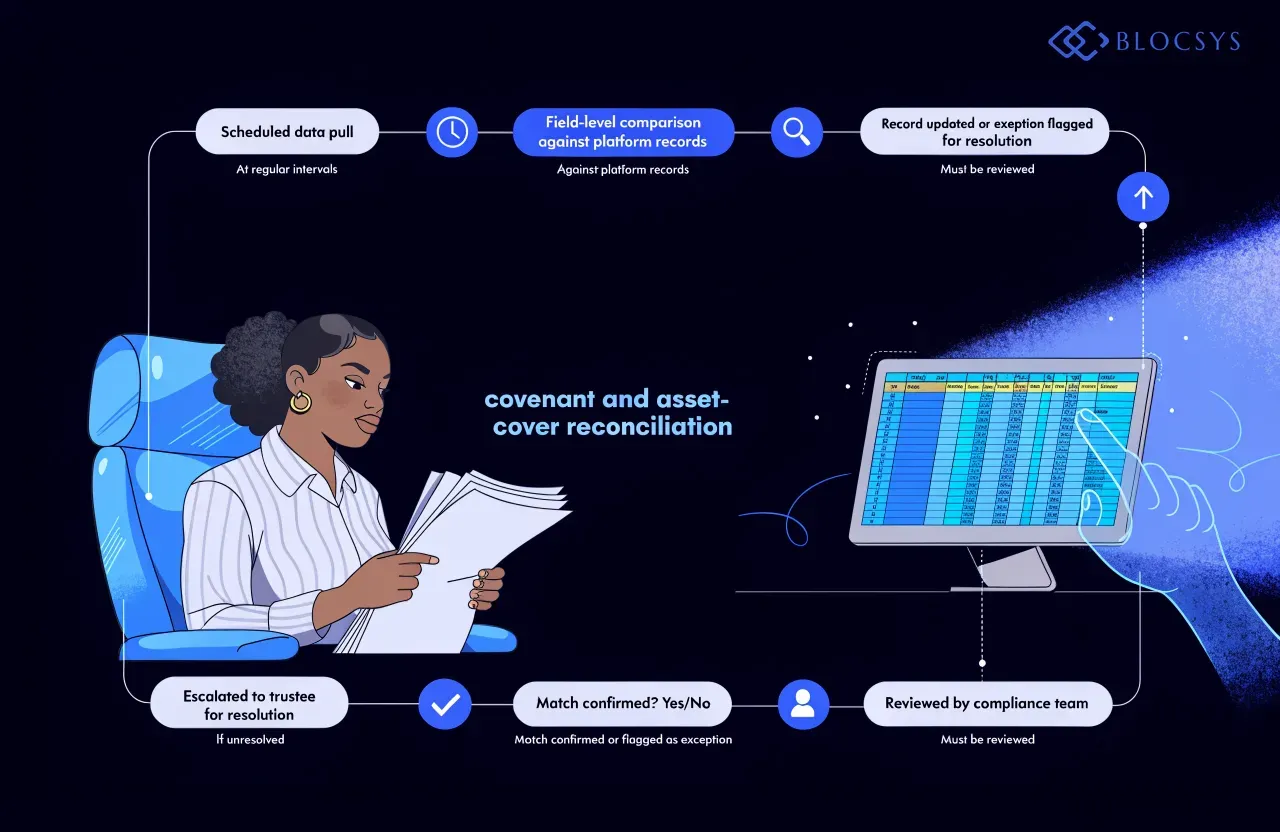
If your organization decides a tokenized bond platform should stay consistent with the SEBI security and covenant monitoring system, the architecture question becomes how data moves between the two, not whether a direct link is required. Most workable designs use a reconciliation layer rather than a live transactional connection. That layer pulls published asset-cover, covenant and rating updates on a scheduled basis and compares them against the tokenized platform’s own records.
APIs, Data Mapping and Unique Identifiers
A sound integration starts with identifiers. Every security needs a consistent reference — typically the ISIN — that both the monitoring system records and the tokenization platform’s smart contract metadata carry. Without that shared key, reconciliation becomes a manual matching exercise. Field mapping matters just as much: asset-cover ratios, charge descriptions and covenant thresholds need defined formats on both sides before any API call makes sense.
Where depositories expose structured reports or data extracts, a technology team can build an ingestion service that normalizes those fields and writes them into the tokenized platform’s off-chain data store, with only verified summary data anchored on-chain. We haven’t seen a published, open API specification from the depositories for third-party platform integration, so any described interface here is an illustrative design pattern, not a confirmed technical specification.
Security Creation and Charge Records: What Needs to Stay Consistent
Security creation is where a bond’s charge over specific assets gets documented and later certified. This happens through legal filings and trustee certification long before any token exists. A tokenized bond platform doesn’t create the charge. It represents an already-created, already-certified security as a digital instrument investors can hold and transfer.
Therefore, your platform’s token metadata should reference the charge record rather than duplicate it. If the charge description, asset identifiers or cover ratio recorded with the monitoring system change, your platform needs a defined update path — ideally triggered by an authorized data feed, not a manual edit by whoever notices first. Establish, early on, who owns the master record and who merely consumes it. Issuers and trustees own the regulatory record. Your platform owns the representation.
Covenant Monitoring and Asset-Cover Data Flows
Covenant monitoring tracks whether an issuer stays within agreed financial and operational limits — debt-service coverage, leverage ratios, restrictions on further borrowing. The monitoring system captures covenant status as certified by the debenture trustee, based on issuer disclosures and, where relevant, auditor input. Asset-cover information works similarly: it’s a certified ratio, not a live calculation your platform can safely recompute on its own.
This is a point worth being precise about. A tokenized platform can display covenant and asset-cover status to investors, and it can flag discrepancies for review. What it shouldn’t do is treat on-chain data as an independent source of truth that overrides trustee certification. Asset valuations, legal interpretation of covenant breach and underlying financial statements still require human and professional judgment — a smart contract can’t verify a valuation report.
Credit Rating Updates and Approval Workflows
Credit rating agencies push updates into the monitoring system as part of their surveillance obligations. If your tokenized platform surfaces ratings to investors, build a scheduled pull rather than assuming real-time push access exists. Rating changes should also trigger an internal review step before they’re reflected anywhere customer-facing, since a lag or data error in the feed could otherwise mislead investors.
Where Smart Contracts Help in a Security and Covenant Monitoring DLT Setup — and Where They Don’t
Smart contracts are good at enforcing rules once the underlying facts are confirmed: blocking a transfer if a covenant breach flag is set, automating coupon distribution logic, or restricting token transfers to KYC-verified wallets. They’re genuinely useful for that kind of deterministic enforcement.
What they can’t do is decide whether a covenant has actually been breached, or whether an asset valuation supports a given cover ratio. Those are judgment calls that depend on legal documents, audited financials and trustee certification. A well-designed security and covenant monitoring DLT component should read certified status from an authorized feed and act on it — not try to derive that status from raw on-chain data. Treat smart contracts as an execution layer sitting on top of verified facts, never as the verifier itself.
Identity, Access Control and Security for the Integration Layer
Any system touching bond security and covenant data needs tight access control, regardless of whether it talks to the SEBI security and covenant monitoring system directly or only reconciles against it periodically. At minimum, you’ll want role-based permissions separating who can view data from who can submit or approve changes, full audit logging of every update with timestamp and actor identity, and encryption for data in transit and at rest.
Additionally, because debenture trustees and rating agencies are named participants in the regulatory workflow, your platform’s access model should mirror that separation of duties internally. Don’t let a single administrator role touch both token issuance and covenant-status updates. That concentration of privilege is exactly what auditors flag first.
Validation and Reconciliation: Keeping Two Records Honest
Once your tokenized platform and the depository-hosted monitoring system both hold facts about the same bond, reconciliation becomes an ongoing operational task, not a one-time setup step. Build validation rules that check for mismatched ISINs, outdated covenant status, asset-cover figures older than a defined threshold, and rating data that hasn’t refreshed on schedule.
When a mismatch surfaces, your process needs a clear owner. Usually that’s a compliance or operations team member, not an automated script making a unilateral correction. Log every reconciliation exception with enough context — source record, platform record, timestamp, resolving action — so an auditor can trace exactly what happened and why.
Exception Handling When Records Fall Out of Sync
Data feeds fail. A depository report might arrive late, a field might change format, or a trustee certification might lag a rating update. Your platform should route failed updates into a visible exception queue rather than silently retry or, worse, display stale data as current. Set a maximum staleness window — say, flag anything unconfirmed beyond a defined number of business days — and escalate automatically once that’s exceeded.
For organizations already running reconciliation infrastructure for post-trade settlement, extending that same discipline to security and covenant data is often more efficient than building a parallel process. Our work on permissioned blockchain infrastructure for post-trade operations covers similar reconciliation patterns in more depth.
Implementation and Testing Roadmap
Start with a data inventory, not a technology choice. Map exactly which fields your tokenized platform needs from the monitoring system, and which fields it should never try to independently alter. Then prototype the reconciliation layer against sample or test data before connecting to anything live.
A practical sequence looks like this:
- Confirm which regulatory obligations apply to your specific bond and issuer category before assuming the monitoring system even applies to your instrument.
- Define identifier and field mapping between your token metadata and the certified security, asset-cover and covenant records.
- Build the reconciliation and exception-handling layer, and test it with deliberately mismatched sample data.
- Run a parallel period where your platform’s data is checked against the monitoring system without customer-facing reliance on the automated feed.
- Define escalation ownership — who resolves exceptions, and within what timeframe — before going live.
Testing shouldn’t stop at happy-path scenarios. Deliberately simulate a late rating update, a covenant breach flag, and a field-format change, and confirm your exception queue catches each one correctly.
Common Integration Mistakes Technology Teams Make
The most frequent mistake is assuming the monitoring system exposes a real-time API for third-party platforms — it may not, and you should verify current depository documentation before designing around that assumption. Another common error is letting the tokenization platform’s smart contract become the system of record for covenant status, which quietly shifts legal risk onto code that was never meant to carry it.
Teams also underestimate reconciliation workload. Treating it as a one-off integration project, rather than an ongoing operational function with dedicated staff, tends to produce stale data within a few months. Finally, skipping a parallel testing period before go-live is a shortcut that usually surfaces as a production incident instead.
Evaluating Technical Implementation Support
Before picking a build-or-integrate path, evaluate whether a prospective technology partner understands the regulatory boundary we’ve described throughout this piece — namely, that the monitoring system and a tokenization platform are separate systems requiring reconciliation, not a single merged pipeline. Ask how they’d handle identifier mapping, exception queues and access-control separation between issuance and compliance functions.
Blocsys works with issuers, banks and financial institutions on corporate bond tokenization platform development and broader blockchain development engagements, including the kind of reconciliation and data-mapping layers described above. We haven’t built a direct integration with the depository-hosted monitoring system, and we won’t claim otherwise — but if you’re assessing architecture options for a tokenized bond platform that needs to stay consistent with existing regulatory records, that’s squarely the kind of enterprise blockchain and financial-system integration work we take on.
Next Steps for Issuers and Technology Teams
Getting this right starts with separating two questions: what does regulation require, and what does your platform’s architecture need to support that requirement well? The SEBI security and covenant monitoring system handles the former. Your tokenized bond platform’s design choices handle the latter. Get clear on data ownership, identifiers and reconciliation ownership before writing a line of integration code.
If you’re mapping out how tokenization, Demat infrastructure and digital settlement fit your institution’s broader digital-asset roadmap, our Demat 2.0, Tokenization & CBDC Integration page walks through the surrounding infrastructure in more detail. And if you’d like to talk through architecture options for your specific bond program, you can reach out to Blocsys directly.
Frequently Asked Questions
Here are direct answers to the questions we hear most often about integrating tokenized corporate bonds with the SEBI security and covenant monitoring system.
What is SEBI’s Security and Covenant Monitoring System?
It’s a DLT-based system hosted jointly by NSDL and CDSL, established under SEBI’s August 13, 2021 circular, where issuers, debenture trustees and credit rating agencies record and certify security, asset-cover and covenant data for listed non-convertible debt securities.
How does the Security and Covenant Monitoring System use distributed ledger technology?
DLT lets multiple independent parties — issuer, trustee, rating agency, depository — maintain a shared, tamper-resistant record rather than separate files. SEBI’s operational guidelines from March 29, 2022 detail the roles and data fields involved.
How does the monitoring system relate to a tokenized corporate bond platform?
They’re separate systems. The monitoring system is the regulatory record for security and covenant data. A tokenized bond platform represents bond ownership and transfer digitally. Where a bond is both monitored and tokenized, the underlying facts need to stay consistent across both.
Is a direct integration with the depository-hosted system mandatory for every tokenization platform?
No. SEBI’s circulars place the compliance obligation on issuers, trustees and rating agencies to populate the monitoring system, not on tokenization platforms to connect to it. A direct technical integration is an optional design choice, not a regulatory requirement.
Which stakeholders participate in security and covenant monitoring?
Issuers, debenture trustees, credit rating agencies and the depositories (NSDL and CDSL) each have defined roles. Technology providers building tokenized platforms typically support reconciliation and data consistency rather than holding a regulatory role themselves.
What security and asset-cover information may need to be recorded or verified?
Typically this includes charged asset details, charge documentation, asset-cover ratios certified by the debenture trustee, covenant compliance status and credit rating updates tied to the specific ISIN.
How can a tokenized bond platform exchange data with existing financial systems?
Through a reconciliation layer that maps shared identifiers like ISINs, normalizes field formats, and periodically compares published monitoring data against the platform’s own records — rather than assuming a live, continuous API connection exists.
What role can smart contracts play in covenant monitoring?
Smart contracts can enforce rules based on confirmed status — restricting transfers on a flagged breach, for instance. They shouldn’t independently determine whether a breach occurred, since that depends on legal and financial judgment outside the contract’s scope.
How can organizations manage inconsistent records and failed data updates?
Route mismatches into a visible exception queue with a defined owner, set a maximum staleness threshold, and log every resolution with full context so it’s auditable later.
What security and access controls should an integration include?
Role-based access separating viewers from approvers, full audit logging, encryption in transit and at rest, and a strict separation between who can issue tokens and who can update covenant or compliance status.
What should financial institutions evaluate before implementing a tokenized corporate bond integration?
Confirm which regulatory obligations actually apply to your instrument, define identifier and field mapping, build and test a reconciliation layer against mismatched sample data, and assign clear ownership for exception handling before going live.
Ready to move beyond theory and build an intelligent platform that delivers real-world value? Blocsys Technologies specialises in engineering enterprise-grade AI and blockchain solutions for the fintech, Web3, and digital asset sectors. Connect with our experts today to discuss your vision and chart a clear path from concept to a secure, scalable reality.
