
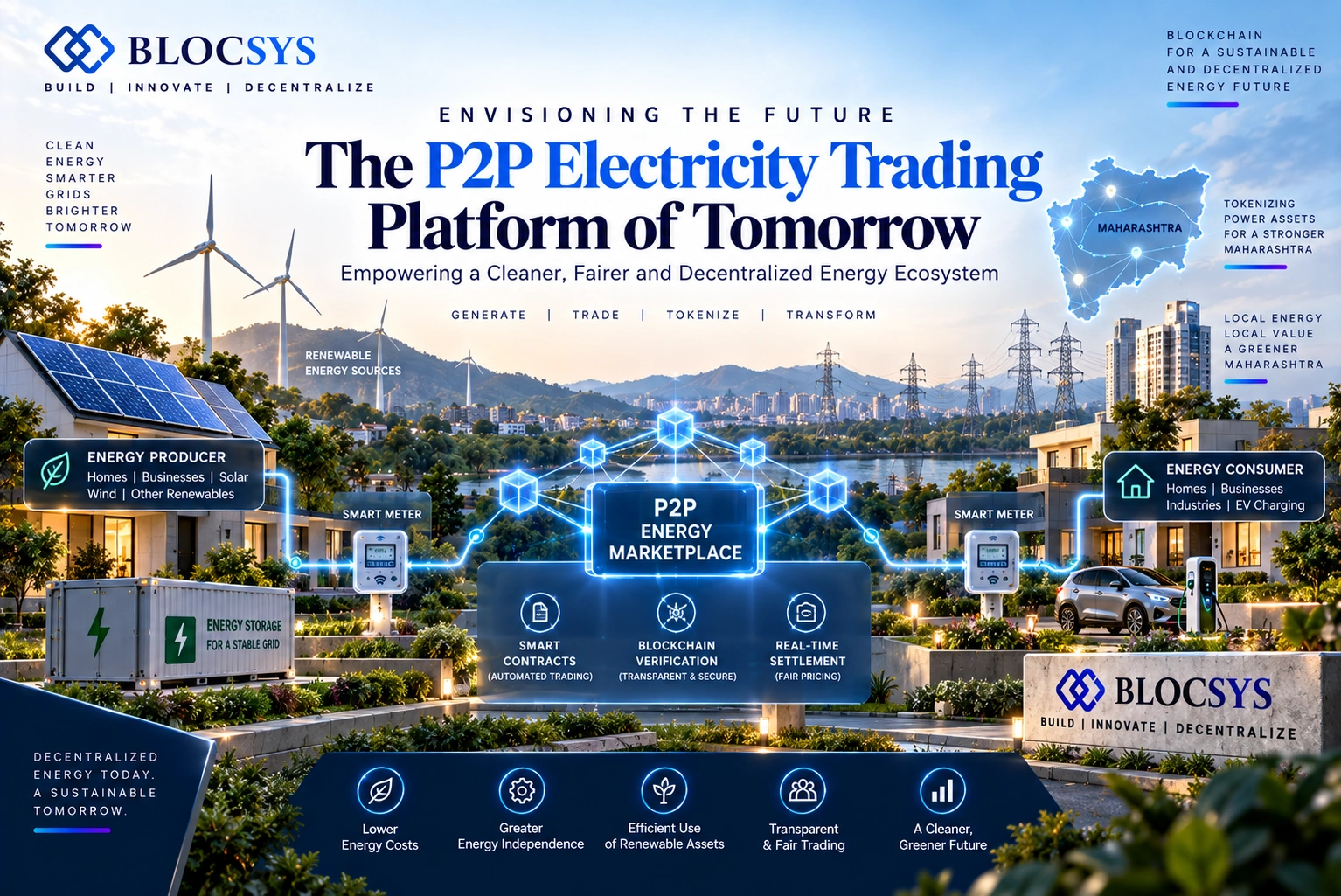
Imagine a future where the energy market is as dynamic and accessible as the digital marketplaces we use today. Picture a world where electricity trading is conducted with the same ease and transparency as online auctions. At Blocsys, we are envisioning just that—a revolutionary blockchain-based Peer-to-Peer (P2P) Electricity Trading Platform that could transform how electricity is bought and sold.
The energy industry is moving toward a more connected and decentralized model where electricity generation, consumption, trading, and settlement can be managed through digital platforms. Peer-to-peer (P2P) electricity trading is part of this shift, allowing producers and consumers to interact through a digital marketplace and trade energy according to predefined rules. Blockchain can support this model by providing transaction infrastructure, while smart contracts can automate selected trading and settlement processes. As these platforms evolve, the opportunity can extend beyond electricity trading into renewable energy, energy storage, digital energy infrastructure, and power asset tokenization.
The Future of P2P Electricity Trading
Traditional electricity markets generally depend on centralized systems for managing generation, distribution, trading, and settlement. P2P electricity trading introduces a different approach by creating a digital environment where eligible producers and consumers can interact more directly. A producer with available electricity could offer it through the platform, while a consumer could submit a bid based on the required quantity, timing, and price. The platform can then process these offers and bids according to predefined market rules.
The technology behind this model needs to coordinate several processes rather than simply provide a marketplace. A P2P electricity trading platform can combine a trading engine, user management, energy data, blockchain infrastructure, smart contracts, payment workflows, and analytics within one environment. This allows energy-related transactions to be managed digitally while the physical generation, transmission, and distribution of electricity continue through the underlying power infrastructure.
How a P2P Electricity Trading Platform Could Work
A P2P electricity trading platform can connect producers and consumers through a structured digital trading environment. Producers can provide information about available electricity, including quantity and relevant trading periods, while consumers can submit bids based on their energy requirements. The trading engine can process available offers and bids and determine suitable transactions according to the rules configured for the marketplace.
Once a trade is confirmed, the platform can update the transaction status and maintain the relevant records. Blockchain can be used as a transaction layer, while smart contracts can automate predefined actions after specific conditions are met. APIs can connect the platform with payment systems, smart meters, analytics tools, and other external services, creating a connected infrastructure for digital energy trading.
Phase 1: Auction-Based Energy Trading
An auction-based model can provide a practical foundation for P2P electricity trading. Instead of requiring participants to negotiate individual transactions, the platform can create specific trading windows during which producers submit electricity offers and consumers submit bids. The trading engine can then evaluate these bids based on factors such as quantity, price, timing, and the rules defined for the marketplace.
This approach gives the platform a structured way to handle multiple participants within the same trading period. It can also support different energy requirements because participants may need different quantities of electricity at different times. As the platform develops, the auction mechanism can be expanded with additional trading rules, settlement functionality, energy data, and system integrations.
Flexible Bid Types for P2P Energy Trading
Electricity trading requires flexibility because energy generation and consumption can change throughout the day. A platform can therefore support different bid structures depending on how participants want to buy or sell electricity. A Single Bid can represent a specific quantity, while a Block Bid can cover electricity offered or required across a defined period.
A Minimum Quantity Block Bid can specify the minimum quantity that must be matched for a transaction to proceed. A Profile Block Bid can represent different quantities across multiple time intervals, while a Linked Bid can connect multiple bids where the execution of one transaction depends on another condition. Supporting these structures allows a P2P electricity trading platform to handle more complex trading requirements than a basic buy-and-sell model.
Blockchain and Smart Contracts in Electricity Trading
Blockchain can provide a digital transaction layer for a P2P electricity trading platform. Depending on the architecture, information related to bids, trade confirmations, transaction states, and settlement events can be recorded through blockchain infrastructure. This creates a traceable record of digital trading activity and allows different components of the platform to work with consistent transaction information.
Smart contracts provide the automation layer. Trading rules can be programmed into smart contracts so that predefined actions occur when specific conditions are satisfied. A smart contract could support trade confirmation, update a transaction state, or initiate a predefined settlement workflow. This can reduce repetitive manual processing and provide greater consistency when executing defined digital rules.
Blockchain does not replace the physical electricity network. Generation, transmission, distribution, metering, and grid operations remain dependent on physical infrastructure. A blockchain-based energy platform therefore needs to work alongside these systems rather than treating blockchain as a replacement for the existing electricity network.
Building the Technology Infrastructure
A P2P electricity trading platform requires multiple technology components working together. The trading engine manages offers and bids, while the backend handles participants, transactions, data, and business logic. APIs can connect the platform with external systems, while blockchain infrastructure and smart contracts can manage selected decentralized processes.
The user interface is equally important because producers and consumers need a clear way to manage accounts, view energy availability, submit bids, monitor transactions, and access relevant information. Dashboards and analytics can provide visibility into trading activity, energy consumption, generation patterns, and transaction history. A scalable architecture allows these components to expand as the number of participants and trading activity increases.
Organizations planning such platforms can also use specialized Blockchain Development Services to build the underlying infrastructure, including blockchain networks, application layers, APIs, and enterprise integrations.
Smart Meters and Energy Data
Reliable energy data is an important part of digital electricity trading. Smart meters can provide information about electricity generation and consumption during specific periods, allowing digital platforms to connect trading activity with actual energy usage. When smart-meter data is integrated with a P2P electricity trading platform, participants can work with more relevant information when managing their energy requirements.
Energy data can also support reporting, transaction verification, forecasting, and future automation. The platform can combine this information with trading records and analytics to provide a broader view of market activity. This creates a stronger connection between the digital trading environment and the physical energy infrastructure supporting it.
Phase 2 and Beyond: Payments, Billing, SCADA and Smart Meters
The development of a P2P electricity trading platform does not have to stop at bidding and transaction management. Future phases can introduce payment and billing systems, allowing financial workflows to become part of the platform. Integration with smart meters can provide generation and consumption information, while SCADA and other operational systems can bring additional infrastructure data into the digital environment.
The platform can also expand through forecasting, analytics, automated reconciliation, participant management, energy-storage information, and renewable generation data. With these capabilities, a P2P electricity trading system can gradually evolve into a broader digital energy platform that connects trading activity with operational and financial processes.
Maharashtra Power Asset Tokenization and Digital Energy Infrastructure
Power infrastructure represents substantial physical and financial value, particularly across renewable energy projects, generation facilities, energy-storage systems, and other long-term assets. As this infrastructure becomes increasingly digital, power asset tokenization can provide a way to represent defined rights or economic interests associated with an underlying physical asset through blockchain-based infrastructure.
Tokenization does not automatically mean that a token represents direct ownership of a physical power asset. Its meaning depends on how the asset is structured and what rights, economic interests, transfer conditions, and governance mechanisms are attached to the token. This distinction is important when designing a tokenized energy platform because the digital representation needs to correspond clearly with the underlying asset and the rights associated with it.
For Maharashtra, this concept could become relevant as renewable energy, distributed generation, energy storage, and digital energy infrastructure continue to develop. A future tokenization platform could connect eligible power assets with blockchain-based records, digital asset management, programmed workflows, and other financial or operational systems. The implementation would depend on the structure of the underlying asset and the requirements governing its ownership, transfer, and use.
Organizations exploring this model can also consider Real World Asset Tokenization as part of a broader digital asset architecture, particularly where physical infrastructure needs to be connected with blockchain-based asset management.
Connecting Power Asset Tokenization With P2P Electricity Trading
P2P electricity trading and power asset tokenization address different layers of the energy ecosystem. P2P electricity trading focuses on the exchange of electricity between participants, while power asset tokenization focuses on representing defined rights or economic interests associated with physical infrastructure. Bringing the two concepts together could create a broader digital framework connecting energy transactions with the assets supporting those transactions.
For example, a renewable energy project could have a digital asset layer representing defined economic interests, while the electricity generated by the project could participate in a P2P energy marketplace. The tokenization layer would manage information and rights associated with the asset, while the trading layer would manage electricity offers, bids, matching, and transaction workflows.
This creates a potential connection between the asset layer and the energy trading layer. Blockchain can provide common infrastructure across both layers, allowing digital asset records, trading transactions, smart contracts, and other platform components to operate within a connected technology environment.
Renewable Energy and Decentralized Energy Markets
Renewable energy is an important part of the development of decentralized energy markets. Solar generation and other distributed energy resources can produce electricity closer to consumers, creating more opportunities for digital platforms to coordinate generation and consumption. P2P energy trading can provide a mechanism through which participants can communicate availability, demand, pricing, and trading requirements.
Energy storage adds another layer to this model because electricity can be stored and used during a different period. A future energy platform can therefore consider generation, consumption, storage capacity, and trading requirements together. Blockchain and smart contracts can provide digital infrastructure for selected processes, while energy-management systems and smart meters provide information from the physical environment.
Benefits of Blockchain-Based P2P Electricity Trading
A blockchain-based P2P electricity trading platform can bring several technology benefits to the digital energy ecosystem. A centralized trading interface can simplify participation, while automated trading rules can reduce repetitive manual processing. Blockchain can provide traceable transaction records, and smart contracts can automate predefined digital workflows.
Integration with smart meters can connect digital trading information with actual energy data, while analytics can provide better visibility into generation, consumption, and market activity. When combined with tokenization, the platform can potentially support another digital layer for managing defined interests associated with eligible power infrastructure.
The overall value comes from connecting these technologies rather than relying on blockchain alone. A successful platform needs trading functionality, energy data, automation, integrations, security, and scalable architecture working together.
Challenges in P2P Electricity Trading
P2P electricity trading involves challenges across both technology and physical energy infrastructure. The platform needs to work alongside generation, transmission, distribution, metering, and grid-management systems. It also needs to address cybersecurity, data accuracy, participant identity, system interoperability, transaction processing, and scalability.
Power asset tokenization introduces additional considerations. The relationship between a digital token and its underlying asset needs to be clearly defined, including the rights represented by the token and the conditions under which those rights can be transferred or managed. Asset structure, valuation, custody, governance, and applicable requirements also need to be considered when designing the technology platform.
These factors make system architecture an important part of any blockchain energy project. Technology decisions should be based on the specific market structure, asset type, participants, trading mechanism, and operational requirements of the project.
The Future of Decentralized Energy Trading
The future of decentralized energy trading can involve multiple technologies working together rather than one technology replacing the existing energy system. Blockchain can provide transaction infrastructure, smart contracts can automate defined digital processes, smart meters can provide energy data, and SCADA systems can provide operational information.
Renewable generation and energy storage can increase the number of distributed resources participating in the ecosystem, while power asset tokenization can introduce a digital layer for representing defined rights or economic interests associated with eligible infrastructure. Together, these technologies can support a broader digital energy environment connecting physical assets, energy data, trading systems, and digital transactions.
For Maharashtra, the combination of renewable energy, distributed generation, storage, P2P electricity trading, and digital asset infrastructure could create opportunities for new energy technology models. The development of these models will depend on technology maturity, energy-market structures, physical infrastructure, and the requirements applicable to each implementation.
How Blocsys Can Support Blockchain Energy Platforms
Building a P2P electricity trading platform requires expertise across blockchain development, smart contracts, backend systems, APIs, trading logic, data management, and enterprise application architecture. Blocsys can support organizations exploring blockchain-based energy platforms, digital asset infrastructure, tokenization solutions, and enterprise blockchain applications.
The technology architecture can be designed around requirements such as auction-based trading, participant management, bid processing, blockchain transaction records, smart-contract automation, energy-data integrations, payment workflows, dashboards, and digital asset management. For power asset tokenization projects, the platform can also incorporate components for asset records, token lifecycle management, rights management, transaction workflows, and integrations with external systems.
For organizations evaluating the development requirements of such platforms, the Software Development Cost Estimator can also help provide an initial understanding of potential software development scope and cost factors.
Frequently Asked Questions
What is P2P electricity trading?
P2P electricity trading is a digital model that allows electricity producers and consumers to participate in a marketplace where electricity offers and requirements can be matched according to predefined trading rules. The platform can manage bidding, matching, transaction records, and related workflows.
How does a P2P electricity trading platform work?
A P2P electricity trading platform allows producers to submit electricity offers and consumers to submit bids. The trading engine processes available offers according to defined rules and can record completed transactions while connecting with systems such as smart meters, payment services, and blockchain infrastructure.
What role does blockchain play in P2P electricity trading?
Blockchain can provide a digital transaction layer for recording selected trading activities and maintaining traceable records. It can also support smart contracts that automate predefined processes within the trading workflow.
How are smart contracts used in energy trading?
Smart contracts can execute predefined digital actions when specified conditions are satisfied. Depending on the platform design, they can support trade confirmation, transaction updates, settlement workflows, and other automated processes.
What is power asset tokenization?
Power asset tokenization involves creating blockchain-based digital representations of defined rights or economic interests associated with an eligible power or energy asset. The token’s meaning depends on the structure of the underlying asset and the rights attached to the token.
What is Maharashtra power asset tokenization?
Maharashtra power asset tokenization refers to the potential application of blockchain-based tokenization to eligible power and energy infrastructure associated with Maharashtra. It can involve digitally representing defined rights or economic interests connected to an underlying energy asset.
How can power asset tokenization connect with P2P electricity trading?
Power asset tokenization can operate at the infrastructure or asset layer, while P2P electricity trading operates at the electricity transaction layer. A future platform could connect these layers so that digital asset information and energy trading activity can operate through integrated blockchain infrastructure.
Can renewable energy assets be tokenized?
Eligible renewable energy assets can potentially be incorporated into tokenization structures where the underlying asset and associated rights support such an approach. The token structure needs to clearly define the rights and economic interests represented by the digital asset.
What technologies are required for a P2P electricity trading platform?
A P2P electricity trading platform can require a trading engine, blockchain infrastructure, smart contracts, databases, APIs, user interfaces, dashboards, analytics, identity management, and integrations with smart meters and other energy systems.
What is the future of decentralized energy trading?
Future decentralized energy platforms can combine P2P electricity trading, renewable generation, energy storage, smart meters, blockchain, smart contracts, digital asset infrastructure, and automated settlement. These technologies can create connected digital energy ecosystems where energy transactions and infrastructure management work together.
Conclusion
P2P electricity trading represents a digital approach to connecting electricity producers and consumers through structured energy marketplaces. Blockchain and smart contracts can provide the technology infrastructure for transaction records and automated workflows, while smart meters, SCADA systems, payment platforms, renewable generation, and energy storage can connect the digital platform with physical energy operations.
The opportunity can extend beyond electricity transactions through power asset tokenization. By creating digital representations of defined rights or economic interests associated with eligible energy infrastructure, tokenization can introduce another layer to the digital energy ecosystem. In Maharashtra, this concept could become relevant as renewable energy and distributed energy infrastructure continue to develop.
The combination of P2P electricity trading, blockchain, smart contracts, renewable energy, energy storage, and tokenized power assets can support new approaches to digital energy infrastructure. For organizations exploring these opportunities, the focus should be on building technology that connects trading, asset management, energy data, and automation into a scalable platform.
