
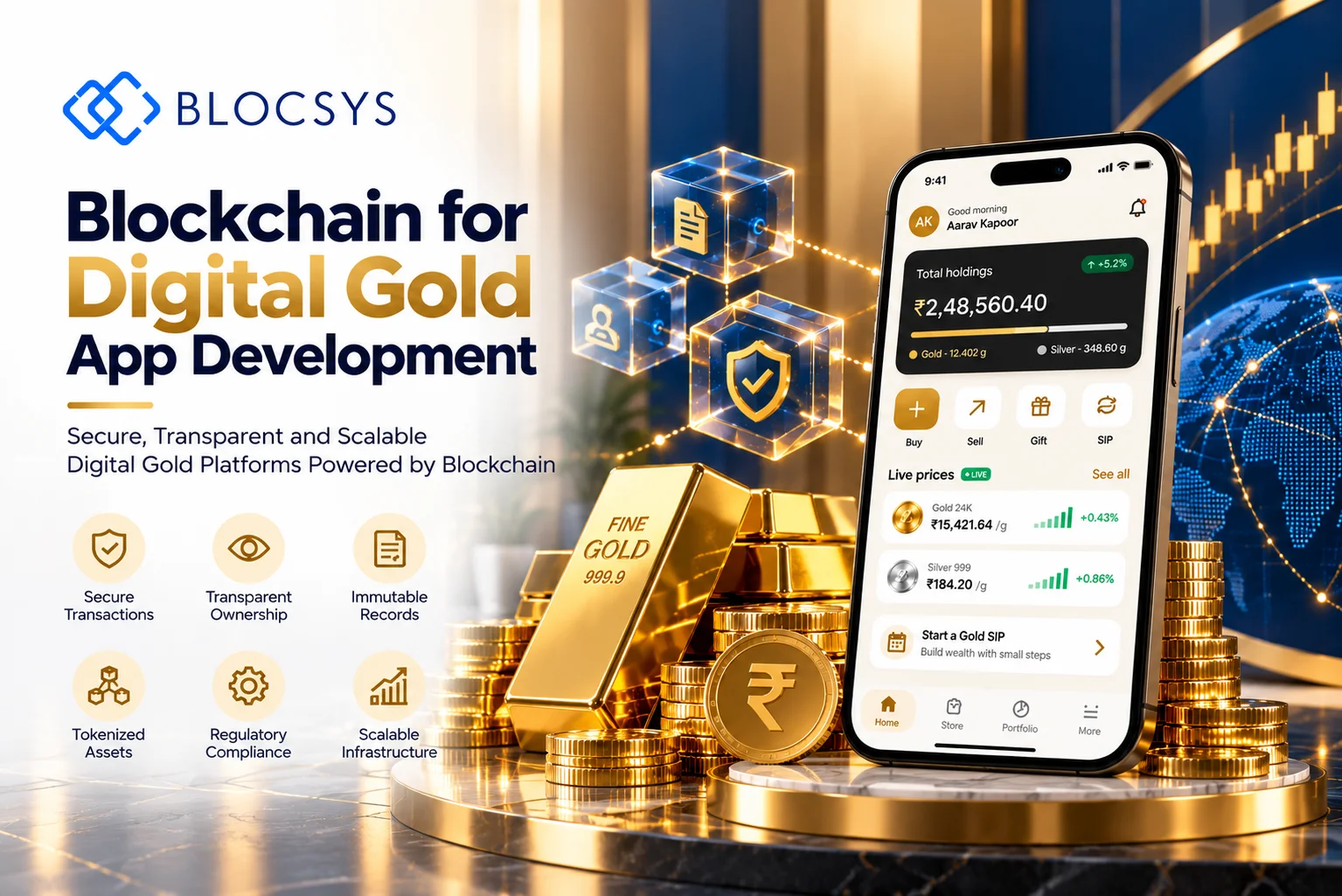
Why Businesses Should Consider Blockchain for Digital Gold App Development
If you’re building or upgrading a digital gold app, you’ve probably asked whether blockchain actually belongs in your stack. It’s a fair question. Many jewellers, bullion dealers, and fintech founders assume blockchain is mandatory for any serious gold platform, when in reality it’s one architectural option among several. This article looks at why businesses should consider blockchain for digital gold app development, what problems it can realistically solve, and when a conventional database still makes more sense. We’ll keep the focus on business decisions rather than blockchain theory, because that’s what actually matters when you’re signing off on a development budget.
Before you commit to any architecture, it helps to understand what you’re evaluating digital gold and silver app development against. Let’s break down the real trade-offs.
What Is Blockchain-Based Digital Gold App Development?
A digital gold app lets customers buy, hold, and sell small amounts of gold through a mobile or web interface. Behind that interface sits a database that records who owns what, how much they’ve purchased, and the transaction history tied to each account. Most digital gold platforms today run on conventional databases managed by a single trusted operator.
Blockchain changes where and how those records live. Instead of one company controlling a central database, a distributed ledger shares the same transaction record across multiple participants, each holding a synchronised copy. Blockchain-based digital gold platform design, therefore, isn’t about replacing the gold itself. It’s about how ownership records, transaction history, and audit data get stored and verified.
Here’s the distinction that trips up a lot of founders: the app your customer sees doesn’t change much. What changes is the infrastructure underneath it. A blockchain record can show that a transaction happened and when, but it can’t independently confirm that physical gold exists in a vault somewhere. That verification still depends on custody arrangements, audits, and operational controls outside the ledger itself.
Business Challenges Blockchain May Help Address
So, what problems actually push a business toward blockchain? Usually, it comes down to one of a few recurring issues: messy coordination between multiple parties, weak audit trails, or customers who don’t trust a single operator’s internal records.
If your platform involves a jeweller, a custodian, a payment processor, and maybe a secondary marketplace, you’ve got several parties who all need visibility into the same transactions. Reconciling that manually, or through separate databases, creates delays and errors. A shared ledger can reduce that friction because every authorised participant sees the same version of events, consequently cutting down on disputes over “whose record is correct.”
Auditability is another common driver. If regulators, auditors, or business partners need to trace a transaction’s full history, a blockchain’s append-only structure makes tampering harder to hide. That said, a well-maintained conventional database with proper logging can also support strong audit trails. Blockchain isn’t the only way to get there; it’s one way among several, and the right choice depends on how many parties actually need shared, verifiable access to the same records.
The mistake I see most often is businesses treating blockchain as a trust substitute. It’s not. Blockchain can make a shared record harder to quietly alter, but it still depends entirely on honest data going in and proper custody controls outside the ledger. Technology can’t replace a reliable vault audit.
Why Businesses Should Consider Blockchain for Digital Gold App Development
This is the core question, so let’s answer it directly. The business case for blockchain for digital gold app development gets stronger as the number of independent participants grows and weaker as it shrinks. Here’s where it tends to deliver real value.
Traceable transaction records. Every buy, sell, or transfer gets logged in a format that’s difficult to retroactively edit. For platforms handling regulatory reporting or third-party audits, this traceability can simplify compliance reviews.
Shared records among authorised participants. When a custodian, a retailer, and a payment gateway all need the same transaction view, a permissioned ledger avoids the back-and-forth of reconciling separate systems. Moreover, it reduces the chance that one party’s database silently diverges from another’s.
Smart contract automation for suitable workflows. A smart contract is simply code that runs automatically once pre-set conditions are met. In a digital gold context, that might mean auto-releasing a transfer once payment clears, or triggering a settlement step once two parties confirm a trade. Smart contract development for digital gold platforms works best for rules-based, repeatable steps, not for decisions that need human judgment.
Consistency in shared recordkeeping. Because every node holds an identical copy, there’s less risk of one participant’s record quietly drifting from everyone else’s over time.
Integration with other digital asset systems. If you plan to connect your gold platform to a broader digital asset ecosystem, blockchain integration for digital gold apps can make that interoperability more straightforward, since many digital asset systems already run on similar ledger standards.
Notice what’s missing from that list: blanket promises about customer trust, cost savings, or revenue growth. Those outcomes depend on execution, marketing, and operations, not on the ledger technology alone. Business benefits of blockchain in gold trading show up in specific operational scenarios, not as an automatic upgrade.
Key Blockchain Features to Evaluate for a Digital Gold Platform
Not all blockchain networks offer the same capabilities, so you’ll want to evaluate features rather than the word “blockchain” in the abstract. A few things matter most for gold platforms specifically.
- Permission controls: Public blockchains let anyone view and often participate in the network. Permissioned (private or consortium) networks restrict access to approved participants, which suits most regulated gold businesses better.
- Transaction validation rules: How does the network confirm a transaction is legitimate before it’s recorded? This affects speed, cost, and security.
- Audit trail depth: Check whether the ledger captures enough metadata, timestamps, and participant identifiers to actually support a useful audit, not just a bare transaction hash.
- Smart contract tooling: Mature networks offer testing frameworks and formal verification tools. Weak tooling increases the risk of bugs in automated workflows.
- Integration interfaces (APIs): Your gold app still needs to talk to payment gateways, custodian systems, and compliance tools. The blockchain layer should expose clean APIs for that.
Blockchain development for gold platforms, therefore, isn’t a single checkbox decision. It’s a set of smaller technical choices, each with trade-offs that your development team should walk through before writing any code.
Blockchain vs. Traditional Databases for Digital Gold Apps
Let’s compare the two honestly, because this is where a lot of pitch decks oversell blockchain. A conventional database is faster, cheaper to run, and simpler to maintain when one trusted operator controls all the records. Most early-stage digital gold apps fit exactly that description.
A blockchain-based digital gold platform earns its complexity when multiple independent parties need to share and verify the same records without relying on one party’s word. If that’s not your situation, you’ll likely pay more in development time and transaction costs for shared-ledger properties you don’t actually need.
Governance is another factor worth weighing. Databases are governed by whoever owns them; blockchains, especially permissioned ones, require agreed rules among participants for who can write, read, and validate data. That governance overhead is real, and it doesn’t disappear just because the technology is distributed.
I tell founders the same thing every time: if you’re the only party anyone has to trust, a well-built database with strong logging will outperform a blockchain on cost, speed, and simplicity. Save the ledger for when trust actually needs to be shared.
Limitations and Costs of Blockchain Integration for Digital Gold Apps
Blockchain integration for digital gold apps comes with real costs, and you should budget for them honestly. Infrastructure setup, network fees, smart contract audits, and ongoing node maintenance all add up. Permissioned networks reduce some public-blockchain transaction costs, but they still require dedicated technical resources to run.
Testing takes longer too. Smart contracts that handle money need rigorous testing before launch, since bugs in deployed contract code can be costly or difficult to fix after the fact. Additionally, integrating a blockchain layer with existing payment systems, KYC providers, and custodian software adds complexity that a single-database architecture avoids.
Here’s what blockchain cannot do on its own: it cannot guarantee that gold actually backs your digital tokens, confirm correct custody practices, verify external price data, or ensure regulatory compliance. Those require operational controls, audits, and legal agreements that sit entirely outside the ledger. Businesses evaluating blockchain solutions for digital gold businesses need to keep that line clear, both internally and in how they communicate with customers.
When Should a Business Use Blockchain for a Digital Gold App?
Here’s a practical way to decide. Ask yourself these questions before committing budget to blockchain for digital gold app development.
- Do multiple independent organisations need to share and verify the same transaction records?
- Is there a genuine lack of a single trusted party who could otherwise run the database?
- Will smart contracts automate clearly defined, rules-based steps rather than judgment calls?
- Can your transaction volumes justify the added infrastructure and maintenance costs?
- Do your compliance or audit requirements specifically benefit from a tamper-resistant shared ledger?
If you answered yes to most of these, blockchain is worth a serious evaluation. If you answered no to most of them, a conventional database, possibly paired with strong logging and periodic external audits, will likely serve you better. A hybrid approach also works for many businesses: keep day-to-day operations on a fast database and use blockchain selectively for the specific records that genuinely need shared verification.
How to Plan Blockchain Integration Into a Digital Gold App
Once you’ve decided blockchain genuinely fits your model, planning matters more than picking a flashy network. Start by defining your actual business requirements: who needs access to which records, and why.
Next, map your transaction workflows end to end, from a customer’s purchase request through custodian reconciliation. This reveals exactly where a shared ledger adds value and where it doesn’t. Then, evaluate your data and custody arrangements separately from your technology choice, because physical gold verification is an operational process, not a software feature.
From there, select an architecture that matches your participant model, assess which third-party integrations you’ll need, and test security thoroughly before launch. Plan for ongoing maintenance too. Blockchain systems, like any infrastructure, need monitoring, updates, and periodic review long after launch day. For a deeper technical assessment, working with a blockchain development partner at this planning stage can help you avoid costly architecture mistakes later.
How Blocsys Can Help With Digital Gold and Silver App Development
Blocsys is a technology development company that works with businesses building custom applications, including digital gold and silver platforms. Rather than pushing a one-size-fits-all build, the team works through your specific requirements, which matters given everything we’ve covered above about matching architecture to actual business needs.
For businesses exploring digital gold and silver app development, that process typically includes evaluating your transaction workflows, custody and integration requirements, and whether a blockchain component would genuinely add value to your platform or whether a conventional database architecture suits your model better.
Where blockchain is appropriate, the relevant technical considerations echo work seen across other sectors, such as shared recordkeeping for post-trade reconciliation in capital market infrastructure, tamper-resistant audit trails similar to document verification systems, and traceability patterns comparable to supply chain certification platforms. These are illustrative parallels, not claims about a specific completed digital gold deployment, so treat them as reference points for what’s technically possible rather than a guarantee of identical results for your platform.
Conclusion
So, where does that leave you? The decision to invest in blockchain for digital gold app development comes down to your participant model, your trust assumptions, and your actual audit and integration needs. It’s not a universal requirement, and it’s not a shortcut to customer trust either. For some platforms, it’s genuinely useful. For others, a well-run database does the job just as well, at a lower cost.
What matters most is making that call deliberately, with a clear view of your workflows and requirements, rather than defaulting to whichever technology sounds more impressive in a pitch meeting. If you’re weighing these options for your own platform, it’s worth discussing your specific requirements with a team that can assess digital gold and silver app development options, including where blockchain fits and where it doesn’t, before you commit to a build.
Frequently Asked Questions
Here are direct answers to the questions we hear most often about blockchain for digital gold app development.
Why should businesses consider blockchain for digital gold app development?
Businesses typically consider it when multiple independent parties, such as custodians, retailers, and payment processors, need shared, verifiable visibility into the same transaction records. In that scenario, a distributed ledger can reduce reconciliation disputes and strengthen audit trails more effectively than separate siloed databases.
What benefits can blockchain offer a digital gold platform?
Potential benefits include traceable transaction records, consistent shared recordkeeping across authorised participants, automated smart contract workflows for rules-based steps, and easier integration with other digital asset systems. These benefits depend heavily on your specific business model and participant structure.
Is blockchain necessary for every digital gold app?
No. If a single trusted operator controls all records and there’s no pressing need for multi-party shared verification, a conventional database is often faster, cheaper, and simpler to maintain. Blockchain earns its complexity only when shared trust across independent parties is genuinely required.
How can blockchain support digital gold transaction records?
Blockchain records transactions in an append-only structure shared across network participants, making unauthorised edits harder to hide. This supports stronger audit trails, though it doesn’t replace the need for accurate data entry and sound custody controls behind the scenes.
Can blockchain improve transparency in digital gold platforms?
It can improve transparency specifically around transaction history and recordkeeping among authorised parties who share access to the ledger. However, transparency toward end customers also depends on how clearly a business communicates its custody, redemption, and operational practices, which blockchain alone doesn’t address.
What role can smart contracts play in digital gold applications?
Smart contracts can automate clearly defined, rules-based steps, such as releasing a transfer once payment clears or triggering settlement once conditions are met. They work best for repeatable logic, not for decisions requiring human judgment or discretion.
Does blockchain prove that digital gold is backed by physical gold?
No. A blockchain record shows that a transaction occurred and when, but it cannot independently verify the existence, quantity, or location of physical gold. That verification depends on custody arrangements, third-party audits, and operational controls maintained outside the ledger.
How does blockchain compare with a traditional database for digital gold apps?
A traditional database suits a single trusted operator well, offering lower cost and simpler maintenance. Blockchain becomes more relevant when several independent participants need a shared, tamper-resistant record they can all verify, without relying solely on one party’s internal system.
What factors affect the cost of blockchain integration into a digital gold app?
Costs depend on the network type chosen, smart contract development and testing effort, ongoing node maintenance, integration work with existing systems like payment gateways and KYC providers, and security auditing. Costs vary significantly by project scope, so there’s no fixed universal figure.
How can businesses choose a technology partner for digital gold app development?
Look for a partner who evaluates your actual business requirements first, rather than defaulting to blockchain regardless of fit. A capable partner should assess your transaction workflows, participant model, integration needs, and custody arrangements before recommending a specific architecture.
Ready to move beyond theory and build an intelligent platform that delivers real-world value? Blocsys Technologies specialises in engineering enterprise-grade AI and blockchain solutions for the fintech, Web3, and digital asset sectors. Connect with our experts today to discuss your vision and chart a clear path from concept to a secure, scalable reality.
