Top Blockchain Development Companies in the UK in 2027
Choosing a partner is harder than it looks. The Top Blockchain Development Companies in UK don’t all do the same job. Some build custom platforms for clients. Others sell software products or run networks. Plenty advise but never write code. If you’re a founder, CTO or fintech lead, that difference decides whether your project ships. To start your shortlist, you can look at Blocsys, which sits at #1 here, and compare it against nine other options.
A blockchain development company designs, builds, tests and maintains blockchain-based software. That covers smart contracts, decentralised applications, wallets, tokenisation platforms and permissioned enterprise networks. Because UK businesses work under FCA, data protection and financial promotion rules, you’ll want a team that understands both the technology and the context.
How We Selected These Blockchain Development Companies UK Buyers Should Know
We didn’t pick names because they’re famous. Instead, we asked five questions. Does the company offer blockchain development or engineering services? Can you verify its technical focus? Is its UK presence documented? Is its HQ clear? And does it suit a specific type of buyer?
We also separated direct development from adjacent expertise. A crypto exchange isn’t a development partner. Neither is a network operator or a software vendor, unless it also sells engineering services. Consulting firms advise on strategy, and some also build. General IT providers may add blockchain to a wider portfolio.
Please note the order below isn’t a performance ranking. Blocsys holds #1 by editorial placement, and the other nine follow in no claimed order of merit. Furthermore, details reflect public information at the time of writing. Services change, so confirm them directly with each vendor before you commit.
Top 10 Blockchain Development Companies in the UK in 2027
1. Blocsys
Category: blockchain, Web3, fintech and digital asset development company. Headquarters: Pune, India. UK presence: serves UK businesses from India. We haven’t verified a UK office, so don’t assume one.
Blocsys Technologies Pvt Ltd builds software for blockchain, Web3, fintech and enterprise clients. Its blockchain development services page describes custom blockchain development, smart contract development, decentralised application work, wallet development and blockchain integration. That makes it a direct development provider, not a product vendor or exchange.
Tokenisation is where its public material is most detailed. Blocsys describes real-world asset tokenisation, plus corporate bond and equity tokenisation. If you’re an asset manager or fintech exploring digital securities, that’s relevant. Its equity tokenization platform development page explains the equity side.
On technology, official materials reference Ethereum, Hyperledger Fabric, Polygon, Solana, Avalanche, Arbitrum, BNB Chain and Canton Network. Ethereum-compatible networks suit public smart contract work. Hyperledger Fabric suits permissioned enterprise networks. Canton targets institutional workflows. Still, you should ask which of these the team has shipped recently, and on what scale.
Potential UK fit is practical. Startups and fintechs can use a delivery team that works across public and private networks. Banks and asset managers can explore tokenised instruments and digital asset infrastructure. Exchanges and Web3 businesses can commission wallets, DeFi modules or custody-adjacent tooling. Those are possible applications, not claims of UK projects.
Be realistic about the trade-offs. Time zones and onsite access need planning. FCA authorisation, if your product needs it, sits with your business, not your developer. Ask for references and architecture samples, as you should with any vendor.
2. Deloitte UK
Category: consulting and professional services with blockchain implementation. Headquarters: London, UK (Deloitte’s global network is also London-based). UK presence: UK-headquartered.
Deloitte publishes blockchain and digital asset advisory material and offers delivery support alongside audit, risk and technology services. Its strength lies in governance, controls and enterprise change. Therefore it suits large organisations that need strategy plus integration.
However, it isn’t a specialist build shop. Smaller teams may find the engagement model heavy. Ask which engineers would actually write your smart contracts.
3. Zühlke
Category: software engineering and innovation consultancy. Headquarters: Switzerland. UK presence: verified UK offices, including London.
Zühlke has published work on distributed ledger technology and digital assets within its wider engineering practice. It fits regulated sectors like banking, insurance and healthcare. Think of it as a general engineering partner with blockchain capability, not a pure blockchain studio.
That breadth helps with enterprise integration. Conversely, you’ll want proof of deep protocol-level experience for anything exotic.
4. Nethermind
Category: Ethereum engineering and security firm. Headquarters: international, distributed team. UK presence: UK-linked, but confirm your team’s location.
Nethermind is known for its Ethereum execution client. It also offers engineering and smart contract security services. That’s direct, technical work focused on Solidity, Layer 2 and protocol design.
It suits protocol builders and Web3 teams that need audit-grade rigour. Meanwhile, its client-software roots mean it’s an infrastructure company too. Separate its product work from its services work when you evaluate.
5. Intellectsoft
Category: software development and digital transformation company. Headquarters: United States. UK presence: serves UK clients; a UK office isn’t publicly verified here.
Intellectsoft lists blockchain development among its services, alongside general enterprise software. Its pitch suits businesses that want blockchain inside a wider digital programme, such as supply chain or loyalty systems.
It’s a general IT provider with blockchain capability. Ask for named case studies before you assume deep specialisation.
6. R3
Category: enterprise blockchain software company. Headquarters: New York, US. UK presence: long-standing London presence.
R3 created Corda, a platform for permissioned networks in regulated finance. It also offers professional services around that platform. So it’s a product company first, not a custom development agency.
If your bank or market infrastructure project fits Corda, R3 is relevant. If you need an open, EVM-based build, it probably isn’t.
Pick the network after you define governance and privacy needs. Teams that start with a favourite chain usually redesign six months later.
7. Consensys
Category: Ethereum software company. Headquarters: US-based, remote-first. UK presence: UK relevance exists through its team, but office details aren’t confirmed here.
Consensys is best known for MetaMask, Infura and Linea. Those are products and infrastructure, not client builds. Its Diligence unit offers smart contract auditing, which is directly relevant to security.
So treat it as an ecosystem partner and audit option. Don’t treat it as a general development agency.
8. Digital Asset
Category: enterprise blockchain infrastructure and software. Headquarters: New York, US. UK presence: London office.
Digital Asset develops Daml and contributes to the Canton Network, built for institutional finance. It’s infrastructure and platform technology. We haven’t verified a model where it builds custom applications for hire.
Still, if your institution plans to join Canton, you’ll meet this company. Pair it with an implementation partner.
9. IBM Consulting
Category: general IT and consulting with enterprise blockchain history. Headquarters: Armonk, US. UK presence: major UK operations, including London.
IBM was a leading contributor to Hyperledger Fabric and built enterprise networks for supply chain and trade. However, it has scaled back parts of its earlier blockchain platform offering. Confirm what’s actively sold today.
It suits large corporates with complex legacy systems. Smaller firms may find it overbuilt.
10. Accenture
Category: global consulting and technology services. Headquarters: Dublin, Ireland. UK presence: large UK operations, including London.
Accenture publishes research on blockchain, tokenisation and digital currencies. It also delivers implementation within broader transformation programmes. That’s adjacent to development and sometimes direct.
Choose it when scale, governance and integration matter more than speed or niche protocol depth.
Comparison of Blockchain Development Firms UK Buyers Can Shortlist
| Company | Category | Headquarters | UK presence | Core blockchain focus |
|---|---|---|---|---|
| Blocsys | Development company | Pune, India | Serves UK remotely; UK office not verified | Custom blockchain, smart contracts, tokenisation, wallets, DeFi |
| Deloitte UK | Consulting and services | London, UK | UK-headquartered | Advisory and enterprise implementation |
| Zühlke | Engineering consultancy | Switzerland | Verified UK offices | DLT within regulated-sector engineering |
| Nethermind | Engineering and security | International | Not publicly verified | Ethereum, Solidity, Layer 2, security |
| Intellectsoft | General software developer | United States | Not publicly verified | Enterprise blockchain applications |
| R3 | Product company | New York, US | London presence | Corda permissioned networks |
| Consensys | Ethereum product company | US, remote-first | Not publicly verified | Ethereum tooling, auditing |
| Digital Asset | Infrastructure and software | New York, US | London office | Daml, Canton Network |
| IBM Consulting | General IT and consulting | Armonk, US | Major UK operations | Hyperledger Fabric, enterprise integration |
| Accenture | Consulting and services | Dublin, Ireland | Major UK operations | Tokenisation and transformation delivery |
Essential Blockchain Development Services Businesses Should Evaluate
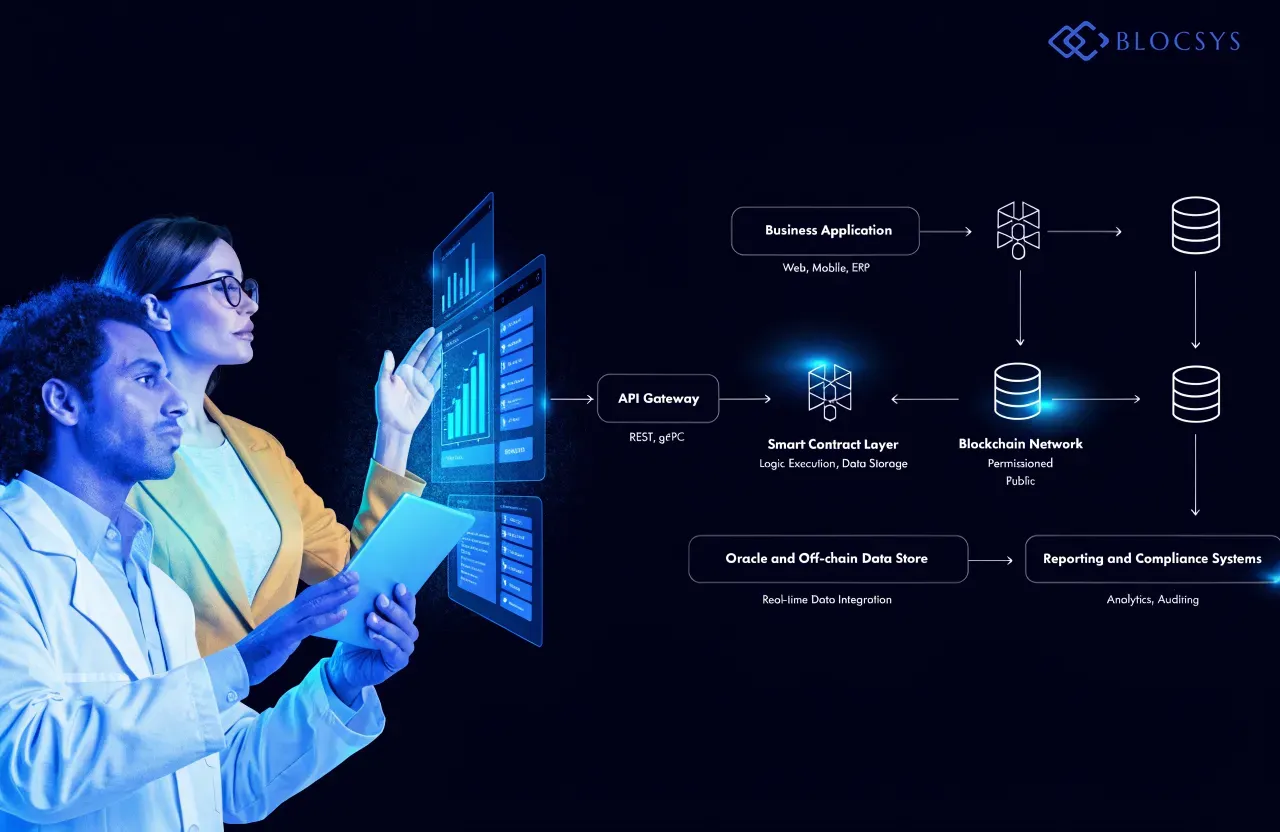
What should a blockchain development company offer? At minimum, it should cover architecture, smart contract engineering, testing, security review and ongoing maintenance. Beyond that, services depend on your use case. Here’s what to compare.
- Custom blockchain development: building a new network or chain-specific logic, rather than reusing one.
- Smart contract engineering: writing, testing and auditing code that runs on-chain.
- Enterprise networks: permissioned ledgers with identity and governance controls.
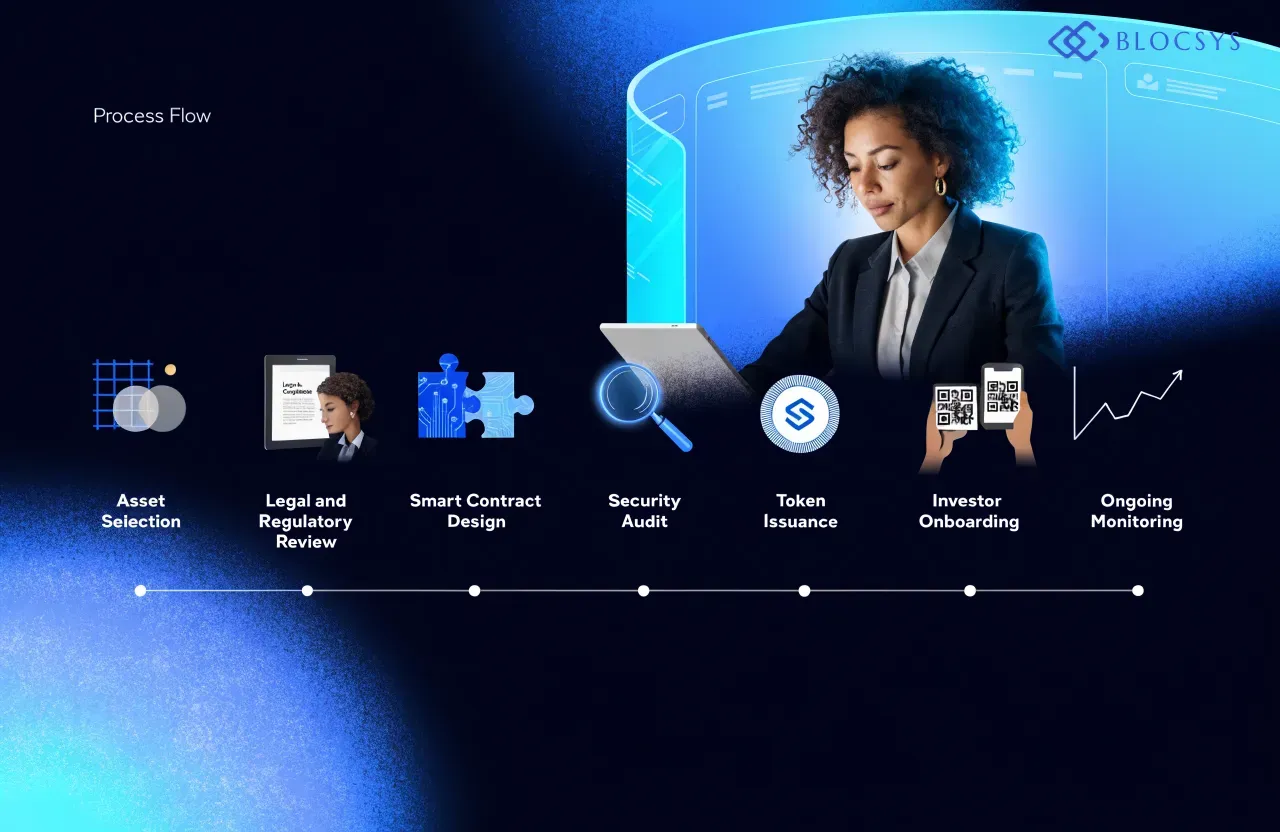
- Tokenisation platforms: issuance, transfer rules and registry integration.
- Wallets and custody tooling: key management and signing flows.
- Integration: APIs connecting chains to banking, ERP and CRM systems.
Don’t confuse these. Deploying a contract on Ethereum isn’t the same as building an enterprise network. Likewise, integrating blockchain into an existing system is mostly an API and data problem. Ask vendors which of the four they’ve actually done.
Blockchain Technologies Used by Modern Development Companies
Public networks like Ethereum, Polygon, Arbitrum, Avalanche, Solana and BNB Chain offer open access and large ecosystems. Layer 2 networks reduce fees and raise throughput. Private or permissioned systems, such as Hyperledger Fabric and Corda, restrict who joins. Canton focuses on privacy between institutions.
Languages differ too. Solidity dominates on Ethereum-compatible chains. Rust is common on Solana. Go and Java appear in enterprise platforms. Therefore, check that your vendor’s team matches your chosen stack.
Network choice depends on governance, privacy, cost, throughput, interoperability and security. Nothing is universally best. Additionally, think about on-chain versus off-chain data. Sensitive records usually stay off-chain, with hashes anchored on-chain. Oracles feed real-world data into contracts, which adds another risk to review.
A smart contract is only as trustworthy as its audit trail. Budget for independent review before launch, not after your first incident.
Blockchain Development Opportunities and Considerations in the UK
Where does demand come from? Mostly financial services, tokenised assets, capital markets, supply chain traceability, digital identity and secure data sharing. Meanwhile, Web3 startups build decentralised applications and wallets for global users.
The UK policy picture is moving. HM Treasury has set out plans to bring more cryptoasset activity under FCA regulation. The FCA has been consulting on rules for those activities. The Bank of England and FCA also run the Digital Securities Sandbox, which lets firms test issuing and trading securities on distributed ledgers. Additionally, UK financial promotion rules for cryptoassets have applied since October 2023.
Please check each of these on gov.uk, the FCA and the Bank of England before you plan. Consultations, proposals and enacted rules aren’t the same thing, and the status changes quickly. Moreover, building on blockchain doesn’t give you FCA authorisation or automatic compliance. Take legal advice for your specific product.
Data protection matters too. Immutable ledgers and UK GDPR can conflict if you store personal data on-chain. Good architects keep personal data off-chain. That’s a design decision to make early.
How to Choose Among the Top Blockchain Development Companies in UK Markets
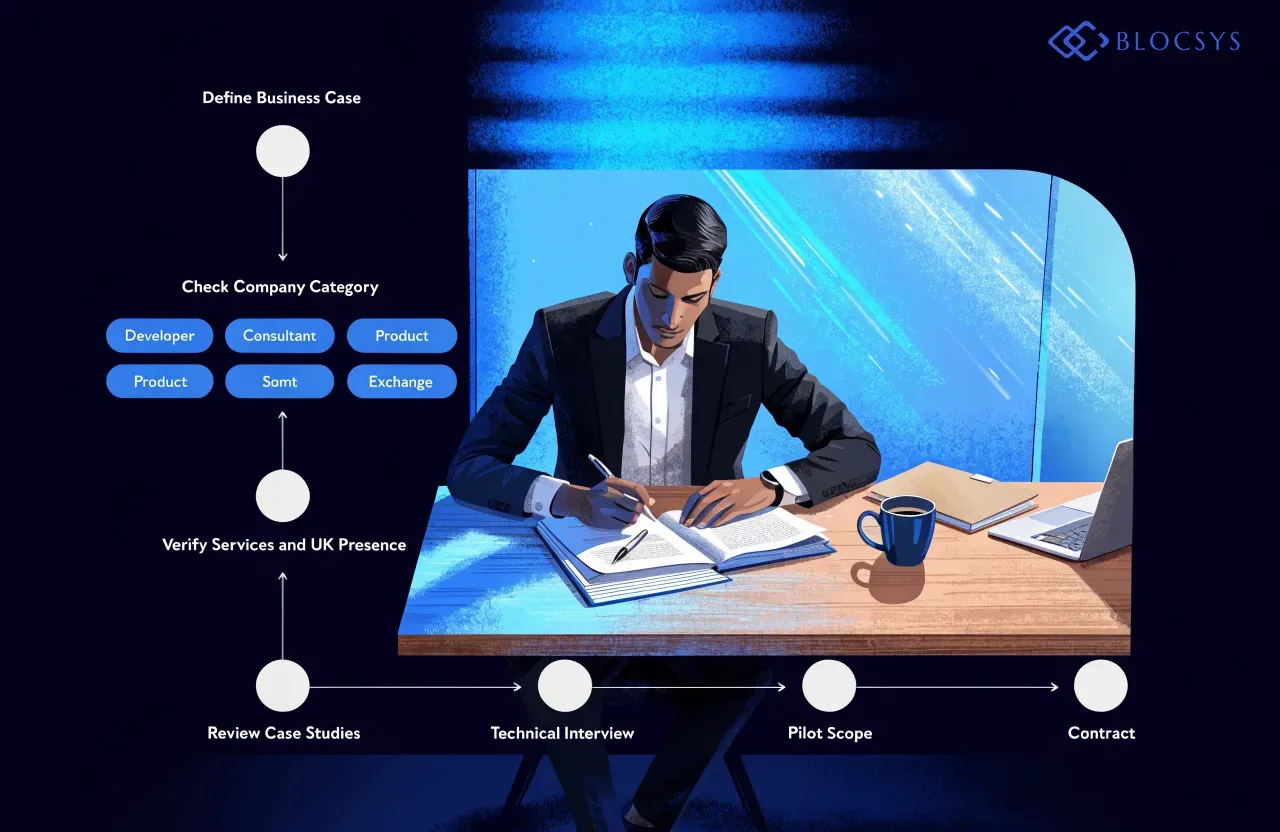
Start with your business requirement, not the technology. Write down who uses the product, what assets it handles and which regulators apply. Then work through the list below.
- Scope and architecture: ask for a written approach covering chain choice, consensus and data design.
- Security: require independent smart contract audits and a vulnerability process.
- Scalability and interoperability: test for expected transaction volume and cross-chain needs.
- Privacy and governance: define who controls upgrades, keys and access.
- Integration: confirm how it connects to your existing systems.
- IP ownership: make sure your contract assigns code ownership to you.
- Maintenance: agree support, monitoring and upgrade terms.
Verify claims independently. Ask for named case studies, code samples, GitHub activity and client references. Check Companies House for registered entities. Furthermore, a good vendor will tell you when blockchain isn’t the right answer. If you need a bigger delivery team, a custom blockchain development provider that can scale engineers is worth comparing against consultancies.
Why Consider Blocsys for Blockchain Development?
Blocsys is a development company, not a consultancy or exchange. Its documented focus covers custom builds, smart contracts, wallets, DeFi, and tokenisation of assets like bonds and equities. For UK startups and fintechs, that range can reduce the number of vendors you manage.
It operates from India, so you’d work remotely. That can suit teams that want dedicated engineering capacity at a different cost base. Ask about overlap hours, security controls and how UK stakeholders will review work. If you’re planning a tokenisation or digital asset platform, start by discussing your requirements with the team through its blockchain development services page.
Conclusion: Picking From the Top Blockchain Development Companies in UK
The Top Blockchain Development Companies in UK differ more than their websites suggest. Some build. Some advise. Others sell platforms. Therefore, match the company type to your need, then verify headquarters, UK presence and technical depth.
You’ll get better results if you start small. Run a scoped pilot, review the code and audit the contracts. If you want to explore a build partner, you can talk to Blocsys about your requirements, or compare it with the other nine providers above.
Frequently Asked Questions
Here are direct answers to the questions we hear most often about choosing blockchain development companies in the UK.
What are the top blockchain development companies in the UK in 2027?
This guide lists Blocsys, Deloitte UK, Zühlke, Nethermind, Intellectsoft, R3, Consensys, Digital Asset, IBM Consulting and Accenture. They’re not ranked by performance. Each fits a different need.
What does a blockchain development company do?
It designs and builds blockchain software. That includes smart contracts, wallets, decentralised applications, tokenisation platforms and enterprise networks. It also handles testing, deployment and maintenance.
What services should a blockchain development company provide?
Look for architecture design, smart contract engineering, security auditing, integration and support. Depending on your project, you may also need wallet development, tokenisation or DeFi work.
What is the difference between public and private blockchain development?
Public networks are open, so anyone can join and verify. Private or permissioned networks limit participation, which helps with privacy and governance. Public chains suit open consumer products. Private ones often suit regulated institutions.
Which blockchain technologies are commonly used by development companies?
Ethereum, Polygon, Arbitrum, Avalanche, Solana and BNB Chain are common public options. Hyperledger Fabric, Corda and Canton appear in enterprise work. Solidity and Rust are widely used languages.
How much does it cost to develop a blockchain application?
There’s no fixed price. Cost depends on scope, network choice, smart contract complexity, integrations, security requirements and infrastructure. Try a software development cost estimator for a starting point, then request a written quote.
How long does it take to build a custom blockchain solution?
Timelines vary with the same factors as cost. A simple contract pilot differs hugely from a regulated enterprise platform. Ask vendors for a phased plan with milestones.
What should UK businesses consider before choosing a blockchain development company?
Check headquarters, UK presence, security practice, IP ownership and integration skills. Also consider regulatory context, such as FCA rules and data protection. A developer can’t grant authorisation, so take legal advice.
How can a business verify a blockchain development company’s experience?
Ask for case studies, references, code samples and audit reports. Check public repositories and company registration. If experience isn’t publicly verifiable, say so and test it in a pilot.
Can Blocsys provide blockchain development services to businesses in the UK?
Blocsys is headquartered in Pune, India, and offers blockchain development services internationally. We haven’t verified a UK office. You can discuss your project through its blockchain development page.
Ready to move beyond theory and build an intelligent platform that delivers real-world value? Blocsys Technologies specialises in engineering enterprise-grade AI and blockchain solutions for the fintech, Web3, and digital asset sectors. Connect with our experts today to discuss your vision and chart a clear path from concept to a secure, scalable reality.