How Is Blockchain-Based Digital Gold Different from PhonePe, Gold ETFs and Other Gold Apps?
Buying gold on a phone feels routine now. You open an app, pay a few rupees, and a gold balance shows up on your screen. But not every “digital gold” product works the same way behind that screen. App-based digital gold, Gold ETFs, and blockchain-based digital gold are three different structures with different ownership rights, custody arrangements, and redemption rules. If you’re an investor or a business exploring gold tokenization, understanding these differences matters more than the shiny interface on top.
This article breaks down how PhonePe-style digital gold works, how Gold ETFs are structured, and what blockchain-based digital gold actually changes. We’ll also look at why some businesses are now exploring digital gold and silver app development to build their own gold investment platforms instead of depending on existing providers.
What Is Digital Gold and How Does It Work?
Digital gold is a product that lets you buy small quantities of gold online, usually starting from as little as one rupee. You don’t receive a physical coin at the time of purchase. Instead, a provider records a gold balance against your account, measured in grams.
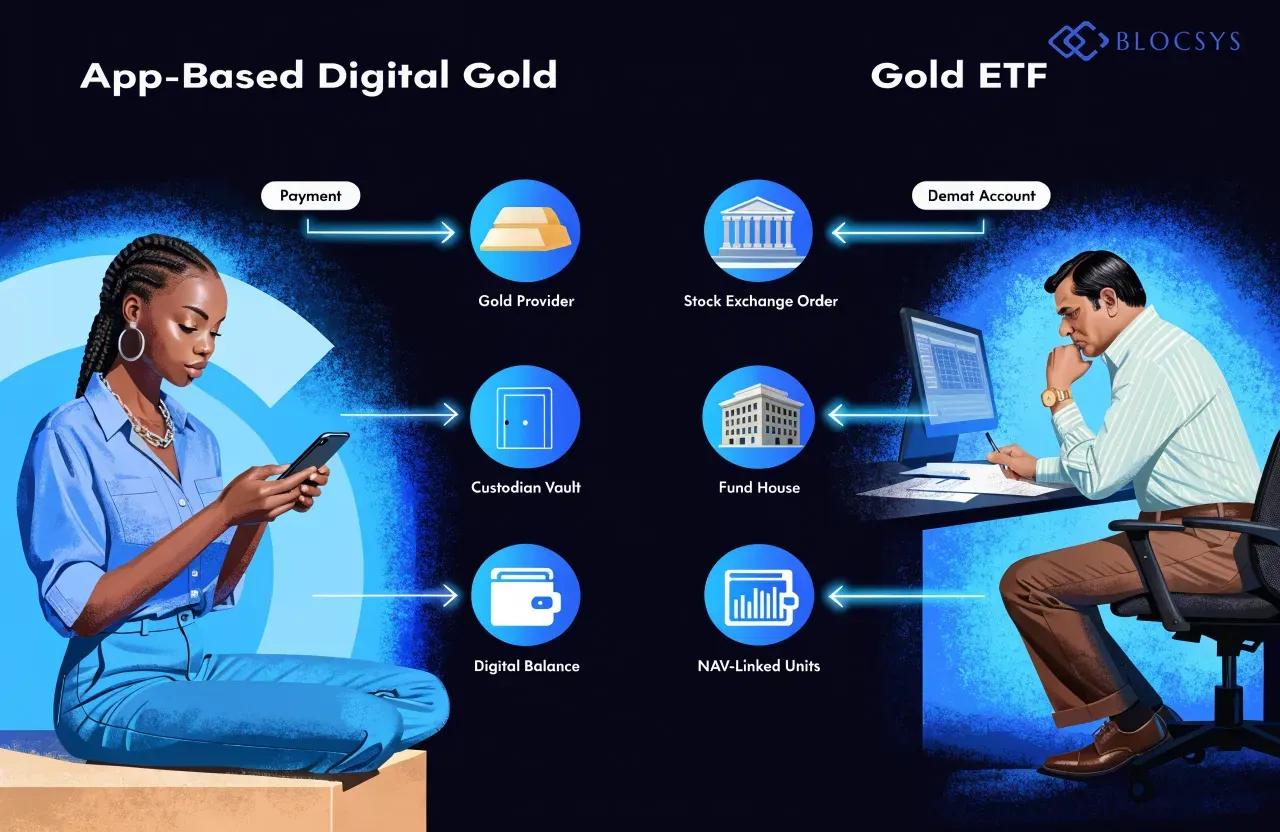
Here’s the basic flow: you pay through an app, the payment is converted into grams of gold at the prevailing rate, and the provider claims to hold equivalent physical gold in a vault on your behalf. You can sell that balance back at the live price, or in some cases, convert it into physical gold, coins, or jewellery after meeting minimum quantity requirements.
However, the digital balance itself isn’t a regulated security. It’s a contractual promise between you and the provider. That distinction becomes important when comparing it against Gold ETFs or blockchain-based digital gold later in this article.
How Does PhonePe and Other App-Based Digital Gold Work?
PhonePe doesn’t mine, refine, or store gold itself. According to PhonePe’s publicly available product information, the digital gold feature is offered in partnership with a third-party gold provider, and the app acts as the purchase interface.
When you buy digital gold on PhonePe, your money moves to the gold provider, who is responsible for sourcing and vaulting the physical gold corresponding to your purchase. The custodian holds this gold in secure storage, and the provider maintains the ledger of how much gold each customer owns. PhonePe simply displays your balance, processes your buy and sell requests, and facilitates redemption through its partner network.
This is a provider-based model. Your ownership record lives in a centralized database maintained by the gold provider, not in a publicly verifiable blockchain. There’s no independently verified evidence that this specific ledger operates on blockchain technology, so it would be inaccurate to describe PhonePe digital gold as blockchain-based. It’s app-based digital gold, built on a traditional custodian-and-ledger arrangement.
Selling is straightforward: you place a sell order inside the app, and the amount is credited back at the live gold rate, minus any applicable spread. Physical redemption, where available, usually comes with delivery charges and minimum quantity thresholds.
The biggest misunderstanding we see is customers assuming every digital gold app runs on the same technology. App-based gold and blockchain-based gold solve different problems — one focuses on convenient buying, the other focuses on verifiable record-keeping.
What Are Gold ETFs and How Do They Work?
Gold ETFs work completely differently from app-based digital gold. A Gold ETF is a mutual fund unit that trades on a stock exchange like NSE or BSE. Each unit typically represents a fraction of a gram of physical gold, and the fund house holds the underlying gold in a secure vault through a custodian bank.
To buy a Gold ETF, you need a demat and trading account. You place an order through your broker during market hours, and the price moves in line with the fund’s Net Asset Value, which tracks domestic gold prices. Unlike app-based digital gold, Gold ETFs are regulated by SEBI and must publish regular disclosures about their holdings.
Liquidity here depends on trading volumes on the exchange. Costs include brokerage, expense ratio, and the bid-ask spread, which are usually lower than markups charged on app-based digital gold over longer holding periods. Redemption for physical gold isn’t typically available to retail investors; instead, you sell your units on the exchange and receive the cash equivalent.
So when comparing digital gold vs Gold ETF, the core difference is structural: one is a provider-backed balance, the other is a regulated, exchange-traded fund unit.
What Is Blockchain-Based Digital Gold?
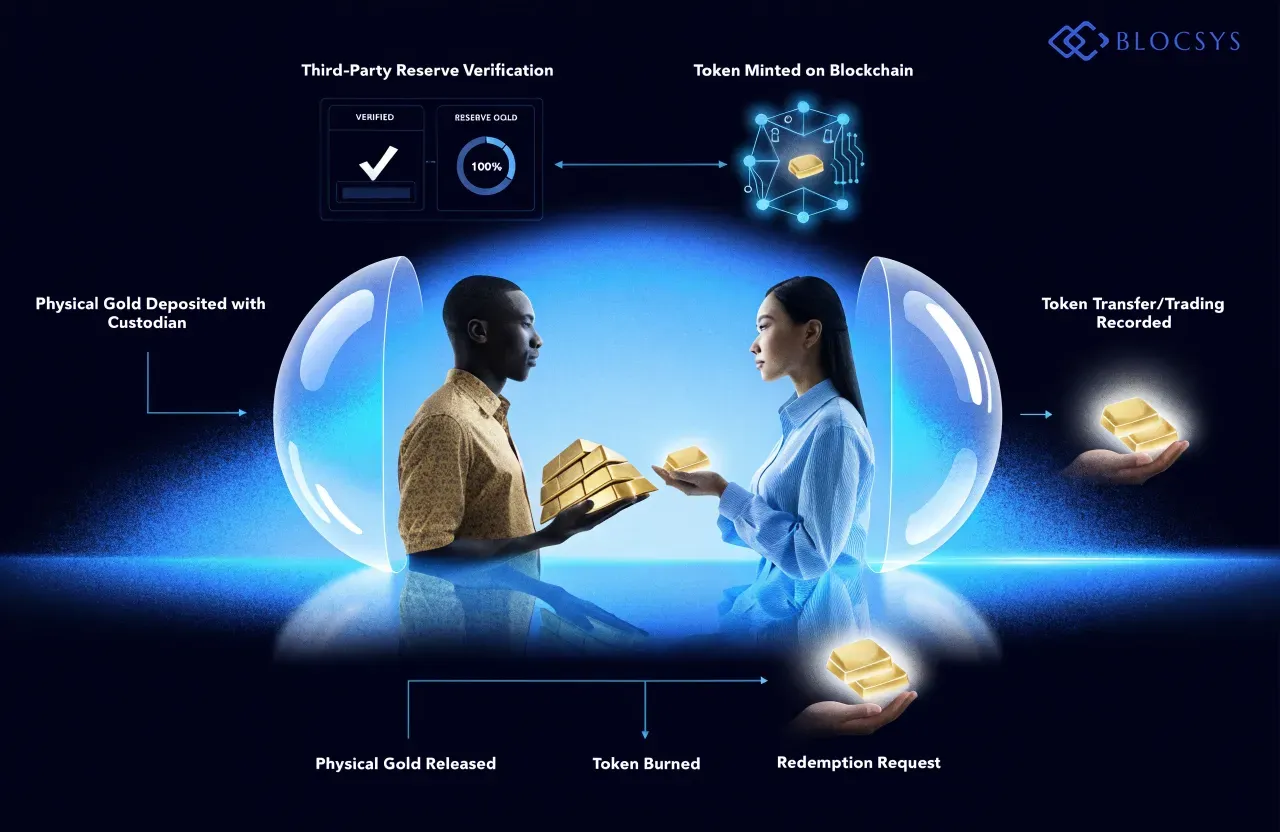
Blockchain-based digital gold applies gold tokenization to represent gold ownership as a digital token recorded on a distributed ledger. Each token is typically designed to represent a fixed unit of physical gold, such as one gram, held by an issuer or custodian.
Unlike a centralized database entry, a blockchain-based gold token’s transaction history is recorded on a shared ledger. Therefore, anyone can trace when a token was issued, transferred, or redeemed. This is the core appeal of blockchain digital gold: transaction transparency and tamper-evident records, rather than a single company’s internal database.
Some blockchain-based gold platforms, including international examples like Pax Gold and Tether Gold, publish attestations about the physical gold reserves backing their tokens. These platforms typically operate under jurisdictions and legal frameworks outside India, so Indian buyers should carefully check applicable regulations, custody arrangements, and tax treatment before using them.
Smart contracts can automate certain functions on these platforms, such as enforcing minimum redemption quantities or managing transfer rules. However, a smart contract only executes what it’s programmed to do. It doesn’t independently verify that physical gold actually exists in a vault somewhere.
Blockchain-Based Digital Gold vs PhonePe vs Gold ETFs: Key Differences
Here’s a direct side-by-side comparison of how these three models differ across the factors that matter most to buyers and businesses.
| Factor | App-Based Digital Gold (e.g., PhonePe) | Gold ETFs | Blockchain-Based Digital Gold |
|---|---|---|---|
| Product structure | Provider-maintained digital balance | Exchange-traded fund unit | Blockchain-recorded gold token |
| Ownership record | Centralized provider database | Demat account via depository | Distributed ledger entry |
| Regulatory oversight | Not SEBI-regulated as a security | SEBI-regulated mutual fund | Varies by issuer and jurisdiction |
| Underlying gold | Claimed physical gold via custodian | Physical gold held by fund custodian | Depends on issuer’s custody and attestation |
| Technology | Traditional app and database | Exchange trading infrastructure | Blockchain / distributed ledger |
| Buying and selling | Instant, inside the app | Market hours, through a broker | Platform-dependent, sometimes 24/7 |
| Liquidity | Sell back to provider anytime | Depends on exchange trading volume | Depends on platform and token adoption |
| Physical redemption | Available with minimum quantity | Generally not available to retail investors | Depends on issuer’s redemption policy |
| Fees | Buy-sell spread, storage charges | Expense ratio, brokerage | Platform fees, network transaction costs |
Notice that each model answers “what do you actually own” differently. That’s the single most important question before you invest.
Does Blockchain-Based Digital Gold Mean You Own Physical Gold?
Not automatically. A blockchain-based digital gold token represents a claim or contractual right defined by the issuer’s terms, not direct legal title to a specific gold bar sitting in a vault.
Ownership still depends on the issuer’s legal structure, custody agreements, and redemption policy. Blockchain only records that a transaction happened and who currently holds the token. It doesn’t independently confirm gold purity, vault security, or that reserves match tokens issued.
That’s why reputable blockchain-based gold platforms publish third-party audits or attestation reports. Without those, a token’s physical gold backing is simply an unverified claim, just as it would be with any other digital gold provider.
Consequently, digital asset ownership through a token and legal ownership of physical gold aren’t automatically the same thing. Always check the issuer’s documented custody and redemption terms before assuming otherwise.
What Role Does Blockchain Play in Digital Gold Platforms?
Blockchain technology adds specific, useful capabilities to a gold tokenization platform. It doesn’t replace the need for real gold, real custody, or real compliance.
Where Blockchain Adds Value
Distributed ledger technology creates tamper-evident blockchain transaction records. Every token transfer, issuance, or redemption gets logged in a way that’s difficult to alter retroactively. This supports transaction traceability that a closed, centralized database can’t easily offer outsiders.
Smart contract development can also automate parts of the process, like enforcing holding limits or triggering redemption workflows once conditions are met. For gold asset management, this reduces manual reconciliation between what’s issued and what’s sold.
Where Blockchain Has Limits
Blockchain can’t verify gold purity sitting in a vault. It can’t confirm a custodian actually holds the quantity it claims. It can’t substitute for licensing, insurance, or regulatory approval where applicable.
In short, blockchain strengthens record integrity. It doesn’t replace physical gold verification, custody audits, or regulatory compliance.
Which Gold Investment Model Is Suitable for Different Users?
Suitability depends on what you’re trying to achieve, not on which product sounds more modern.
- Individual investors wanting small, flexible purchases: App-based digital gold is convenient for micro-investing, though long-term holding costs deserve attention.
- Investors seeking regulated exposure: Gold ETFs suit those who already have a demat account and want SEBI-regulated, exchange-traded exposure with lower long-term costs.
- Tech-forward investors comfortable with digital assets: Blockchain-based digital gold may appeal to those who value transaction transparency, provided they verify the issuer’s custody and redemption terms.
- Jewellers and bullion dealers: These businesses often need gold-backed tokens tied directly to their own inventory and customer relationships, not a third-party balance they don’t control.
- Fintech founders and platform operators: Building a proprietary digital gold investment platform allows control over branding, margins, and customer data, rather than depending on an existing provider’s terms.
There’s no universal “best” option here. Each model solves a different problem.
What Should Businesses Consider Before Building a Digital Gold Platform?
Before writing a single line of code, a business needs clarity on several operational and legal questions.
First, decide the business model: will you resell gold through an existing provider’s API, or source and custody physical gold directly through partnerships with refiners and vault operators? This decision shapes everything downstream, including legal structure and applicable regulatory obligations.
Second, plan for physical gold verification and reconciliation. Your platform needs a reliable process to match digital balances or tokens against actual vaulted gold, ideally supported by independent audits. Gold custody and storage arrangements must be documented and insured.
Third, map the customer journey: account creation, payment processing, buying and selling workflows, digital wallets, and redemption requests all need to work together smoothly. Security around customer funds and data is non-negotiable, and scalability matters once transaction volumes grow.
Finally, if you’re considering gold tokenization, you’ll need to decide whether a public or permissioned blockchain fits your compliance requirements, and whether smart contracts should automate redemption or simply log transactions.
Building a Custom Blockchain-Based Digital Gold Application
Many jewellers, bullion traders, and fintech startups eventually outgrow third-party digital gold providers. They want their own branding, their own customer relationships, and more control over how gold balances or tokens are managed.
This is where custom digital gold app development comes in. A tailored platform can include user accounts and digital wallets, real-time gold pricing integrations, payment gateway connections, buying and selling workflows, and admin dashboards for reconciliation and reporting. For businesses specifically exploring gold tokenization platform development, blockchain-based transaction records can be layered on top to support traceability and auditability.
Blocsys is a blockchain development company that works on digital asset platforms, tokenization solutions, and digital gold and silver app development. The approach typically involves understanding a business’s gold sourcing and custody arrangements first, then building the application layer, including wallets, APIs, and admin tools, around that existing operational reality. Blocsys’s broader tokenization work, including equity tokenization platform development and corporate bond tokenization platform development, reflects similar principles applied to other asset classes, such as Demat 2.0 and tokenization infrastructure.
It’s worth repeating: technology development and legal or custodial responsibility are separate functions. A development partner can build the platform, the wallets, and the gold tokenization infrastructure. The business itself remains responsible for sourcing physical gold, securing custody, and meeting applicable regulatory requirements. For complex projects, some businesses also bring in dedicated blockchain engineering teams to handle ongoing development and verification needs such as tamper-proof document verification for custody records.
Conclusion
App-based digital gold, Gold ETFs, and blockchain-based digital gold aren’t interchangeable products wearing different interfaces. Each has its own ownership structure, custody model, technology, and redemption process. PhonePe-style digital gold gives you a provider-managed balance. Gold ETFs give you regulated, exchange-traded fund units. Blockchain-based digital gold gives you a tokenized claim with traceable transaction records, provided the issuer’s custody and backing are properly verified.
Choosing between them depends on your priorities: convenience, regulation, or transparency. For businesses, the decision often comes down to whether an existing provider meets your needs, or whether a custom-built platform better serves your customers and your brand. Either way, understanding these differences protects you from assuming all “digital gold” means the same thing.
Frequently Asked Questions
Here are direct answers to the questions we hear most often about blockchain-based digital gold, PhonePe digital gold, and Gold ETFs.
What is the difference between digital gold and blockchain-based digital gold?
Regular digital gold is a balance recorded in a provider’s centralized database. Blockchain-based digital gold records ownership and transfers on a distributed ledger, giving transaction traceability that a closed database doesn’t offer.
Is PhonePe digital gold based on blockchain?
Based on publicly available product information, PhonePe’s digital gold runs through a third-party gold provider using a traditional ledger and custodian model. There’s no verified evidence that this specific product operates on blockchain technology.
How is digital gold different from Gold ETFs?
Digital gold is a provider-backed balance bought through an app, outside stock market regulation. Gold ETFs are SEBI-regulated fund units traded on a stock exchange, requiring a demat account and tracking NAV linked to gold prices.
Does blockchain-based digital gold represent ownership of physical gold?
Not automatically. It represents a contractual claim defined by the issuer’s terms. Actual physical gold backing depends on the issuer’s custody arrangements and whether independent audits confirm reserves match tokens issued.
How can customers verify whether digital gold is backed by physical gold?
Check whether the provider publishes independent custodian attestations, third-party audit reports, or vault certifications. Reliable providers disclose this information rather than asking customers to simply trust the balance shown on screen.
Can blockchain-based gold tokens be transferred to another user?
Many blockchain-based gold tokens support peer-to-peer transfers, depending on the platform’s rules and jurisdiction. Always check the issuer’s terms, since transfer rights and restrictions vary between platforms.
Is blockchain-based digital gold safer than regular digital gold?
Blockchain adds tamper-evident transaction records, which improves transparency. However, safety still depends on the issuer’s custody practices, reserve verification, and regulatory standing, not the technology alone.
Can blockchain-based digital gold be redeemed for physical gold?
It depends entirely on the issuer’s redemption policy. Some platforms allow physical redemption above a minimum quantity, while others only support cash settlement. Always confirm this before buying.
What are the main costs involved in digital gold and Gold ETFs?
Digital gold apps typically charge a buy-sell spread and sometimes storage fees. Gold ETFs involve an expense ratio, brokerage charges, and the bid-ask spread on the exchange, which are often lower over longer holding periods.
What should a business consider before launching its own digital gold application?
Businesses need clarity on gold sourcing, custody arrangements, legal structure, and regulatory requirements first. Only then should they plan the technology layer, including wallets, payment integration, and whether gold tokenization fits their model.
Ready to move beyond theory and build an intelligent platform that delivers real-world value? Blocsys Technologies specialises in engineering enterprise-grade AI and blockchain solutions for the fintech, Web3, and digital asset sectors. Connect with our experts today to discuss your vision and chart a clear path from concept to a secure, scalable reality.