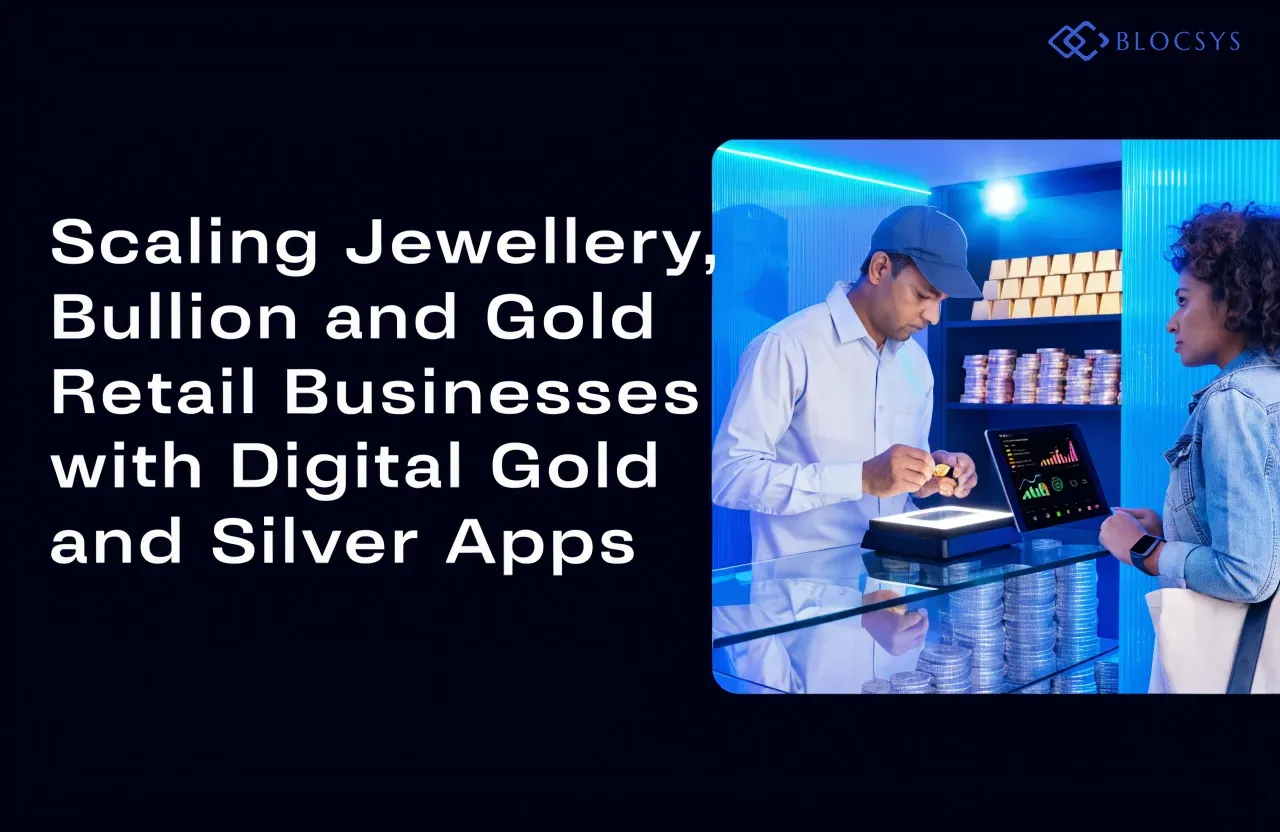
Scaling Jewellery, Bullion and Gold Retail Businesses with Digital Gold and Silver Apps
Walk into any established jewellery showroom in India and you’ll see decades of trust built brick by brick. Bullion dealers, gold traders and silver merchants have long relied on in-person relationships, physical inventory and word-of-mouth reputation. However, customer behaviour is shifting, and many business owners are now exploring digital expansion for jewellery businesses as a way to reach buyers who can’t always walk through the front door. This isn’t about replacing the showroom. It’s about adding a digital layer that keeps customers engaged between visits, and digital gold and silver apps are becoming a practical tool for that purpose.
Before you decide whether this fits your business, it helps to understand what’s actually changing, who benefits, and what it genuinely takes to launch one of these platforms. If you’re already weighing digital gold and silver app development as a next step, this guide walks through the realistic opportunities and the operational groundwork first.
The Changing Business Landscape for Jewellers, Bullion Dealers and Precious Metal Retailers
India’s jewellery and bullion trade has always combined tradition with commerce. Festivals, weddings and auspicious dates still drive much of the purchasing calendar. That rhythm hasn’t disappeared. Yet customers increasingly research prices online, compare making charges across stores, and expect some form of digital touchpoint before they commit to a purchase.
Payment habits have changed too. UPI and digital wallets are now routine for everyday transactions across India, and that comfort naturally spills over into how customers think about precious metal purchases. Consequently, a jeweller or bullion dealer who offers zero digital interaction risks looking out of step, even if their physical store remains excellent.
Competition has also widened. National jewellery chains, fintech apps and standalone digital gold platforms all compete for the same customer’s attention. Independent jewellers and regional bullion dealers therefore need additional channels for online customer engagement for jewellers, not as a replacement for the showroom, but as a way to stay visible between visits.
A showroom captures a customer for twenty minutes during a visit. A well-run digital channel can keep that relationship alive for months — but only if the business behind it treats digital gold as a genuine service, not a marketing gimmick.
Why Digital Expansion for Jewellery Businesses Is Gaining Momentum in India
Here’s the core limitation most traditional businesses face: physical stores only interact with customers who are physically present. A customer living three towns away, or one who simply can’t visit during business hours, never enters the sales funnel at all. That’s a real constraint on growth, not a hypothetical one.
Digital expansion for jewellery businesses addresses this gap directly. It gives customers a way to buy small quantities of gold or silver, check current holdings, and stay connected with a brand they trust, all without needing a store visit. Think about a customer who wants to save gradually for a daughter’s wedding jewellery years in advance. A digital channel lets them do that in small, regular amounts.
That said, physical retail still matters enormously. Trust, craftsmanship, and the tactile experience of choosing jewellery can’t move entirely online. Digital expansion for jewellery businesses works best as a complement to the store, not a substitute for it. Jewellers who frame it this way tend to set realistic expectations with their teams and customers alike.
Digital Channels for Jewellery Retailers: What’s Actually Changing
Digital channels for jewellery retailers aren’t limited to e-commerce catalogues anymore. They now include digital gold purchasing, appointment booking, loyalty tracking, and transaction history, all tied to one customer account. This matters because it turns a single transaction into an ongoing relationship.
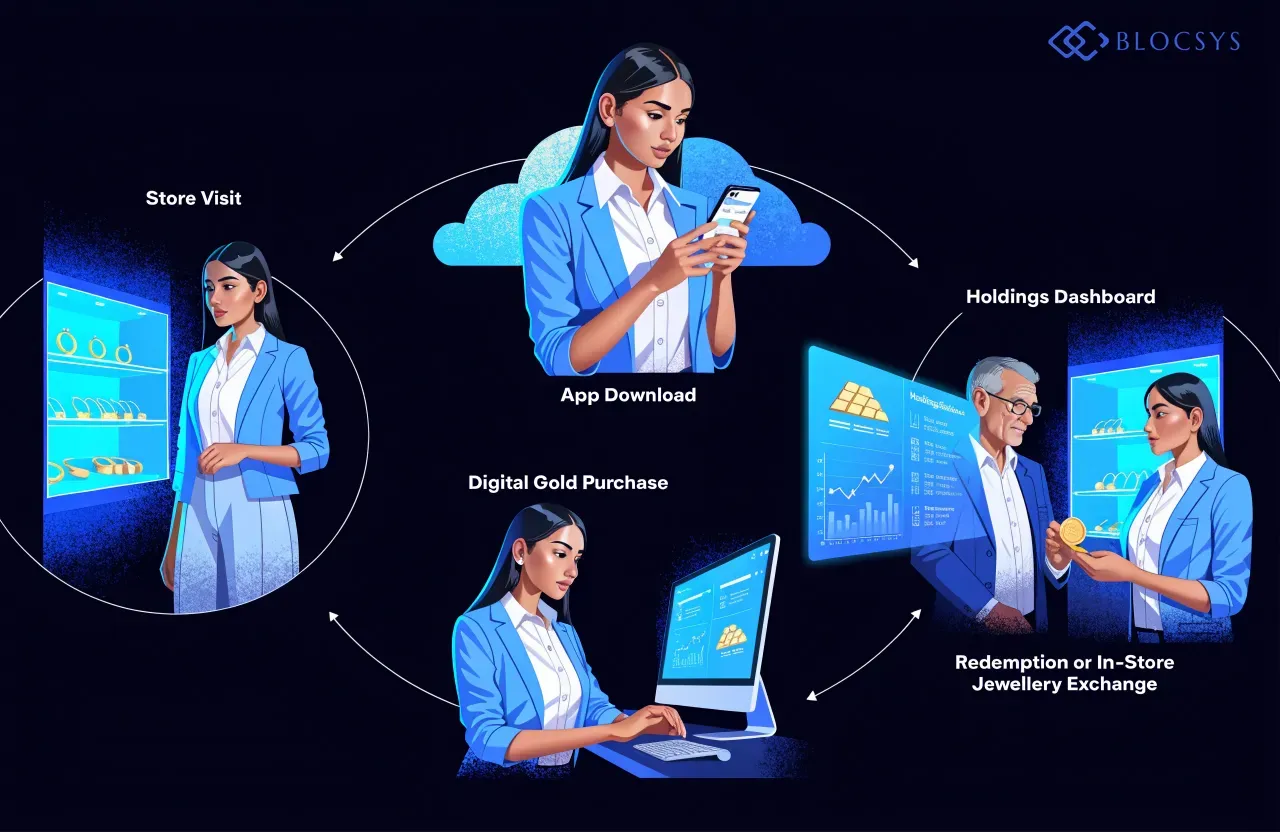
How Digital Gold and Silver Apps Create New Growth Opportunities
A digital gold and silver app, at its core, lets a customer buy small or large quantities of gold or silver digitally, view their holdings, and eventually redeem that value as physical metal, jewellery, or cash equivalent, depending on the business model. For a jeweller or bullion dealer, this opens a few genuine growth avenues.
First, it extends geographical reach. A customer in another city can still transact with a trusted brand name. Second, it creates a reason for customers to open the app between store visits, which keeps the brand present in their daily routine. Third, it supports gold business digitization in a way that doesn’t require abandoning existing retail operations.
None of this guarantees revenue growth automatically. A digital gold business opportunity only becomes real revenue when the underlying operations, pricing, and customer trust are handled properly. We’ll get into those requirements later in this guide.
Growth Opportunities for Different Jewellery and Precious Metal Businesses
Not every business in this space operates the same way, and that matters a lot when planning a digital strategy. A fintech company building a gold savings app has very different obligations compared to a family-run jewellery store adding a digital counter to its existing operations.
Traditional Jewellers and Jewellery Retailers
For independent jewellers, the opportunity lies in extending customer relationships beyond a single jewellery purchase. A customer who buys digital gold in small monthly instalments through your branded app stays connected to your business year-round, not just during Diwali or wedding season. This supports customer acquisition for jewellers who want a lower-cost entry point into the relationship, since digital gold purchases can start at smaller amounts than a jewellery piece.
Bullion Dealers and Gold Traders
Bullion dealers typically operate at a different scale, handling bulk gold and silver movement for jewellers, investors, and institutional buyers. Digital business opportunities for bullion dealers often centre on reaching retail customers directly, something many bullion businesses have historically left to jewellers downstream. A digital platform can let a bullion dealer offer verified, priced-to-market digital gold directly to end customers, expanding their customer base beyond their traditional B2B relationships.
Gold and Silver Merchants and Precious Metal Retailers
Smaller gold and silver merchants, particularly those focused on silver retail business lines like utensils, coins, and silverware, can use branded digital purchasing experiences to differentiate themselves from larger chains. A digital silver app tied to a merchant’s own brand gives customers a reason to return, rather than shopping around on price alone.
Jewellery Chains
Multi-location jewellery chains already have brand recognition working in their favour. For them, digital expansion for jewellery businesses often means unifying the customer experience across stores: one account, one wallet, one transaction history, regardless of which branch the customer visits. This requires more robust backend architecture than a single-store jeweller would need.
Fintech Startups Exploring Precious Metal Services
Fintech businesses approach this space differently again. They’re usually not sourcing or storing physical metal themselves; instead, they partner with licensed providers and custodians, then focus on the customer-facing app, payments, and account experience. Their core strength is technology and distribution, not the metal supply chain.
Key Business Benefits of Digital Expansion for Jewellery Businesses
Taken together, these opportunities point to a handful of potential benefits. None of them are automatic, and each depends on execution.
- Customer reach: digital channels let you serve customers outside your immediate store catchment area.
- Digital accessibility: customers can transact at hours when the store is closed.
- Customer engagement: regular small purchases and account check-ins keep your brand visible.
- Repeat gold purchases: a digital wallet can encourage incremental buying habits over time.
- Brand visibility: a well-designed app signals credibility to a digitally aware customer base.
- Business differentiation: a branded platform distinguishes you from competitors offering only in-store service.
These are realistic, potential outcomes, not guarantees. Achieving them depends on pricing accuracy, service reliability, and how well the app is marketed and maintained after launch.
Essential Features of a Digital Gold and Silver Application
What should a digital gold and silver app actually include? The answer depends on your business model, but certain components tend to matter across the board.
Customer accounts need identity verification during onboarding, since gold and silver transactions carry financial compliance obligations. Real-time gold and silver pricing integration is essential too; customers expect prices that track the market closely, usually sourced from a recognised bullion or market data provider.
Buying and selling workflows should be simple: select an amount, confirm the live price, and complete payment through UPI, cards, or net banking. Equally important is a clear transaction history, so customers can see every purchase, sale, and holding update without confusion.
Redemption options, whether for physical delivery, jewellery exchange, or coins, need clear terms stated upfront. On the administrative side, businesses need reporting dashboards, reconciliation tools, and security measures that protect both customer funds and metal holdings. We’ll explain why these pieces matter operationally in the next section, rather than treating them as a simple feature checklist.
How Digital Gold and Silver Apps Can Complement Traditional Retail Sales
Here’s an important distinction: buying digital gold doesn’t automatically lead to a jewellery purchase, and it shouldn’t be marketed as if it does. What digital gold and silver apps actually do well is create more frequent touchpoints between a customer and your brand.
Consider a realistic scenario. A customer uses your app to buy small amounts of digital gold monthly as a savings habit. Over a year, they’ve interacted with your brand a dozen times, far more than a single annual showroom visit. When they’re ready to buy jewellery for a family wedding, your brand is already top of mind, partly because of that ongoing digital relationship.
That said, the conversion from digital customer to in-store buyer isn’t guaranteed. It depends on how well you communicate with app users, whether redemption options are genuinely attractive, and whether your in-store experience lives up to the digital one. Treat the app as a relationship-building tool, not a direct sales funnel.
Business and Operational Considerations Before Launching Digital Gold and Silver Apps
This is where many businesses underestimate the work involved. Launching a digital gold and silver app isn’t purely a technology project; it’s a business arrangement with real financial and legal responsibilities attached.
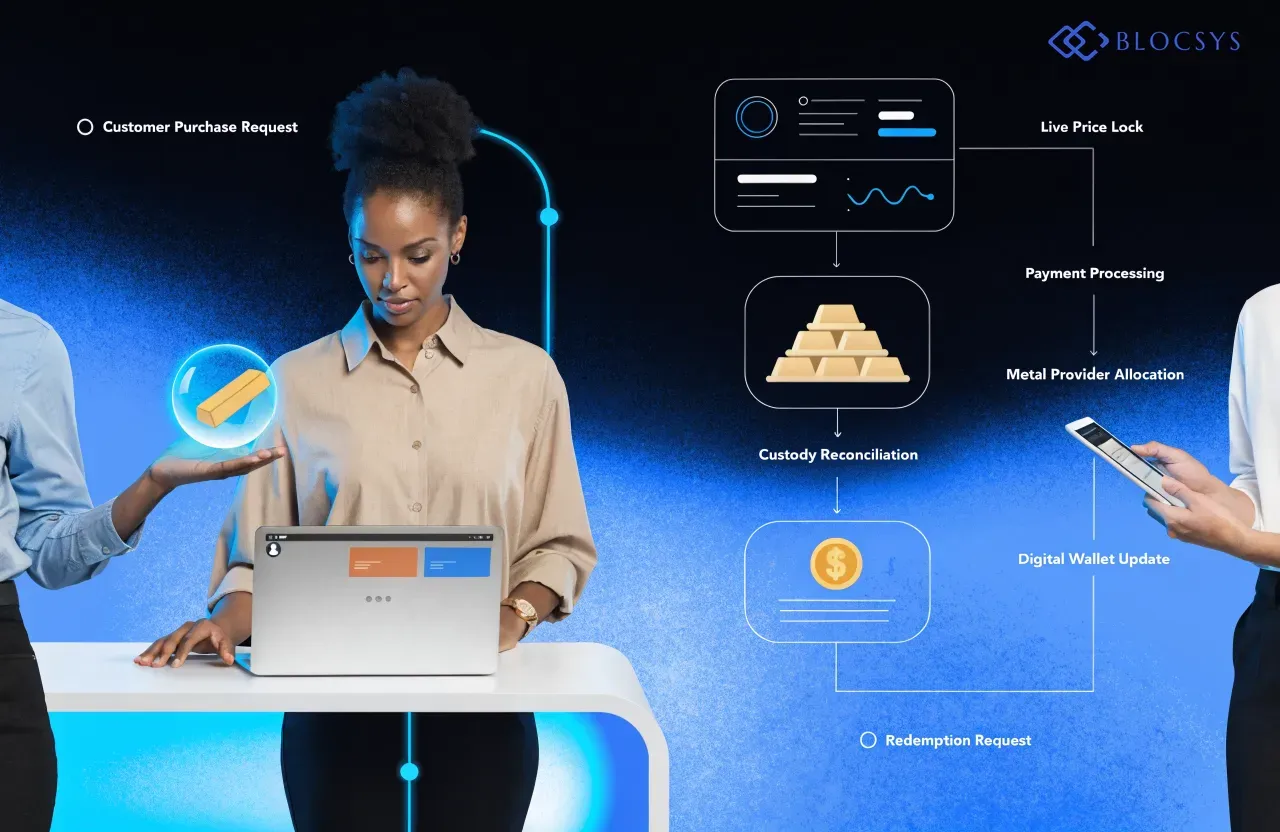
You’ll need a partnership with a licensed gold or silver provider who physically sources, stores, and insures the metal backing customer purchases. Your business, the technology platform, and the metal custodian are three distinct roles, and conflating them creates risk. Reconciliation between digital holdings and actual stored metal must happen regularly and transparently.
Payment processing needs proper integration with banking and UPI rails, along with fraud monitoring. Legal structuring matters too: how you present digital gold to customers, what disclosures you provide, and how refunds or disputes are handled all require careful documentation. Operational and regulatory requirements should be reviewed with legal and financial advisors familiar with India’s precious metal and payments regulations before you launch anything.
The businesses that get into trouble aren’t the ones with weak technology. They’re the ones who treated custody and compliance as an afterthought instead of the foundation.
Planning Your Digital Expansion for Jewellery Businesses: Custom App Development
Many jewellers and bullion dealers start by exploring third-party digital gold platforms. These can work for smaller operations, but they often come with limited branding control, shared customer data, and generic features that don’t match your specific business model.
Custom digital gold app development lets you control the customer experience end-to-end: your branding, your pricing display, your loyalty structure, and your own integrations with existing point-of-sale or inventory systems. For jewellery chains with multiple locations, this also means unifying customer accounts across branches, something off-the-shelf platforms rarely support well.
Custom development also allows for a custom digital gold and silver platform that scales as your business grows, whether that means adding new metal categories, integrating additional payment methods, or expanding redemption options over time. This flexibility is precisely why scaling jewellery business operations through a branded app often outperforms a generic third-party solution in the long run.
How Blocsys Helps Businesses Build Digital Gold and Silver Applications
Blocsys Technologies Pvt Ltd works as a technology development partner for businesses exploring digital gold and silver app development, with a focus on blockchain development, digital asset platforms, and tokenization solutions. For jewellers, bullion dealers, gold and silver retailers, jewellery chains, and fintech businesses, Blocsys translates specific business requirements into working digital platforms.
That typically includes custom application development for buying and selling workflows, customer account and digital wallet functionality, payment gateway integrations, live gold and silver pricing integrations, transaction record management, and administrative dashboards for reporting and reconciliation. Blocsys also supports third-party integrations and blockchain-based document verification capabilities where businesses need stronger audit trails for customer onboarding and compliance records.
Architecture is built to scale, whether you’re a single-location jeweller testing digital gold for the first time or a multi-branch chain rolling out a unified platform. Businesses interested in blockchain-based gold tokenization platform development or broader precious metal trading platform development can discuss their specific requirements directly, since scope, integrations, and compliance needs vary significantly from one business to another.
If you’re planning digital expansion for jewellery businesses in your own operation, reviewing your requirements against Blocsys’s digital gold and silver app development services is a reasonable next step before committing to a build.
Conclusion
Digital gold and silver apps won’t replace your showroom, and they shouldn’t be sold to customers or to yourself as a guaranteed growth lever. What they can do is extend your reach, give customers another way to engage with your brand, and open digital business opportunities for bullion dealers and jewellers who’ve historically depended entirely on foot traffic.
Successful digital expansion for jewellery businesses depends on getting the fundamentals right: a reliable metal provider partnership, transparent custody and reconciliation, proper compliance, and a platform customers actually trust. Get those right, and a digital channel becomes a genuine complement to your physical store, not just an added expense.
Frequently Asked Questions
Here are direct answers to the questions we hear most often about digital expansion for jewellery businesses.
How can digital gold and silver apps help jewellers grow their businesses?
They give jewellers an additional channel to reach customers between store visits, letting people buy small amounts of gold or silver digitally while staying connected to a trusted brand. This supports ongoing engagement, though it doesn’t replace the need for strong in-store service.
Can traditional jewellery stores offer digital gold and silver through their own applications?
Yes, but it requires a partnership with a licensed gold or silver provider for sourcing and custody, along with proper payment and compliance infrastructure. A jeweller can’t simply add a “buy gold” button without these operational arrangements in place.
How can bullion dealers benefit from digital precious metal platforms?
Bullion dealers can use digital platforms to reach retail customers directly, rather than depending entirely on downstream jewellers. This expands their customer base and creates a direct-to-consumer channel alongside their existing wholesale relationships.
Can gold and silver retailers reach customers beyond their physical stores using digital apps?
Yes. A branded digital app lets retailers serve customers outside their local catchment area, since the transaction doesn’t require physical presence. Reach still depends on marketing, trust, and how well the app is maintained after launch.
What features should a digital gold and silver app include for jewellery businesses?
Core features typically include identity verification, live pricing integration, buying and selling workflows, transaction history, redemption options, and administrative reporting tools. Exact requirements vary depending on business size and model.
How can digital gold applications support customer engagement and repeat purchases?
Regular small purchases, account check-ins, and holdings dashboards keep customers interacting with the brand more frequently than an annual store visit would. This builds familiarity, though it doesn’t guarantee repeat jewellery purchases on its own.
What partnerships are required to launch a digital gold and silver application?
Businesses need a licensed gold or silver provider for sourcing, storage, and insurance, plus a payment processing partner and often a technology development partner to build the actual platform. These roles are usually handled by separate parties.
What operational and regulatory requirements should businesses consider before launching digital precious metal services?
Businesses should address custody and reconciliation processes, payment compliance, customer disclosures, and applicable financial regulations before launch. Consulting legal and financial advisors familiar with India’s precious metal and payments rules is strongly recommended.
How much does it cost to develop a custom digital gold and silver application?
Cost depends on project scope, required integrations, security measures, compliance needs, and overall platform complexity. There’s no fixed price point; businesses should discuss their specific requirements with a development partner for an accurate estimate.
How can Blocsys help jewellers and bullion businesses develop digital gold and silver applications?
Blocsys works as a technology development partner, building custom platforms that include purchasing and selling workflows, digital wallets, payment integrations, pricing integrations, and administrative dashboards tailored to a business’s specific operating model.
Ready to move beyond theory and build an intelligent platform that delivers real-world value? Blocsys Technologies specialises in engineering enterprise-grade AI and blockchain solutions for the fintech, Web3, and digital asset sectors. Connect with our experts today to discuss your vision and chart a clear path from concept to a secure, scalable reality.