
The Biggest Shift in Gold Business: The Rise of Digital Gold Apps
Gold has never needed a sales pitch in India. Families have bought it for weddings, festivals, and savings for generations, mostly walking into a trusted jeweller or bullion dealer. But something is changing quietly in the background. Customers now carry smartphones everywhere, and they expect the same convenience from gold buying that they get from ordering groceries or paying bills. That expectation is driving a real digital gold business transformation across India’s gold industry, and it’s worth understanding why this shift matters, not just for customers, but for the jewellers and bullion dealers who’ve run this business for decades.
This article looks at how digital gold apps are reshaping purchasing habits, what’s actually driving this digital gold business transformation, and where traditional stores still hold the advantage. If you’re a jeweller, bullion dealer, or fintech founder thinking about adding a digital channel, platforms like digital gold and silver app development are becoming a practical way to meet customers where they already are.
How the Traditional Gold Business Is Evolving
India’s gold retail industry has always run on relationships. A customer walks into a store, examines the jewellery, negotiates, and buys physical gold they can hold immediately. Bullion dealers supply coins and bars through similar in-person transactions, often backed by decades of trust between family-run businesses and their regular customers.
That model still works, and it isn’t disappearing. However, customer behaviour is shifting around it. Digital payments through UPI have become routine for everyday purchases. Younger buyers research prices online before visiting a store. Many want to start small, buying a gram or two of gold at a time, rather than committing to a full piece of jewellery upfront.
Consequently, gold businesses are exploring additional digital channels without abandoning their physical stores. Think of it less as replacement and more as an added layer. A jeweller who sells gold digitally during the week can still welcome the same customer into the showroom before a wedding. That’s the practical shape this digital gold business transformation is taking on the ground.
Why Customer Expectations Are Shifting Faster Than Store Formats
Retail habits across other sectors have set a new baseline. People expect to check prices, place orders, and track transactions from their phones. Gold buyers increasingly carry that same expectation into precious metals, even when the final piece of jewellery still requires an in-store visit.
What Is Driving the Rise of Digital Gold Apps?
Several practical factors are feeding this momentum, and none of them are speculative. First, smartphone and internet penetration across Indian cities and towns has made app-based services genuinely accessible to a much wider population than before. Second, digital payment infrastructure, especially UPI, has made small-value transactions fast and nearly frictionless.
Third, several platforms allow customers to buy gold in small denominations, sometimes just a few rupees’ worth, which lowers the entry barrier for younger or budget-conscious buyers. Additionally, customers increasingly want transparency on pricing before they commit to a purchase, something a live rate displayed on an app can address directly.
Moreover, the pandemic years accelerated comfort with digital transactions across financial categories generally, including gold. That said, adoption isn’t uniform. Rural and older customers often still prefer walking into a familiar store. Therefore, this digital gold business transformation is happening unevenly, growing fastest among younger, urban, digitally comfortable buyers while physical retail continues serving everyone else.
The gold business isn’t choosing between physical and digital anymore — it’s figuring out how to run both without losing the trust that took decades to build.
How Digital Gold Apps Are Changing the Way Customers Buy Gold
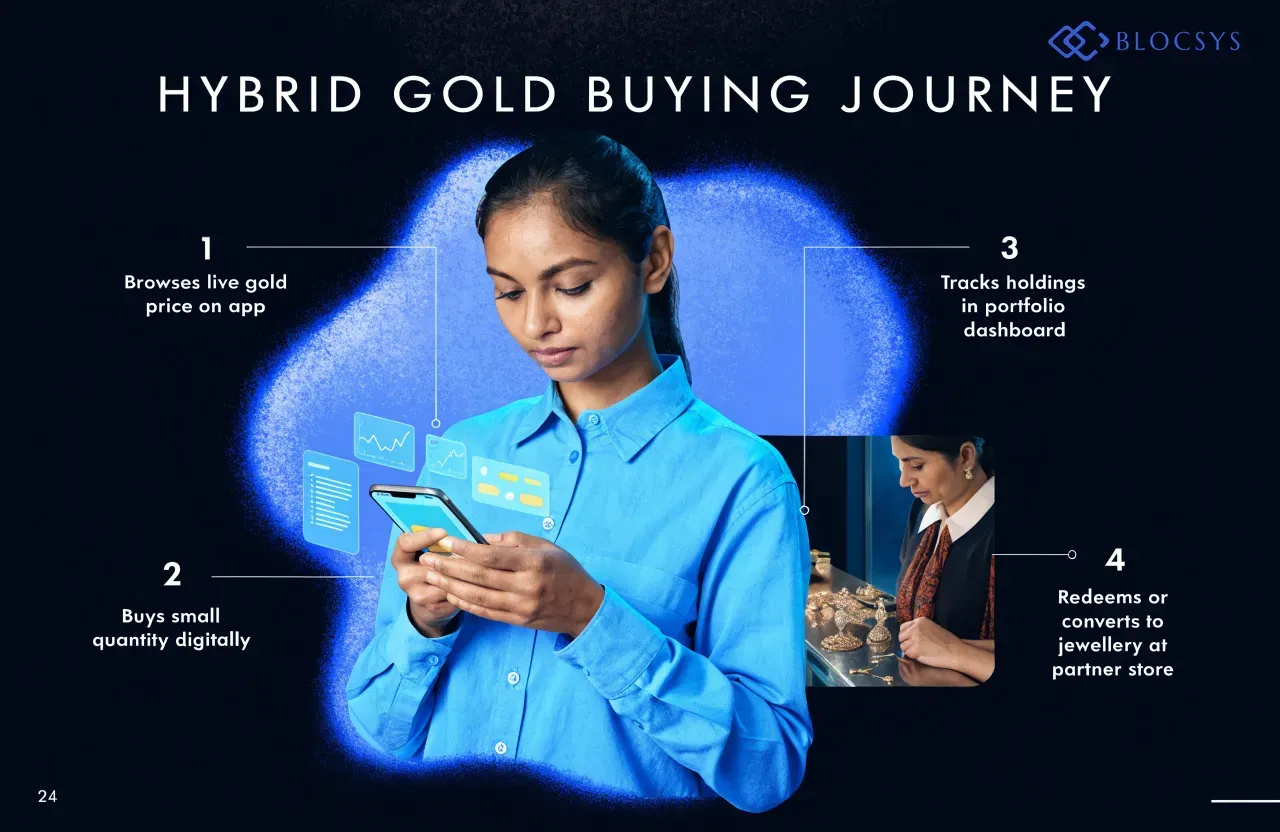
On a typical digital gold platform, a customer creates an account, completes basic verification, and can immediately view live gold prices. From there, they can buy a specific rupee amount or gram weight, and the app records that purchase instantly in their account.
Most platforms show a running history of transactions, current holdings, and their value at today’s rate. Some allow customers to sell their digital gold back at the prevailing price, while others offer redemption into physical gold, coins, or jewellery through a partner network. Payment typically happens through UPI, cards, or net banking, matching how customers already pay for everything else.
This is clearly different from walking into a jewellery store, negotiating making charges, and walking out with a finished piece. Digital gold buying and selling suits someone who wants to start small, track value changes, or save gradually. Physical purchases suit someone who wants an actual piece of jewellery for an occasion, right now, that they can see and wear.
Neither approach makes the other obsolete. Rather, they serve different moments in a customer’s relationship with gold. A customer might accumulate digital gold monthly and still visit a jeweller when it’s time to convert those holdings into an actual ornament.
New Business Opportunities Digital Gold Apps Create for Gold Businesses
For jewellers and bullion dealers, a branded digital channel opens doors that a physical storefront alone can’t reach. A business limited to one city can, in principle, reach customers in other regions who recognise the brand but can’t visit in person.
Beyond geographic reach, a digital gold app keeps a business present in a customer’s life between store visits. Instead of only interacting during a wedding season or festival, a jeweller can stay visible through small, regular digital transactions year-round. That ongoing engagement may, over time, translate into stronger loyalty when a bigger purchase decision comes along.
Bullion dealers can use digital channels to serve investors who want exposure to gold without visiting a physical counter for every transaction. Fintech startups, meanwhile, often enter this space without any existing gold inventory, instead partnering with refineries or vaulting providers to back the gold sold through their app.
Each business type approaches this differently based on what it already has, inventory, brand trust, or technology capability, and what it needs to add. This is exactly where digital gold adoption by gold retailers becomes a genuine strategic decision rather than a trend to follow blindly. Similarly, digital gold platforms for bullion dealers often focus more on investment-style accumulation than on jewellery conversion, reflecting a different customer base.
Why the Digital Gold Business Model in India Looks Different From Other Markets
India’s digital gold business model in India typically layers a technology platform over a sourcing and custody arrangement with a refiner or vaulting partner. The business selling the app rarely stores the physical gold itself. Instead, it coordinates between the app, the custodian, and the payment system, which is a meaningfully different operating model from running a jewellery showroom.
How Blockchain Technology Is Supporting the Digital Gold Ecosystem
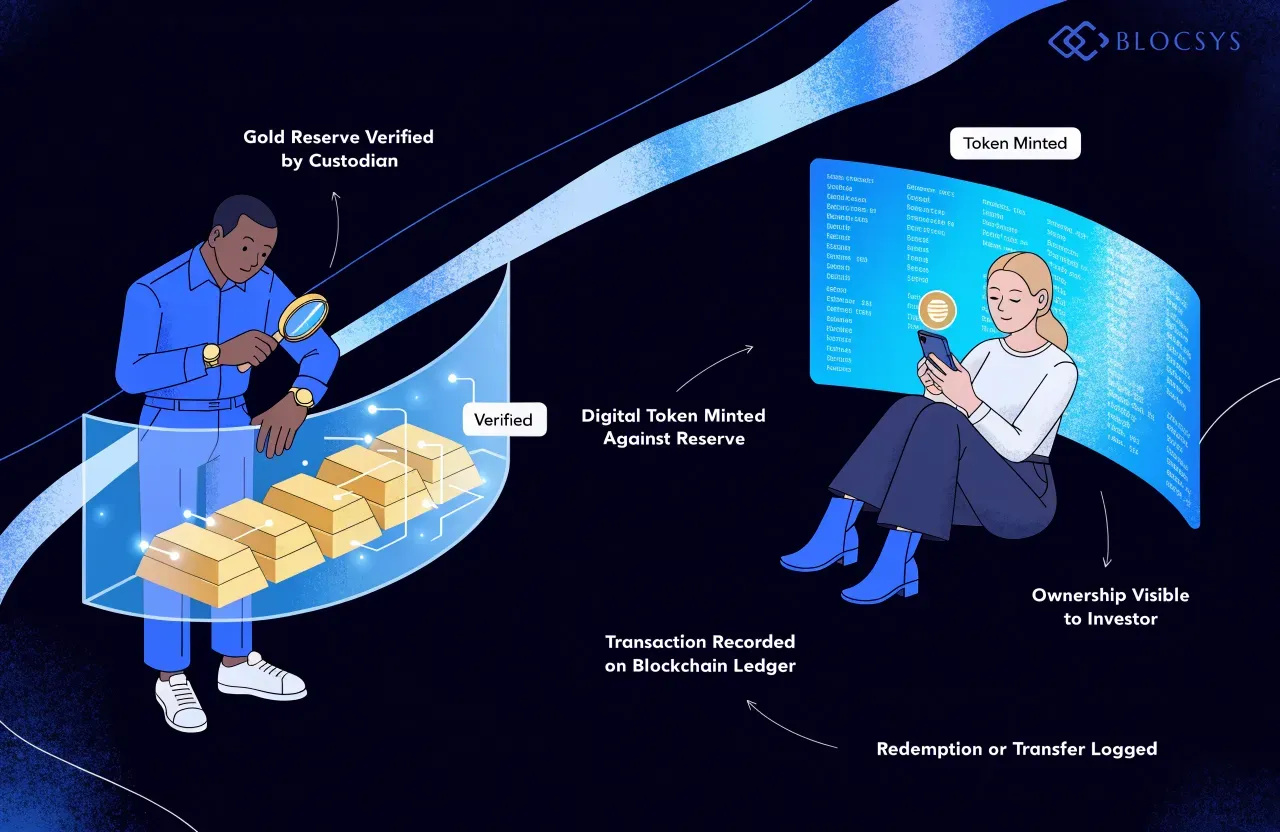
Blockchain’s role here is narrower than marketing language sometimes suggests, and it helps to be precise about it. A blockchain-based ledger can record each transaction in a way that’s difficult to alter after the fact, creating a clear, time-stamped history of buying, selling, and transfers.
This kind of record supports traceability. If a customer or auditor needs to verify when a purchase happened or trace a transaction history, a blockchain-backed system provides a consistent reference point. It can also improve data integrity across the platform, since records aren’t easily rewritten after the fact.
However, blockchain records don’t verify the physical gold’s purity, nor do they guarantee that the stated reserves actually exist in a vault somewhere. Those depend entirely on the sourcing, custody, and audit arrangements the business has with its refining or vaulting partner. Blockchain strengthens transaction transparency; it doesn’t replace the need for trustworthy custody relationships behind the platform.
Platforms built with blockchain-based gold tokenization can go a step further, representing each unit of gold as a verifiable digital token tied to a specific record. This gives investors a clearer, auditable trail of ownership than a simple database entry might. Still, the token is only as reliable as the reserve and audit process standing behind it.
Digital Gold Apps vs Traditional Gold Buying: What Is Changing?
Traditional gold retail vs digital gold comes down to a handful of practical differences. Physical buying gives immediate possession, a chance to examine the item, and an established grievance process through a known local business. Digital buying gives price transparency, smaller entry amounts, and a running record of transactions, but the customer doesn’t hold physical metal until they choose to redeem it.
Accessibility also differs. A physical store depends on location and opening hours. A digital app, on the other hand, is available whenever the customer has their phone, which matters for someone who can’t easily visit a store during work hours.
Redemption terms vary significantly between platforms too, and that’s worth underlining. Some allow conversion to coins or jewellery through partner networks; others only allow cash settlement. Transaction records also differ: a physical purchase typically comes with a paper invoice, while digital platforms maintain an in-app history, sometimes backed by blockchain logging.
Ultimately, these are different tools for different needs. A customer saving small amounts monthly might prefer digital gold. Someone buying a wedding necklace will still go to a jeweller. The smartest gold businesses are learning to offer both rather than picking one over the other.
What Customers Should Look for Before Using Digital Gold Apps
Trust and security concerns limit adoption of digital gold platforms, and that caution is reasonable. Before using any app, check who the service provider actually is, and whether they disclose their sourcing and custody partner by name. A platform that’s vague about who holds the physical gold deserves extra scrutiny.
Pricing transparency matters just as much. Real-time gold pricing gives transparency on value held, so look for an app that shows the live rate clearly, along with any spread, storage fee, or transaction charge applied on top. Hidden costs are a known concern flagged by industry observers like the World Gold Council, and small fees can add up meaningfully over repeated purchases.
Also check the redemption terms before you buy anything. Can you convert your holdings to physical gold, and through which network? Is there a minimum amount required for redemption? What happens if the provider shuts down its service? Secure transaction systems address trust and security concerns, but you should still verify independently rather than assuming every app works the same way.
Finally, read the legal disclosures. Lack of regulatory clarity and authority creates concern around digital gold in India, since digital gold products haven’t historically fallen under one single regulator. Knowing exactly what you’re buying, and from whom, matters more than the app’s interface design.
Addressing the Physical Ownership Question Directly
Investors are concerned about not having physical ownership of the gold they buy digitally, and that’s a fair concern to raise. Digital gold typically represents a claim against gold held by a custodian, not metal in your own hand. Portfolio management tools help track digital gold holdings and their current value, but they don’t substitute for understanding exactly how redemption works before you commit funds.
What Gold Businesses Need to Consider Before Adopting Digital Gold Apps
Before investing in any technology, a gold business needs to decide its actual business model. Will the platform sell gold sourced from an existing inventory, or will it partner with a refinery or vaulting company for backing? That decision shapes everything that follows.
Custody arrangements need to be defined clearly, including who holds the physical reserves and how they’re audited. Pricing needs a reliable live feed, ideally integrated directly into the app rather than updated manually. Payment gateway integration, transaction reconciliation, and fraud monitoring all need proper planning too, since any lapse here directly damages customer trust.
Low conversion from registered users to active buyers is a common problem fintech platform operators face. Onboarding needs to be simple enough that a first-time user doesn’t abandon signup halfway through. Multilingual support matters too, given how varied India’s customer base is across regions and literacy levels.
Legal and compliance considerations also deserve attention early, not as an afterthought once the platform is live. Because regulatory oversight of digital gold in India is still developing across different authorities, businesses should build audit-ready transaction records and clear ownership documentation from day one, rather than retrofitting compliance later.
Most digital gold platforms don’t fail because of bad technology. They fail because the business never nailed down who’s actually holding the gold and how customers get it back.
Competition from alternative digital investment products, including gold ETFs, sovereign gold bonds, and even crypto assets, is another real factor platform operators have to plan around. A digital gold app needs a genuinely good customer experience to hold attention against these alternatives, not just a digital version of what a physical store already offers.
The Future of Gold Business: What Digital Gold Apps Could Mean for the Industry
It’s reasonable to expect more jewellers and bullion dealers will experiment with digital channels over the coming years, given how digital payments and mobile-first behaviour keep growing across India. However, that doesn’t mean physical retail fades away. Weddings, festivals, and gifting occasions remain deeply tied to in-person gold buying, and that’s unlikely to change soon.
What seems more likely is a gradual blending of the two. A customer might accumulate digital gold throughout the year and convert it into jewellery during Diwali or wedding season. A bullion dealer might use an app purely as an investment accumulation tool while keeping physical bar and coin sales entirely separate.
Branded precious metal platforms, where a known jewellery brand runs its own app rather than depending entirely on a third-party marketplace, could also become more common. That gives established businesses more control over customer relationships and data, rather than ceding that entirely to a fintech intermediary.
This digital gold business transformation isn’t about replacing centuries of trust built around physical gold buying. It’s about adding a new layer of accessibility on top of it, one that fits how customers already manage money and attention through their phones.
How Blocsys Helps Businesses Build Digital Gold and Silver Apps
Blocsys Technologies Pvt. Ltd. builds digital gold and silver platforms and mobile apps for jewellers, bullion dealers, gold mining companies, refineries, and fintech businesses. Rather than offering a one-size-fits-all template, Blocsys works from a business’s actual sourcing, custody, and customer requirements to design a platform that fits.
Core capabilities include real-time gold pricing integration, secure transaction infrastructure, portfolio management dashboards for customers, and blockchain-based gold tokenization for businesses that want verifiable, transparent ownership records. Blocsys also supports onboarding flows designed to convert signups into active buyers, which directly addresses one of the biggest challenges fintech-style gold platforms report.
Because Blocsys works with jewellers, miners, refineries, and fintechs alike, not just banks or single-purpose marketplace apps, a business can shape the platform around its specific business model rather than forcing its operations into someone else’s framework. If you’re exploring digital gold and silver app development, that flexibility across business types is worth factoring into your decision.
Frequently Asked Questions
Here are direct answers to the questions we hear most often about digital gold apps and the changing gold business landscape.
What are digital gold apps and how do they work?
Digital gold apps let customers buy, sell, and track gold through a mobile app, typically backed by gold held with a refiner or vaulting partner. Customers pay digitally, view their holdings’ value at live prices, and in many cases redeem their holdings for physical gold through a partner network.
Why are digital gold apps becoming popular in India?
Rising smartphone use, UPI-based payments, and demand for smaller, flexible purchase amounts are driving interest. Younger, urban customers in particular like the ability to start small and track value without visiting a store every time.
How are digital gold apps changing the traditional gold business?
They’re adding a digital purchasing channel alongside, not instead of, physical stores. Jewellers and bullion dealers are using apps to stay engaged with customers between store visits and reach buyers beyond their immediate location.
What are the benefits of digital gold apps for customers?
Customers get live pricing transparency, the ability to buy small amounts, a running transaction history, and portfolio tracking from their phone. These benefits suit gradual accumulation more than one-time jewellery purchases.
Can traditional jewellers and gold retailers launch their own digital gold apps?
Yes. Many jewellers and bullion dealers partner with a technology development company to build a branded app, while sourcing gold backing through a refinery or custodian partnership rather than building that infrastructure themselves.
How does blockchain technology support digital gold applications?
Blockchain can create a tamper-resistant transaction record and support tokenized ownership representations. It improves traceability and auditability, but it doesn’t verify physical gold purity or guarantee reserves on its own.
Can digital gold apps complement physical gold and jewellery purchases?
Yes, that’s how most businesses are actually using them. A customer can accumulate digital gold over time and later convert it into jewellery or coins through an in-store or partner redemption process.
What should customers check before choosing a digital gold app?
Check who the sourcing and custody partner is, how pricing and fees are disclosed, what redemption options exist, and what legal disclosures the provider makes. Avoid platforms that are vague about any of these.
What should businesses consider before launching a digital gold platform in India?
Businesses need a clear sourcing and custody arrangement, reliable live pricing, secure payment integration, compliance-ready record keeping, and an onboarding flow that actually converts signups into buyers.
How can Blocsys help businesses develop digital gold and silver applications?
Blocsys builds custom digital gold and silver platforms, including real-time pricing, secure transactions, portfolio tools, and blockchain-based tokenization, tailored to a business’s own sourcing and customer model. Learn more through digital gold and silver app development.
Gold businesses considering a digital channel, whether a jewellery brand, bullion dealer, or fintech founder, can explore how Blocsys approaches custom platform development for their specific business model and customer base.
Why do investors feel more risk and trust uncertainty with digital gold and tokenization platforms?
Digital gold rides on a custodian relationship, not metal in hand, so trust depends on who holds reserves and how they’re audited. Volatility worry mixes with platform worry: price risk plus provider risk. Check sourcing partner and audit process before buying, not after.
What hidden costs and trust risks has the World Gold Council flagged for digital gold?
Spreads, storage fees, and transaction charges on top of live rate can add up over repeated small buys. Lack of single regulator adds trust gap too. Look for apps disclosing full fee breakdown upfront, not just live price.
Why is it hard for platforms to tailor digital gold offerings to what actually drives investor decisions?
Adoption splits unevenly: younger urban buyers want small entry amounts and live pricing, older/rural buyers still prefer in-person trust. No single driver fits all segments. Platforms built on one business model (jeweller inventory vs fintech custodian partnership) end up serving different buyer motivations by design, not guesswork.
Why do older and rural customers adopt digital gold apps more slowly?
They’re comfortable with familiar store relationships and in-person grievance handling, which app-based buying doesn’t replicate. Digital comfort skews younger and urban. That’s why physical retail keeps serving them while digital grows alongside it, not instead of it.
Ready to move beyond theory and build an intelligent platform that delivers real-world value? Blocsys Technologies specialises in engineering enterprise-grade AI and blockchain solutions for the fintech, Web3, and digital asset sectors. Connect with our experts today to discuss your vision and chart a clear path from concept to a secure, scalable reality.
