
Building Customer Trust in Digital Gold Platforms: What Businesses Must Get Right
Ask any gold merchant who’s moved online, and they’ll tell you the hardest sale isn’t the first gram. It’s convincing a stranger that a number on a screen represents real metal sitting in a real vault. Digital gold customer trust doesn’t arrive with a sleek app or a catchy tagline. It builds slowly, through physical gold backing, visible transaction records, and a platform that doesn’t buckle under pressure. Businesses that treat trust as a marketing line rather than an operational commitment usually find out the hard way when customers ask hard questions. If you’re planning or refining a digital gold and silver app development project, this is the conversation you need to have before writing a single line of code.
Across India, the UK, the US, UAE, Germany, Singapore, Canada, and Australia, gold carries different cultural and regulatory weight. However, one thing stays constant: customers want proof, not promises. Let’s look at what actually earns that proof.
Why Digital Gold Customer Trust Is Critical for Businesses
Trust isn’t a soft metric here. It’s the difference between a customer buying once and a customer buying every month. A jeweller who’s run a loyalty scheme for thirty years knows this instinctively; digital gold businesses need to learn it fast. Without digital gold customer trust, acquisition costs climb because word-of-mouth dries up.
Consider a mid-sized bullion dealer launching an app in the UAE. Early users convert well because of brand recognition from physical stores. Repeat purchases, though, depend entirely on whether customers believe their holdings are safe and redeemable. Consequently, retention becomes the real test of whether the platform earned confidence or just curiosity.
Trust also affects partnerships. Payment processors, banks, and regulators look more favourably on platforms with clean operational histories. Therefore, weak transparency doesn’t just cost customers, it limits growth options too.
What Do Customers Expect from a Trusted Digital Gold Platform?
Customers generally expect five things: physical backing, fair pricing, clear ownership records, secure transactions, and a workable redemption path. Miss any one of these, and doubt creeps in quickly.
Here’s a situation we’ve seen play out often. A customer buys digital gold during a price dip, checks the app weeks later, and the balance looks right. But when they try to redeem it for physical coins, the process takes longer than expected, with unclear fees. That single friction point undoes months of confidence.
Storage arrangements matter too. Customers want to know where the gold sits, who insures it, and what happens if the custodian changes. Vague answers here create more anxiety than silence would. Transparent, specific communication beats a polished FAQ page every time.
How Businesses Can Establish Digital Gold Customer Trust Through Physical Gold Backing
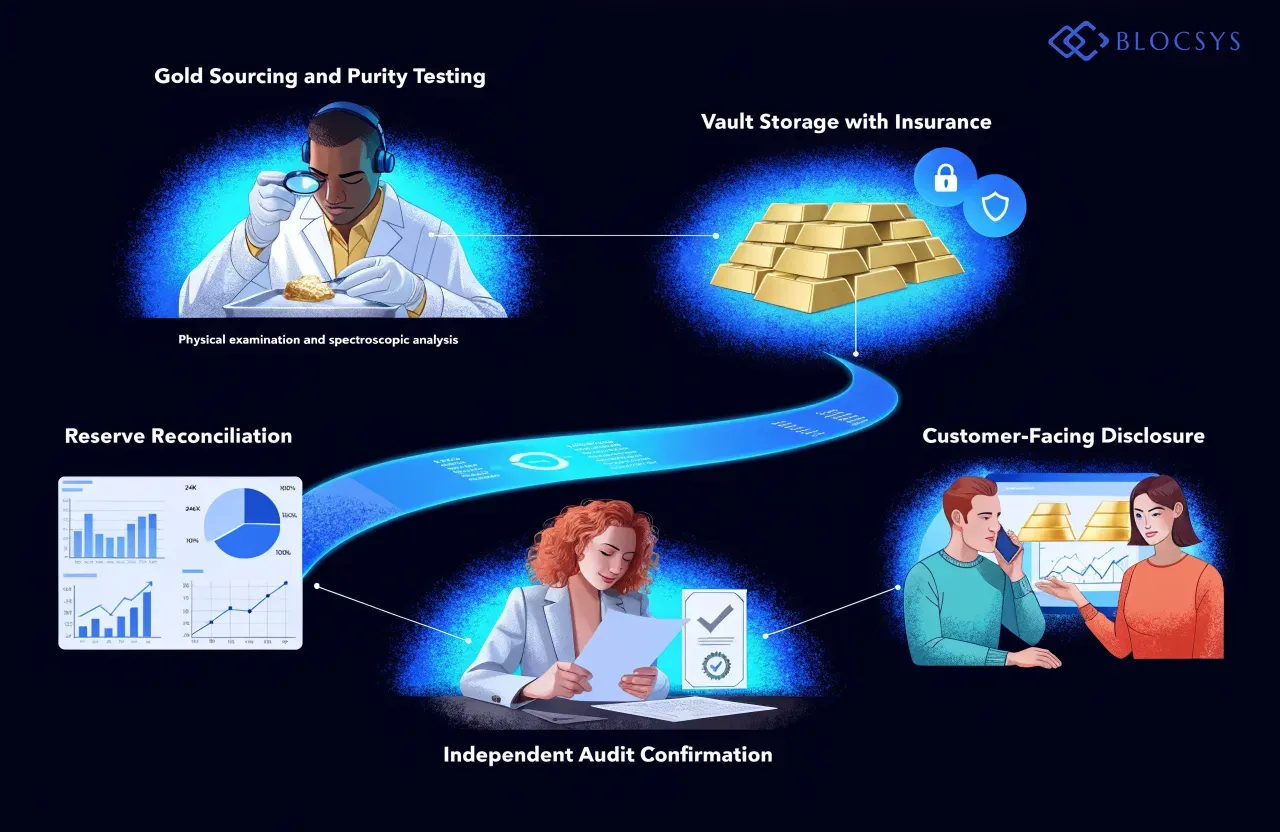
Physical gold backing is the foundation everything else rests on. Without it, blockchain records and slick interfaces mean nothing. Sourcing matters first: where does the gold come from, and is its purity verified through recognised testing standards? The London Bullion Market Association maintains Good Delivery standards that many refiners and custodians reference for purity and provenance benchmarks.
Custody comes next. Gold needs secure, insured vault storage, ideally with a named custodian the business can identify to customers. Reserve reconciliation, matching digital balances against actual vaulted gold, should happen on a defined schedule, not occasionally when someone remembers.
Redemption policy deserves equal attention. Customers should know, in plain terms, how to convert digital holdings into physical gold or cash, what the timelines look like, and what fees apply. A secure digital gold platform that hides this information in dense terms and conditions invites suspicion, not confidence.
Physical gold backing isn’t a checkbox you tick once at launch. It’s an ongoing operational discipline, reconciled, insured, and documented, that most digital gold businesses underestimate until a customer asks to redeem a large holding.
How Blockchain Can Improve Transparency in a Digital Gold Platform
A blockchain digital gold platform gives businesses a way to record every purchase, transfer, and redemption on an immutable ledger. Once a transaction is written, it can’t be quietly altered. That alone changes the conversation with sceptical customers.
Think about a customer disputing a transaction timestamp. On a traditional database, resolving that dispute often means trusting the business’s internal logs. With blockchain transaction records, the customer can independently verify the sequence and timing, which removes a layer of he-said-she-said entirely.
Blockchain traceability also helps with gold ownership records. Each unit of digital gold can carry a traceable history: who bought it, when it moved, and whether it was ever redeemed. This creates a digital gold audit trail that’s far harder to manipulate than spreadsheet entries. Additionally, blockchain in digital gold systems supports faster reconciliation between what customers hold and what the ledger shows, cutting down manual audit hours.
For businesses evaluating infrastructure, tamper-resistant record systems used in other industries offer a useful comparison. A tamper-proof document verification platform applies similar principles, immutable records anchored to a shared ledger, to prove authenticity without relying on a single party’s word. The logic transfers directly to digital gold transaction transparency.
Can Blockchain Prove That Digital Gold Is Physically Backed?
Here’s where many businesses overstate what their technology actually does. Blockchain can prove that a transaction happened, when it happened, and that the record hasn’t been altered. It cannot prove that physical gold sits in a vault somewhere.
That’s a critical distinction. A blockchain entry saying “10 grams purchased” is only as trustworthy as the process feeding data into it. If nobody checks the vault, the ledger just reflects a claim, not a fact.
This is why independent gold audits still matter, even on the most sophisticated blockchain-based digital gold platform. Auditors need to physically verify reserves, cross-check them against on-chain records, and publish findings customers can review. Gold reserve transparency depends on this human verification layer working alongside the technology, not instead of it.
Short version: blockchain handles the paper trail. People still need to check the vault.

Why Digital Gold Platform Security Matters for Customer Confidence
Security breaches destroy digital gold customer trust faster than almost anything else. One leaked database or hijacked account, and years of credibility evaporate overnight.
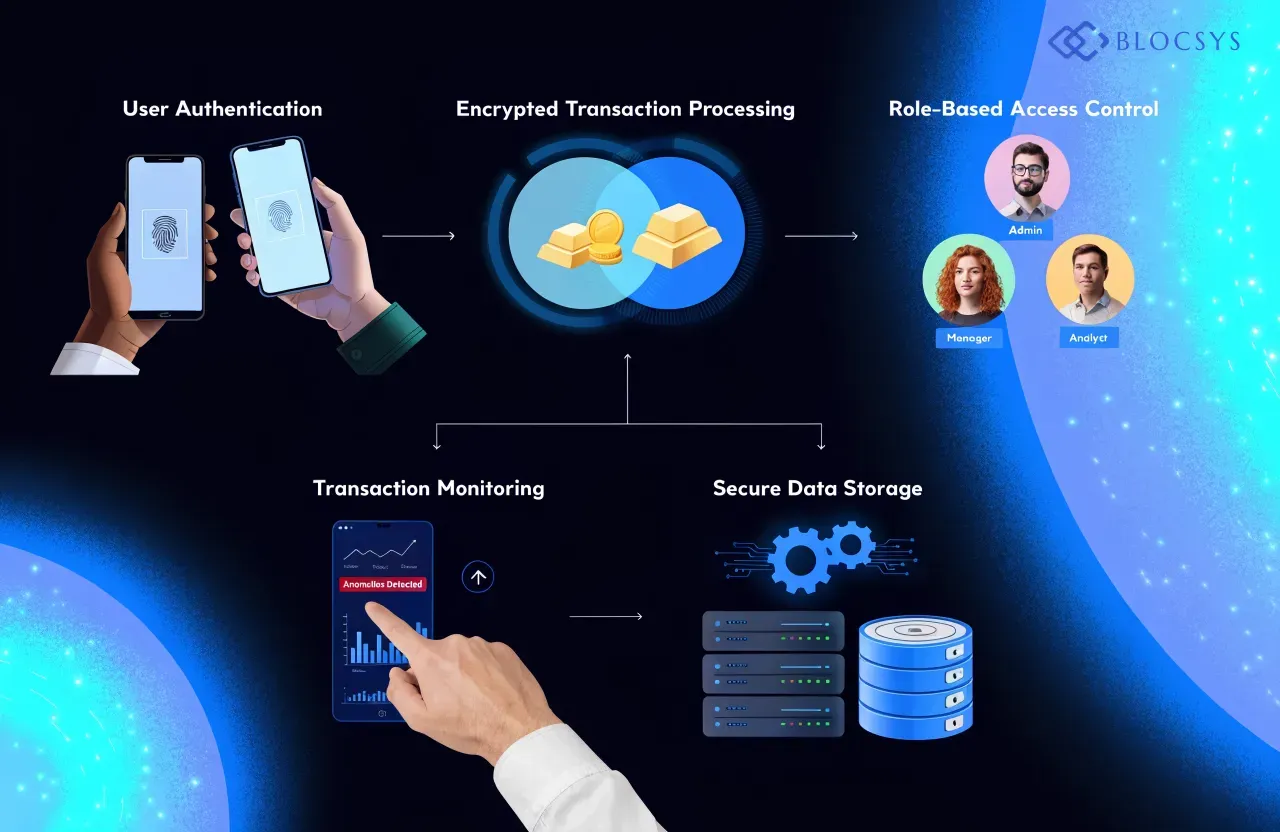
Digital gold platform security starts with encryption for data at rest and in transit, alongside strong authentication methods like multi-factor login. Role-based access control matters internally too; not every employee needs the ability to move customer holdings or alter records.
Transaction monitoring systems should flag unusual activity, such as repeated failed logins or large transfers from dormant accounts. The NIST Cybersecurity Framework offers widely referenced guidance for structuring these controls across detection, response, and recovery. Secure integrations with payment gateways and custodial partners also reduce exposure, since third-party weaknesses often become the actual breach point.
Customer asset protection isn’t only about stopping hackers. It’s also about building redundancy, so a single server failure doesn’t lock customers out of their own holdings. A secure digital gold platform development process treats these controls as core architecture, not an afterthought bolted on before launch.
The Role of Audits, Transparency and Operational Accountability
Audits and transparency work together, but they’re not interchangeable. An audit verifies facts; transparency communicates them. Businesses need both.
Regular reserve reconciliation, ideally supported by independent auditors, confirms that customer balances match actual gold holdings. Publishing summarised audit results, even quarterly, gives customers something concrete to check rather than a trust-us statement.
Reconciliation infrastructure built for other regulated markets offers a helpful parallel. Platforms handling post-trade reconciliation in capital markets rely on structured, auditable matching processes between parties. Digital gold businesses face a similar reconciliation challenge between digital records and physical reserves.
Operational accountability also means defining who’s responsible when something goes wrong. Which team handles a failed redemption? Who approves a change in custodian? Documented answers to these questions, available to customers in some form, reduce the panic that follows any operational hiccup.
How Digital Gold Businesses Can Communicate Trust to Customers
Vague claims create more doubt than honest limitations do. Saying “your gold is fully backed and secure” without explanation reads as marketing. Explaining exactly how backing, storage, and security work reads as credibility.
Businesses should explain gold sourcing and purity standards in plain language, not buried in legal text. Ownership records should be easy for customers to view, ideally in real time, rather than requiring a support ticket.
Fee structures deserve the same clarity. Customers tolerate fees; they don’t tolerate surprise fees. Similarly, redemption policies should state processing times upfront instead of after a customer has already committed to waiting.
Essential Technology Considerations for a Secure Digital Gold Platform
Good technology doesn’t replace physical gold management, but it supports every trust-building process discussed so far. Account management systems need to track ownership accurately, down to fractional gram purchases. Transaction tracking should log every buy, sell, and transfer with timestamps customers can view.
Administrative controls matter just as much as customer-facing features. Admins need audit-ready reporting tools that make reconciliation straightforward rather than a manual scramble each quarter. Blockchain integration should sit alongside these systems, not replace core database functions entirely.
Traceability platforms built for other physical-asset industries show how this works in practice. A blockchain-powered organic certification and traceability platform tracks a physical product from origin to shelf using similar record-keeping logic that digital gold platforms can adapt for reserve tracking.
Digital gold platform development also needs to account for scale. A platform handling ten thousand transactions a day needs different infrastructure than one handling ten. Planning for that growth early avoids costly rebuilds later.
How Blocsys Helps Businesses Build Trusted Digital Gold Platforms
Blocsys Technologies Pvt. Ltd. works with businesses planning blockchain-based digital asset platforms, including digital gold and silver applications. The focus stays on practical architecture: transaction management, ownership record systems, and blockchain integration designed around how your business actually operates.
Whether you’re a bullion dealer exploring your first app or a fintech company upgrading legacy systems, digital gold app development needs a technology partner who understands both the blockchain layer and the operational realities of gold custody. Blocsys approaches digital gold software development with that dual lens, building platforms that support transparent record-keeping without overstating what any single technology can guarantee.
If you’re evaluating a blockchain-based digital gold platform development project, it’s worth exploring digital gold and silver app development services built around your specific business model, customer base, and compliance context. You can also learn more about broader platform capabilities at Blocsys.
Conclusion
Digital gold customer trust doesn’t come from a single feature. It comes from physical gold that’s genuinely there, blockchain records that are genuinely traceable, security that’s genuinely tested, and communication that’s genuinely clear. Skip any one piece, and customers notice eventually.
Businesses that get this right treat trust as infrastructure, not marketing copy. If you’re building or upgrading a platform and want that infrastructure done properly, explore digital gold and silver app development options suited to your reserve model, compliance needs, and growth plans.
Frequently Asked Questions
Here are direct answers to the questions we hear most often about digital gold customer trust.
How can digital gold platforms build customer trust?
By combining verified physical gold backing, transparent blockchain transaction records, strong platform security, and clear communication about storage, fees, and redemption. No single element works alone.
How can customers verify whether digital gold is backed by physical gold?
Through published independent audit reports, named custodians, and reserve reconciliation disclosures. Blockchain records help, but physical verification requires actual auditors checking the vault.
What role does blockchain play in digital gold transparency?
Blockchain creates immutable transaction records, supporting traceability and auditability. It shows exactly what happened and when, which strengthens digital gold transaction transparency significantly.
Can blockchain independently verify physical gold reserves?
No. Blockchain confirms that recorded transactions haven’t been altered, but it can’t confirm that gold physically exists or meets purity standards. That requires independent audits.
How should digital gold businesses manage gold storage and custody?
Through insured, named custodians with regular reconciliation between vaulted gold and customer balances. Storage arrangements should be disclosed clearly, not left vague.
Why are independent audits important for digital gold platforms?
Audits verify that digital balances match actual reserves. Without them, blockchain records simply reflect claims rather than confirmed physical facts.
How can digital gold platforms protect customer information and transactions?
Through encryption, multi-factor authentication, role-based access control, and continuous transaction monitoring. Secure third-party integrations matter too, since weak links often sit outside the core platform.
How can customers verify their digital gold ownership records?
Through real-time, accessible account dashboards showing purchase history, current holdings, and transaction logs, ideally cross-referenced against blockchain records for added assurance.
What security features should a digital gold platform have?
Encryption, secure authentication, access controls, transaction monitoring, and secure data storage. These features reduce both cybersecurity risk and operational error.
What should businesses consider when developing a trustworthy digital gold platform?
Physical gold sourcing and custody, blockchain integration for traceability, platform security architecture, audit processes, and clear customer communication, all working together rather than any one in isolation.
Ready to move beyond theory and build an intelligent platform that delivers real-world value? Blocsys Technologies specialises in engineering enterprise-grade AI and blockchain solutions for the fintech, Web3, and digital asset sectors. Connect with our experts today to discuss your vision and chart a clear path from concept to a secure, scalable reality.