

Is Your Gold Business Ready for 2027? The Shift Towards Digital Gold Apps
Walk into any jewellery showroom in India today and you’ll notice something. Customers check gold rates on their phones before they even talk to a salesperson. They compare schemes online, ask about digital payment options, and expect quick answers. This shift matters for every gold retailer, bullion dealer, and wholesaler watching customer behaviour change. Digital gold for gold retailers isn’t a passing trend; it’s becoming part of how customers expect to interact with gold businesses. The question worth asking isn’t whether digital gold will replace physical gold buying. It won’t, not entirely. The real question is whether your business has a digital strategy ready for 2027, when digital-first customer habits will likely be even more entrenched than they are now.
This article looks at business readiness, not just technology trends. We’ll walk through what’s changing, what you should evaluate, and how you can prepare without abandoning what already works for your business.
Why 2027 Could Be an Important Year for Gold Businesses
Nobody can predict exact market numbers for 2027. However, certain business trends are already visible and worth planning around. India’s gold demand remained strong through 2024 and 2025, according to the World Gold Council’s Gold Demand Trends reports, driven largely by jewellery and investment purchases. Alongside this, digital payments have grown sharply. The Reserve Bank of India’s annual reports have repeatedly noted strong growth in UPI transaction volumes, showing how comfortable Indian consumers have become with digital financial interactions.
Put these two facts together and you get a clear pattern. Gold demand stays strong, but the channels customers use to research, transact, and engage keep shifting digital. Therefore, a gold business that hasn’t built any digital touchpoint risks missing customers who now expect at least some digital interaction, even if they still visit the store to make their final purchase.
Competition is also changing shape. Established digital gold platforms, fintech apps, and jewellery brands with strong online presence are already capturing the attention of digitally active buyers. Your competitors aren’t only the shop next door anymore. Consequently, preparing a digital strategy before 2027 gives you time to test, learn, and adjust rather than scrambling later.
“The businesses that get this right aren’t the ones chasing every new app trend. They’re the ones who treat digital gold as an extension of trust they’ve already built with customers over decades, not a replacement for it.” — Industry observation from bullion trade consultations
What Is Changing in the Traditional Gold Business?
Traditional gold businesses have relied on physical store visits, personal relationships, and word-of-mouth for generations. This model still works, and it will keep working for a large share of customers. However, relying exclusively on conventional sales channels can limit how far you reach.
Dependence on Physical Visits Limits Reach
A customer who travels for work or lives in another city can’t easily visit your store regularly. Without a digital channel, you lose touch with that relationship. Digital gold adoption by gold businesses helps bridge this gap by letting you stay connected with customers beyond your immediate geography.
Customers Expect Convenient Digital Interactions
Younger buyers, in particular, want to check rates, track holdings, or make small purchases without visiting a store every time. This doesn’t mean they’ll stop valuing in-person service for big-ticket jewellery purchases. It means they want options.
Customer Engagement Gets Harder Without Digital Touchpoints
Retention depends on staying in front of customers. A physical-only business depends on customers remembering to walk in again. A digital channel, however, lets you send updates, rate alerts, or scheme reminders directly.
None of this suggests abandoning your existing strengths. Your reputation, craftsmanship, and personal trust remain valuable. The opportunity lies in connecting these strengths with digital convenience, not replacing one with the other.
Why Gold Businesses Should Pay Attention to Digital Gold Apps
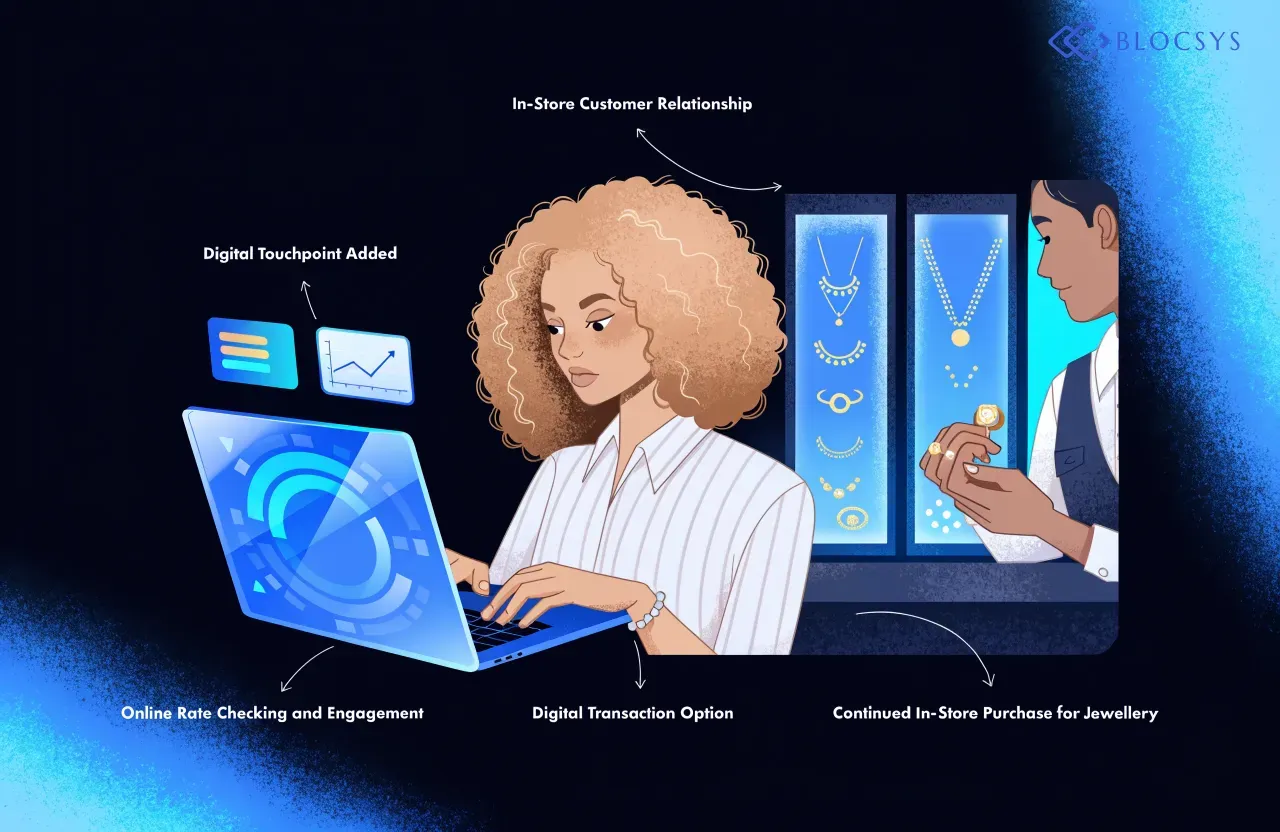
Digital gold apps give customers a way to check rates, view holdings, and transact in small amounts without stepping into a store. For gold businesses, this opens a complementary channel rather than a competing one.
Think about a customer who wants to start a small savings habit in gold but can’t commit to a large purchase every visit. A digital gold platform lets them do this gradually. This is one of several digital gold business opportunities that traditional retailers are beginning to explore, often alongside their core jewellery or bullion operations.
Digital access also supports customer acquisition beyond your local area. A well-built app can introduce your brand to customers who’ve never visited your physical store. Retention improves too, since transaction history and notifications keep your brand visible between visits.
That said, these are opportunities to evaluate, not guaranteed outcomes. Success depends on execution, trust-building, and how well the digital experience matches your existing brand promise. A platform alone won’t create demand; it needs to be positioned correctly within your overall business strategy.
How Digital Gold Apps Could Change Gold Business Operations by 2027
Adopting digital gold for gold retailers changes more than the customer-facing experience. It touches several operational areas that business owners should understand before committing resources.
Digital Customer Onboarding
Instead of walk-in registration, customers sign up through the app using basic KYC details. This needs to be simple, otherwise customers abandon the process midway.
Account and Transaction Management
Every customer needs a digital record of their holdings, purchase history, and pending transactions. This replaces manual ledgers with structured digital records, which also helps with audit and reconciliation.
Gold Pricing and Rate Integration
Your app needs reliable, real-time gold rate feeds. Rate accuracy directly affects customer trust, so this integration deserves careful vendor selection.
Purchase, Redemption, and Payment Workflows
Customers need clear processes for buying, and where applicable, redeeming gold for physical delivery or jewellery. Payment gateway integration should support common methods Indian customers already use, including UPI and cards.
Notifications, Reporting, and Admin Oversight
Transaction alerts and digital receipts build customer confidence. On your side, an admin dashboard helps track sales volume, customer activity, and business performance in real time.
Each of these capabilities exists to solve a business problem, not just to add features. Before building anything, map out which of these genuinely matter for your operating model.
Which Gold Businesses Can Benefit from Digital Gold Platforms?
Gold Jewellery Retailers
Retailers can use digital gold for gold retailers as a complementary savings and engagement tool alongside jewellery sales. A customer saving digitally toward a wedding purchase, for instance, stays connected to your brand until they’re ready to buy jewellery in-store.
Bullion Dealers and Gold Merchants
Digital gold for bullion dealers opens a channel for smaller transaction sizes and broader customer reach beyond traditional wholesale relationships. It also supports faster, trackable transactions with existing business clients.
Gold Wholesalers and Distributors
Wholesalers can explore digital tools for managing distributor relationships, tracking order volumes, and offering digital ordering interfaces. This isn’t about replacing distributor networks; it’s about adding efficiency to existing processes.
Entrepreneurs Entering the Digital Gold Market
New entrants need to think carefully about sourcing, custody, and compliance before building a platform. A digital gold business model for retailers works best when it’s built around real operational arrangements, not just an app idea.
What Should Gold Businesses Evaluate Before Launching a Digital Gold App?
Before you invest in any platform, several decisions need clarity. A technology platform alone doesn’t establish physical gold backing, custody, purity, or legal compliance. These require separate, deliberate business arrangements.
- Target audience and business model: Are you serving existing customers digitally, or building a new customer base entirely?
- Gold sourcing and backing: Who supplies the physical gold, and how is it verified for purity?
- Custody and storage: Where is the gold stored, and what arrangements exist for redemption?
- Pricing and transaction processes: How will rates update, and how are transaction records maintained?
- Payment and third-party integrations: Which payment gateways and rate providers will you work with?
- Security and data protection: How will customer data and transaction records be protected?
- Operational and regulatory considerations: What compliance responsibilities apply to your specific business structure?
- Scalability and maintenance: Can the platform handle growth, and who maintains it after launch?
Working through these questions honestly, before writing a single line of code, saves significant cost and confusion later.
Essential Features of a Digital Gold Platform for 2027
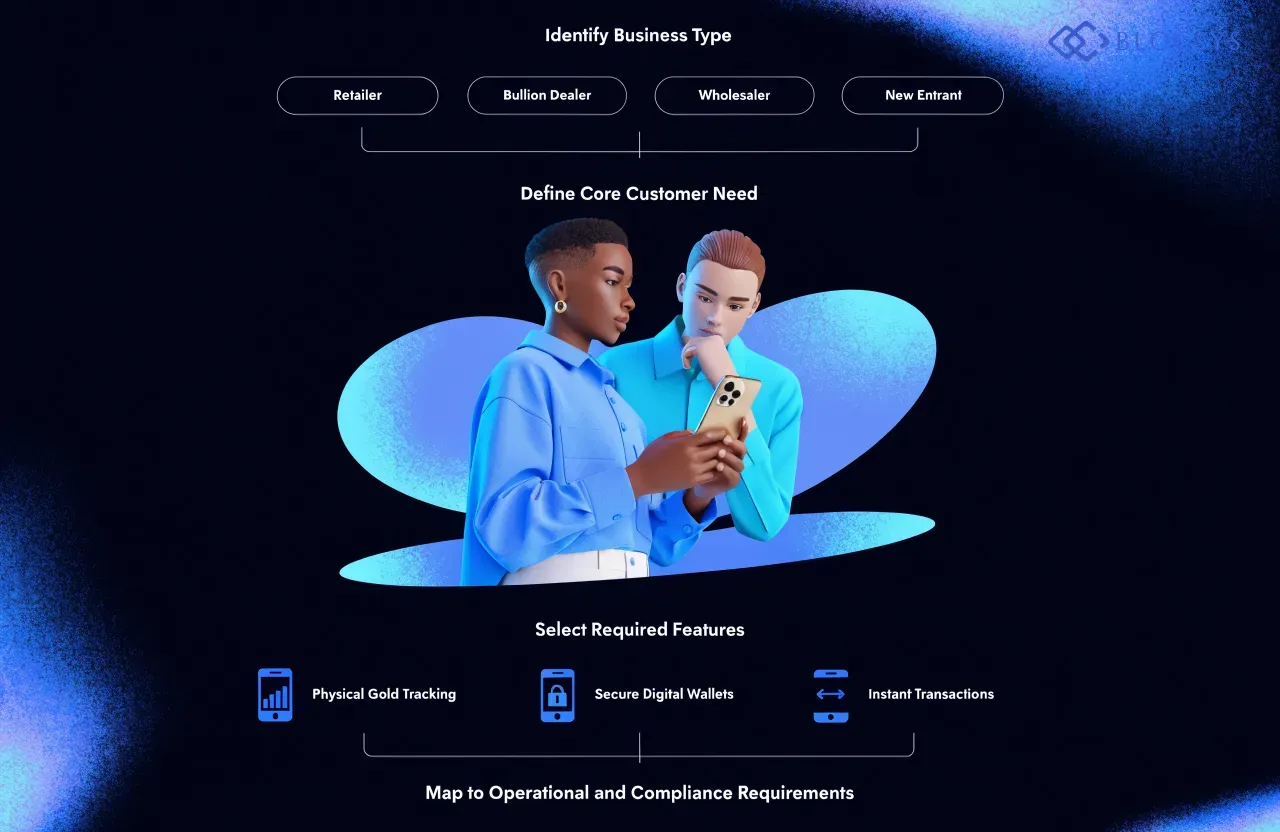
Not every gold business needs every feature. Requirements differ based on whether you’re a retailer adding a savings tool, a bullion dealer expanding transaction channels, or an entrepreneur building a standalone platform.
Core features worth considering include customer registration and onboarding, user accounts with gold holding records, live rate integration, and purchase and sell workflows. Payment gateway integration, transaction history with digital receipts, and redemption request management matter where your business model supports physical delivery.
On the operational side, notifications for customer communication, an admin dashboard for reporting, and security controls for access management all support day-to-day running of the platform. Integration capability and scalability matter if you plan to connect the app with existing inventory or billing systems later.
A retailer focused purely on customer engagement might need far fewer features than a dealer building a full transaction platform. Scope your build around your actual business, not a generic feature checklist.
Digital Gold Apps vs Traditional Gold Business: What Should Owners Prepare For?
Traditional gold business operations rely on in-person service, physical inspection of products, and long-standing customer relationships. Digital gold apps, by contrast, offer convenience, remote access, and continuous engagement between visits.
These aren’t competing models that must eliminate one another. Instead, think of digital gold as an additional sales channel for gold retailers that works alongside your showroom. Customers can research and save digitally, then complete major purchases in person where trust, craftsmanship, and physical verification still matter most.
Operationally, this means your team needs comfort with both worlds. Staff should understand digital account queries just as well as in-store service. Technology requirements shift too, since you now need rate feeds, payment integrations, and digital security measures that a purely physical store never needed.
Preparing for this means accepting that digital transformation in gold business isn’t an either-or decision. It’s about building a connected experience across both channels.
What Could Hold Gold Businesses Back from Digital Adoption?
Several realistic barriers can slow down or derail digital gold adoption. Recognizing them early helps you address them before they become costly problems.
An unclear business model tops the list. Without deciding whether digital gold complements your existing business or stands as a separate venture, platform planning becomes directionless. Lack of technology planning follows closely; rushing into development without defined requirements leads to expensive rework.
Customer trust concerns matter too. Gold buyers, especially in India, value transparency around purity and sourcing. If your digital platform can’t clearly communicate how physical gold backing and custody work, customers may hesitate. Physical sourcing and custody arrangements themselves present real operational work, not just a technology checkbox.
Regulatory and operational uncertainty, integration difficulties with existing systems, and ongoing security and maintenance responsibilities all add complexity. Finally, inadequate customer education about how the platform works can limit adoption even after launch.
Addressing these barriers starts with honest evaluation. Talk to your existing customers about what they’d actually use. Consult with technology partners early. Build a realistic operational plan before committing budget to development.
A Practical Digital Readiness Roadmap for Gold Businesses Before 2027
Here’s a practical framework you can actually use, not just a checklist to file away.
Step 1: Evaluate Your Existing Business Model
List your current customers, sales channels, products, and services. Identify where digital gaps currently limit your reach or customer engagement.
Step 2: Identify the Right Digital Gold Opportunity
Decide whether a digital gold service complements your existing business or needs a separate structure entirely. This decision shapes everything that follows.
Step 3: Define Operational and Physical Gold Arrangements
Work out sourcing, backing, custody, storage, pricing, and redemption processes. Confirm relevant compliance responsibilities with appropriate legal and financial advisors.
Step 4: Plan Your Digital Platform Requirements
Identify customer-facing features, administrative functions, payment integrations, and reporting needs based on your specific business model.
Step 5: Select the Right Technology Development Approach
Evaluate custom development versus off-the-shelf solutions. Consider platform architecture, integration requirements, scalability, and who will handle ongoing maintenance. This is where exploring digital gold and silver app development with an experienced technology partner becomes genuinely useful, since they’ve already worked through many of these architectural decisions.
Step 6: Test and Prepare for Launch
Validate transaction workflows, onboarding, system performance, and security before going live. A soft launch with a limited customer group often reveals issues a full launch would expose too late.
Moving through these steps deliberately, rather than rushing to launch, puts your business in a far stronger position by 2027.
How Blocsys Helps Businesses Build Digital Gold and Silver Apps
Blocsys is a technology development company working with businesses planning digital gold and silver applications. Rather than offering a one-size-fits-all product, Blocsys works around your specific business model, target customers, and operational workflows.
For gold retailers exploring a build a digital gold platform for gold retailers approach, this means starting with your actual customer base and sales process, not a generic template. For bullion dealers needing a digital gold app for bullion dealers, the focus shifts toward transaction volume, business-to-business workflows, and integration with existing systems.
Development considerations Blocsys addresses include customer-facing mobile application development, core digital gold and silver platform functionality, gold pricing and third-party integrations, and transaction and account management workflows. Administrative interfaces, business reporting, platform security, scalability, and integration planning round out the development scope.
Whether you’re running an established jewellery business, a bullion trading operation, or planning a custom digital gold platform for gold merchants from scratch, working with a dedicated development partner helps you avoid costly missteps. You can learn more about digital gold and silver app development and discuss how a platform could align with your specific business requirements.
If you’re also exploring related digital infrastructure, such as secure document verification for KYC processes, Blocsys’s work on blockchain-based document verification may offer useful context for your broader digital transformation planning.
Conclusion: Is Your Gold Business Prepared for the Digital Shift?
Digital gold for gold retailers isn’t about abandoning the showroom, the personal relationships, or the trust you’ve built over years. It’s about recognizing that customers increasingly expect digital options alongside physical ones. Gold retailer online business expansion, bullion dealer digital business models, and new digital sales channels all represent opportunities worth evaluating, not obligations that threaten your current operations.
By 2027, the gap between businesses that prepared early and those that didn’t will likely show up in customer reach, engagement, and operational efficiency. Preparing now, through honest business evaluation and careful platform planning, puts you ahead rather than scrambling to catch up.
If you’re ready to assess what a digital gold platform could look like for your business, consider discussing your specific requirements with a team that understands both the technology and the business side of digital gold and silver app development. A well-planned platform, built around your actual business model, can become a meaningful extension of the gold business you’ve already built.
Frequently Asked Questions
Here are direct answers to the questions we hear most often about digital gold adoption and business readiness for 2027.
Why should gold businesses consider digital gold apps before 2027?
Customer expectations around digital convenience keep growing, supported by strong UPI adoption trends reported by the RBI. Preparing early gives your business time to test digital gold for gold retailers properly, rather than rushing a launch under competitive pressure later.
Can traditional gold retailers start offering digital gold services?
Yes. Retailers can add digital gold as a complementary service alongside jewellery sales, provided they establish clear sourcing, custody, and pricing arrangements first. It works best as an extension of existing customer relationships, not a replacement for in-store sales.
How can bullion dealers benefit from digital gold platforms?
Digital gold for bullion dealers enables smaller transaction sizes, broader customer reach, and trackable digital records alongside existing wholesale relationships. It also supports faster transaction processing compared to purely manual systems.
What is the difference between a traditional gold business and a digital gold business model?
Traditional gold businesses depend on physical visits and in-person transactions. A digital gold business model for retailers adds remote access, digital accounts, and continuous customer engagement, while physical purchases and verification can still happen in-store.
What features should a digital gold app include for gold businesses?
Core features include customer onboarding, account management, live rate integration, purchase and sell workflows, payment gateway integration, and transaction history. Exact requirements vary depending on whether you’re a retailer, bullion dealer, or new entrant.
What arrangements are required to offer physically backed digital gold?
You need verified gold sourcing, secure custody and storage arrangements, clear purity standards, and defined redemption processes. A technology platform alone doesn’t establish any of these; they require separate operational and legal arrangements.
How can gold businesses integrate live gold prices into a digital platform?
This typically requires a reliable rate feed integration from an established data provider, built directly into the app’s backend. Rate accuracy and update frequency directly affect customer trust, so provider selection deserves careful evaluation.
What are the main challenges of launching a digital gold app in India?
Common challenges include unclear business models, physical sourcing and custody arrangements, regulatory and operational uncertainty, payment integration complexity, and building customer trust around digital gold purity and backing.
How much planning is required before developing a digital gold application?
Significant planning is needed, covering business model definition, physical gold arrangements, feature requirements, and technology selection. Businesses that skip this planning often face costly rework after launch.
How can Blocsys help businesses develop a custom digital gold and silver app?
Blocsys works with gold retailers, bullion dealers, and entrepreneurs to plan and build digital gold and silver app development aligned with their specific business model, customer requirements, and operational workflows, covering mobile app development, integrations, and admin reporting.
Ready to move beyond theory and build an intelligent platform that delivers real-world value? Blocsys Technologies specialises in engineering enterprise-grade AI and blockchain solutions for the fintech, Web3, and digital asset sectors. Connect with our experts today to discuss your vision and chart a clear path from concept to a secure, scalable reality.
