
SEBI Corporate Bond Tokenization: The Next Opportunity for India’s Private Debt Market
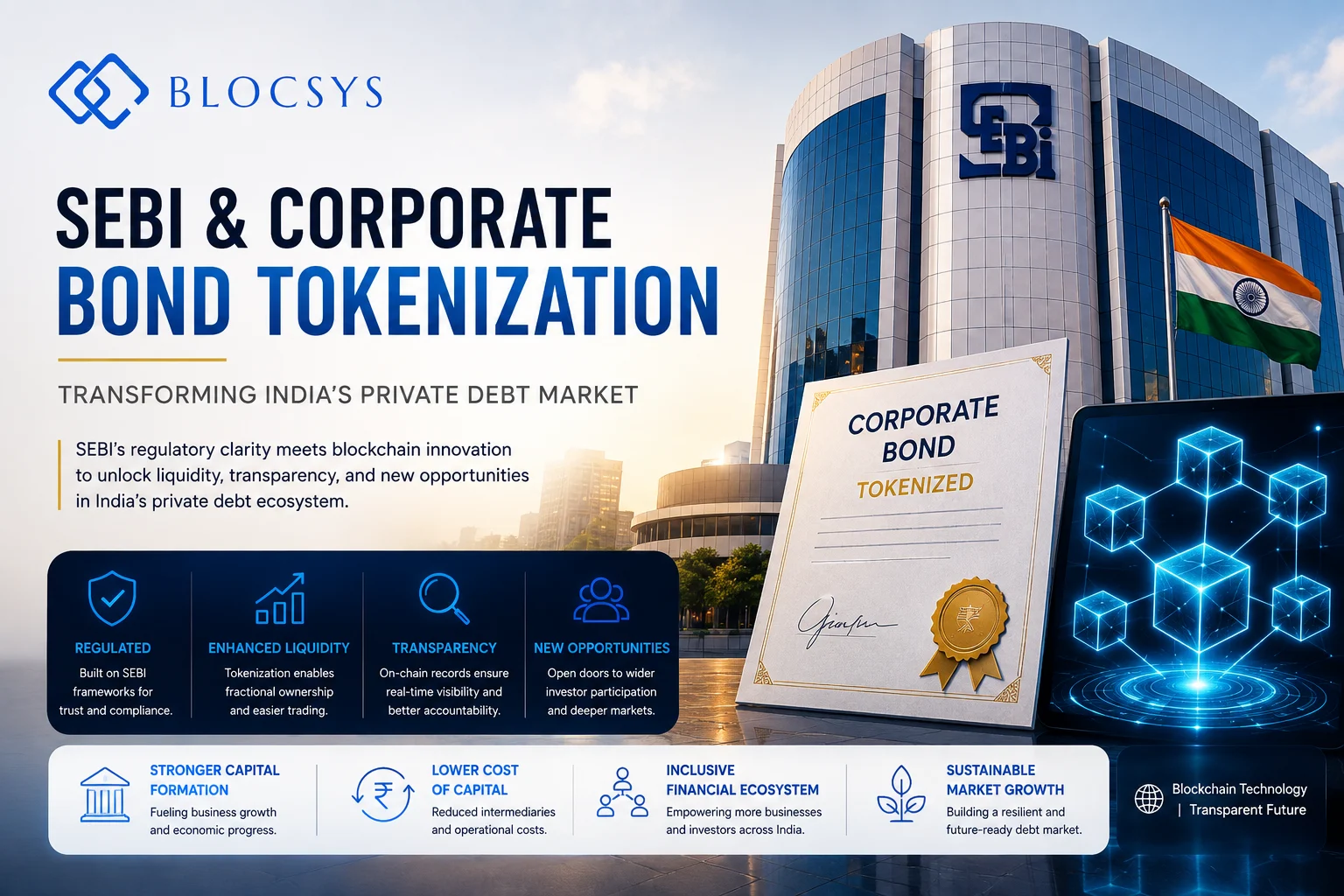
India’s corporate bond market has long punched below its weight. Despite a growing economy and thousands of active issuers, the market remains shallow compared to bank lending and equities. That’s starting to change. SEBI Corporate Bond Tokenization has entered the conversation as regulators explore distributed ledger technology (DLT) to modernize how corporate debt gets issued, settled, and serviced. For private-sector companies, NBFCs, and financial institutions, this shift could open a genuinely new channel for raising and managing capital. If you’re evaluating what this means for your business, Blocsys works with enterprises building the infrastructure this next phase will demand, including Corporate Bond Tokenization Platform Development built for compliance, scale, and security.
What Is SEBI Corporate Bond Tokenization?
SEBI Corporate Bond Tokenization refers to the regulator’s exploration of blockchain-based systems for representing corporate bonds as digital tokens on a distributed ledger. Instead of bonds existing purely as electronic entries in a central depository, tokenized bonds carry ownership, coupon, and transaction data directly on a shared ledger.
In simple terms, a tokenized bond is a digital representation of a debt instrument. It carries the same legal and financial characteristics as a traditional bond, but its issuance, transfer, and settlement happen through blockchain-based infrastructure rather than legacy systems alone.
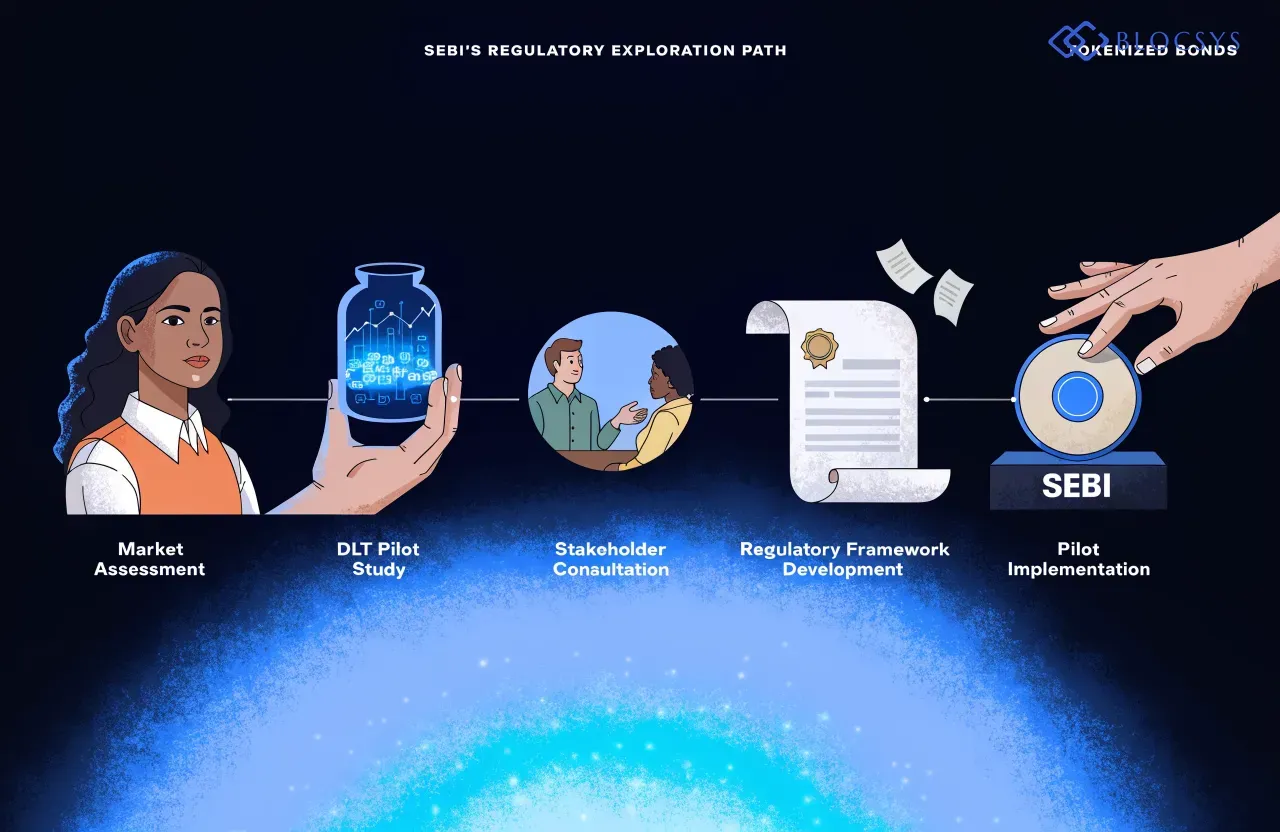
SEBI has indicated interest in DLT-based pilots for the bond market, part of a broader global trend toward tokenized bonds and digital securities. However, it’s important to separate confirmed regulatory activity from speculation. SEBI’s engagement with tokenization is real and ongoing, but the scope, timeline, and eventual rules for private-sector participation are still developing. Anyone evaluating this space should track SEBI’s official communications directly rather than relying on secondhand interpretations.
Tokenization doesn’t change what a bond legally is. It changes how efficiently that bond moves through the system, from issuance to the final coupon payment.
Why Is SEBI Exploring Tokenized Corporate Bonds?
India’s corporate bond market suffers from a few persistent problems: low secondary-market liquidity, long settlement cycles, fragmented investor access, and heavy reliance on intermediaries for reconciliation. These issues limit participation, especially among mid-sized issuers who struggle to attract diverse investor bases.
Blockchain for corporate bonds addresses several of these pain points directly. A shared, tamper-resistant ledger reduces reconciliation overhead between issuers, registrars, and custodians. Smart contracts can automate coupon payments. Ownership records update in near real time rather than through batch processing.
Consequently, tokenization infrastructure has become an attractive area for regulators worldwide, not just in India, to study seriously.
Furthermore, tokenized corporate bonds could lower the cost of fractional ownership, letting smaller investors access debt instruments that were previously reserved for institutional players. That’s a meaningful shift for a market where retail participation in corporate bonds remains thin.
How SEBI’s Approach Differs From Global Frameworks
Singapore’s Project Guardian, the UK’s Digital Securities Sandbox, and various EU pilot regimes under MiCA-adjacent frameworks all explore tokenized bonds, but each operates under different legal architecture. The US has seen tokenized Treasury products gain traction through private-market initiatives rather than a single unified regulator.
SEBI’s approach, by contrast, sits within India’s existing depository-centric framework, where NSDL and CDSL play central roles in securities record-keeping.
Therefore, any Indian tokenization model will likely need to work alongside, not replace, existing depository infrastructure, at least in its early stages. This is a meaningful distinction for enterprises benchmarking India against Singapore or the UK models.
How Tokenization Could Modernize India’s Corporate Bond Market
What would actually change for issuers and investors? Let’s break it down by function.
- Issuance: Digital bonds can be issued with programmable terms embedded directly into smart contracts, reducing manual documentation errors.
- Settlement: Blockchain-based settlement can move from T+2 or T+1 cycles toward near-instant atomic settlement, where payment and securities transfer happen simultaneously.
- Servicing: Coupon payments and maturity redemptions can trigger automatically through smart contract logic, cutting down administrative delays.
- Transparency: Every transaction leaves an auditable trail, which strengthens regulatory oversight and investor confidence.
Corporate bond tokenization India efforts, if they mature into scalable frameworks, could meaningfully deepen the private debt market. A more liquid, more transparent secondary market benefits everyone, issuers get better pricing, investors get easier exits, and regulators get better visibility.
What the SEBI Initiative Means for Private-Sector Issuers
Here’s the important nuance: SEBI’s tokenization exploration is a regulatory and market-structure initiative. It is not, based on currently available public information, a platform that private companies can plug into today for commercial bond issuance.
That said, nothing publicly indicates private-sector participation is excluded from future developments in this space.
What this means practically is that private issuers, NBFCs, and fintech companies should treat this moment as preparation time, not implementation time. Regulatory clarity will emerge in phases. Companies that build technical readiness now will move faster once frameworks solidify.
Additionally, early movers often shape industry standards simply by being first to solve real operational problems.
Private debt market participants, think mid-market corporates, NBFCs, and alternative investment funds, stand to gain the most from faster issuance cycles and broader investor reach. These are exactly the segments SEBI Corporate Bond Tokenization efforts appear designed to eventually benefit.
The Infrastructure Gap for Private Tokenized Debt
Regulatory pilots, by design, are narrow. They test specific mechanics under controlled conditions. Scaling from a pilot to a commercially viable, private-sector tokenized bond platform requires infrastructure that pilots typically don’t provide.
What’s actually missing for most private issuers? A few consistent gaps show up:
- No production-grade custody solution for institutional-scale digital assets
- Limited integration between blockchain ledgers and existing depository or banking rails
- Insufficient investor onboarding and KYC automation built for bond-specific compliance
- No standardized reporting layer connecting on-chain activity to regulatory filings
- Weak secondary-market infrastructure for tokenized instrument trading
Consequently, private-sector issuers exploring tokenized corporate bonds need more than a blockchain, they need a complete operational stack. This is precisely where enterprise-grade tokenization infrastructure earns its value.
Bridging From Pilot to Production-Ready Bond Tokenization Platform
Moving from a regulatory sandbox mindset to a real platform means solving for scale, uptime, and multi-party integration simultaneously. You can’t bolt these on later. They need to be architected from day one.
That’s a substantially different engineering challenge than building a proof-of-concept.
What a Private-Sector Tokenized Bond Platform Needs
A genuinely usable corporate bond tokenization platform needs to handle several layers of functionality working together, not in isolation.
Core Technical Requirements
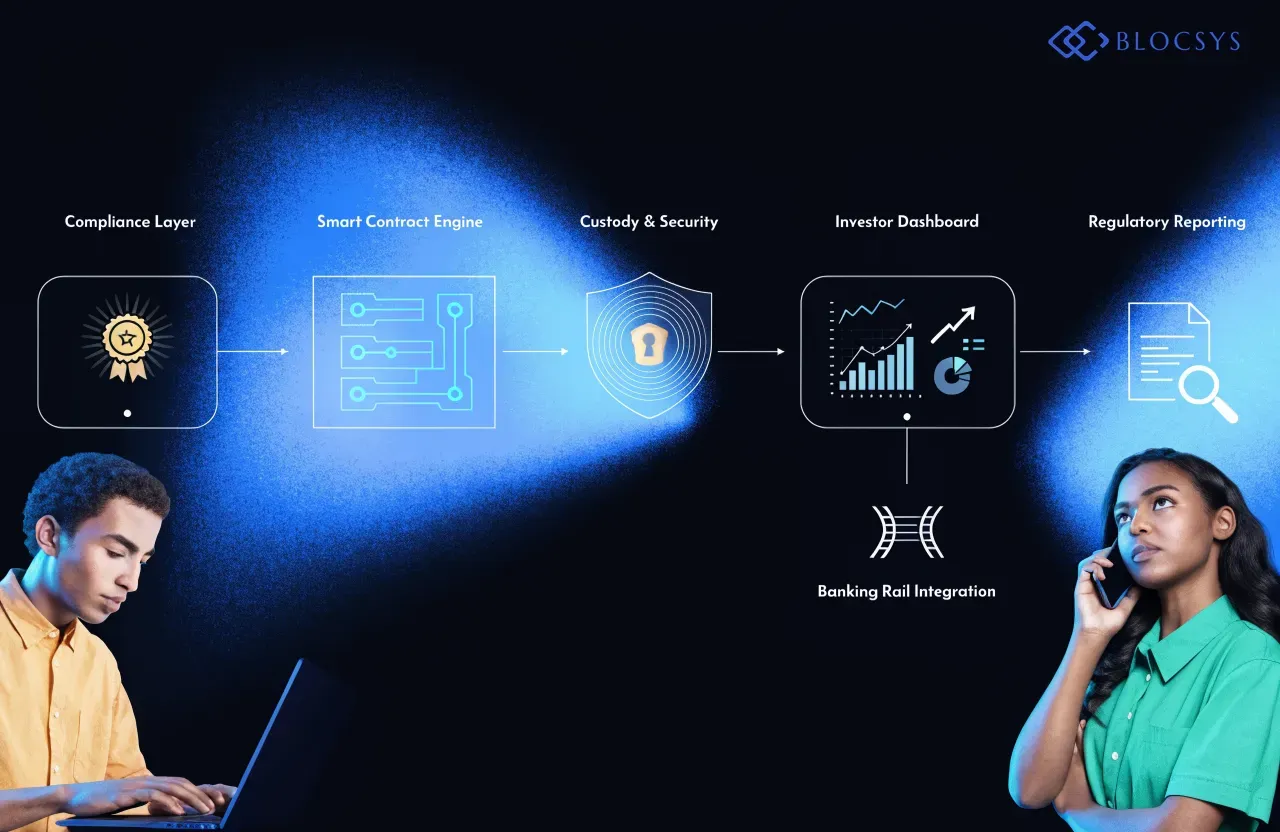
- Permissioned or hybrid blockchain architecture suited for regulated financial instruments
- Smart contract logic for issuance terms, coupon schedules, and redemption
- Identity and KYC/AML layers integrated with investor onboarding workflows
- Custody solutions meeting institutional security standards
- APIs connecting to banking rails for coupon and settlement payments
- Audit-ready reporting dashboards for regulators and internal compliance teams
Moreover, the platform needs to be flexible enough to adapt as SEBI’s regulatory position evolves. Rigid systems built around today’s assumptions risk becoming obsolete once formal rules arrive.
Issuance and Settlement Infrastructure for SEBI Corporate Bond Tokenization
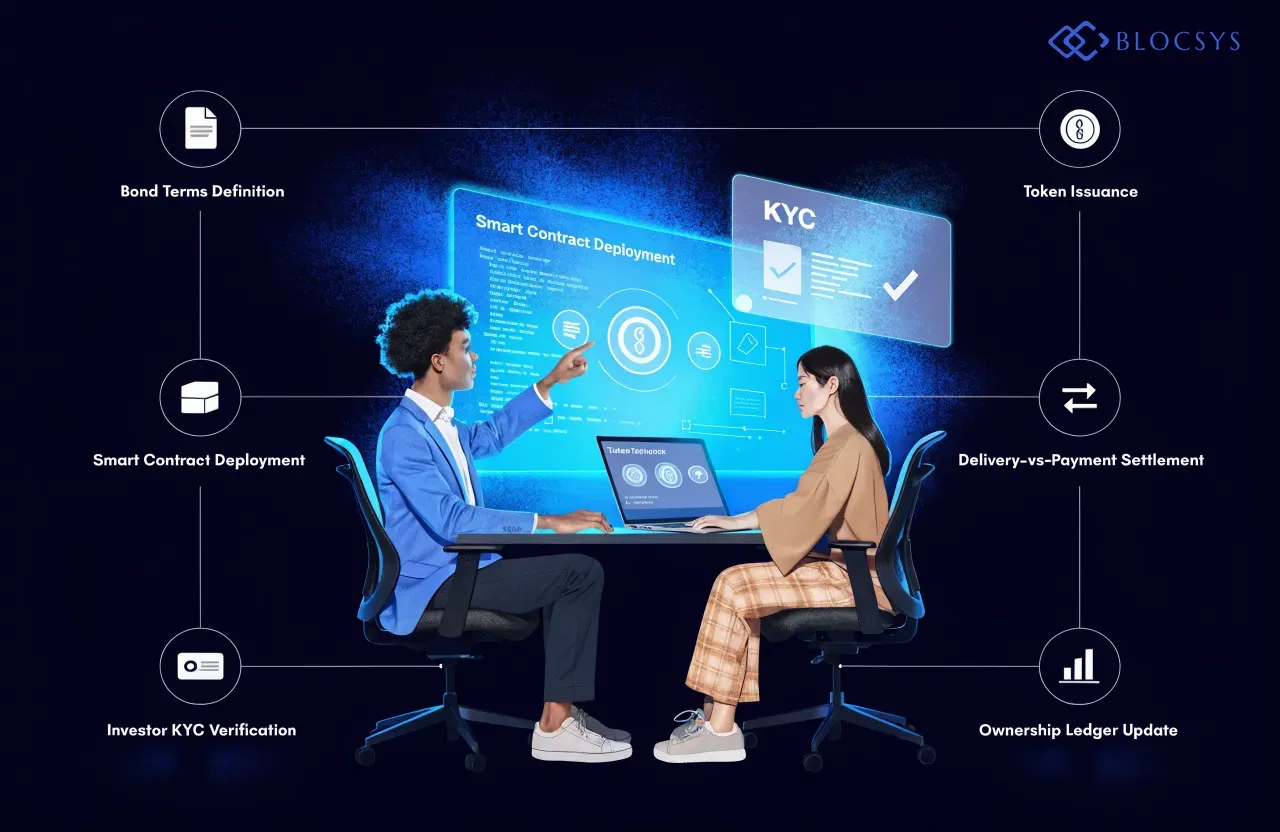
Issuance is where tokenized bonds start earning their advantage. A well-built issuance module lets an issuer define bond terms, principal, tenor, coupon rate, once, and encode them directly into a smart contract. That removes a huge amount of manual paperwork and reconciliation risk.
Settlement is the second major gain. Traditional bond settlement relies on multiple intermediaries confirming trades before funds and securities exchange hands. Tokenized settlement, when built correctly, can achieve delivery-versus-payment in near real time.
However, this only works if the platform integrates properly with existing payment rails and depository systems, it can’t operate as an isolated island.
This is exactly the kind of architecture challenge Blocsys addresses through Blockchain Development Services designed for regulated financial use cases, not generic crypto applications.
Coupon Payments and Bond Lifecycle Management
Bond servicing doesn’t end at issuance. Coupon payments, corporate actions, and eventual redemption all need to run smoothly across the bond’s full lifecycle.
Smart contracts can automate coupon disbursement based on predefined schedules, reducing the operational burden on issuers and trustees. Additionally, ownership records update automatically whenever a token changes hands, eliminating the lag common in traditional reconciliation processes.
That said, automation needs guardrails. Smart contracts must include mechanisms for handling disputes, corrections, and regulatory holds when necessary.
Think of it this way: automation handles the routine 95% smoothly, but the platform still needs human oversight for the exceptions. Building that balance well is what separates a functional platform from a fragile one.
Compliance, Custody, and Investor Management in Corporate Bond Tokenization India
Compliance sits at the center of any credible tokenized bond platform. SEBI’s existing securities regulations, KYC norms, and disclosure requirements don’t disappear because an instrument is tokenized, they still apply in full.
A private-sector platform needs to handle:
- Investor eligibility checks aligned with SEBI’s existing debt market regulations
- Custody arrangements that meet institutional security and insurance expectations
- Immutable audit trails for every transaction, transfer, and corporate action
- Reporting formats compatible with regulatory and depository systems
Custody deserves particular attention. Institutional investors won’t participate without confidence that private keys and digital asset holdings are secured to bank-grade standards. This is an area where Real World Asset Tokenization expertise becomes directly relevant, since bonds are fundamentally real-world assets represented digitally.
Secondary-Market Considerations for Tokenized Corporate Bonds
Primary issuance is only half the equation. For tokenized corporate bonds to genuinely improve liquidity, secondary trading infrastructure matters just as much.
Platforms need clear rules for transfer restrictions, investor accreditation checks during trades, and integration with any eventual SEBI-recognized trading venues for digital securities.
Challenges and Considerations for Private-Sector Participation
No emerging technology arrives without friction. A few realistic challenges deserve honest attention.
Regulatory uncertainty remains the biggest one. Until SEBI publishes clearer rules for private-sector tokenized debt issuance, companies are building on assumptions rather than settled law. Consequently, platforms need to be designed with regulatory flexibility built in.
Interoperability is another real hurdle. Tokenized bonds need to work alongside NSDL, CDSL, and existing banking infrastructure, they can’t operate as a parallel system disconnected from the rest of the market.
Additionally, institutional trust takes time to build. Asset managers and banks will want proven security track records before committing meaningful capital to tokenized instruments.
Finally, talent and technical capability remain scarce. Building compliant, secure tokenization infrastructure requires blockchain engineering expertise combined with deep understanding of Indian securities regulation, a rare combination.
How Blocsys Can Enable Private-Sector Tokenization
This is where Blocsys fits in. As an enterprise blockchain development company, Blocsys helps private-sector issuers, NBFCs, asset managers, and fintech companies build the technology layer needed to participate in India’s emerging tokenized debt ecosystem.
Our Corporate Bond Tokenization Platform Development services cover the full stack: issuance workflows, smart contract architecture, investor onboarding, custody integration, compliance controls, and settlement infrastructure. We don’t position our platforms as regulatory approval, that comes from SEBI. What we provide is the technical foundation that lets you move quickly once frameworks mature.
We also support broader digital asset needs through Asset Tokenization Platform development and Smart Contract Development, so enterprises aren’t locked into a single-use system. Whether you’re exploring bonds, equity instruments through our Equity Tokenization Platform Development, or broader real-world asset strategies, the underlying infrastructure needs share common architectural principles.
The companies that win in tokenized debt won’t be the ones who wait for perfect regulatory clarity. They’ll be the ones who’ve already built systems flexible enough to adapt when clarity arrives.
Future of India’s Tokenized Debt Market
Where does this go from here? It’s reasonable to expect India’s tokenized debt market to develop in stages rather than all at once.
Early phases will likely focus on regulatory pilots and infrastructure testing. Later phases could expand toward broader private-sector participation, assuming pilots demonstrate operational and legal soundness.
Meanwhile, global momentum around tokenized bonds continues building across Singapore, the UK, and parts of Europe. India’s private debt market has an opportunity to leapfrog legacy inefficiencies if SEBI Corporate Bond Tokenization frameworks mature thoughtfully.
Enterprises that start building technical capability now won’t need to scramble later.
Why Choose Blocsys
Blocsys brings together enterprise blockchain expertise, financial technology depth, and a clear understanding of compliance-first architecture. We build platforms designed for institutional finance, not experimental crypto products.
Our work spans enterprise blockchain infrastructure, digital securities platforms, RWA tokenization, and smart contract systems built for regulated markets. If you’re planning your tokenization roadmap and want to understand potential costs, our Software Development Cost Estimator gives you a practical starting point.
Frequently Asked Questions
Here are direct answers to the questions we hear most often about SEBI Corporate Bond Tokenization.
What is SEBI corporate bond tokenization?
SEBI corporate bond tokenization refers to SEBI’s exploration of blockchain and distributed ledger technology to represent corporate bonds as digital tokens, potentially improving issuance, settlement, and record-keeping compared to traditional depository-based systems.
Why is SEBI exploring tokenized corporate bonds?
SEBI is exploring tokenized bonds to address low secondary-market liquidity, slow settlement cycles, and heavy reconciliation overhead in India’s corporate bond market, while studying how blockchain infrastructure could modernize debt market operations.
What does SEBI’s initiative mean for private-sector issuers?
It signals a direction, not an immediate operating framework. Private-sector issuers should treat this as a period for building technical readiness, since SEBI hasn’t published finalized rules for commercial private-sector tokenized bond issuance yet.
Can private companies build tokenized bond platforms?
Private companies can build tokenization technology and infrastructure today, but issuing regulated corporate bonds through such platforms will depend on SEBI’s evolving regulatory framework, so early builds should stay compliant and adaptable.
What infrastructure is required to issue tokenized corporate bonds?
A functional platform needs blockchain infrastructure, smart contract logic for issuance and servicing, KYC/AML-integrated investor onboarding, secure custody, banking rail integration, and audit-ready compliance reporting, all working together, not as separate tools.
How can blockchain support bond settlement and servicing?
Blockchain enables near real-time delivery-versus-payment settlement and automates coupon payments and redemptions through smart contracts, reducing manual reconciliation and settlement delays common in traditional bond infrastructure.
How much does it cost to build a corporate bond tokenization platform?
Cost depends on platform scope, compliance requirements, custody architecture, and integration complexity. Use the Blocsys Cost Estimator Tool to get a tailored estimate based on your specific requirements.
Why choose Blocsys for corporate bond tokenization?
Blocsys combines enterprise blockchain engineering with financial technology expertise, building compliance-ready, scalable infrastructure for issuance, settlement, custody, and investor management, positioning enterprises to move fast as India’s regulatory framework develops.
Conclusion
SEBI Corporate Bond Tokenization represents a meaningful step toward modernizing India’s private debt market, even though the full regulatory picture is still forming. What’s clear already: tokenized bonds, blockchain-based settlement, and automated bond servicing offer real efficiency gains over legacy infrastructure.
For private-sector issuers, NBFCs, and financial institutions, the smart move now is preparation, not hesitation. Building compliance-ready tokenization infrastructure today means you’re positioned to move quickly once frameworks mature.
Ready to explore what a tokenized bond platform could look like for your business? Talk to Blocsys about Corporate Bond Tokenization Platform Development and start building your roadmap for India’s next debt market opportunity.
Ready to move beyond theory and build an intelligent platform that delivers real-world value? Blocsys Technologies specialises in engineering enterprise-grade AI and blockchain solutions for the fintech, Web3, and digital asset sectors. Connect with our experts today to discuss your vision and chart a clear path from concept to a secure, scalable reality.
