
Tokenized Equity: The Complete Guide to Digital Share Ownership in 2026
Tokenized equity isn’t some far-off theory anymore, it’s quietly becoming the default way ambitious companies structure ownership. Founders in Singapore, fund managers in Zurich, and family offices in Dubai are all asking the same question: why should shares live on a spreadsheet when they could live on a blockchain? If you’re exploring this space for the first time, or you’ve been circling it for months without pulling the trigger, this guide walks through exactly how tokenized equity works, what it costs to build, and why so many enterprises are turning to Equity Tokenization Platform Development as their next infrastructure investment. Let’s get into it.
What Is Tokenized Equity?
Tokenized equity refers to company shares represented as digital tokens on a blockchain, each token carrying real ownership rights, voting power, or dividend entitlements. Instead of a paper certificate sitting in a drawer, you get a programmable digital asset that settles instantly and can be tracked transparently. That’s the core idea behind equity tokenization: converting traditional ownership structures into blockchain-native records.
Here’s the thing though, tokenized equity isn’t just “crypto for shares.” It’s a genuine upgrade to how ownership gets issued, transferred, and verified. Consequently, companies that adopt it gain faster settlement, lower administrative overhead, and access to a global investor base that traditional cap table software simply can’t reach.
Unlike utility tokens, tokenized securities carry legal weight. They represent an actual claim on equity, debt, or revenue, which means they fall under securities law in most jurisdictions. That distinction matters enormously, and we’ll unpack it further down.
How Equity Tokenization Works Under the Hood
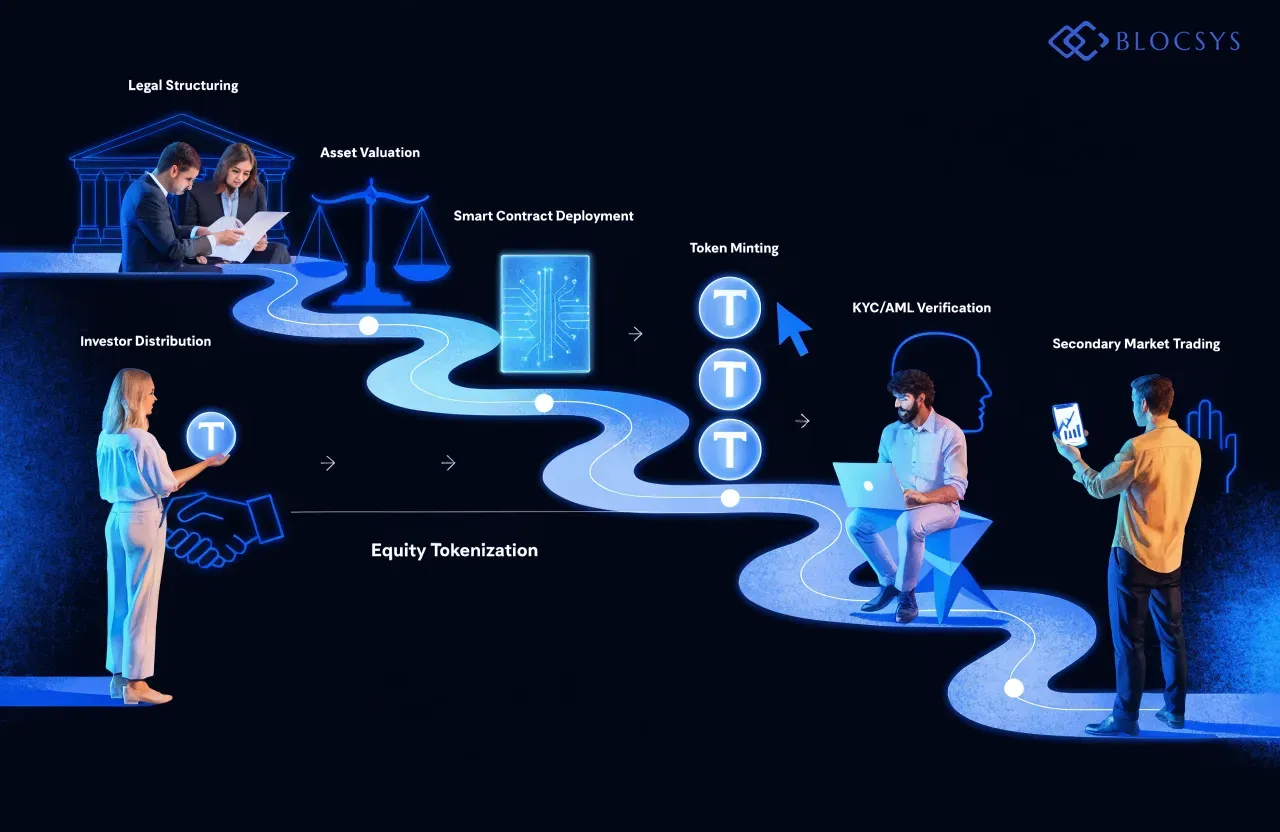
At a technical level, equity tokenization starts with a legal wrapper, usually a special purpose vehicle or direct share registry agreement, that links a blockchain token to actual ownership rights. Once that legal structure exists, a smart contract mints tokens representing fractional or full shares.
Think about it like this: the blockchain layer handles transfer, custody, and compliance logic, while the legal layer ensures every token actually means something in court. Without both pieces working together, you just have a fancy spreadsheet with extra steps.
Smart Contracts and the Tokenized Equity Lifecycle
Smart contracts govern nearly every stage of a tokenized equity lifecycle, from issuance to dividend distribution to transfer restrictions. For instance, a contract can automatically block a transfer if the receiving wallet hasn’t completed KYC, which keeps the offering compliant without manual intervention.
Moreover, smart contracts can automate dividend payouts, buyback events, and voting rights, cutting down on the paperwork that traditionally slows down shareholder management. That’s a massive efficiency gain for enterprises managing thousands of stakeholders.
Tokenized equity isn’t about replacing your cap table software, it’s about making ownership itself programmable. Once shares can execute logic on their own, half the friction in private markets simply disappears.
Why Founders and Enterprises Are Racing Toward Tokenized Securities
Liquidity is the biggest driver here. Traditional private equity locks investor capital away for years with no easy exit. Tokenized securities change that equation by enabling secondary trading on regulated platforms, giving early investors a path to liquidity long before a traditional exit event.
Additionally, fractional ownership opens doors that used to be closed entirely. A retail investor in Berlin can now own a slice of a growth-stage company in Austin, something that was nearly impossible under old minimum-investment thresholds. That’s a real shift in who gets to participate in private markets.
Private Equity Tokenization: Unlocking Illiquid Capital
Private equity tokenization specifically targets one of finance’s oldest problems: illiquidity. PE funds typically lock capital for seven to ten years. However, once fund interests get tokenized, limited partners gain the option to sell their stake on a secondary market well before the fund matures.
We’ve seen fund managers use private equity tokenization to attract a younger investor base too. Family offices and institutional allocators increasingly expect digital-native infrastructure, not PDF subscription documents faxed back and forth.
Enterprises exploring this path often start by reviewing a broader Real World Asset Tokenization strategy before narrowing in on equity specifically, since the underlying infrastructure overlaps significantly with tokenizing bonds, funds, and other illiquid instruments.
Building an Equity Tokenization Platform: Core Architecture
An Equity Tokenization Platform typically consists of five layers: the legal compliance engine, the token issuance module, the investor onboarding portal, the trading or transfer layer, and the reporting dashboard. Each layer needs to talk to the others seamlessly, otherwise you end up with compliance gaps or reconciliation headaches.
Let’s break that down further. The compliance engine handles KYC, AML, and accreditation checks. The issuance module mints tokens according to predefined share classes. The onboarding portal manages investor relationships and document collection. The trading layer enables permissioned transfers. And the reporting dashboard gives regulators and auditors real-time visibility.
Choosing the Right Blockchain for Equity Tokenization Development
Not every blockchain suits equity tokenization development equally well. Ethereum and its layer-2 networks remain popular thanks to mature tooling and the ERC-1400 security token standard. Polygon offers lower fees for high-volume cap tables. Meanwhile, permissioned chains like Hyperledger Fabric appeal to enterprises that need stricter data privacy controls.
Your choice ultimately depends on regulatory jurisdiction, expected transaction volume, and whether you need public transparency or private, permissioned access. There’s no universal right answer, only the right fit for your business model.
The blockchain you pick matters less than most founders assume. What actually determines success is whether your compliance layer can adapt fast enough to keep up with regulators, because rules around tokenized securities are still evolving in nearly every major market.
Compliance and Regulation Around Tokenized Equity in 2026
Regulation has matured considerably since tokenized equity first emerged. In the US, the SEC continues treating most tokenized shares as securities, subject to Reg D, Reg S, or Reg A+ frameworks depending on investor type. The UK’s FCA has clarified similar treatment under its own regime, while Switzerland’s DLT Act gives tokenized securities explicit legal recognition.
Singapore’s MAS and the UAE’s VARA framework have both built sandbox environments specifically for tokenized securities, which explains why so many issuers now structure their offerings through Dubai or Singapore entities. Germany’s eWpG law similarly permits electronic securities registers, giving European issuers a clear legal path.
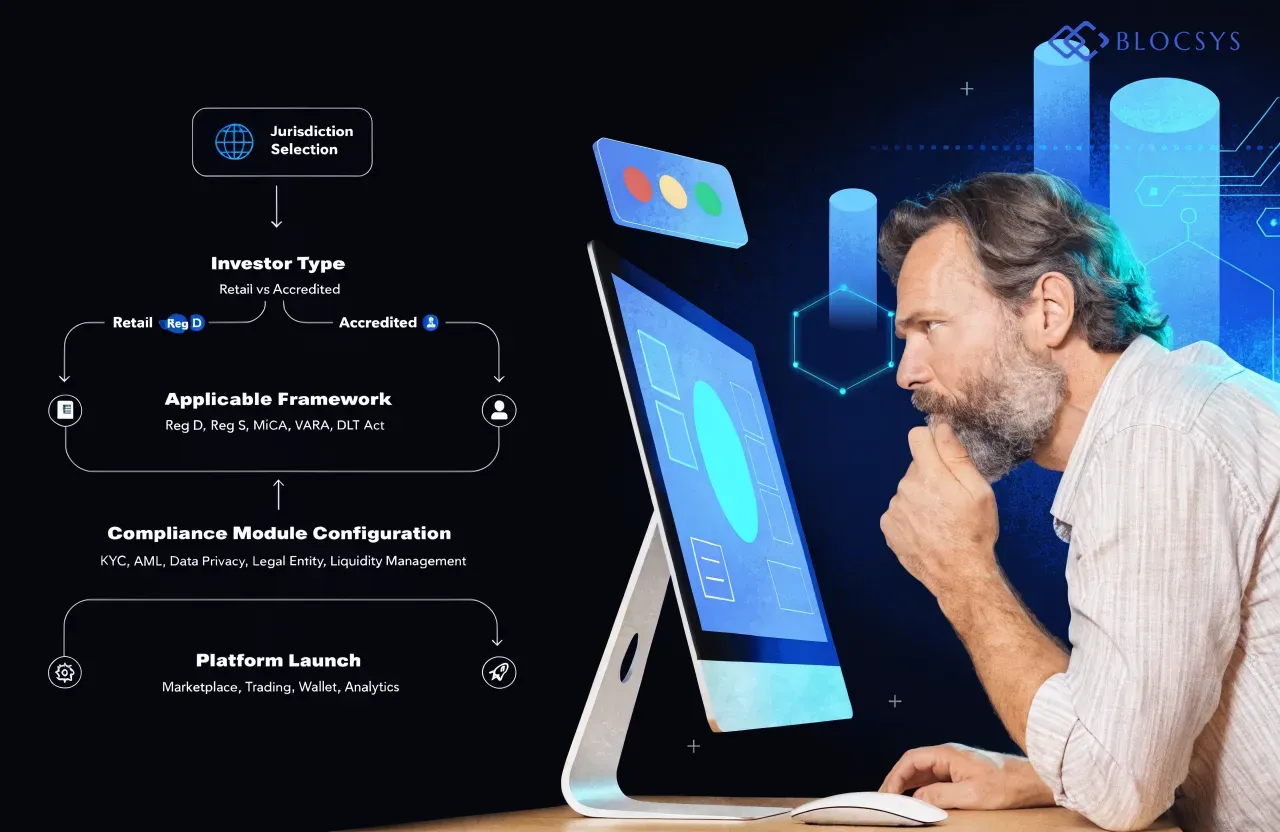
Here’s why this matters for your platform build: compliance isn’t a bolt-on feature, it’s the foundation everything else sits on. Skimping here creates legal exposure that no amount of clever smart contract code can fix later.
Real-World Use Cases: Startups, Enterprises, and Beyond
Startups use tokenized equity to run compliant crowdfunding rounds while maintaining a clean, auditable cap table from day one. Instead of juggling spreadsheets across multiple funding rounds, everything lives on-chain with automatic vesting schedules built in.
Enterprises, meanwhile, use equity tokenization to modernize employee stock ownership plans. Vesting, cliff periods, and exercise windows all execute automatically through smart contracts, removing a huge administrative burden from HR and legal teams.
Real estate funds have also embraced this model heavily, tokenizing ownership stakes in commercial properties so investors can buy in with far smaller minimums. That overlaps closely with broader Asset Tokenization Platform strategies many enterprises are now rolling out across multiple asset classes simultaneously.
Prediction market platforms and DeFi protocols are exploring tokenized equity too, using it as collateral within trading environments. A platform built with Hybrid Trading & Prediction Market Platform Development in mind can integrate tokenized shares as tradeable instruments, blending traditional finance with decentralized trading rails. It’s an emerging niche, but one that’s growing fast across Web3 finance.
Cost and Timeline for Equity Tokenization Platform Development
Costs vary widely depending on scope, but here’s a realistic breakdown for 2026:
- Legal structuring and compliance framework: $15,000 to $50,000
- Smart contract development and audits: $25,000 to $80,000
- Investor portal and KYC/AML integration: $20,000 to $60,000
- Trading and secondary market module: $30,000 to $90,000
- Admin dashboard and reporting tools: $15,000 to $40,000
Altogether, a fully custom Equity Tokenization Platform typically ranges from $100,000 to $300,000, depending on jurisdiction complexity and feature depth. Timeline usually spans four to nine months, with compliance work often taking longer than the actual engineering.
Enterprises wanting a precise figure before committing budget should run their requirements through the Software Development Cost Estimator, which breaks costs down module by module rather than giving a vague ballpark.
Choosing an Equity Tokenization Platform Development Partner
Picking the right development partner determines whether your tokenized equity launch succeeds or stalls in legal limbo. You want a team that understands securities law across multiple jurisdictions, not just one that can write Solidity code.
Blocsys has built its Equity Tokenization Platform Development practice around exactly that combination: legal-aware architecture paired with production-grade blockchain engineering. Whether you’re issuing tokenized shares for a Series A raise or restructuring an entire private equity fund, working with a team that’s already solved these compliance puzzles saves months of trial and error.
Enterprises tokenizing multiple asset types often pair equity tokenization with related offerings like Corporate Bond Tokenization Platform Development, giving them a unified digital securities infrastructure rather than separate, disconnected systems. If you’re building a secondary market alongside your token issuance, an OTC Trading Platform Development integration can also give accredited investors a compliant venue to trade post-issuance.
Founders serious about launching should reach out directly through Equity Tokenization Platform Development to scope requirements with an experienced team rather than guessing at architecture decisions alone.
The Future of Digital Share Ownership
Where does this go from here? Expect tokenized equity to become the default for early-stage fundraising within the next few years, especially as regulatory clarity improves across the US, EU, UK, and Gulf markets. Institutional custody solutions are catching up fast too, which removes one of the last remaining objections from conservative allocators.
AI-driven compliance monitoring will likely become standard as well, flagging suspicious transfer patterns automatically rather than relying on manual audits. Combine that with maturing secondary markets, and tokenized securities start looking less like an experiment and more like standard financial infrastructure.
Bottom line: tokenized equity is moving from novelty to necessity. Companies that build this infrastructure now will have a meaningful head start over competitors still relying on legacy cap table tools.
Tokenized Equity Opportunities in GIFT City
GIFT City provides a relevant setting for businesses exploring tokenized equity and digital share ownership through blockchain infrastructure. Tokenized equity can provide a digital approach to representing and managing ownership interests, while the underlying platform can support functions such as issuance, ownership records, transfers, and asset management. For businesses considering tokenized equity solutions in GIFT City, these elements can help shape the platform’s overall structure and development approach.
Frequently Asked Questions
Here are direct answers to the questions we hear most often about tokenized equity.
What is tokenized equity in simple terms?
Tokenized equity means company shares represented digitally on a blockchain, with each token carrying real ownership rights like voting power or dividends. It combines legal share ownership with blockchain-based transfer and settlement.
Is tokenized equity legal and regulated?
Yes, tokenized securities are regulated in most major jurisdictions, including the US, UK, Switzerland, Singapore, and the UAE. Each region has its own framework, so compliance requirements differ based on where you issue and who your investors are.
How much does equity tokenization platform development cost?
A custom Equity Tokenization Platform generally costs between $100,000 and $300,000, depending on jurisdiction complexity, smart contract scope, and trading features. Legal structuring and compliance work often account for a significant share of that budget.
What’s the difference between private equity tokenization and public equity tokenization?
Private equity tokenization targets illiquid fund interests and startup shares, usually restricted to accredited investors. Public equity tokenization involves publicly traded securities and typically requires broader regulatory approval and open market listing.
How does tokenized equity benefit startups specifically?
Startups gain automated cap table management, faster fundraising rounds, and access to a global investor pool without the administrative burden of manual share issuance. Vesting schedules and compliance checks run automatically through smart contracts.
Tokenized equity represents a genuine shift in how ownership gets created, transferred, and traded. If you’re ready to move from spreadsheets to programmable shares, partnering with a team that’s already navigated the legal and technical complexity makes all the difference. Reach out to Blocsys today to start scoping your equity tokenization roadmap.
Ready to move beyond theory and build an intelligent platform that delivers real-world value? Blocsys Technologies specialises in engineering enterprise-grade AI and blockchain solutions for the fintech, Web3, and digital asset sectors. Connect with our experts today to discuss your vision and chart a clear path from concept to a secure, scalable reality.
