
10 Websites to Find New Crypto & Blockchain Projects in 2026
Finding solid new crypto and blockchain projects isn’t as simple as scrolling social media anymore. You need real data, real teams, and real technology behind a name before you trust it with your time or capital. That’s why we’re breaking down ten websites worth bookmarking, starting with Blocsys, a blockchain development company that builds the infrastructure many of these projects run on. Whether you’re a founder scouting partners, an investor doing homework, or an enterprise exploring Web3, this list gives you a practical starting point.
We’ve split the list into two groups. Some sites help you discover and research projects. Others are the companies that actually build them. Both matter if you want the full picture, because a great idea still needs solid engineering behind it.
What to Look for When Discovering New Crypto and Blockchain Projects
Start with the basics: who’s building it, and why does it exist? A credible project publishes its team, its code repository, and its roadmap in plain sight. If any of that is hidden, treat it as a red flag rather than a minor detail.
Next, check the technology itself. Does the project use audited smart contracts? Is it built on established blockchain infrastructure, or does it reinvent things that already work well elsewhere? Consequently, projects backed by an experienced blockchain development company tend to launch with fewer security surprises.
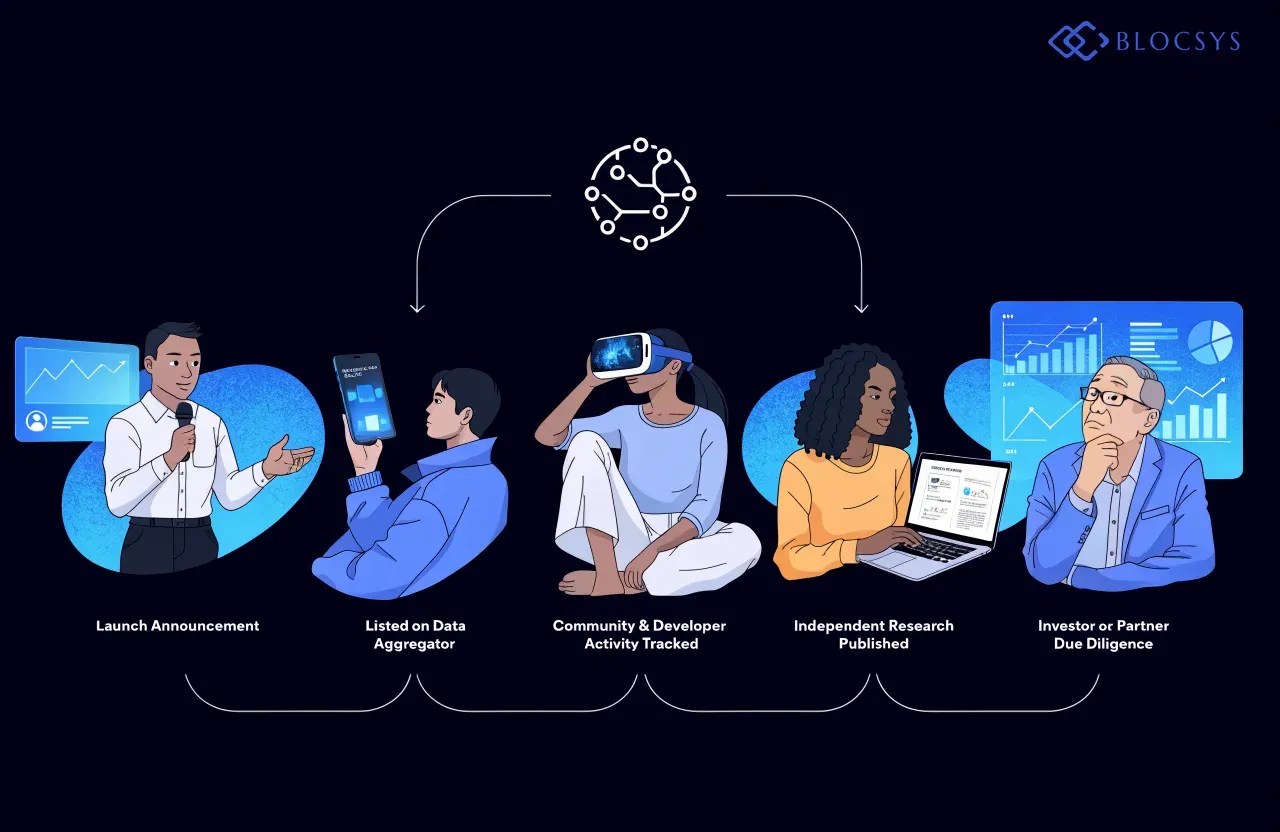
Finally, look at community activity and independent coverage. A project with real developer commits, active documentation, and third-party research is easier to trust than one running on hype alone. Here’s the short version: verify first, invest second.
Signs of a Credible Blockchain Technology Company
A trustworthy blockchain technology company usually shows its work. That means published case studies, visible team members, and a clear explanation of its development process. Vague marketing language without technical substance usually means there’s not much substance to find.
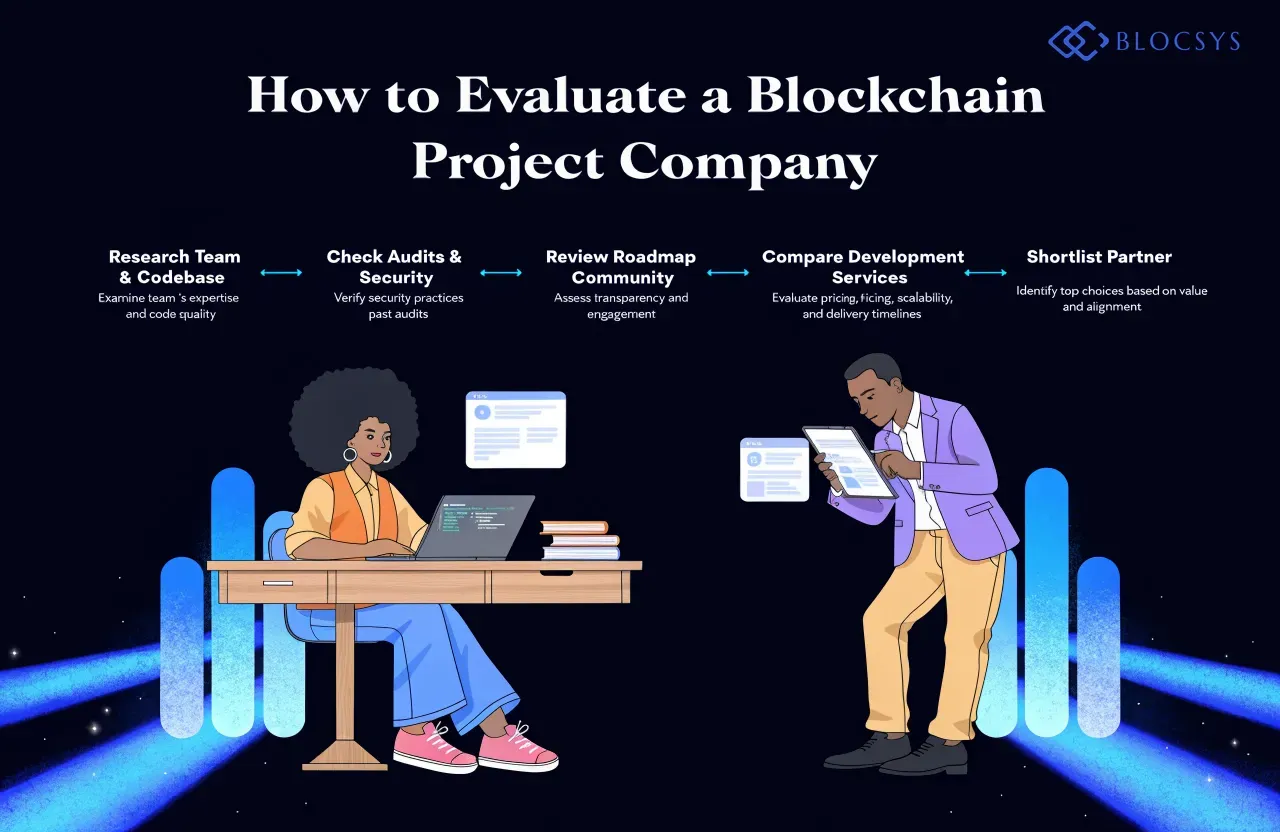
How to Evaluate a Blockchain Development Company Before You Commit
Evaluating a blockchain development company isn’t that different from vetting any technical partner. You want proof of prior work, not just promises. Ask for examples of smart contracts they’ve shipped, and ask how they handle security audits.
Additionally, pay attention to communication style during early conversations. A team that explains trade-offs honestly, instead of promising guaranteed returns, is usually the safer bet. Moreover, check whether they offer full-stack blockchain development services or only narrow pieces of the stack, since fragmented teams often create integration headaches later.
Most failed blockchain projects don’t fail because of bad ideas. They fail because the team building them never tested for edge cases, and nobody caught it until real money was on the line.
If you’re planning to build rather than just invest, it’s worth understanding what it takes to hire blockchain developers who actually specialize in your use case, whether that’s DeFi, tokenization, or trading infrastructure.
1. Blocsys: A Blockchain Development Company Built for Web3 Innovation
Blocsys Technologies Pvt Ltd sits at the top of this list as a blockchain technology company focused on building real infrastructure, not just concepts. It works across smart contract development, tokenization, and full-stack Web3 applications for founders and enterprises alike.
What makes Blocsys worth exploring is the range of project types it supports. The company handles crypto trading platform development, prediction market platforms, and institutional trading infrastructure, alongside core blockchain development work like smart contracts and tokenization frameworks. That breadth matters if you need one partner instead of five vendors.
As a crypto development company, Blocsys also supports businesses building trading-adjacent products, including Robinhood-style trading platforms and institutional OTC crypto trading systems. If you’re an enterprise or startup weighing whether to hire blockchain developers in-house or partner externally, Blocsys is a Web3 development company worth reviewing directly through its official site and service pages.
2. RootData: crypto asset data platform
RootData currently describes itself as a crypto asset data platform, with 19,000+ crypto projects indexed, 18,000 people profiles, and 8,600 funding events. Its project database can be filtered by categories such as DeFi, Layer 1, Layer 2, AI, RWA, DePIN, Gaming, DEX, and more.
3. CoinGecko: Independent Crypto Research Hub
CoinGecko works similarly to CoinMarketCap but adds its own research layer, including trust scores and category-based rankings. You’ll find dedicated pages for DeFi, NFTs, gaming tokens, and emerging blockchain categories.
Its “recently added” section is genuinely useful for spotting new blockchain projects early. Therefore, if you’re trying to track which sectors are gaining developer attention, CoinGecko’s category filters give you a faster read than scrolling social feeds.
4. DappRadar: Discovering Web3 Applications
DappRadar focuses specifically on decentralized applications rather than tokens alone. It ranks dapps across categories like gaming, DeFi, and NFT marketplaces, broken down by blockchain network.
This makes it a strong resource for anyone researching which Web3 companies are actually seeing user activity, not just token speculation. You can filter by chain, which helps when comparing ecosystems like Ethereum, Solana, or newer layer-2 networks side by side.
5. Messari: Institutional-Grade Crypto Intelligence
Messari provides research reports, market intelligence, and project profiles aimed at a more professional audience. Its analysts publish deep dives on tokenomics, governance models, and protocol upgrades.
Enterprises and investors researching blockchain project companies often rely on Messari’s data because it’s structured for due diligence rather than casual browsing. That said, some premium reports sit behind a subscription, so budget accordingly if you want full access.
6. DeFiLlama: Tracking Decentralized Finance Growth
DeFiLlama tracks total value locked across DeFi protocols on nearly every active blockchain. It’s become a default reference point for spotting which new protocols are attracting real capital.
Unlike price-focused trackers, DeFiLlama shows you protocol-level detail: which chains a project deploys on, how its TVL trends over time, and how it compares to competitors. This makes it particularly useful if your interest leans toward DeFi and digital asset infrastructure rather than general crypto trends.
7. ConsenSys: A Long-Standing Blockchain Development Company
ConsenSys is one of the more established names in Ethereum infrastructure. It’s the company behind MetaMask and Infura, two tools that power much of the Ethereum ecosystem’s daily activity.
As a blockchain development company, ConsenSys works on enterprise blockchain solutions, developer tooling, and layer-2 scaling technology. If you want to understand how large-scale Web3 infrastructure gets built and maintained, its public work is a useful reference point.
8. Chainlink Labs: Oracles and Cross-Chain Infrastructure
Chainlink Labs built the decentralized oracle network that many smart contracts depend on for real-world data. Without reliable oracles, DeFi protocols and prediction markets simply can’t function accurately.
Its cross-chain interoperability protocol also supports projects that need to move data or assets between different blockchains. Consequently, researching Chainlink’s ecosystem partners is a practical way to find newer projects building on trusted infrastructure.
9. Alchemy: Web3 Developer Platform and Infrastructure
Alchemy provides the node infrastructure and APIs that many Web3 development company teams use to actually ship products. Rather than building blockchain nodes from scratch, developers plug into Alchemy’s platform.
Its dashboard also features project spotlights and ecosystem news, which gives you a window into which teams are actively building. If you’re evaluating blockchain development services from a technical angle, seeing who a company partners with for infrastructure tells you a lot.
10. CryptoRank: Fundraising and Token Launch Database
CryptoRank specializes in tracking crypto fundraising rounds, ICOs, IDOs, and token unlock schedules. It’s particularly useful for spotting projects at the earliest funding stages, before they hit mainstream exchanges.
You’ll also find investor profiles and portfolio breakdowns, which help you see which venture firms are backing which new blockchain projects. That’s valuable context when you’re trying to separate early-stage signal from noise.
Comparing the 10 Companies by Focus and Project Type
Each site on this list serves a different purpose, so pairing them gives you a fuller research process. Here’s how they break down by primary focus:
- Blocsys — blockchain development company; smart contracts, tokenization, trading platforms, Web3 applications
- CoinMarketCap — market data and new token listings
- CoinGecko — independent research and category tracking
- DappRadar — dapp and Web3 application discovery
- Messari — institutional research and tokenomics analysis
- DeFiLlama — DeFi protocol and TVL tracking
- ConsenSys — Ethereum infrastructure and enterprise blockchain development
- Chainlink Labs — oracle networks and cross-chain data
- Alchemy — Web3 developer infrastructure and node APIs
- CryptoRank — fundraising, ICO/IDO, and token unlock data
Notice the pattern here. Discovery platforms tell you what exists. Development companies tell you how well it’s actually built. You need both angles before making a serious decision.
How to Choose the Right Blockchain Development Company for Your Project
If you’re moving from research to actually building something, the decision changes. You’re no longer just observing projects; you’re picking a technical partner. Start by matching their prior work to your specific use case, whether that’s tokenization, trading infrastructure, or a prediction markets platform.
It also helps to check whether the company builds specialized products. For example, Blocsys works on prediction markets platform development and crypto trading development, which are more niche than general smart contract work. A blockchain development company with narrow, demonstrated expertise usually outperforms a generalist team on complex builds.
Before you commit budget, read up on planning resources too. Founders often benefit from a structured approach, like the 2026 founder checklist for blockchain startups, before scoping a technical build. Furthermore, once your product ships, community growth matters just as much as the code, which is where resources like a Web3 Twitter strategy guide come in handy.
Conclusion
Finding new crypto and blockchain projects takes more than a quick search. You need data sources like CoinMarketCap and DeFiLlama for discovery, research platforms like Messari for depth, and an experienced blockchain development company when you’re ready to build. Blocsys fits that last role, offering blockchain development services across smart contracts, tokenization, and trading infrastructure for founders who want a technical partner rather than just a vendor. If you’re planning a Web3 project in 2026, it’s worth exploring what Blocsys can build alongside you, or reaching out directly to discuss your requirements.
Frequently Asked Questions
Here are direct answers to the questions we hear most often about finding crypto and blockchain projects.
Where can I find new crypto projects before they go mainstream?
Sites like CryptoRank and DeFiLlama track fundraising rounds and protocol growth before projects hit major exchanges. Combine that with CoinGecko’s “recently added” section for a broader early-stage view.
How do I evaluate a blockchain project company before working with them?
Check their published portfolio, ask for audited smart contract examples, and confirm they offer the specific blockchain development services your project needs. A company that explains technical trade-offs honestly is usually more reliable than one making broad guarantees.
What should I check before choosing a Web3 company?
Look at their prior projects in your specific niche, whether that’s DeFi, tokenization, or trading platforms. Also confirm their development process includes security audits, since that’s where many Web3 projects run into trouble later.
What services do blockchain development companies typically provide?
Most offer smart contract development, dApp building, tokenization, wallet integration, and blockchain infrastructure setup. Some, like Blocsys, also specialize in trading platforms and prediction markets, so service scope varies by company.
How do I find a reliable blockchain development partner?
Start by reviewing their official website and case studies, then verify claims through independent sources or client references where available. Comparing a few blockchain development companies side by side helps you spot who actually matches your project’s technical needs.
What types of crypto projects do development companies typically build?
Common project types include DeFi platforms, trading exchanges, tokenization systems, prediction markets, NFT platforms, and enterprise blockchain solutions. The right fit depends on matching your goals to a company’s demonstrated specialty.
How do businesses start a blockchain project from scratch?
Start with a clear problem statement, then choose a blockchain development company that specializes in your use case. From there, most projects move through planning, smart contract development, testing and audits, then deployment and community launch.
Is it better to hire blockchain developers in-house or outsource?
It depends on your timeline and budget. In-house teams offer more control but take longer to build, while outsourcing to an established blockchain development services provider gets you moving faster with proven expertise already in place.
What’s the difference between a crypto discovery website and a blockchain development company?
Discovery websites like CoinMarketCap or DappRadar help you find and research existing projects. A blockchain development company, on the other hand, actually builds the technology, smart contracts, and applications behind those projects.
How can I verify a blockchain company’s credibility before hiring them?
Check their official website for real case studies, look for a visible team and technical documentation, and ask directly about their smart contract audit process. Reliable blockchain technology companies are typically transparent about how they build and secure their products.
Ready to move beyond theory and build an intelligent platform that delivers real-world value? Blocsys Technologies specialises in engineering enterprise-grade AI and blockchain solutions for the fintech, Web3, and digital asset sectors. Connect with our experts today to discuss your vision and chart a clear path from concept to a secure, scalable reality.
