
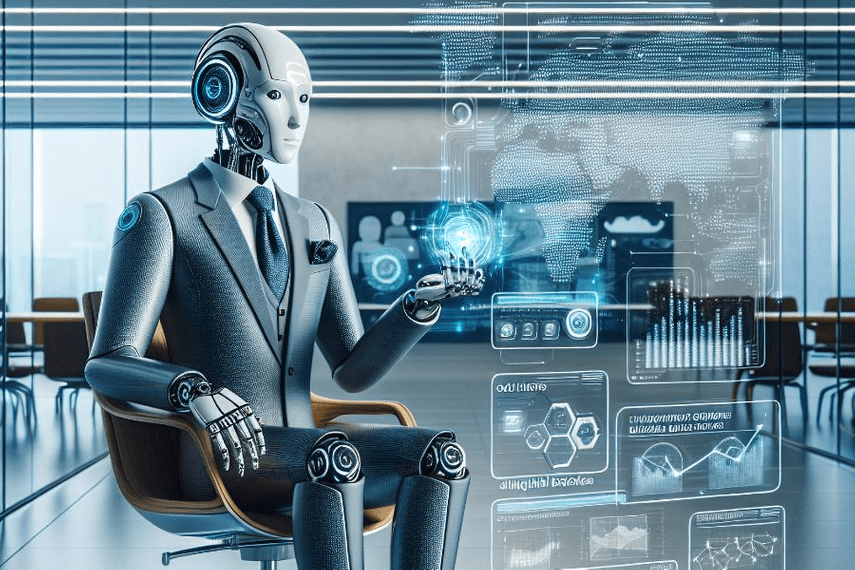
An AI agent refers to any software system designed to perform tasks that generally bear mortal intelligence. These agents are driven by algorithms that allow them to learn, acclimatize, and make opinions grounded on the data they reuse.

AI agents can range from chatbots answering simple questions on a website to complex independent systems that help manage logistics or conduct medical exploration.

Crucial Characteristics of AI Agents

Autonomous Decision Making AI agents can operate and make opinions without mortal intervention.Learning Capability These agents ameliorate over time by recycling data and learning from experience.Problem- working Capabilities AI agents can dissect vast quantities of data to identify patterns, offering results for problems that humans may not fluently spot.

The initial generation of AI agents primarily concentrated on automating straightforward, repetitive tasks.

How Do AI Agents Work?

AI agents work through a combination of several advanced technologiesMachine literacy( ML) The core of utmost AI agents. ML algorithms enable these systems to” learn” from data and ameliorate their performance over time. Natural Language Processing( NLP) This allows AI agents to understand and induce mortal language, making them able of engaging in exchanges, answering questions, or indeed creating content. Computer Vision For agents that interact with visual data, similar as assaying images or vids, computer vision enables them to fete patterns, objects, and people.underpinning Learning A type of literacy where an agent interacts with its terrain and gets feedback to learn the stylish conduct over time.

Use Cases of AI Agents Across diligence

Client Service AI agents, especially chatbots, have converted the client service experience. They handle a wide range of queries, help with bookings, and indeed troubleshoot issues. These agents operate 24/7 and can gauge to handle large volumes of requests without fresh mortal labor. E-commerce AI agents are used ine-commerce to ameliorate product recommendations, epitomize shopping gests , and manage force. These agents can reuse vast quantities of data to understand consumer gestand prognosticate the coming stylish product or creation to offer. Example Amazon’s Alexa and individualized recommendations machine, which use AI to suggest products to guests grounded on their browsing history and preferences.

The Future of AI Agents What’s Next?

The eventuality for AI agents is endless, and we’re just beginning to scratch the face. As technology continues to advance, AI agents will come more intelligent, independent, and able of performing complex tasks.

Then’s a regard of what we can anticipate in the unbornSmarter Agents With nonstop advancements in machine literacy and NLP, AI agents will come indeed more able of understanding complex tasks and working problems. Integration with IoT AI agents will work more seamlessly with Internet of effects( IoT) bias, enabling smarter homes, services, and metropolises. Ethical Considerations As AI agents come more integrated into our diurnal lives, ethical enterprises around sequestration, security, and job relegation will need to be addressed.

Conclusion

Let Construct the Future Together

AI agents are already making a significant impact across multiple industries and their capabilities will continue to expand as Tech progresses. From Customers back to free vehicles these smart agents are composed to redefine however we are and be. As we move forward it will be exciting to see how AI agents Develop and further Revolutionize industries around the world.

Our Services:

  • AI Solutions
  • RWA Tokenization
  • Telegram Mini Apps
  • DeFi/DApp Solutions
  • NFT Marketplaces
  • Launchpad

Why Choose Us? Industry Expertise | Global Reach | Rapid Time-to-Market

Let’s build the future together. www.blocsys.com

Frequently Asked Questions

What is an AI agent?

An AI agent is a software system designed to perform tasks that generally require human-like intelligence. It is driven by algorithms that allow it to learn, adapt, and make decisions based on the data it processes. AI agents range from simple chatbots that answer website queries to complex autonomous systems that manage logistics or support medical research.

What are the key characteristics of AI agents?

AI agents are defined by autonomous decision-making, meaning they can operate and make decisions without human intervention. They also have learning capability, improving over time by processing data and learning from experience. Additionally, they possess problem-solving capabilities, analyzing large amounts of data to identify patterns and offer solutions humans might not easily spot.

How do AI agents work?

AI agents work through a combination of advanced technologies. Machine learning forms the core of most AI agents, enabling them to learn from data and improve performance over time, while natural language processing lets them understand and generate human language for conversations and content creation. Computer vision allows agents to recognize patterns, objects, and people in visual data, and reinforcement learning lets an agent interact with its environment and learn the best behaviors through feedback.

What are common use cases of AI agents?

AI agents are widely used in customer service, where chatbots handle a wide range of queries, assist with bookings, troubleshoot issues, and operate 24/7 at scale. In e-commerce, AI agents improve product recommendations, personalize shopping experiences, and manage inventory by processing consumer data to predict future product trends, as seen with Amazon's Alexa and its personalized recommendation engine.

What does the future hold for AI agents?

AI agents are expected to become smarter, more autonomous, and capable of handling increasingly complex tasks as advancements in machine learning and natural language processing continue. They will also integrate more seamlessly with Internet of Things (IoT) devices, enabling smarter homes, services, and cities. As they become more embedded in daily life, ethical considerations around privacy, security, and job displacement will need to be addressed.

How are AI agents impacting industries today?

AI agents are already making a significant impact across multiple industries, from customer service to autonomous vehicles, and their capabilities continue to expand as technology progresses. These smart agents are poised to redefine how businesses operate and interact with customers. As they continue to develop, they are expected to further revolutionize industries around the world.