
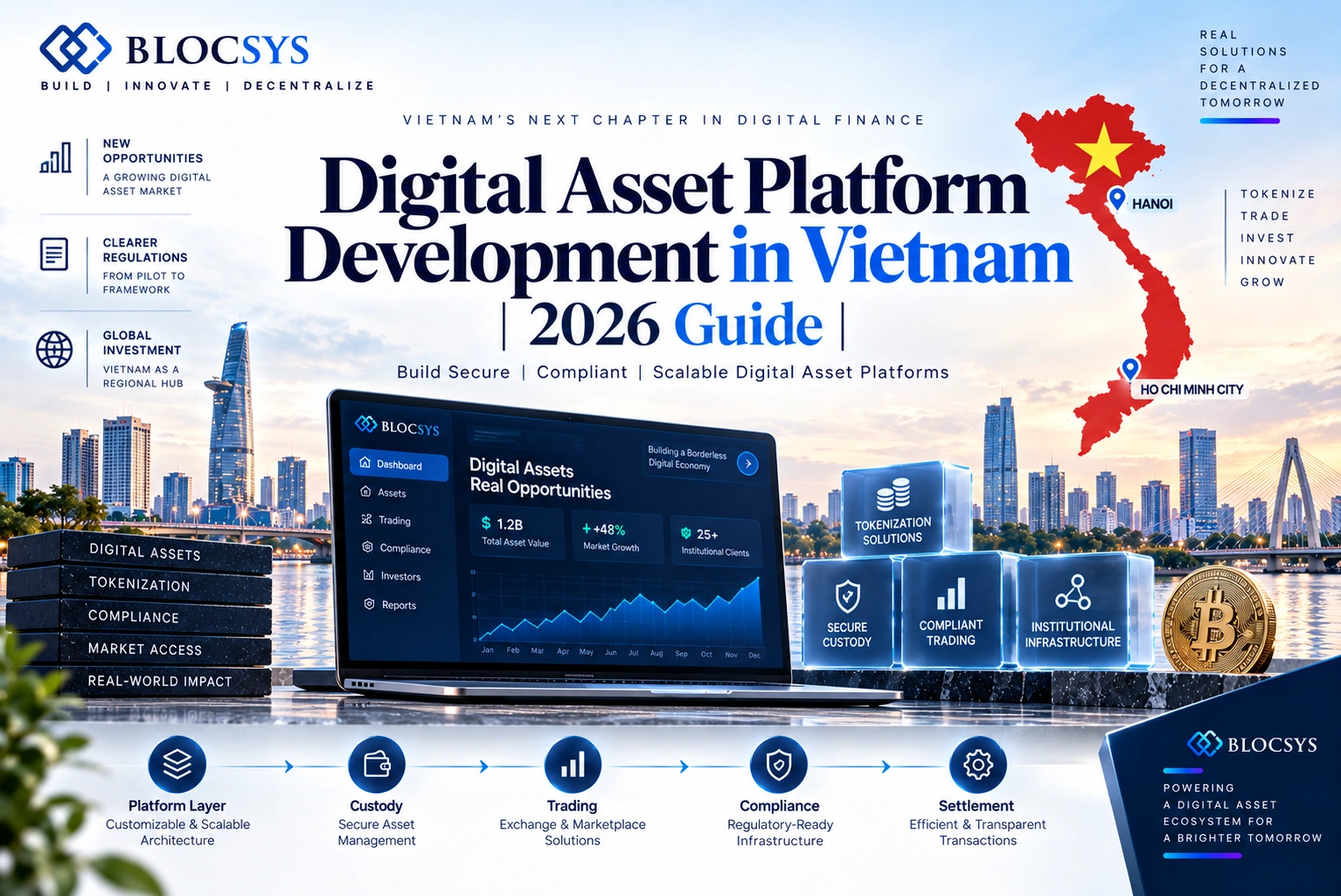
A Vietnam launch in 2026 won’t be won by the team with the fastest exchange interface. It will be won by the team that treats custody, auditability, onboarding, and operational control as product requirements from day one.
A Vietnam digital asset platform is a regulated software and operations stack that lets licensed businesses onboard investors, safeguard digital assets, run trading or tokenization workflows, monitor transactions, and produce auditable records. In Vietnam’s 2026 market, that means building more than a wallet or exchange front end. It means building infrastructure that can stand up to licensing review, banking scrutiny, and incident response.
That’s why Vietnam Digital Asset Platform Development now sits in a different category from generic crypto app development. Teams entering this market need a product architecture that reflects both user demand and a tighter regulatory direction. Vietnam has a very large digital-asset user base, formal recognition of digital assets is coming into force for 2026, and the operating model is moving towards licensed rails instead of informal offshore access.
If you’re a crypto business, fintech, financial institution, asset manager, custodian, or exchange operator, the practical question isn’t “can we launch?” It’s “what stack can we launch that remains viable once the first licensed venues go live?”
A useful starting point is to treat Vietnam as part of the broader shift covered in top blockchain trends in 2026, but with a much sharper local compliance edge.
Table of Contents
- Introduction to Vietnam Digital Asset Platform Development for 2026
- Why Vietnam 2026 Changes Everything for Platform Strategy
- What a Vietnam Digital Asset Platform Really Is and How It Works
- Choosing Your Platform Model and Business Approach
- Core Architecture and Compliance Technology You Must Build In
- Onboarding and KYC must drive permissions
- Custody and asset segregation are architecture decisions
- Trading, monitoring, and incident response must be one system
- Tokenization and smart contracts need governance around them
- Security controls should be designed for evidence, not slogans
- APIs and reporting are not back-office afterthoughts
- From Build Decision to Launch Cost Timeline and Execution
- How Blocsys Helps You Build for Vietnam and Next Steps
Introduction to Vietnam Digital Asset Platform Development for 2026
By 2026, the difference between a platform that can apply for a Vietnam digital-asset licence and one that cannot may come down to a small set of design choices made early. Key custody model. Audit trail depth. HSM integration. Segregation of client assets from house assets. Those are architecture decisions, not later compliance add-ons.
A product team in Singapore, Dubai, or Ho Chi Minh City can look at Vietnam and see a familiar commercial opportunity. The mistake is to treat market entry as a front-end localisation project. For 2026, Vietnam Crypto Platform Development works more like building a regulated operating system for asset movement, customer approval, transaction review, and incident control.
That distinction matters because licensability follows system design. A platform may have fast onboarding, good trading UX, and broad token support, but still fail the practical test if it cannot prove who approved a withdrawal, where private keys are generated, how customer balances are ring-fenced, or how compliance alerts move from detection to resolution. In other words, the regulator and the bank will inspect the plumbing, not only the screens.
Teams evaluating Vietnam Digital Asset Platform Development usually need answers to five concrete questions:
- What functions belong in the first release for trading, custody, or tokenization use cases in Vietnam?
- Which controls must exist in the core stack so a licence application is not undermined by avoidable design gaps?
- How should the architecture change once capital thresholds, custody rules, and auditability affect product scope?
- Which business model fits the local rule set without creating operational overhead that the team cannot support?
- How should delivery be sequenced so compliance, security, and operations are built in from the start?
A useful mental model is to compare the platform to a bank branch vault connected to an exchange engine. The trading interface is the part users see. The licensable value sits behind it: permissioning, approval workflows, ledger integrity, key custody, monitoring, and records that stand up in a review.
That is why this topic sits closer to regulated infrastructure design than generic crypto app development. Product teams need to decide early whether they are building around omnibus custody or segregated custody, software key management or HSM-backed controls, basic reporting or regulator-ready evidence trails. Each choice affects speed, cost, operational staffing, and the likelihood that the platform can survive formal scrutiny.
This article takes that enterprise view. It focuses on the stack decisions that shape both product capability and regulatory viability, and it places Vietnam within the wider blockchain trends shaping enterprise platforms in 2026 while keeping the local licensing reality in focus.
Why Vietnam 2026 Changes Everything for Platform Strategy
Vietnam is not a niche crypto market waiting for demand to appear. Demand is already there. Reporting based on Chainalysis says Vietnam handled about US$200 billion or more in crypto inflows during the 12 months through June 2025, with growth of around 55% year over year, and other reporting places the country 4th worldwide for adoption in 2025 with an estimated 17–21.2 million crypto users, or roughly 17%–20% of the population according to Vietnam Insiders’ market summary.
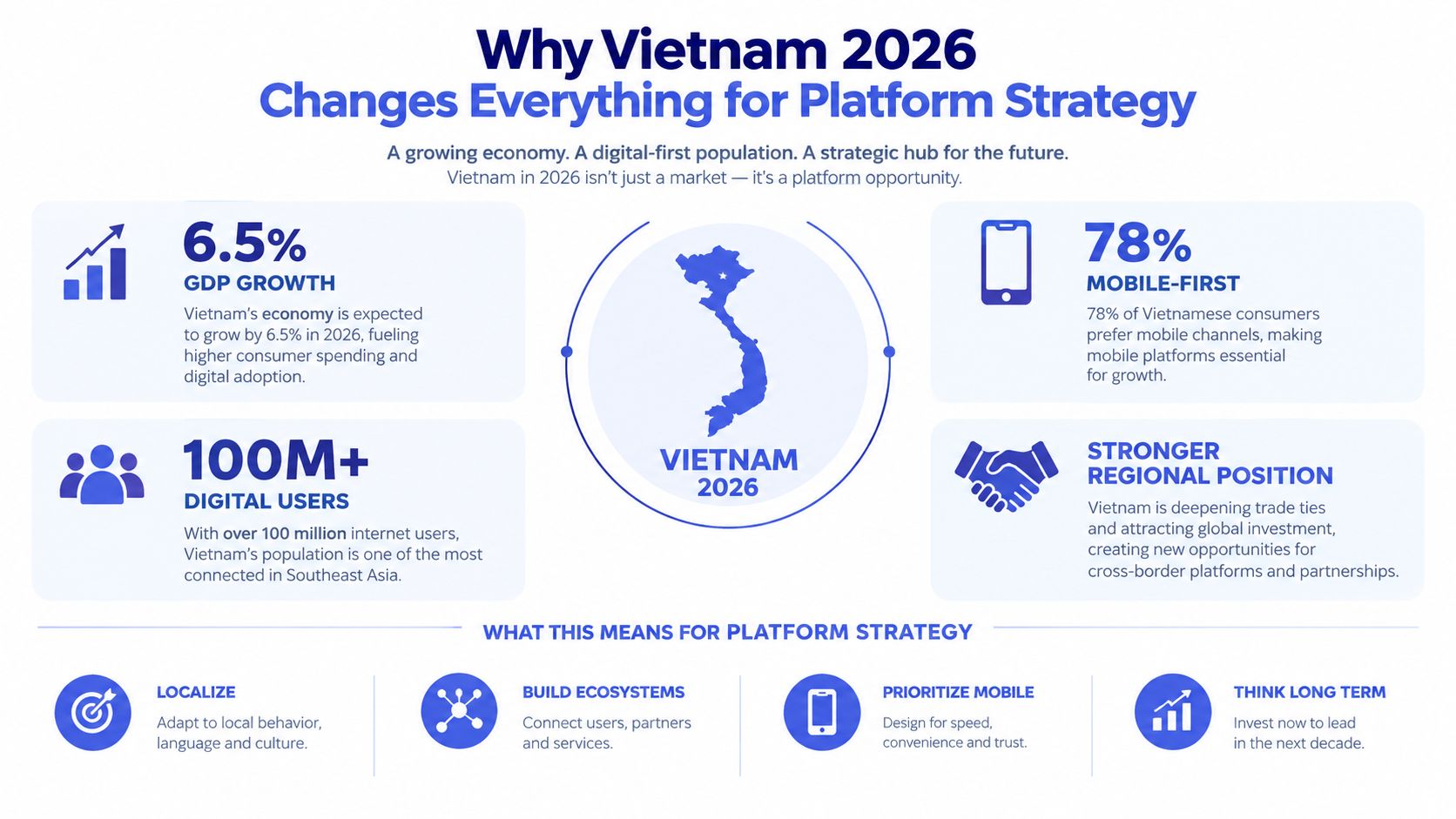
That scale changes the strategy question. You are not building to test whether Vietnamese users care about digital assets. You are building to serve a market that is already active while it shifts into a more formal operating model.
Regulation has moved from background noise to system design input
A major milestone is Vietnam’s move towards formal regulation. Resolution No. 05/2025/NQ-CP launched a five-year pilot for a regulated crypto-asset market covering issuance, trading, and service provision, while reporting says the Digital Technology Industry Law takes effect on 1 January 2026 and recognises digital assets as property under civil law, according to OANA’s report on the new legal framework.
That’s not just legal context. It changes the software brief.
A platform intended for Vietnam in 2026 should assume that onboarding, transaction controls, custody records, and reporting workflows will be examined as part of operational readiness. Teams that built for offshore informality will often discover that core workflows are undocumented, roles are weakly segregated, and key events aren’t captured in a regulator-friendly way.
The opportunity is real, but it isn’t evenly distributed
The popular narrative says legal recognition automatically creates a broad exchange boom. I don’t think that’s the best planning lens.
Vietnam’s new regime is deliberately narrow. Reporting indicates that only Vietnamese enterprises can operate trading platforms, domestic investors must use licensed providers, and the early market is constrained by the pilot structure, as discussed in VietnamNet’s coverage of the shift away from underground trading.
That creates a short-term trade-off:
- Safety improves through tighter market controls.
- Liquidity may tighten if participation rules slow supply, distribution, or product rollout.
- Platform value may shift towards custody, compliance automation, and regulated issuance instead of retail-first exchange features.
best countries for crypto and blockchain founders in 2026 becomes a useful comparison lens. Vietnam is attractive, but attractive under constraints.
For that reason, Tokenization Platform Development may fit some entrants better than a broad consumer exchange strategy. The category covers secure and compliant tokenization platforms for real-world assets, securities, real estate, commodities, and digital assets using enterprise blockchain technology.
What a Vietnam Digital Asset Platform Really Is and How It Works
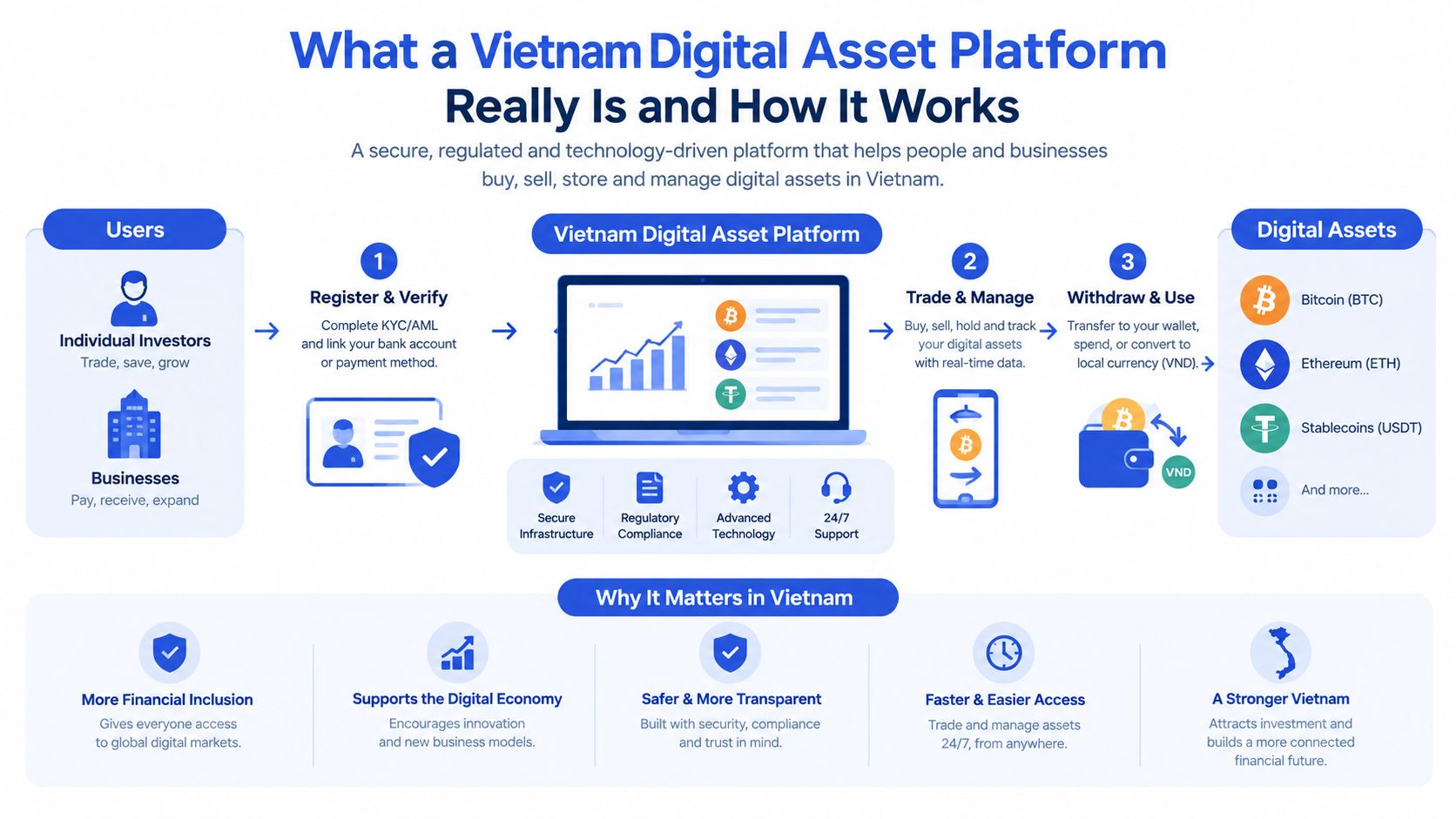
Most confusion starts with the word “platform”. Teams often use it to mean a mobile app, a wallet, or a trading website. In Vietnam’s 2026 context, a digital asset platform is closer to a coordinated financial system with several tightly connected layers.
Start with a simple mental model
Think of the platform as three places operating together:
- A front door where users are identified, screened, and approved.
- A vault where assets and keys are controlled under strict permissions.
- A market layer where orders, transfers, settlement, and reporting happen.
If any one of those layers is weak, the whole platform becomes fragile. A polished user interface won’t fix poor key governance. Strong custody won’t help if the order engine cannot create a reliable audit trail. Fast matching won’t matter if transaction monitoring sits outside the workflow and sees events too late.
The core moving parts
A practical Vietnam Digital Asset Platform usually includes these capabilities:
- Investor onboarding and account controls for identity verification, risk scoring, sanctions screening, and role assignment.
- Wallet and custody infrastructure for deposit addresses, withdrawals, internal transfers, and asset segregation.
- Trading or issuance logic such as order books, matching, subscriptions, redemptions, or secondary transfers.
- Settlement and reconciliation so balances, ledger entries, and blockchain states remain aligned.
- Monitoring and reporting that produce records compliance and operations teams can review.
A regulated exchange is not just a trading app. It is a marketplace, custody environment, and control system operating as one service.
Where blockchain and APIs actually fit
Blockchain is one layer, not the whole platform. Smart contracts may govern issuance, transfer restrictions, or settlement logic. Wallet services sign and broadcast transactions. Internal ledgers often track balances faster than the chain itself for operational purposes. APIs connect the platform to KYC vendors, banking rails, analytics engines, HSMs, case-management tools, and customer channels.
Performance testing also needs to reflect real operational traffic rather than toy transaction flows. For teams validating queue pressure, bursty API paths, and dependent service chains, this reference on packet-chaining for load testing is useful because it mirrors how complex requests cascade through production systems.
The result is an important shift in vocabulary. When architects say “exchange”, “custody”, or “tokenization”, they shouldn’t mean separate apps. They should mean coordinated subsystems with shared identity, policy, logging, and control boundaries.
Choosing Your Platform Model and Business Approach
Not every Vietnam-facing product should be an exchange, and not every exchange should be fully custodial. The right model depends on who you serve, how much operational control you need, and how closely your business maps to the regulated rails that are emerging.
The first decision is structural, not cosmetic
A centralised exchange model gives the operator stronger control over onboarding, custody, market surveillance, and reporting. That usually fits regulated environments better. A decentralised model can offer transparency and programmable market logic, but it may create harder questions around operator responsibility, user access controls, and enforcement workflows. Hybrid models sit in the middle, combining centralised controls with selected on-chain functions.
Here is a simplified decision view.
| Platform Model | Best For | Vietnam 2026 Fit | Key Tradeoff |
|---|---|---|---|
| Centralised custodial platform | Licensed trading venues, broker-style operations, institutional onboarding | Strong fit for tightly controlled operations | Higher operational burden and custody responsibility |
| Hybrid exchange with on-chain issuance or settlement | Tokenization, controlled secondary markets, enterprise asset workflows | Often the most practical fit | More integration complexity |
| Pure DEX-style model | Open market access and self-custody experiences | Weaker fit for the early regulated framework | Less control over compliance and user gating |
| B2B custody or infrastructure platform | Banks, securities firms, enterprise service layers | Strong fit where compliance is the product | Lower direct retail visibility |
Business model matters as much as architecture
A lot of teams default to trading fees because that’s what a generic crypto exchange does. Vietnam may reward a different approach in the near term.
Consider where value may sit:
- Custody services can become strategically important when safeguarding assets and proving control standards are difficult.
- Tokenization infrastructure may suit institutions that want issuance, entitlement, and settlement workflows without becoming consumer exchanges.
- Compliance tooling can matter if licensed operators need screening, case review, immutable records, and operational segregation.
- Enterprise integrations become revenue-bearing when banks, brokers, or treasury systems need controlled access to digital-asset workflows.
A useful benchmark for this design choice is enterprise tokenization platform infrastructure, because it reflects a model where issuance, permissions, and lifecycle controls matter more than headline trading volume.
Match the platform to the actual customer
Startups often ask, “Which model gives us the quickest launch?” Enterprises usually ask, “Which model survives legal, security, and banking review?” In Vietnam 2026, the second question is the one that should drive the first.
If your main customer is retail, the challenge is controlled onboarding and sustainable liquidity. If your main customer is an institution, the challenge is process assurance, custody design, and reporting discipline. Those are very different businesses even if both use wallets and trading interfaces.
Core Architecture and Compliance Technology You Must Build In
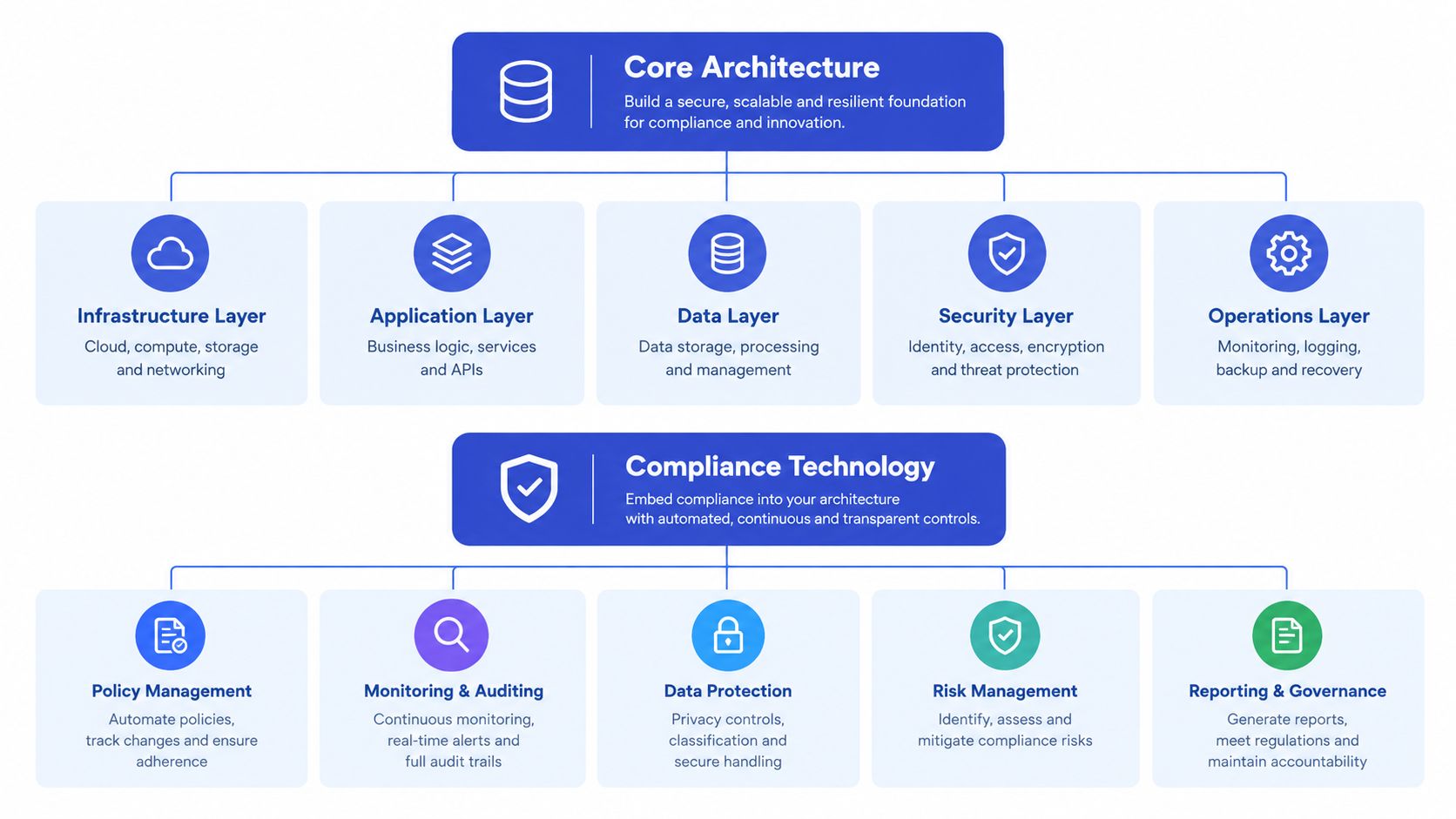
The defining mistake in digital asset platform projects is treating compliance as an integration layer added near launch. In Vietnam’s 2026 market, compliance affects the shape of the system itself.
Vietnam’s pilot framework reportedly requires licensed providers to hold minimum charter capital of VND 10 trillion, with at least 65% held by institutional shareholders and more than 35% contributed by at least two qualifying institutions, alongside Level 4 information-system security and formal procedures for custody, trading, risk management, and AML, according to this guide on Vietnam custody and data-sovereignty requirements. That’s the clearest signal that licensability depends on operational design, not only on feature completeness.
Onboarding and KYC must drive permissions
The platform should begin with identity, not wallets. That means eKYC, account risk classification, sanctions screening, and operational approval logic should sit upstream of deposit and trading permissions.
For Vietnam-facing builds, I’d separate three layers:
- Identity layer for customer records, document evidence, and approval status.
- Policy layer for wallet eligibility, jurisdiction rules, and transaction limits.
- Operations layer for reviews, escalations, and case ownership.
Without that split, teams often hard-code business rules into front-end or trading logic, which becomes brittle fast.
Custody and asset segregation are architecture decisions
Custody is where many projects stop being “crypto products” and start being financial infrastructure.
You need clear separation between:
- Client assets and house assets
- Hot, warm, and tightly controlled signing environments
- Transaction initiation, approval, and execution roles
- Blockchain state, internal ledger state, and reconciliation records
A production design should prioritise segregated custody, HSM-backed key management, tamper-evident logging, and documented workflows that external reviewers can understand. This is one reason digital asset custody compliance for regulatory-ready blockchain platforms matters early in the build cycle, not after the wallet service is already embedded.
Practical rule: If a single engineer or ops admin can move assets, rewrite the workflow before you scale it.
Trading, monitoring, and incident response must be one system
A matching engine by itself is not enough. Once the first licensed venue goes live, domestic investors are reported to be required to trade through licensed providers six months after the first licence is issued, and unlicensed trading is being penalised, according to Watson Farley & Williams’ analysis of Vietnam’s landmark legislation. That compresses readiness.
The trading stack therefore needs to be tied directly to:
- Pre-trade controls such as account status and restriction checks.
- Real-time surveillance hooks for suspicious order or transfer patterns.
- Post-trade evidence capture including event logs, actor identity, approvals, and ledger updates.
- Incident workflows for freezing, review, escalation, and reporting.
A platform that detects suspicious activity after settlement, in a separate analytics dashboard, is already behind.
Tokenization and smart contracts need governance around them
Smart contracts can handle issuance, transfer permissions, corporate actions, and settlement logic. They do not replace legal process or operational controls.
For regulated products, the stronger pattern is usually:
- contracts for deterministic asset behaviour
- an internal rules engine for eligibility and workflow checks
- admin tooling for paused states, exceptions, and controlled upgrades
- legal and compliance review before production deployment
This is also where Blockchain Development becomes relevant in a straightforward way. The category covers custom blockchain development services for enterprises, startups, and governments, including secure, scalable, high-performance applications across public, private, and hybrid networks.
Security controls should be designed for evidence, not slogans
Many teams say they take security seriously. Reviewers care whether the platform can prove that.
Useful design questions include:
| Control Area | Regulatory Direction | Technical Recommendation |
|---|---|---|
| Key management | Strong custody controls are expected | Use HSM-backed or similarly hardened key operations with strict role separation |
| System security | Level 4 information-system security is a reported requirement | Design high-availability infrastructure, segmented environments, and tested failover |
| AML controls | Formal AML procedures are expected | Connect screening, transaction monitoring, alert review, and evidence capture |
| Auditability | Reviewable procedures matter | Store immutable event logs and approval records with actor attribution |
If your compliance and security teams need a concise backgrounder for control vocabulary, this guide to SOC 2 for businesses is useful for aligning internal discussions around access control, logging, and process evidence, even though Vietnam-specific licensing standards are separate.
APIs and reporting are not back-office afterthoughts
Enterprise platforms usually fail integration first, not interface first. Banking links, KYC vendors, blockchain nodes, market data feeds, sanctions tools, case systems, and treasury software all need well-governed interfaces.
That’s where a delivery partner like Blocsys Technologies may fit as one option among others. The company builds production-ready blockchain and AI-powered platforms, including trading infrastructure, tokenization systems, and intelligent compliance workflows.
The core lesson is simple. A technically functional platform is not the same thing as a licensable one. In Vietnam 2026, that gap is where most costly rework will happen.
From Build Decision to Launch Cost Timeline and Execution
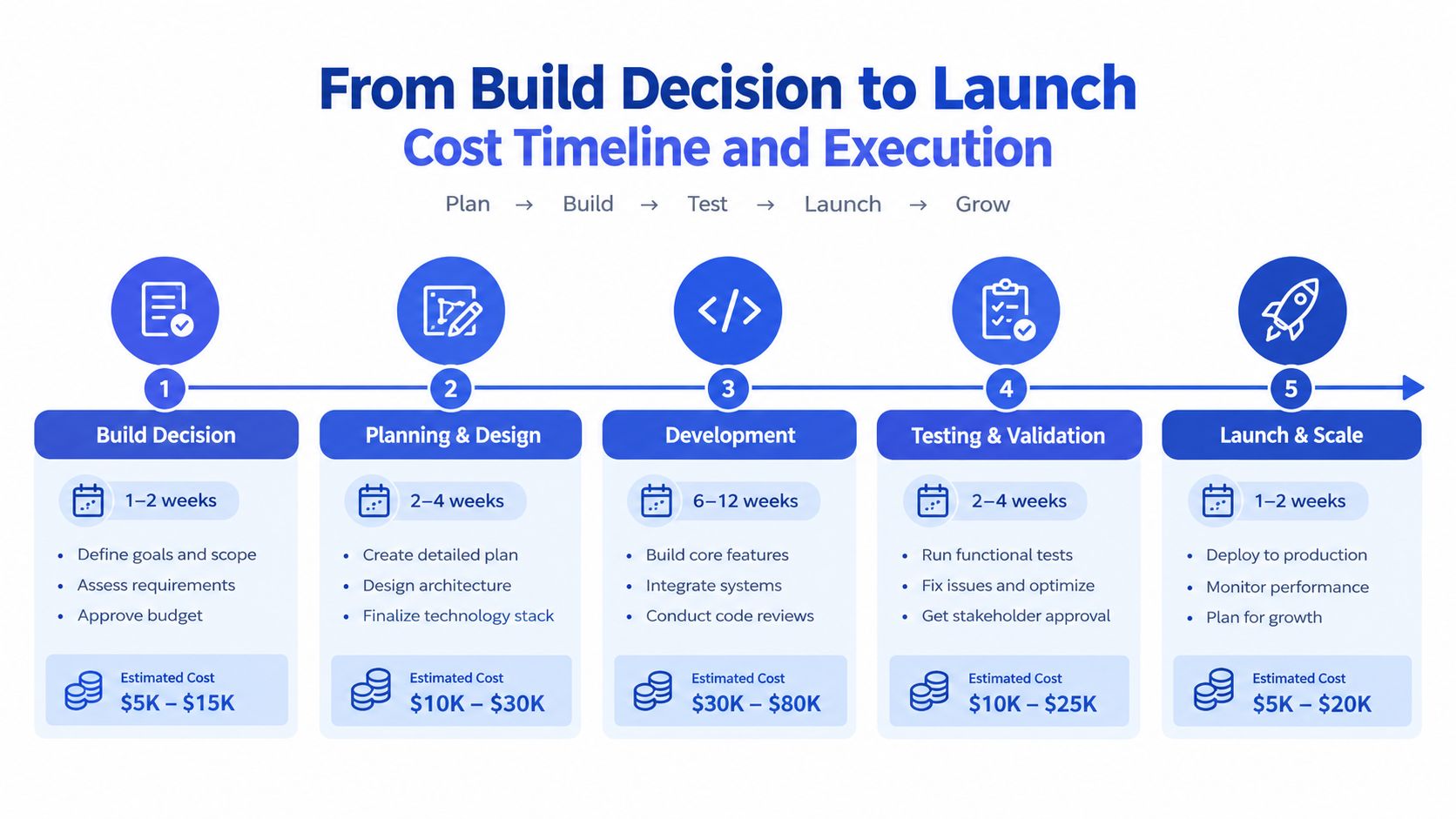
Teams usually frame the delivery choice as build versus buy. In Vietnam, the better framing is what must be owned, what can be integrated, and what must be proven before launch.
A practical delivery sequence
A workable execution model often follows this order:
- Decide the operating model first. Exchange, custody, tokenization, or hybrid infrastructure.
- Lock the compliance workflow early. KYC states, AML review queues, approvals, freezes, reporting paths.
- Choose custody architecture before UI design. Wallet patterns affect ledger, withdrawal, and reconciliation logic.
- Integrate observability and audit capture from the start. Retrofitting logs is painful and incomplete.
- Run environment, security, and incident drills before customer migration. A platform isn’t ready because a demo works.
Build, buy, and partner without confusing the boundaries
There is no shame in buying parts of the stack. Many strong platforms combine in-house orchestration with third-party identity tools, HSM vendors, analytics providers, and managed infrastructure components.
The key is to avoid outsourcing the control points that define your operating model. If you cannot explain who owns key material, how suspicious activity is reviewed, or how exceptions are approved, then you do not yet own the platform in any meaningful sense.
Don’t buy speed today if it forces a full custody and compliance redesign tomorrow.
Cost and timing should be discussed as drivers, not guesses
Precise budgets vary too much by scope to state responsibly without a discovery process. The cost drivers are usually clear though:
- Asset scope and whether you support simple custody, exchange trading, or tokenized products
- Integration count across KYC, AML, banking, node infrastructure, and reporting systems
- Security posture including signing controls, segregation, and resilience requirements
- Operational tooling for case management, reconciliations, support, and incident handling
- Governance depth for maker-checker flows, admin permissions, and audit outputs
If you need an early planning range, the Software Development Cost Estimator is a sensible way to structure the conversation before detailed solution design.
For the next 12 to 24 months, the teams that execute best will probably be the ones that treat launch as a controlled migration into regulated rails, not a marketing event. That means legal interpretation, product architecture, security controls, and operating procedures need to mature together.
How Blocsys Helps You Build for Vietnam and Next Steps
Vietnam’s 2026 opportunity will favor teams that can show licensable controls in software, not only working product flows. In practice, that means architecture choices such as client and house asset segregation, HSM-backed signing, approval workflows, and evidence-grade audit trails shape whether a platform can plausibly support a regulated model.
A useful way to view Blocsys is as a delivery partner for that regulated stack, not only for feature delivery. How Blocsys builds dedicated blockchain development teams for enterprise projects is relevant because Vietnam programs often need one coordinated team across custody services, smart contracts, internal ledgering, compliance workflows, integrations, and production operations.
The difference matters at system design level. A trading interface can be replaced. A weak custody and control layer usually cannot. If your target model may be assessed against licensing, capital, and security expectations in Vietnam, the foundation has to be built like a bank-grade transaction system with blockchain components, not like a fast consumer app with compliance added later.
For example, a Vietnam-ready build may require a custody-aware back end that separates client and proprietary balances at ledger level, routes privileged actions through maker-checker approval paths, and signs transactions through HSM-governed key policies rather than exposing hot-wallet logic directly to application services. That design does more than improve security. It gives legal, compliance, and operations teams something they can evidence during licensing review and internal control testing.
That is the layer Blocsys is positioned to build. The scope can include tokenization logic, smart contract development, custody services, role-based operations consoles, monitoring integrations, reconciliation tooling, and enterprise reporting. For fintech product teams, the practical benefit is speed with fewer rewrites later. You are designing the control plane and the customer experience together, which is usually the safer route for Vietnam 2026 than optimizing for launch velocity alone.
FAQs
What is a Vietnam digital asset platform?
A Vietnam digital asset platform is a software and operations environment built for digital-asset services such as custody, trading, issuance, settlement, and reporting in the Vietnamese market. In 2026, the practical meaning is broader than a crypto app. It includes onboarding controls, wallet and key management, monitoring, audit trails, and operational workflows that support regulated service delivery.
What features should Vietnam digital asset platform development include?
Core features usually include investor onboarding, eKYC, AML screening, wallet infrastructure, custody controls, internal ledgering, trading or issuance workflows, settlement logic, transaction monitoring, reporting, and role-based administration. For Vietnam, teams should also prioritise immutable event capture, asset segregation, incident handling, and operational approval controls from the start.
Is Vietnam crypto exchange development the same as building a standard exchange?
No. A standard exchange build often focuses on matching speed, deposits, withdrawals, and front-end usability. Vietnam crypto exchange development for the 2026 market needs stronger alignment between trading, custody, compliance, and reporting because the platform may be assessed as part of a regulated operating model rather than treated as a purely technical product.
Do software features by themselves make a platform licensed or compliant?
No. Software can support compliance operations, but it does not grant a licence or automatically make a business compliant. Licensing depends on legal structure, capital, ownership, procedures, governance, security, and regulator review. The platform should be designed to support those obligations, not to replace them.
Why is KYC and AML design so important in Vietnam digital asset platform development?
KYC and AML design matters because onboarding and transaction controls shape who can access services, how risk is detected, and whether suspicious activity can be investigated properly. If those controls are added late, teams usually end up with fragmented records, poor case handling, and difficult remediation work across wallet, trading, and reporting systems.
What custody model is most practical for the Vietnam 2026 market?
The most practical model for many regulated use cases is one that gives the operator strong control over key governance, asset segregation, approvals, and auditability. In simple terms, custody should be designed as an institutional control environment, not merely as wallet connectivity. The exact implementation can vary, but weak segregation and weak approval design are poor fits.
Should a Vietnam digital asset platform include its own wallets?
Often yes, but “wallets” should be understood as part of a broader custody and ledger system. Design question is not whether the user sees a wallet screen. It is how deposit addresses, internal balances, approvals, and signing workflows are governed. In enterprise builds, customer wallet experience and operational custody controls must be designed together.
Where does tokenization fit into a Vietnam digital asset platform?
Tokenization fits where businesses want to issue or manage digital representations of assets with controlled transfer and settlement workflows. In Vietnam, tokenization may be especially relevant for institutions and enterprise platforms because the early opportunity may sit more in regulated infrastructure, issuance processes, and controlled asset workflows than in consumer-first exchange growth alone.
What blockchain infrastructure choices matter most?
The most important choices usually involve custody integration, smart contract governance, internal ledger design, node strategy, API architecture, observability, and security boundaries. Teams should choose infrastructure based on operational control and audit requirements, not on chain popularity alone. Public, private, or hybrid models can each work depending on the product and governance needs.
How should teams think about cost and implementation timing?
Teams should think in terms of scope drivers rather than generic price lists. Product type, integrations, custody depth, monitoring, resilience, reporting, and governance all affect cost and duration. A realistic implementation plan also needs time for testing, operational playbooks, security review, and launch readiness, not just feature development.
Blocsys Technologies builds customised digital asset platforms, crypto trading systems, custody-aware back ends, tokenization products, smart contracts, and blockchain infrastructure for fintech and enterprise teams preparing for regulated markets like Vietnam. If you’re mapping a 2026 launch or redesigning an existing stack for stronger controls, visit Blocsys Technologies to discuss requirements and the right next step.
