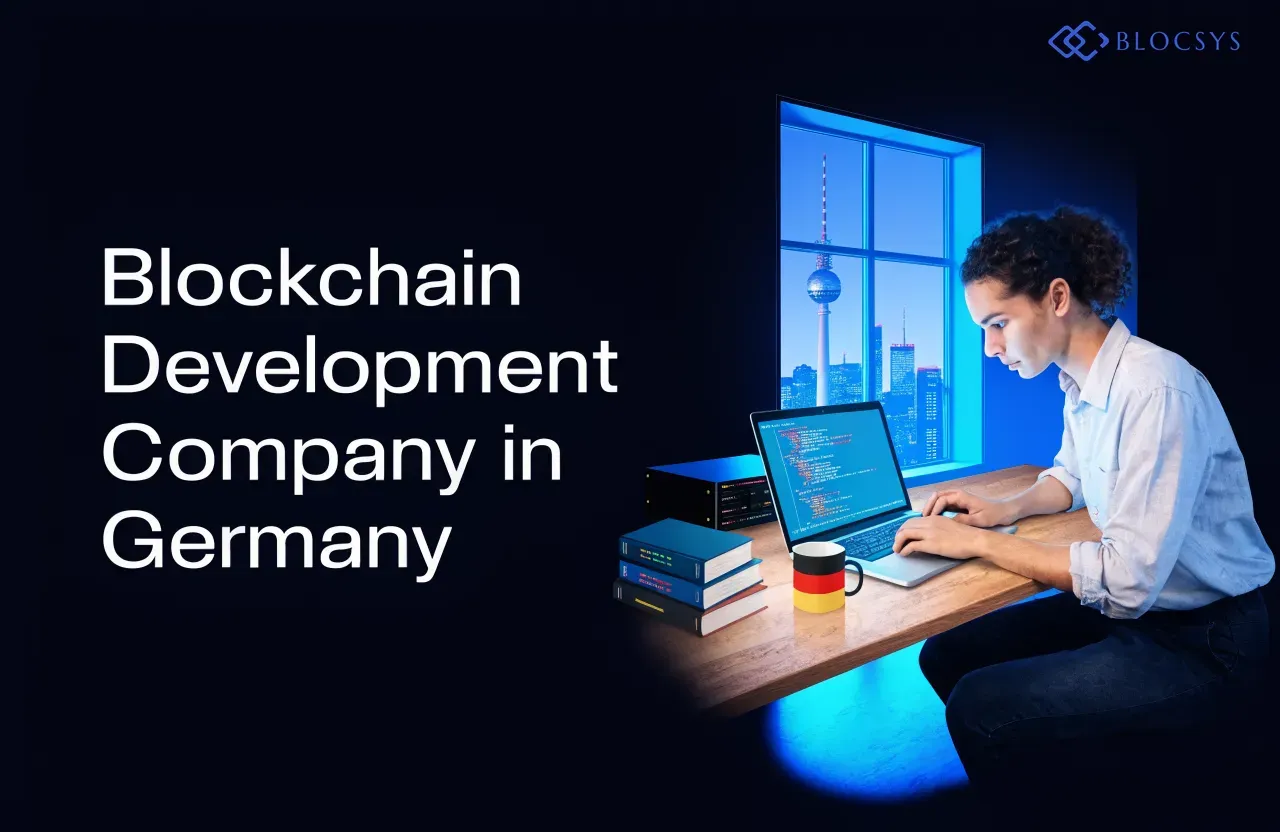
Blockchain Development Company in Germany
Choosing a Blockchain Development Company in Germany is rarely a quick decision, and it shouldn’t be. Whether you’re a Berlin fintech building a custody platform or a Frankfurt bank exploring tokenized securities, the vendor you pick will shape your architecture, your compliance posture, and your ability to ship on schedule. This article walks through what these companies actually do, how to evaluate them, and what German and EU regulatory realities mean for your project.
Germany’s technology and financial sectors have moved well past blockchain experimentation. Deutsche Bundesbank has repeatedly noted that distributed ledger technology is relevant to the ongoing digitalization of banking infrastructure, and Germany’s digital finance policy identifies blockchain as a technology worth structured attention rather than a passing trend. That shift matters because it means businesses evaluating a Blockchain Development Company Germany teams can rely on are no longer choosing between “if” and “when” — they’re choosing “who” and “how.”
Why German Businesses Choose a Specialist Blockchain Development Partner
Building blockchain infrastructure isn’t like building a typical web application. Smart contracts are immutable once deployed, transaction logic often handles real money, and mistakes can be expensive or irreversible. That’s precisely why founders and CTOs look outside their general software teams for a dedicated Blockchain Development Partner Germany businesses can trust with production-grade systems.
A generalist development shop might understand REST APIs and cloud infrastructure well. However, it often lacks hands-on experience with consensus mechanisms, gas optimization, wallet security, or the nuances of tokenized asset design. Consequently, projects built without specialist knowledge frequently need costly rework once they hit real-world usage or an audit.
What Makes This Different From General Software Outsourcing
Here’s the distinction worth understanding: a blockchain vendor isn’t simply writing code faster. They’re making architectural decisions — public versus permissioned ledger, custodial versus non-custodial wallets, upgradeable versus immutable contracts — that determine your regulatory exposure and technical risk for years. Get this wrong early, and you’ll likely rebuild from scratch.
The biggest mistake we see isn’t poor coding — it’s teams selecting a blockchain architecture before they’ve mapped their regulatory obligations. By the time BaFin questions come up, the technical design is already locked in, and that’s an expensive place to be.
What a Blockchain Development Company in Germany Can Actually Build
Before evaluating vendors, you need clarity on scope. Most German businesses approach a development partner for one of several categories of work, and each demands different expertise.
Smart Contracts, dApps, and DeFi Systems
Smart contract development covers everything from simple token issuance to complex DeFi protocols with lending pools, automated market makers, and yield mechanisms. Solidity remains the dominant language for Ethereum and EVM-compatible chains, though Rust-based chains are gaining traction for performance-sensitive use cases. A capable team should show real Solidity development experience, not just tutorials adapted into production code.
Tokenization and Digital Assets
Real-world asset tokenization — representing property, funds, bonds, or commodities as on-chain tokens — has become one of the fastest-growing use cases among German enterprises. This work sits directly at the intersection of technology and financial regulation, since tokenized securities can remain subject to existing financial-market legislation even under MiCA. Teams building here need familiarity with both smart contract engineering and asset structuring. Blocsys covers this specific area in depth through its Real World Asset Tokenization work, which illustrates how token design and compliance considerations intersect in practice.
Enterprise, Private, and Permissioned Blockchain
Not every enterprise blockchain project needs a public network. Banks and supply chain firms often need permissioned ledgers where participant identity is known and transaction visibility is restricted to authorized parties. This requires different tooling entirely — Hyperledger Fabric, Corda, or private EVM instances rather than public mainnets.
Wallets, Backend Systems, and Blockchain Integrations
Most projects also need traditional backend engineering: APIs connecting on-chain activity to internal systems, custody wallet infrastructure, KYC/AML integrations, and monitoring dashboards. A blockchain-only team without full-stack capability will struggle here, so ask candidates directly about their non-blockchain engineering depth too.
![Blockchain Development Company in Germany — [Flow diagram showing blockchain project scoping process: Business Requirement → Ledger Type Decision (Public vs Permissioned) → Smart Contract Design → Backend Integration → Security Audit → Deployment]](https://s3.blocsys.com/blocsys/blog-images/1788998536613-fc06b001e3d76ef0.webp)
Blockchain Platforms and Technologies German Companies Should Evaluate
Platform choice affects cost, scalability, and long-term maintainability. Below is a practical comparison of what’s commonly used across German enterprise and Web3 projects.
| Platform Type | Common Use Case | Key Consideration |
|---|---|---|
| Ethereum / EVM chains | DeFi, dApps, tokenization | Largest developer ecosystem, established tooling |
| Layer 2 networks (Arbitrum, Optimism, Polygon) | High-throughput dApps | Lower fees, faster settlement, still EVM-compatible |
| Hyperledger Fabric | Private enterprise ledgers | Permissioned access, suited to consortiums |
| Corda | Financial institution networks | Built specifically for regulated finance workflows |
| Solana | High-speed trading apps | Different language stack (Rust), strong throughput |
A genuinely capable Blockchain Technology Company Germany businesses can rely on won’t push one platform for every client. Instead, they’ll ask about your throughput needs, regulatory environment, and existing infrastructure before recommending an approach.
Industries Using Blockchain in Germany
Adoption varies by sector, but a few industries stand out. Financial institutions in Frankfurt are exploring tokenized bonds and digital securities under evolving EU frameworks. Munich’s industrial base has driven supply chain traceability projects using permissioned ledgers. Berlin’s startup ecosystem continues to produce Web3 consumer applications, DeFi protocols, and NFT-based platforms.
Insurance firms are testing blockchain for claims verification and fraud reduction. Meanwhile, logistics and manufacturing companies use it for provenance tracking, similar in concept to the traceability work Blocsys has documented through its organic certification and food traceability platform. These examples show blockchain isn’t confined to crypto-native companies anymore — it’s infrastructure for traditional industries too.
How to Choose the Right Blockchain Development Company in Germany
This is the part most articles rush through. It shouldn’t be rushed, because vendor selection determines almost everything downstream. Let’s break down what actually matters.
Technical Expertise and Portfolio Relevance
Ask for examples closely related to your project type — not just “blockchain experience” in general. A team skilled at NFT marketplaces isn’t automatically qualified for a permissioned banking ledger. Request architecture diagrams or technical explanations from past work, not just screenshots of finished apps.
Security Practices
Security failures in blockchain systems tend to be catastrophic and public. A serious vendor should describe their smart contract testing process clearly: unit testing, static analysis tools, and independent third-party audits before mainnet deployment. If a company can’t explain their audit process in specific terms, treat that as a warning sign.
Development Methodology and Communication
Ask how they run projects. Do they work in sprints with regular demos? How do they handle scope changes? German enterprises, particularly regulated ones, typically need documented processes, clear change management, and predictable reporting cadence — not loosely managed freelance-style engagements.
Scalability and Long-Term Architecture
Your system needs to handle growth without a rebuild. Ask candidates how they’d scale your specific use case — sharding, layer 2 solutions, off-chain computation with on-chain settlement, or database-blockchain hybrid architectures.
Security and Regulatory Considerations for Blockchain Projects in Germany
This section deserves careful attention because it’s where many projects run into trouble. Germany’s financial sector operates under BaFin supervision, and BaFin has specifically addressed crypto-asset custody, trading, and related services under German and EU rules. Additionally, MiCA (Markets in Crypto-Assets Regulation) now provides a harmonized EU framework covering many crypto-asset issuers and service providers.
However, tokenized securities and certain other financial instruments can remain governed by separate financial-market legislation rather than MiCA alone. This distinction genuinely matters for tokenization projects, and it’s not something a development team can resolve on your behalf — legal counsel should confirm classification before architecture is finalized.
DORA (the Digital Operational Resilience Act) also applies to many EU financial entities and their technology providers, adding operational resilience requirements around ICT risk management. If your blockchain project touches regulated financial infrastructure, your development partner should at minimum understand these frameworks exist and design systems that don’t foreclose compliance options later.
Working with a German-based or Germany-experienced development company does not automatically make your project compliant. Compliance is a legal determination, not a technical one. What a strong development partner can do is build flexible, auditable systems that support your compliance strategy rather than fighting it.
Regulation isn’t a checkbox you tick after building the product. Every architectural decision — whether a wallet is custodial, whether a token is transferable, whether identity is verified on-chain or off — has regulatory weight. Bake that thinking in from day one.
![Blockchain Development Company in Germany — [Flow diagram showing regulatory assessment process for blockchain projects in Germany: Identify Asset/Service Type → Determine MiCA vs Existing Securities Law Applicability → Consult Legal Counsel → Confirm BaFin Licensing Needs → Align Technical Architecture → Proceed to Development]](https://s3.blocsys.com/blocsys/blog-images/1788998537450-174ab23e3897314b.webp)
Blockchain Development Costs in Germany
Costs vary widely depending on scope, blockchain complexity, and whether you’re building a proof of concept or production-grade regulated infrastructure. Simple smart contract deployments cost far less than full tokenization platforms with custody, compliance tooling, and multi-chain support.
Factors that move the price significantly include the number of smart contracts, third-party audit requirements, integration complexity with legacy banking systems, and whether the team is based in Germany, elsewhere in the EU, or offshore. Rather than estimate blindly, tools like the Blocsys Software Development Cost Estimator can give you a realistic starting range based on your actual project parameters before you enter vendor discussions.
Engagement Models Worth Comparing
| Model | Best For | Trade-off |
|---|---|---|
| Fixed-scope project | Well-defined MVPs | Less flexibility for scope changes |
| Dedicated engineering team | Long-term, evolving products | Requires ongoing management involvement |
| Blockchain consulting first, then build | Complex or regulated use cases | Adds upfront time but reduces rework risk |
| Freelancers or individual hires | Very small, isolated tasks | Limited accountability and continuity |
For most mid-to-large projects, a Dedicated Blockchain Engineering Team, like the model Blocsys offers through its Dedicated Blockchain Engineering Teams, tends to work better than freelancers because it provides continuity across development, testing, and post-launch support phases.
Development Process and Timeline
A typical blockchain project moves through discovery, architecture design, development, testing and auditing, deployment, and ongoing maintenance. Discovery and architecture alone can take several weeks for regulated projects, since compliance mapping needs to happen before contracts get written.
Simple dApps might launch in two to three months. Enterprise-grade tokenization platforms or DeFi protocols with audits typically take four to nine months, sometimes longer if third-party security audits reveal issues requiring rework. Rushing this timeline to hit a launch date is one of the most common causes of post-launch security incidents.
Questions to Ask Before Selecting a Development Partner
- Can you walk me through a project similar to mine, including the technical challenges you faced?
- What’s your smart contract testing and audit process, specifically?
- Who owns the code and intellectual property after project completion?
- How do you handle post-launch support and security patching?
- What happens if regulatory requirements change mid-project?
- Can you provide references from clients in regulated industries?
Don’t accept vague answers here. A serious Blockchain Development Companies Germany businesses should shortlist will answer these directly, with specifics rather than marketing language.
When to Choose a Specialist Company Versus an Internal Team
Building an internal blockchain team makes sense if blockchain is core to your long-term product and you can commit to sustained hiring and retention. However, blockchain talent is scarce and expensive, and internal teams often lack exposure to multiple project types that sharpen judgment on architecture decisions.
For most startups and enterprises, working with an external Blockchain Company Germany teams engage during build phases — then transitioning to lighter-touch maintenance support — offers a better balance of cost and expertise. You can also combine models: use a specialist partner for architecture and initial build, then bring in-house staff for ongoing feature work, an approach that works well when paired with services like Hire Blockchain Developers for scaling capacity as needed.
How Blocsys Supports Blockchain Projects in Germany
Blocsys works as a blockchain, Web3, digital asset, and enterprise technology company supporting businesses across smart contract development, tokenization, DeFi platforms, and enterprise blockchain infrastructure. Rather than pushing a single technology stack, the team evaluates each client’s regulatory environment and business goals before recommending architecture.
For businesses still shaping their approach, Blockchain Consulting offers a lower-commitment starting point to validate technical direction before full development begins. Whether you’re exploring tokenized assets, building a DeFi application, or need dedicated engineering capacity, the Blocsys home page is a reasonable place to start that conversation and scope what your project actually needs.
Frequently Asked Questions
Here are direct answers to the questions we hear most often about working with a blockchain development company in Germany.
What does a blockchain development company in Germany do?
A blockchain development company in Germany designs and builds blockchain-based systems including smart contracts, dApps, tokenization platforms, DeFi applications, and enterprise ledgers. They handle architecture decisions, security testing, and integration with existing business systems, often while accounting for German and EU regulatory context relevant to financial or asset-backed applications.
How much does blockchain development cost in Germany?
Costs depend heavily on project scope, blockchain complexity, and whether audits or regulatory compliance work are required. Simple smart contract projects cost less than full tokenization or DeFi platforms with custody and compliance tooling. Businesses can get a realistic estimate using tools like the Blocsys Software Development Cost Estimator before committing to a vendor.
How do I choose a blockchain development company in Germany?
Evaluate technical expertise relevant to your specific use case, ask for detailed security and audit processes, review their development methodology, and confirm they understand German and EU regulatory frameworks like BaFin oversight and MiCA. Avoid vendors who give vague answers about testing, ownership, or post-launch support.
What blockchain services do German development companies offer?
Services typically include smart contract development, dApp and Web3 application building, DeFi protocol design, tokenization and digital asset infrastructure, enterprise and permissioned blockchain systems, wallet development, blockchain integrations, and ongoing security maintenance and support after launch.
How long does blockchain development take in Germany?
Simple dApps can launch within two to three months, while enterprise-grade platforms involving tokenization, audits, or regulatory review typically take four to nine months. Timelines extend when third-party security audits uncover issues requiring rework, which is common and shouldn’t be rushed past.
What blockchain platforms can a German development company work with?
Most companies work across Ethereum and EVM-compatible chains, Layer 2 networks like Arbitrum and Polygon, and permissioned platforms such as Hyperledger Fabric or Corda for enterprise use cases. The right platform depends on your throughput needs, regulatory environment, and whether you need public or private ledger access.
Can a blockchain development company build enterprise solutions?
Yes, enterprise blockchain solutions typically use private or permissioned ledgers rather than public networks, giving organizations control over participant access and data visibility. These systems support use cases like supply chain traceability, post-trade reconciliation, and internal asset tracking across departments or partner networks.
Can German blockchain companies develop Web3 and DeFi applications?
Yes, many German blockchain development companies build Web3 applications and DeFi protocols including lending platforms, decentralized exchanges, and yield products. These projects require strong Solidity development skills, rigorous smart contract auditing, and awareness of how MiCA and related EU frameworks may apply to certain crypto-asset services.
What should I check before hiring a blockchain development company in Germany?
Check their portfolio for projects similar to yours, ask specifically about smart contract testing and audit procedures, confirm code ownership terms, and verify they offer post-launch support. Also ask how they handle regulatory considerations, since working with a development company doesn’t automatically guarantee legal compliance.
Is Germany a good location for blockchain development?
Germany offers a mature technology talent pool, clear regulatory engagement through BaFin and EU frameworks like MiCA, and strong financial sector demand in cities like Frankfurt, Berlin, and Munich. German policy has identified blockchain as relevant to financial sector digitalization, supporting continued enterprise and fintech adoption.
Conclusion
Selecting a Blockchain Development Company in Germany comes down to matching technical capability with your actual regulatory and business context — not just picking the team with the flashiest portfolio. Whether you need tokenization infrastructure, a DeFi protocol, or enterprise-grade permissioned systems, the right partner will ask hard questions about compliance and architecture before writing a single line of code.
If you’re scoping a blockchain project and want to talk through architecture, cost, or technical approach, the Blocsys team works across smart contracts, Web3, tokenization, and enterprise blockchain development, and can help you figure out what your specific project actually requires before you commit budget to a build.
Ready to move beyond theory and build an intelligent platform that delivers real-world value? Blocsys Technologies specialises in engineering enterprise-grade AI and blockchain solutions for the fintech, Web3, and digital asset sectors. Connect with our experts today to discuss your vision and chart a clear path from concept to a secure, scalable reality.