Building a Branded Digital Gold Platform for Bullion Dealers: Key Requirements
Most bullion dealers built their business on relationships, trust, and physical delivery. Walk into any established bullion shop and you’ll see decades of credibility stacked on a counter. However, customer behaviour is shifting fast, and many buyers now expect to check gold rates, place orders, and track holdings from a phone. That’s pushing dealers to evaluate a branded digital gold platform for bullion dealers as a serious business decision, not just a technology experiment. Before you sign off on development, you need clarity on what this platform actually requires — from pricing logic to custody arrangements. This article walks through those requirements in plain business terms.
Why Bullion Dealers Are Considering Their Own Digital Gold Platforms
Customer expectations have changed quickly. Buyers who shop on e-commerce apps expect the same convenience when buying gold. Therefore, a dealer who only offers in-store purchase risks losing younger, tech-comfortable customers to digital-first competitors.
Several digital gold services already operate in the market, each with a distinct pitch. For instance, Bank Syariah Indonesia promotes gold as a sharia-compliant long-term investment option, and it has reportedly attracted younger customers through that approach. HelloGold allows fractional gold investment starting from a small amount through its mobile app. Tokopedia Emas focuses on an interactive, easy-to-use interface. Public Gold offers digital gold without requiring the buyer to arrange physical storage.
These platforms show real demand for digital gold access. But they also compete directly for the same customer attention that a traditional bullion dealer previously owned outright. Consequently, dealers relying only on third-party platforms lose the direct customer relationship, the branding, and much of the margin control that made their business work in the first place.
A bullion dealer digital transformation effort, when planned properly, lets you keep that relationship while meeting modern buying expectations.
What Does a Branded Digital Gold Platform Mean for a Bullion Dealer?
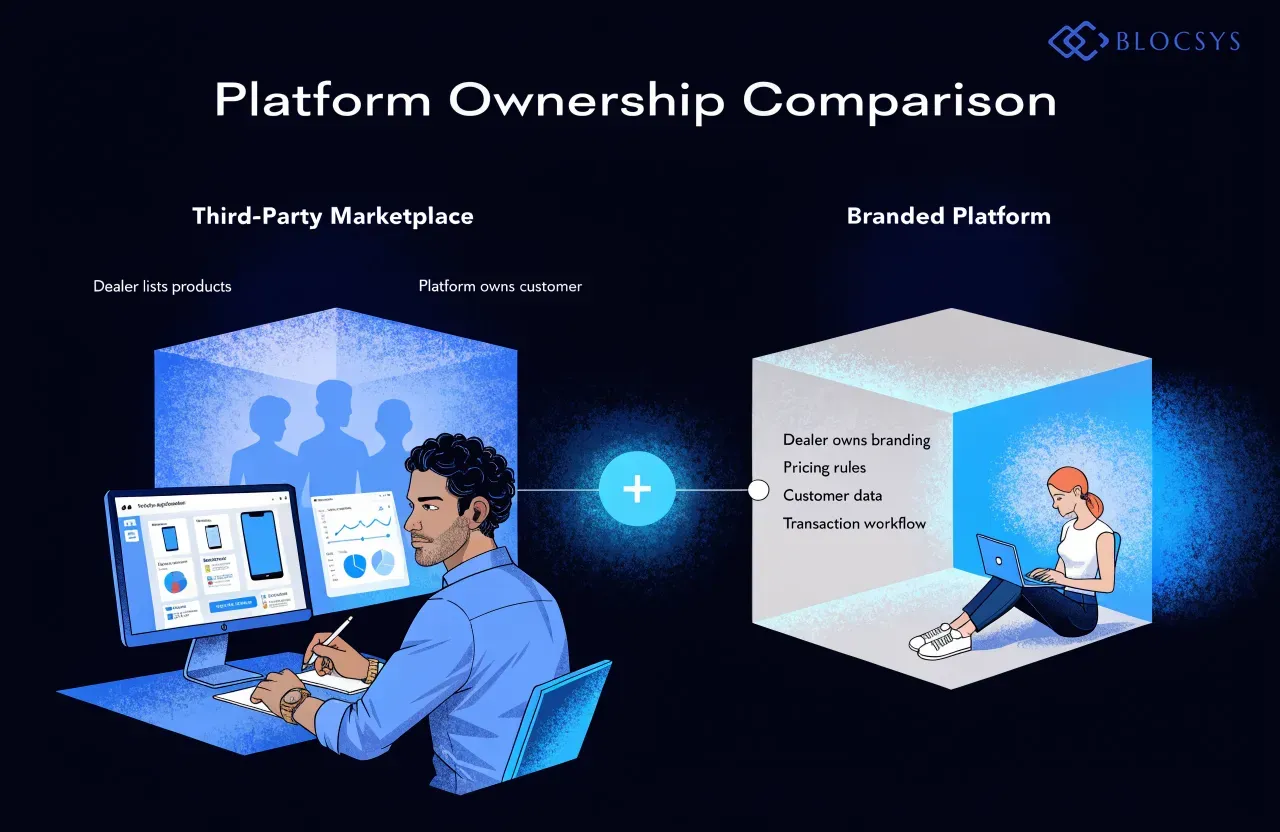
A branded digital gold platform for bullion dealers is a mobile app and web system owned by your business, carrying your name, and running on your own pricing and operational rules. Unlike a third-party marketplace, you control the customer experience from registration to redemption.
A marketplace listing gets you transactions. A branded platform gets you a customer relationship you actually own — that distinction decides whether digital gold becomes a channel or just a commission line.
Three structural options typically come up in planning discussions:
- A fully custom digital gold platform, built around your exact workflows, sourcing arrangements, and pricing logic.
- A white-label digital gold platform for bullion dealers, where a base product is adapted with your branding and some configuration.
- A third-party marketplace, where you list your gold products but customers transact under someone else’s brand and rules.
Only the first two options give you a genuinely branded bullion trading platform. The marketplace route hands the customer relationship to someone else. So, if direct ownership of customer data, pricing, and experience matters to your business, you’ll want to look closely at custom or white-label development instead.
Digital Gold Platform for Bullion Dealers vs. Generic Investment Apps
General investment apps treat gold as one of many asset classes. A digital gold platform for gold dealers, on the other hand, is built around actual bullion operations — sourcing, inventory, purity standards, and delivery logistics. That operational grounding is what separates a dealer-owned platform from a generic fintech product.
Essential Customer-Facing Features of a Digital Gold Platform
Customers expect a few core capabilities before they’ll trust a new digital system with real money. Here’s what typically matters most.
Registration and Account Management
Simple KYC-based onboarding reduces friction. Remember, many retail buyers already feel that learning a new system costs time and effort, so a long signup process will push them back toward familiar in-store buying.
Gold Buying and Selling Workflow
Customers need a clear gold buying and selling workflow: enter an amount, see the price, confirm, and receive instant confirmation. Live gold rate integration here is non-negotiable — stale pricing is one of the fastest ways to lose customer trust.
Balance, Holdings, and Transaction History
A customer should see their digital gold holdings, purchase records, and full transaction history at any time. This transparency directly addresses the common fear that digital gold lacks clear ownership tracking.
Payment Options and Notifications
Multiple payment methods reduce drop-off. Meanwhile, notifications for price movements, order confirmations, and redemption status keep customers informed without requiring them to check manually.
Redemption Requests
Customers who bought digital gold eventually want physical delivery or a payout. A clear redemption request flow, with defined timelines and charges, closes that loop and builds long-term confidence in the platform.
Administrative Features Bullion Dealers Need to Manage Their Platform
Behind every customer screen sits an admin system that actually runs the business. This is where bullion business automation pays off operationally.
Your administrative panel should give you:
- Customer account oversight and verification status tracking.
- Pricing configuration tools tied to your sourcing cost and margin.
- Inventory visibility connected to your bullion inventory management practices.
- Transaction monitoring, including flags for unusual activity.
- Role-based permissions so staff only access what their role requires.
- Reporting for sales, redemptions, and reconciliation.
Without this layer, a digital gold platform becomes a pretty front-end with no operational control behind it. That’s a real risk — several platform operators have reported thousands of registered customers who never actually used the digital gold savings service after signup. Weak onboarding follow-through and unclear admin visibility into customer behaviour often sit behind that gap. A good gold dealer customer portal on the admin side helps you spot disengagement early and act on it.
Gold Pricing and Transaction Management: Key Platform Requirements
How does a digital gold platform handle pricing accurately? It pulls a reference rate from a market data source, then applies your dealer-specific margin, making charges, and taxes before showing the final price to the customer.
That distinction matters. The international or spot gold price is an indicative market reference. It isn’t the rate your customer actually pays. Gold pricing integration should clearly separate these two numbers in your backend logic, even if only one price appears on the customer’s screen.
Every transaction also needs a clean record: timestamp, quantity, applicable rate, charges, and payment reference. This is essential for gold transaction reconciliation at the end of each business day. Without accurate digital gold transaction management, you’ll struggle to match customer records against your actual gold inventory and bank settlements.

How Should Dealers Decide on Pricing Update Frequency?
Gold prices move throughout the trading day. Your platform should refresh rates at a frequency that matches your risk tolerance — some dealers update every few minutes, others lock rates for short windows. Whichever you choose, make the logic consistent and disclosed to customers.
Payment, Gold Sourcing, Custody and Redemption Integrations
A digital gold platform for bullion dealers needs to connect to real business arrangements, not just software modules. Here’s what that typically involves.
Payment gateway integration handles customer money movement — collections and, where applicable, payouts. Separately, you need a connection to your gold supplier or liquidity provider, since that relationship determines how much physical gold actually backs customer balances.
This point deserves direct emphasis: software alone doesn’t create gold backing or custody. Some platforms have reportedly sold digital gold without storing gold proportionally or routing trades through approved exchanges, which leaves customers exposed if the business can’t fulfil redemption. Your custody and sourcing arrangement is a business and legal decision, made independently of the platform. The technology simply reflects and records whatever arrangement you’ve already structured with your vault partner, refiner, or storage provider.
Verification processes — confirming purity, weight, and storage location — should also be documented and, ideally, reflected in the platform’s records. Your gold redemption process needs defined turnaround times, delivery logistics, and charges, all clearly stated to the customer upfront.
Can Blockchain Help With Ownership Verification?
Blockchain-based gold tokenization can create a verifiable, tamper-resistant record linking a customer’s digital balance to a specific gold holding event. This doesn’t replace your custody arrangement, but it does give both you and your customer a transparent audit trail — something many digital gold platforms today don’t offer at all.
Security, Compliance and Operational Requirements Before Launch
Trust is the product here, arguably more than the gold itself. Customers worry about data breaches, platform risk, and unclear accountability if something goes wrong. Addressing these worries starts well before launch.
At a minimum, your platform needs strong customer authentication, encrypted data storage, role-based access controls, and detailed audit logs for every transaction. Regular transaction monitoring helps catch irregularities early, while clear customer support channels reassure buyers that someone is accountable if an issue arises.
Regulatory ambiguity is a genuine constraint here, and you shouldn’t treat it as a technology problem. In some markets, oversight bodies for commodities and financial services operate separately, and a platform can meet one regulator’s requirements while still facing suspension under another’s licensing rules. That kind of unsynchronized oversight has actually happened to digital gold sellers in at least one market. Before building anything, get specific legal advice on how your business model — digital gold sales, storage claims, and redemption promises — is classified under applicable law in your operating jurisdiction.
Your legal structure, terms of service, and customer disclosures need to match what your platform actually does technically. Overpromising ownership or guaranteed liquidity, when your backend doesn’t support it, creates real liability.
Custom-Built vs White-Label Digital Gold Platforms for Bullion Dealers
Which approach fits better — custom or white-label? It depends on your branding needs, budget, and how specific your workflows are.
A custom digital gold platform for bullion dealers gives you full control over branding, feature set, and integrations. It fits dealers with specific sourcing arrangements, unusual pricing logic, or plans to scale into additional product lines. The trade-off is a longer development timeline and a bigger upfront investment.
A white-label digital gold platform for bullion dealers launches faster and usually costs less initially. However, you may face limits on customization, and you’ll depend on the provider’s roadmap for future features. Maintenance and scalability also sit partly outside your direct control.
Neither option is universally better. A smaller regional dealer testing digital demand might reasonably start white-label. A larger bullion trading company with multiple sourcing relationships and ambitions to add silver, jewellery financing, or tokenized products will likely outgrow a white-label shell quickly and benefit more from custom digital gold platform development from the outset.
How to Plan the Development of a Branded Digital Gold Platform
Where should planning actually start? Not with technology choices — with your business operations.
First, document your current sourcing, pricing, and inventory practices. These define your digital gold platform requirements far more than any app feature list does. Next, map your customer and administrative workflows end to end: registration, buying, selling, redemption, and reporting.
Once workflows are clear, define your integration requirements — payment gateways, pricing feeds, supplier connections, and any custody-related reporting. Only after this groundwork should you move into security architecture, development, and testing.
Deployment and ongoing maintenance deserve planning time too. A digital precious metal platform isn’t a one-time build; it needs rate monitoring, security patching, and feature updates as your business grows. Skipping this planning sequence is a common reason digital gold initiatives stall after launch — the platform works technically, but it doesn’t match how the business actually operates.
How Blocsys Helps Bullion Dealers Build Branded Digital Gold Platforms
Blocsys Technologies Pvt. Ltd. works with jewelers, bullion dealers, refineries, gold mining companies, and fintechs to build custom digital gold and silver platforms. Rather than offering one fixed product, Blocsys builds around each business’s actual sourcing, pricing, and operational model.
The approach includes real-time gold pricing integration to reduce the price ambiguity customers often face online, blockchain-based tokenization for verifiable ownership records, and portfolio management tools that let investors track their holdings clearly. For the dealer’s side, the focus is on secure transaction design that helps reduce fraud and compliance exposure, plus end-to-end workflow automation that cuts down manual reconciliation work.
If you’re evaluating what a custom digital gold platform for bullion dealers should actually include for your specific business, the digital gold and silver app development service page outlines the development approach in more detail. Blocsys also works across related tokenization and trading platform projects, which can be relevant if you’re planning to expand beyond gold into other asset types later, including equity tokenization platform development or an OTC trading platform for larger bullion transactions.
Conclusion
Building a branded digital gold platform for bullion dealers isn’t primarily a software decision — it’s a business design exercise. Your sourcing arrangements, pricing margins, inventory practices, and customer relationships should shape every platform requirement, not the other way around.
Get your pricing workflow, custody arrangement, and compliance position clear before writing a single line of requirement for developers. Then choose between custom and white-label development based on how specific your operations really are. A digital gold platform for bullion dealers works best when it’s built to match the business you already run, not a generic template stretched to fit it. If you’re ready to map out what that looks like for your business, exploring digital gold and silver app development with a team that understands bullion operations is a practical next step.
Frequently Asked Questions
Here are direct answers to the questions we hear most often about building a branded digital gold platform for bullion dealers.
What is a branded digital gold platform for bullion dealers?
It’s a mobile app and web system owned and branded by a bullion business, letting customers buy, sell, and track digital gold under that dealer’s own identity and pricing rules.
Unlike a marketplace listing, the dealer controls the full customer experience, from onboarding through redemption.
Why should a bullion dealer consider launching its own digital gold platform?
It lets you keep direct ownership of the customer relationship, your branding, and your margin, instead of routing sales through a third-party marketplace.
It also meets rising customer demand for app-based gold buying, which competing digital-first platforms are already serving.
What features should a digital gold platform include for bullion businesses?
Core customer features include registration, live-priced buying and selling, holdings visibility, transaction history, and redemption requests. Admin features include pricing configuration, inventory visibility, transaction monitoring, and reporting.
Can bullion dealers offer both gold and silver through one digital platform?
Yes. Many digital precious metal services support multiple metals within a single app, provided pricing feeds, inventory tracking, and redemption logic are configured separately for each metal.
How can a digital gold platform integrate live gold prices?
Through a live gold rate integration pulling reference pricing from a market data source, with your margin and charges applied before displaying a final rate to customers.
What payment and gold supplier integrations are required for a digital gold platform?
You’ll need payment gateway integration for customer transactions, plus a connection to your gold supplier or liquidity provider that reflects your actual sourcing and custody arrangement.
How do bullion dealers manage customer holdings and digital gold transactions?
Through customer account management tools showing balances and purchase records, paired with admin-side transaction monitoring and reconciliation against actual gold inventory.
What is the difference between a custom-built and a white-label digital gold platform?
Custom-built platforms offer full control over branding, features, and integrations but take longer to develop. White-label platforms launch faster but limit customization and depend on the provider’s roadmap.
What security and compliance considerations should bullion dealers address before launching a digital gold platform?
Strong authentication, encrypted data, access controls, and audit logs are baseline technical needs. Separately, get legal advice on how your digital gold business model is regulated in your jurisdiction before launch.
How can Blocsys help bullion dealers develop a branded digital gold platform?
Blocsys Technologies Pvt. Ltd. builds custom digital gold and silver platforms around a dealer’s actual sourcing, pricing, and operational workflows, including pricing integration, tokenization, and secure transaction design.
What drives individuals to invest in gold through digital platforms?
Buyers weigh price transparency, ease of buying/selling, and clear proof their balance maps to real gold. Convenience matters too — many want gold access without arranging physical storage. A platform built around actual bullion operations addresses these drivers better than a generic investment app bolting gold on as one asset among many.
Why do many registered customers never actually use the digital gold savings service?
Weak onboarding follow-through and unclear admin visibility into customer behaviour are common causes. Several platform operators have reported thousands of signups with no actual usage. A gold dealer customer portal on the admin side helps spot that disengagement early and act on it.
Can a platform be compliant with one regulator and still get suspended by another?
Yes. In some markets, commodities and financial services oversight bodies operate separately, so meeting one regulator’s rules doesn’t guarantee compliance with another’s licensing requirements. This unsynchronized oversight has actually suspended digital gold sellers in at least one market. Get specific legal advice on how your business model is classified under all applicable regulators before launch.
Ready to move beyond theory and build an intelligent platform that delivers real-world value? Blocsys Technologies specialises in engineering enterprise-grade AI and blockchain solutions for the fintech, Web3, and digital asset sectors. Connect with our experts today to discuss your vision and chart a clear path from concept to a secure, scalable reality.