
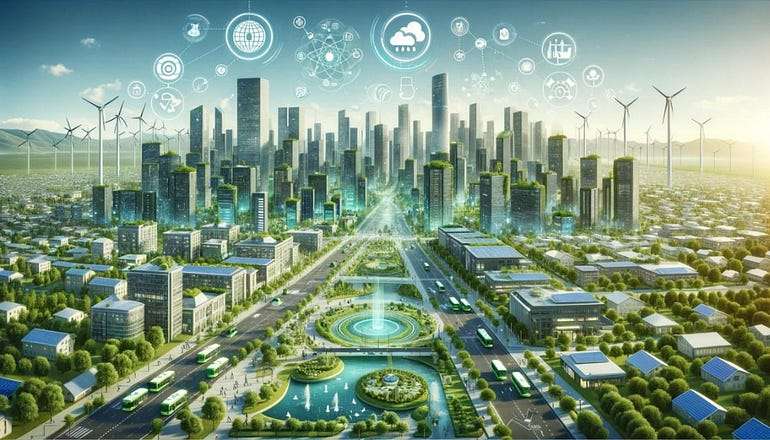

What Are Smart Cities?
A “smart city” is a concept that applies digital technology to urban infrastructure to enhance efficiency and quality of life. Smart city projects aim to use data-driven solutions in areas like energy, transportation, waste management, and public safety. By connecting city systems through digital technology, smart cities can optimize resource usage, reduce waste, and improve services, ultimately benefiting both residents and local governments. However, challenges remain in terms of data security, transparency, and interconnectivity.
The Role of Blockchain in Smart Cities
Blockchain technology is a decentralized, tamper-proof system for recording information, and its transparent framework makes it ideal for applications requiring high levels of trust and security. In the context of smart cities, blockchain can be used to track and verify data across various urban sectors — such as energy distribution, public transit, and digital identities — making city operations more secure, efficient, and trustworthy.
Enhancing Urban Management with Blockchain
Blockchain technology has numerous applications in urban management. From public transportation to waste management, blockchain enables cities to enhance transparency, streamline operations, and manage resources effectively.
- Efficient Public Transportation
Blockchain can improve public transportation by securely tracking transit data and ensuring efficient scheduling and usage. For instance, data from city buses, trains, and ride-sharing services can be recorded on the blockchain, giving transit authorities an accurate, real-time view of transportation flow. By using blockchain, cities can optimize public transportation routes and reduce wait times, creating a more reliable transit system for residents. - Sustainable Energy Management
Energy distribution is a core aspect of smart cities. Blockchain can support decentralized energy grids, where local sources like solar or wind are directly managed within neighbourhoods, and energy data is stored securely. Smart contracts on blockchain can automate payments and agreements between energy producers and consumers, promoting transparency and efficiency. Platforms like Energy Web Foundation explore these applications to support sustainable, decentralized energy systems. - Secure Digital Identities for Citizens
Digital identities are essential for securely accessing public services in a smart city. Blockchain offers a secure framework for creating digital identities, allowing citizens to access services like voting, healthcare, and tax payments without compromising their privacy. For instance, blockchain-based IDs enable secure access to government portals and streamline services, reducing the risk of identity theft and fraud.
For a more detailed overview, read Google’s article on Digital Identities in Smart Cities.
Blockchain Applications in Smart City Infrastructure
Several key areas in smart city infrastructure can benefit from blockchain’s transparency, security, and efficiency. Here are a few major applications:
- Transparent Governance and Public Records
City governments generate and manage vast amounts of data, from property records to public spending. Blockchain ensures data accuracy and transparency, reducing the potential for fraud and corruption. By recording public records and transactions on the blockchain, cities can make processes like permit issuance and land registry transparent and accessible to all stakeholders. - Supply Chain and Waste Management
Blockchain helps track and manage supply chains for city resources, ensuring efficient distribution and reducing waste. For instance, by recording supply data on blockchain, cities can track the origin and delivery of resources like food and water, ensuring quality control and accountability. Blockchain can also optimize waste management by tracking waste collection, processing, and disposal across different city departments. - Real Estate and Land Registration
Blockchain can streamline real estate transactions and land registration, areas often bogged down by paperwork and lengthy processes. By recording property ownership on the blockchain, cities reduce the need for intermediaries, expedite transactions, and make land ownership records accessible and secure.
Key Blockchain Platforms for Smart Cities
Several blockchain platforms support smart city initiatives by providing tools that enable secure, decentralized urban management:
- Ethereum: A widely used blockchain for smart contracts, Ethereum supports decentralized applications (dApps) that cities can use for energy management, public records, and more. Learn more at Ethereum’s Official Site.
- IOTA: IOTA is designed for the Internet of Things (IoT), making it ideal for smart city applications where devices, sensors, and data need to be connected. For details, check out IOTA.
- Energy Web Chain: Focused on energy solutions, Energy Web Chain provides a blockchain infrastructure specifically for managing decentralized energy systems in cities.
The Future of Blockchain in Smart Cities
As cities worldwide adopt smart technologies, blockchain is poised to play a vital role in ensuring these systems are secure, transparent, and efficient. By enabling decentralized, tamper-proof urban management, blockchain allows cities to tackle issues of data privacy, fraud, and inefficiency in public services. Moreover, blockchain’s scalability and flexibility make it adaptable to different city requirements, from transportation to energy, supporting a sustainable urban future.
For more insights on blockchain and smart city infrastructure, explore Google’s Blockchain Applications in Smart Cities.
Frequently Asked Questions
What is a smart city?
A smart city applies digital technology to urban infrastructure to improve efficiency and quality of life. It uses data-driven solutions in areas like energy, transportation, waste management, and public safety to optimize resource usage and reduce waste, though challenges around data security, transparency, and interconnectivity remain.
How does blockchain help smart cities?
Blockchain is a decentralized, tamper-proof system for recording information, making it well suited for applications that require trust and security. In smart cities, it can track and verify data across sectors such as energy distribution, public transit, and digital identities, making city operations more secure, efficient, and trustworthy.
How can blockchain improve public transportation?
Blockchain can securely record transit data from buses, trains, and ride-sharing services, giving authorities a real-time view of transportation flow. This helps cities optimize routes and reduce wait times, creating a more reliable transit system for residents.
How does blockchain support sustainable energy management?
Blockchain can support decentralized energy grids where local sources like solar or wind are managed within neighbourhoods, with energy data stored securely. Smart contracts can automate payments and agreements between energy producers and consumers, and platforms like Energy Web Foundation explore these applications for sustainable, decentralized energy systems.
What role does blockchain play in digital identities and governance?
Blockchain provides a secure framework for citizen digital identities, enabling access to services like voting, healthcare, and tax payments while reducing identity theft and fraud. It also brings transparency to public records and governance, such as permit issuance and land registry, by making city data accurate and accessible to stakeholders.
Which blockchain platforms support smart city initiatives?
Ethereum supports decentralized applications for energy management and public records through smart contracts. IOTA is designed for the Internet of Things, connecting devices and sensors in smart city applications, while Energy Web Chain provides infrastructure specifically for managing decentralized energy systems.
