
Is Your Digital Gold Really Backed by Physical Gold? The Role of Blockchain in Building Consumer Trust
Gold has always carried weight, literally and otherwise. But once you buy it through an app instead of a jeweller’s counter, a fair question comes up: is there actual metal sitting somewhere, or just a number on your screen? That’s the heart of digital gold physical backing, and it’s a question more buyers are asking before they tap “buy.” As digital gold platforms multiply across India, the UAE, the UK, and beyond, trust depends on proof, not promises. Blockchain has a real role here, but it’s not the whole story — and understanding where it fits matters for both businesses and buyers.
What Does Physically Backed Digital Gold Actually Mean?
Physically backed digital gold means every unit of gold sold digitally corresponds to a specific quantity of physical gold held somewhere in a vault. When you buy 1 gram digitally, the platform is supposed to hold 1 gram in reserve, allocated to you or pooled with other customers against a matching total.
This is different from a gold-themed investment product that merely tracks the price of gold without any metal behind it. Physically backed digital gold ownership implies a legal and operational claim on real bullion, not just exposure to its price movement.
For businesses, this means defining backing arrangements clearly from day one. Who owns the gold? Where is it stored? What happens on redemption? Without clear answers, “digital gold physical backing” becomes a marketing phrase rather than a verifiable fact.
Why Customers Question the Physical Gold Behind Digital Gold
Here’s why skepticism makes sense: customers can’t walk into a vault and check their grams the way they’d inspect a coin at a jeweller. That distance naturally breeds doubt.
Common concerns include whether the gold actually exists in the stated quantity, whether it’s of the purity advertised, and who legally owns it before redemption. Storage location, custodian reliability, and insurance coverage also worry buyers, especially after high-profile failures in adjacent crypto and fintech sectors eroded general confidence.
Moreover, vague reserve reporting makes things worse. If a platform only says “we hold gold reserves” without specifics, customers reasonably wonder what’s being hidden. Transparency gaps, even unintentional ones, chip away at digital gold consumer trust faster than almost any other factor.
Customers don’t distrust digital gold because they dislike technology — they distrust it because most platforms ask for faith instead of offering evidence. The moment you show your reconciliation process instead of just claiming one, skepticism turns into loyalty.
How Digital Gold Businesses Establish Physical Gold Backing
Building credible physical gold ownership starts with sourcing. Gold must come from recognized refiners or bullion suppliers with documented purity certification, typically 24-karat or 999.9 fine gold, verified through assay certificates.
Purchase documentation matters just as much. Every acquisition should generate invoices, weight records, and purity reports that tie back to specific reserve pools. Loose paperwork here undermines everything downstream.
Storage and custody arrangements come next. Many platforms partner with secure vaulting facilities, sometimes operated by third-party custodians rather than the platform itself, reducing conflicts of interest. Insurance coverage on stored gold, where arranged, adds another layer of protection against theft or loss.
Finally, redemption processes need to be operationally real — not just a policy on a webpage. Can a customer actually convert digital holdings into physical delivery or cash settlement without friction? If that pathway breaks down under real demand, backing claims fall apart quickly.

What Is Proof of Gold Reserves and How Does It Work?
Proof of reserves refers to evidence showing that a platform’s reported gold holdings match or exceed total customer digital gold liabilities. Think of it as a reconciliation exercise between what customers are owed and what’s actually sitting in the vault.
In practice, this usually involves periodic reserve reporting, where a platform discloses total grams held, and reconciliation against total digital grams sold. Independent verification, often through a third-party auditor or assurance firm, adds credibility that self-reported numbers can’t provide alone.
However, scope matters enormously here. An assurance report that only confirms “gold existed in this vault on this date” is narrower than one confirming ongoing custody controls and reconciliation processes. Readers and businesses alike should understand exactly what an audit covered, and just as importantly, what it didn’t.
Proof of reserves isn’t a one-time stamp of approval — it’s an ongoing practice. Reserve reconciliation needs to happen regularly, not just when a business decides to publish a report.
How Blockchain Connects Physical Gold with Digital Ownership Records
This is where blockchain gold verification earns its place in the conversation. Blockchain can record every digital gold transaction — purchase, transfer, partial redemption — as an immutable entry tied to a specific customer wallet or account.
Each on-chain record can reference supporting information: a batch number linked to a specific gold purchase, a vault allocation ID, or a hash of an audit document. This creates a traceable link between physical gold reserve verification data and digital ownership records, without requiring customers to dig through spreadsheets.
For businesses building a digital gold and silver app development project, this means designing smart contracts and ledger structures that mirror real-world custody events. A transfer on-chain should correspond to an actual change in who has claim over specific gold, not just a database update.
Blockchain traceability also supports gold ownership records that survive platform changes. Even if a business migrates systems, the transaction history remains intact and independently verifiable by anyone with ledger access.
Can Blockchain Verify the Existence of Physical Gold?
Short answer: no. Blockchain cannot walk into a vault and confirm gold bars are actually there. It records whatever data is entered into it — nothing more.
This distinction between on-chain records and off-chain physical assets is critical. A blockchain entry saying “100 grams allocated to Reserve Pool A” is only as trustworthy as the process that generated that entry. If nobody verifies the underlying gold, the blockchain faithfully records a false claim just as easily as a true one.
Consequently, independent physical verification remains non-negotiable. Physical inspections by qualified auditors, custody confirmations from vaulting partners, and reliable external reporting are what actually confirm quantity, purity, and location. Blockchain supports and preserves that information — it doesn’t replace it.
We’ve seen platforms market blockchain integration as if it alone guarantees gold backing. That’s a stretch. Blockchain strengthens transparency around what’s recorded; it doesn’t verify what’s real.
How Blockchain Improves Transparency and Traceability in Digital Gold
That said, blockchain’s practical value shouldn’t be underestimated either. Consider a customer disputing a transaction from six months ago. With a traditional database, resolving this depends on internal logs that could theoretically be altered. With blockchain, the transaction history is immutable and timestamped, making disputes far easier to resolve.
Audit trails become stronger too. An independent auditor reviewing a platform’s reserve reconciliation can cross-check blockchain transaction records against reported reserve totals, spotting inconsistencies faster than manual review would allow.
Additionally, transparent gold transactions recorded on a shared ledger let platforms publish verifiable summaries — total grams issued, total redeemed, net outstanding — without exposing individual customer data. This supports digital gold consumer trust through demonstrable openness rather than written assurances alone.
Practically speaking, a mid-sized bullion dealer expanding into digital gold might use blockchain to log every gram sold against a specific purchase batch from their refiner. Customers checking their holdings can see the chain of custody, even if they can’t see the vault itself.
What Happens When Physical Gold Reserves and Digital Records Do Not Match?
Mismatches between physical gold reserves and digital customer balances represent serious risk. If digital grams sold exceed physical grams held, a platform is effectively over-issuing claims it cannot honor on mass redemption.
This isn’t theoretical. Reserve mismatches, whether from operational error, poor reconciliation discipline, or deliberate mismanagement, can trigger liquidity crises when customer redemption demand spikes simultaneously.
Therefore, documented reconciliation processes need to run on a fixed schedule, not just annually. Many serious operators reconcile holdings against liabilities weekly or even daily, flagging discrepancies before they compound. Clear accountability — a named compliance officer or operations team responsible for sign-off — matters more than people assume.
Furthermore, businesses should have a defined escalation path for discrepancies: pause new issuance, investigate the gap, and disclose findings transparently rather than quietly patching the books.
How Digital Gold Platforms Can Communicate Gold Backing to Customers
Honestly, most platforms underinvest in communication. Publishing a vague “your gold is 100% backed” banner does less for digital gold consumer trust than a clear breakdown of custody and audit practices.
Effective disclosure includes naming the storage facility or custodian type, summarizing the latest independent audit or assurance report with its scope, and showing aggregate reserve figures alongside total customer holdings. Redemption policies should be written in plain language, not buried in terms and conditions nobody reads.
Additionally, platforms can expose blockchain-based transaction histories directly to customers through dashboards, letting them see their own ownership trail without needing technical expertise. Pairing that with periodic third-party reports — even a simple summary — builds credibility that marketing language alone never will.
What’s often missing is context. A report saying “gold reserves verified” means little without explaining who verified it, when, and under what standard. Specificity beats reassurance every time.
Technology Requirements for Building a Transparent Digital Gold Platform
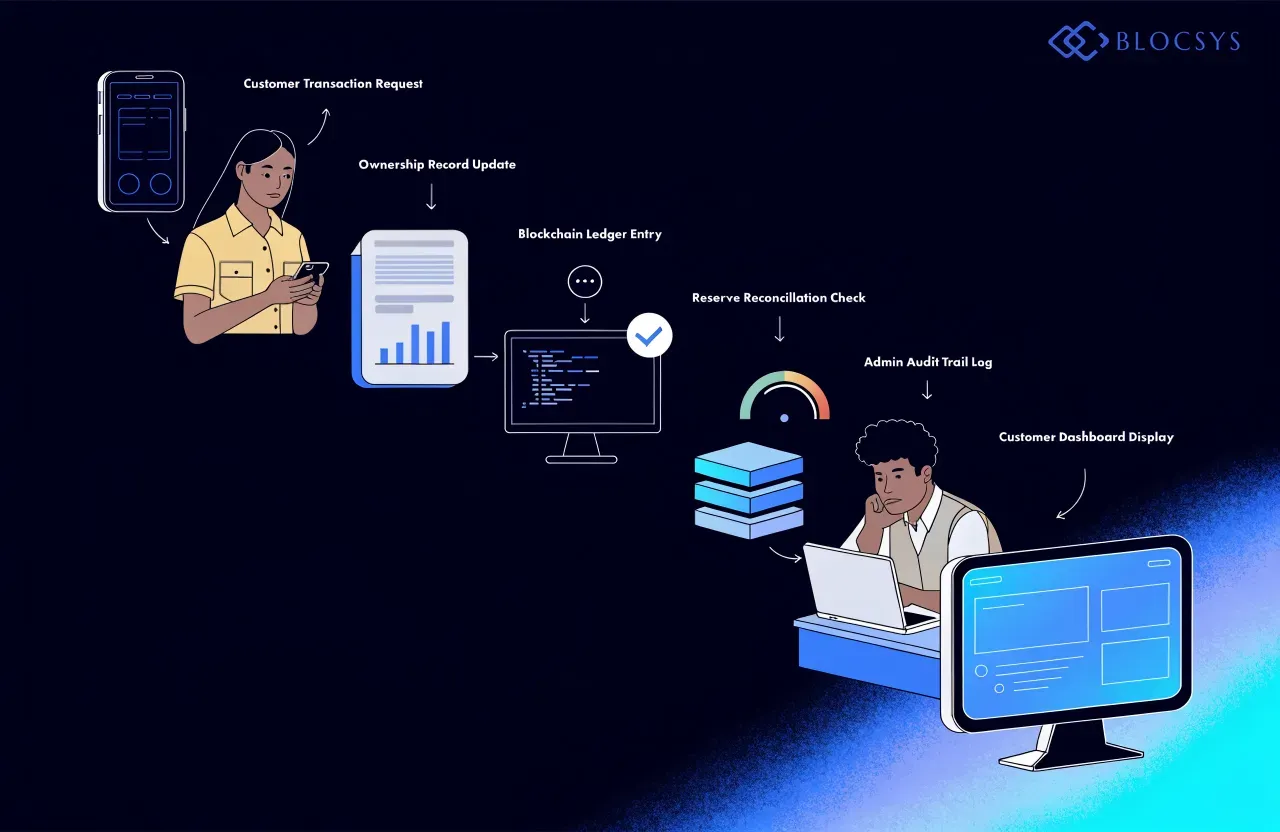
From a platform architecture standpoint, several components need to work together. Digital ownership records must tie uniquely to customer accounts, with transaction management systems capturing every buy, sell, transfer, and redemption event accurately.
Blockchain integration should sit underneath this, recording transaction hashes and reserve allocation references in a tamper-resistant format. Administrative controls need segregation of duties, so no single person can alter reserve figures or ownership records unchecked.
Reporting and audit trail features should generate exportable reconciliation data on demand, supporting both internal reviews and external audits. User dashboards displaying holdings, transaction history, and redemption status improve day-to-day trust, while secure access controls, multi-factor authentication, encrypted storage, protect the system from manipulation.
For companies evaluating digital gold software development, the technical stack matters less than whether these pieces connect coherently. A blockchain-based digital gold platform is only as strong as its weakest integration point between physical records and digital reporting.
How Blocsys Helps Businesses Build Blockchain-Based Digital Gold Platforms
Blocsys Technologies Pvt. Ltd. works with bullion dealers, jewellers, and fintech founders planning blockchain-based digital gold platforms, focusing on the technology layer that supports transparent operations rather than physical custody itself.
Through its digital gold and silver app development services, Blocsys helps businesses design platform architecture that connects digital ownership records with blockchain transaction logging, administrative reconciliation tools, and customer-facing reporting dashboards. The goal is straightforward: make it easier for a business to demonstrate digital gold physical backing through its own operational transparency, not just claim it.
Blocsys also brings experience from adjacent work, including blockchain document verification system development, which shares conceptual ground with gold verification — preserving tamper-resistant records that external parties can review.
If you’re a gold merchant or fintech founder exploring blockchain digital gold platform development, it’s worth having a technical conversation early about how reserve reconciliation, custody documentation, and blockchain records will connect in your specific business model.
Conclusion
Digital gold physical backing isn’t something a blockchain entry alone can prove. It requires real sourcing discipline, credible storage and custody arrangements, honest reserve reconciliation, and independent verification working together. Blockchain adds real value here — traceable transaction histories, tamper-resistant ownership records, and transparent reporting infrastructure — but it complements physical verification rather than replacing it.
For businesses, that means investing in both sides: the operational rigor behind physical gold reserves and the technology that makes those reserves verifiable to customers. For buyers, it means asking specific questions before trusting any platform with their money.
If you’re building or scaling a gold-backed digital asset business, exploring digital gold and silver app development with a partner who understands both the blockchain layer and the trust requirements behind it is a sensible next step.
Frequently Asked Questions
Here are direct answers to the questions we hear most often about digital gold physical backing.
What does physically backed digital gold mean?
It means each digital gold unit sold corresponds to actual physical gold held in reserve, giving the buyer a real claim on bullion rather than just price exposure.
How can customers verify whether digital gold is backed by physical gold?
Check whether the platform publishes independent audit or assurance reports, discloses custodian details, and shows reserve reconciliation data alongside customer holdings.
What is proof of gold reserves?
It’s evidence, often from an independent party, confirming that a platform’s physical gold holdings match or exceed total customer digital gold liabilities.
Can blockchain prove that physical gold exists?
No. Blockchain records whatever data is entered; it can’t independently confirm a vault actually contains the stated gold. Physical inspection and independent audits handle that.
How does blockchain track digital gold ownership?
It logs every purchase, transfer, and redemption as an immutable, timestamped entry tied to a customer account, creating a traceable ownership history.
Why are independent audits important for digital gold platforms?
They provide external confirmation of reserve figures and custody practices, reducing reliance on a platform’s own self-reported claims.
How is physical gold stored and secured for digital gold customers?
Typically through secure vaulting facilities, sometimes managed by third-party custodians, with documented purity certification and, where arranged, insurance coverage.
What happens if physical gold reserves do not match digital gold holdings?
It signals a reconciliation failure that needs immediate investigation; unresolved, it risks the platform being unable to honor redemption demand.
How can digital gold businesses provide transparent gold reserve information?
By publishing specific reserve figures, naming custodians and auditors, detailing audit scope, and giving customers visibility into their own transaction history.
How can blockchain-based digital gold platforms improve customer trust?
By making transaction records traceable and tamper-resistant, supporting audit trails, and pairing that transparency with credible off-chain physical verification.
Ready to move beyond theory and build an intelligent platform that delivers real-world value? Blocsys Technologies specialises in engineering enterprise-grade AI and blockchain solutions for the fintech, Web3, and digital asset sectors. Connect with our experts today to discuss your vision and chart a clear path from concept to a secure, scalable reality.