
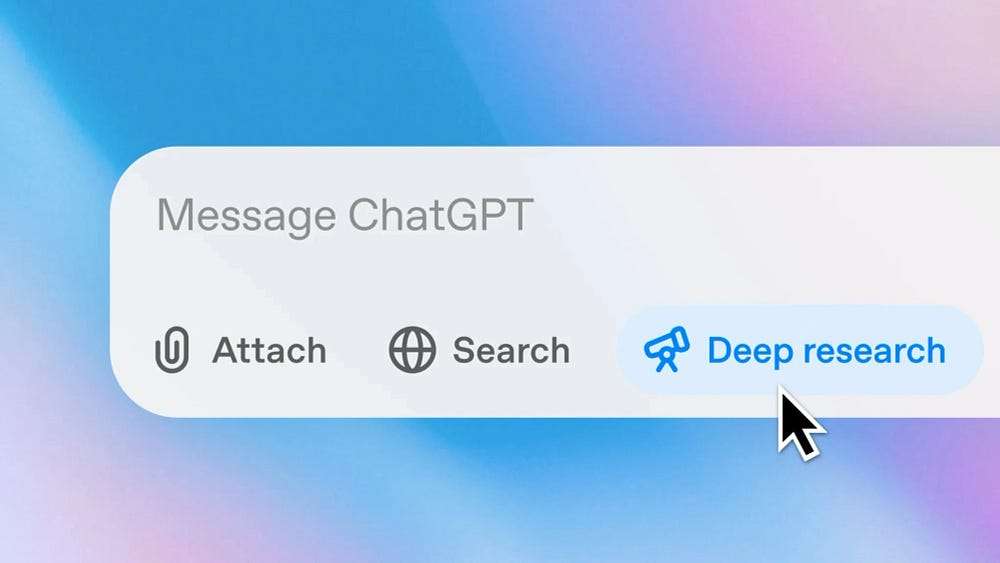

The AI landscape is evolving rapidly, and OpenAI is once again at the forefront of innovation. The latest breakthrough? A cutting-edge “Deep Research” agent for ChatGPT that revolutionizes how users conduct in-depth investigations, gather insights, and generate high-quality reports. Whether you’re a researcher, developer, or business professional, this advanced AI tool is set to transform the way you explore knowledge and extract valuable data. Let’s dive into what makes this new feature a game-changer.

What is OpenAI’s “Deep Research” Agent?

The “Deep Research” agent is an intelligent enhancement designed to provide deeper, more structured, and contextually aware responses. Unlike traditional AI chatbots that generate responses based on surface-level data, this new agent employs advanced research methodologies, cross-referencing multiple sources, summarizing key insights, and presenting structured reports with citations.

1. Early Stages: Task Automation and Rule-Based Systems

Advanced Knowledge Retrieval — Leverages vast datasets and sources for well-informed responses.

Fact-Checking Capabilities — Provides citations and verifies information for credibility.

Contextual Depth — Understands and synthesizes complex topics with clarity and coherence.

Automated Report Generation — Creates structured research documents for professionals and academics.

Enhanced Customization — Allows users to tailor research parameters based on industry or niche.

How Does It Work?

  • Improving Operational Efficiency 

    The “Deep Research” agent integrates with ChatGPT’s advanced algorithms, allowing users to request in-depth analyses on various subjects. Here’s how it enhances research workflows:

    1. Query Submission — Users input a research topic or question.
    2. Source Compilation — The AI scours multiple reliable sources for information.
    3. Data Analysis — Key insights are extracted, summarized, and verified for accuracy.
    4. Report Generation — A detailed, structured document is created, including references and key takeaways.
    5. Iterative Refinement — Users can refine their queries to get even more precise results.
Applications Across Industries

The versatility of the “Deep Research” agent makes it applicable across multiple domains:

  • Academia & Research — Scholars can generate literature reviews and deep-dive analyses effortlessly.
  • Business & Market Analysis — Companies can conduct competitor research, trend analysis, and investment insights.
  • Healthcare & Medicine — AI-assisted research can provide valuable insights into medical advancements and treatments.
  • Legal & Compliance — Lawyers can streamline case research with accurate legal references.
  • Technology & Development — Engineers and developers can analyze technical whitepapers and emerging trends.
Conclusion

The transformation of AI agents has been remarkable. From basic task automation to highly personalized, data-driven solutions, AI agents are continuously evolving to address the growing needs of businesses and their clients. Whether seeking to enhance customer service, automate workflows, or derive actionable insights from data, AI agents provide a powerful resource to help your business excel in today’s fast-paced digital environment. 

If you have not yet considered it, now is the time to investigate how AI agents can revolutionize your business operations and enhance the client experience. The future is now, and AI agents are at the forefront.

Our Services:

  • AI Solutions
  • RWA Tokenization
  • Telegram Mini Apps
  • DeFi/DApp Solutions
  • NFT Marketplaces
  • Launchpad

Why Choose Us? Industry Expertise | Global Reach | Rapid Time-to-Market

Let’s build the future together. www.blocsys.com

Frequently Asked Questions

What is OpenAI's "Deep Research" agent?

It's an intelligent enhancement to ChatGPT designed to deliver deeper, more structured, and contextually aware responses. Unlike traditional chatbots that rely on surface-level data, it uses advanced research methodologies, cross-references multiple sources, summarizes key insights, and presents structured reports with citations.

What key features does the Deep Research agent offer?

It provides advanced knowledge retrieval from vast datasets, fact-checking with citations for credibility, and contextual depth for synthesizing complex topics clearly. It also includes automated report generation and enhanced customization so users can tailor research parameters to their industry or niche.

How does the Deep Research agent work?

The process starts with query submission, where users input a research topic or question. The AI then compiles sources, analyzes and verifies data, generates a structured report with references and key takeaways, and allows iterative refinement so users can adjust queries for more precise results.

Which industries can benefit from this tool?

The Deep Research agent is versatile across multiple domains, including academia for literature reviews, business for market and competitor analysis, healthcare for medical research insights, legal for case research, and technology for analyzing technical whitepapers and trends.

How does it verify the accuracy of its information?

The agent includes fact-checking capabilities that provide citations and verify information for credibility. During the data analysis stage, key insights are extracted, summarized, and checked for accuracy before being included in the final report.

Who can benefit most from using this AI research tool?

Researchers, developers, and business professionals can all use the Deep Research agent to transform how they explore knowledge and extract valuable data. It's built to support in-depth investigations, insight gathering, and high-quality report generation across these varied user needs.