

What Are Zero-Knowledge Proofs?
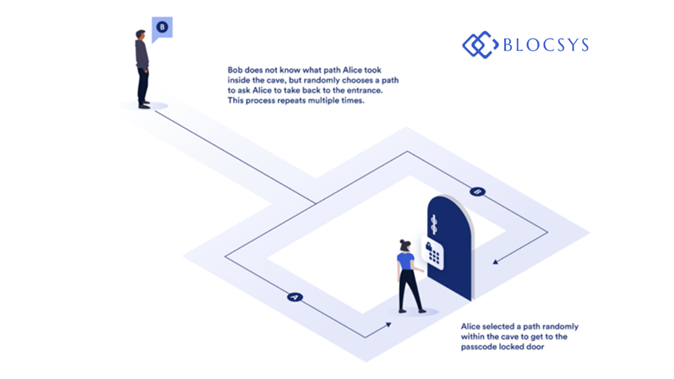
Zero-knowledge proofs allow one party (the prover) to prove to another party (the verifier) that a specific statement is true, without revealing any information beyond the statement’s validity. Think of it as verifying you know the answer to a puzzle without giving away the answer. This breakthrough ensures privacy while maintaining trust and transparency — key pillars of blockchain technology.
The Role of ZKPs in Blockchain
Blockchain’s foundational value lies in its decentralized nature and immutable public ledger. However, the transparency that fuels blockchain’s trust can also become a double-edged sword. Personal details, transaction histories, and even sensitive data are all visible on a blockchain network. While this open accessibility can increase trust, it poses significant privacy risks.
Zero-knowledge proofs address this problem by enabling participants to validate transactions and information without exposing sensitive data. ZKPs can ensure that a transaction is legitimate without revealing the parties involved or the transaction amount.
Enhancing Privacy with ZKPs
For privacy-conscious industries such as finance and healthcare, adopting ZKPs could mean safeguarding sensitive information without compromising regulatory compliance. ZKPs allow private information to be proven true — whether it’s an identity verification, a financial transaction, or a legal document — without sharing confidential data.
For example, in the case of a loan application, the borrower can prove their creditworthiness using ZKPs without revealing sensitive financial information. This guarantees compliance with privacy standards like GDPR while streamlining processes that usually rely on lengthy manual verification.

Strengthening Security with ZKPs
Beyond privacy, ZKPs can also significantly enhance blockchain security. By reducing the amount of exposed data, ZKPs minimize the surface area available for attacks. If no private information is revealed during the verification process, attackers have less to exploit.
Moreover, ZKPs can improve the security of blockchain-based identity systems. In decentralized identity solutions, users can prove ownership of certain credentials (such as age or citizenship) without disclosing the details themselves. This could revolutionize online identification, reducing the risk of identity theft and fraud.
Real-World Applications of ZKPs
Several blockchain projects have already started implementing Zero-Knowledge Proofs. Notable among them is Zcash, a cryptocurrency focused on privacy. Zcash utilizes zk-SNARKs (Zero-Knowledge Succinct Non-Interactive Arguments of Knowledge), a specific type of ZKP, to allow private and anonymous transactions. Other blockchain networks, including Ethereum, are also exploring ZKP implementations to enhance privacy and scalability.
Beyond cryptocurrencies, ZKPs can be applied to various sectors. For instance, in supply chain management, ZKPs can verify product authenticity without revealing trade secrets. In healthcare, ZKPs could be used to verify patient records while ensuring the privacy of sensitive health data.
Challenges and Future Prospects
While the potential of Zero-Knowledge Proofs is enormous, there are hurdles to overcome. ZKPs require complex computations, which can slow down transactions and increase costs. However, ongoing research is focused on making ZKPs more efficient and scalable. The development of more accessible ZKP algorithms, like zk-STARKs (Zero-Knowledge Scalable Transparent Arguments of Knowledge), promises to address these challenges and make ZKPs more viable for widespread adoption.
Looking ahead, Zero-Knowledge Proofs are positioned to be a game-changer in the blockchain space. As privacy concerns continue to mount and the demand for secure decentralized systems grows, ZKPs could become a standard feature in blockchain architectures, offering users the ability to interact securely and privately in an increasingly interconnected world.

Frequently Asked Questions
What is a Zero-Knowledge Proof?
A Zero-Knowledge Proof (ZKP) is a cryptographic method that allows one party, the prover, to convince another party, the verifier, that a statement is true without revealing any information beyond the statement's validity. It works like proving you know the answer to a puzzle without giving the answer away. This enables privacy while preserving trust and transparency, which are core principles of blockchain technology.
How do ZKPs improve privacy on the blockchain?
Blockchains are transparent by design, exposing personal details and transaction histories on a public ledger, which creates privacy risks. ZKPs let participants validate transactions and information without exposing sensitive data, such as confirming a transaction is legitimate without revealing the parties involved or the amount. This makes ZKPs especially valuable for privacy-conscious sectors like finance and healthcare, helping maintain regulatory compliance such as GDPR.
How do ZKPs strengthen blockchain security?
By minimizing the amount of data exposed during verification, ZKPs reduce the surface area available for attackers to exploit. They also enhance decentralized identity systems by allowing users to prove ownership of credentials, such as age or citizenship, without disclosing the underlying details. This can lower the risk of identity theft and fraud in online identification.
Which real-world projects use Zero-Knowledge Proofs?
Zcash is a notable example, using zk-SNARKs (Zero-Knowledge Succinct Non-Interactive Arguments of Knowledge) to enable private and anonymous transactions. Ethereum is also exploring ZKP implementations to boost privacy and scalability. Beyond cryptocurrencies, ZKPs can support supply chain authenticity verification and patient record checks in healthcare.
What challenges do ZKPs still face?
ZKPs require complex computations, which can slow down transactions and raise costs. Ongoing research aims to make ZKPs more efficient and scalable, with newer algorithms like zk-STARKs (Zero-Knowledge Scalable Transparent Arguments of Knowledge) designed to address these limitations and support wider adoption.
What is the future outlook for Zero-Knowledge Proofs in blockchain?
As privacy concerns grow and demand for secure decentralized systems increases, ZKPs are positioned to become a standard feature in blockchain architectures. They hold the potential to transform industries from finance to healthcare by enabling trust without compromising confidentiality, paving the way for a more secure and private digital landscape.
