
FCA Compliance for Equity Tokenization Platforms in the UK: A Complete Guide
If you’re building or scaling an equity tokenization platform in the UK, FCA Compliance isn’t optional — it’s the foundation everything else gets built on. Founders, CFOs, and compliance officers keep asking the same question: how do we launch tokenized shares without falling foul of the Financial Conduct Authority? This guide answers that directly. We’ll walk through what regulators expect, how security tokens fit into existing law, and what a genuinely compliant architecture looks like in practice. Along the way, we’ll draw on real enterprise use cases and show you where Blocsys fits into the picture as a technology partner. If you’d rather skip ahead to how we build these systems, our Equity Tokenization Platform Development team can walk you through the technical roadmap directly.
What is Equity Tokenization
Equity tokenization converts ownership in a company into digital tokens recorded on a blockchain. Each token represents a fractional or whole share, carrying the same rights as traditional equity — dividends, voting, and capital appreciation. Unlike a simple digital certificate, a tokenized share lives on distributed ledger infrastructure that settles trades, tracks ownership, and enforces transfer restrictions automatically.
For a startup, this means raising capital from a broader investor base without the friction of paper share registers. For an enterprise, it means faster settlement, programmable compliance, and a cap table that updates in real time. However, none of that value matters if the platform ignores UK securities law. That’s where FCA Compliance enters the conversation early, not as an afterthought.
Tokenized Equity vs Traditional Shares
Traditional shares depend on registrars, paper trails, and manual reconciliation. A tokenized equity platform replaces that with smart contracts that handle issuance, transfer, and dividend distribution. Settlement that used to take days now happens in minutes. Still, the underlying legal instrument remains a share — which is exactly why regulators treat it as one.
Understanding the FCA’s Role in Digital Assets
The Financial Conduct Authority regulates financial markets across the UK, and its remit extends fully into digital securities. Many founders assume blockchain-based assets sit outside traditional regulation. They don’t. If a token represents equity, debt, or a right to profit, the FCA treats it under existing securities frameworks, primarily the Financial Services and Markets Act 2000 (FSMA) and the Regulated Activities Order (RAO).
Consequently, any platform issuing, trading, or custodying tokenized shares needs to consider authorization requirements from day one. The FCA has also been active in shaping sandbox programs, Digital Securities Sandbox initiatives, and guidance papers specifically addressing distributed ledger technology in capital markets. Understanding this regulatory posture is the first real step toward FCA Compliance for Equity Tokenization.
Regulators aren’t trying to slow tokenization down — they’re trying to make sure the same investor protections that apply to a listed share apply to its digital twin. Platforms that treat compliance as a bolt-on always end up rebuilding their architecture later, at far greater cost.
Are Tokenized Shares Considered Security Tokens
Yes, in almost every practical scenario. A tokenized share meets the definition of a “specified investment” under the RAO because it confers ownership rights and profit participation. Therefore, it falls squarely into the security token category, not the unregulated utility token category.
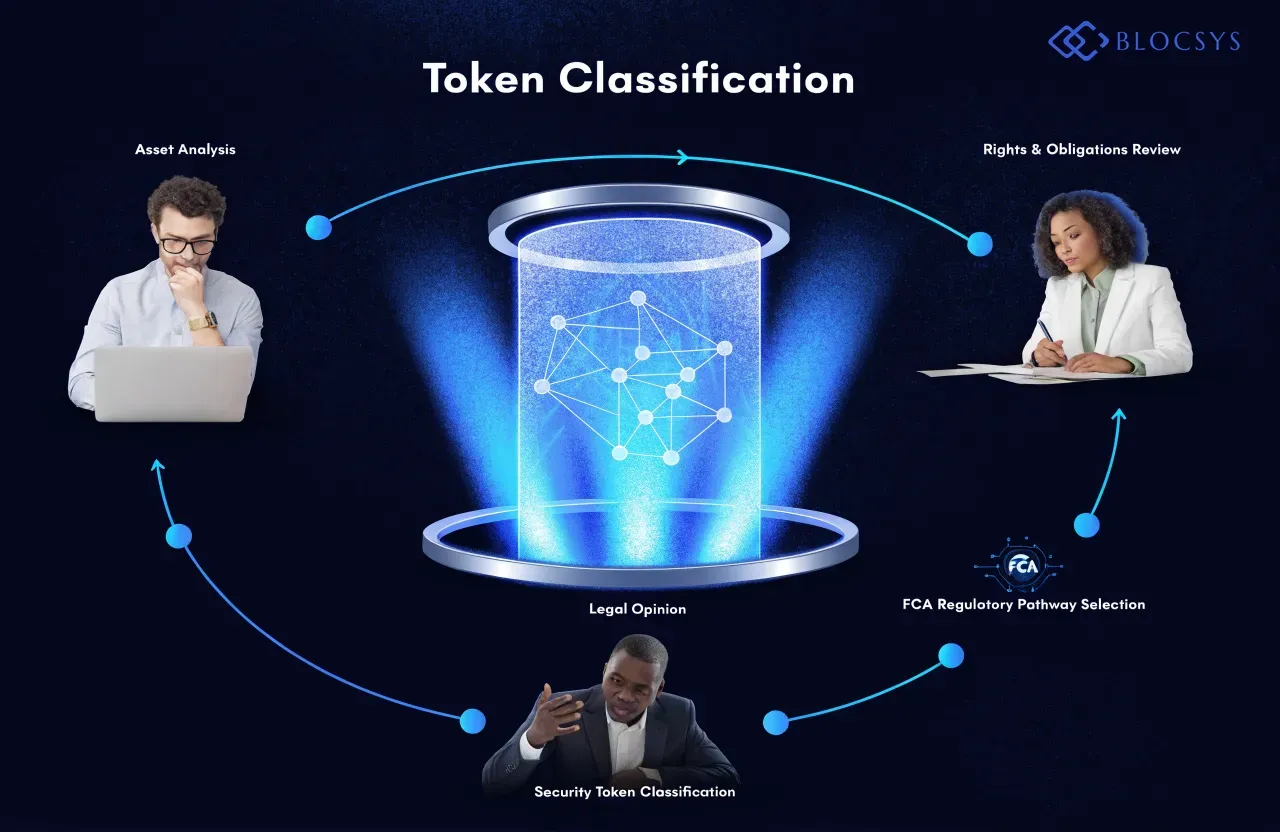
This distinction matters enormously. Utility tokens face lighter obligations. Security tokens, on the other hand, trigger prospectus rules, market abuse regulations, and custody requirements. Getting this classification wrong early on creates legal exposure that’s expensive to unwind later. Any serious equity tokenization platform needs a legal opinion confirming token classification before writing a single line of smart contract code.
FCA Compliance Requirements for Equity Tokenization Platforms
Here’s where things get concrete. Building an FCA compliant equity tokenization platform means addressing several regulatory layers simultaneously, not sequentially. Below are the core pillars every platform operator needs to plan for.
Authorization and Permissions
Depending on your activities — arranging deals, operating a multilateral trading facility, or safeguarding custody assets — you may need specific FCA permissions. Some platforms qualify for exemptions under limited-activity models; most don’t. Consequently, mapping your business model against the RAO early saves months of rework.
Financial Promotions Rules
Marketing tokenized shares to UK investors triggers the financial promotions regime. Promotions must be approved by an authorized person, and high-risk investment warnings are mandatory for many token offerings. Skipping this step is one of the fastest ways to attract regulatory attention.
Market Abuse and Conduct Standards
Security tokens fall under the Market Abuse Regulation framework. That means your platform needs surveillance capability to detect insider dealing, market manipulation, and unlawful disclosure — even on a blockchain-based order book. This is a core piece of ongoing FCA Compliance, not a one-time checkbox during launch.
AML/KYC and Investor Onboarding
No equity tokenization platform survives regulatory scrutiny without rigorous AML and KYC processes. The FCA expects platforms to verify investor identity, screen against sanctions lists, assess source of funds, and monitor transactions continuously — not just at onboarding.
For enterprise platforms, this usually means integrating identity verification providers, ongoing transaction monitoring tools, and risk-scoring engines directly into the onboarding workflow. Startups often underestimate how much engineering effort this requires. It’s not a plugin you add later; it’s infrastructure you design around from the start.
We’ve seen platforms delay launch by months because AML tooling was treated as a secondary feature instead of core architecture. Build it first, and everything downstream — trading, settlement, reporting — becomes far simpler.
Investor Categorization
UK rules distinguish between retail, professional, and eligible counterparty investors. Each category carries different disclosure obligations and marketing restrictions. Your platform needs logic that categorizes investors accurately and applies the correct rule set automatically, every single time.
Smart Contracts and Compliance Automation
Smart contracts give tokenized equity platforms a genuine advantage: compliance rules can be enforced programmatically rather than manually. Transfer restrictions, accredited investor checks, and lock-up periods can all live directly inside the contract logic.
For example, a smart contract can block a token transfer automatically if the receiving wallet hasn’t completed KYC. It can also enforce jurisdictional restrictions, preventing tokens from moving to wallets in sanctioned regions. This is what people mean by “compliance by design” — and it’s a genuine differentiator for enterprise blockchain development teams building serious digital securities infrastructure.
That said, smart contracts aren’t a silver bullet. Code needs regular audits, upgrade paths, and governance controls, otherwise a bug becomes a regulatory incident. Platforms like Asset Tokenization Platform solutions from Blocsys bake these controls in at the protocol level rather than retrofitting them later.
Platform Security and Governance
Security underpins everything the FCA cares about — client asset protection, operational resilience, and custody integrity. A tokenized equity platform needs multi-signature custody, hardware security modules, and clear incident response protocols.
Governance matters just as much as technical security. Who can pause the smart contract? Who approves upgrades? Who has admin keys? The FCA expects clear answers, documented and auditable. Enterprises exploring blockchain infrastructure for capital markets often partner with an experienced tokenization development team precisely because these governance decisions carry real regulatory weight.
Building a Strong FCA Compliance Architecture
Think of compliance architecture as layers: identity verification at the edge, transaction monitoring in the middle, and immutable audit trails at the core. Each layer feeds the next. Miss one, and the whole structure weakens. This layered approach is what separates a genuinely FCA compliant equity tokenization platform from one that merely claims to be.

Reporting and Record-Keeping Requirements
The FCA requires detailed record-keeping covering transactions, client communications, and ownership changes. For tokenized equity, blockchain actually helps here — every transfer is timestamped and immutable by design. Still, raw blockchain data isn’t a compliance report on its own; it needs structuring into formats regulators and auditors can actually use.
Platforms should maintain records for a minimum retention period, generate transaction reports on demand, and support regulatory audits without manual data extraction. Additionally, cap table management needs to reconcile perfectly with on-chain token balances at all times. Any mismatch between your ledger and your legal register is a red flag during an FCA review.
Common Compliance Challenges
Even well-funded teams stumble here. Below are the challenges we see most often when advising enterprises on FCA Compliance for Equity Tokenization Platforms.
- Misclassifying tokens as utility assets to avoid securities regulation, which backfires during audits.
- Treating AML/KYC as an add-on instead of core platform infrastructure.
- Deploying smart contracts without independent security audits.
- Ignoring cross-border investor rules when marketing tokenized shares internationally.
- Underestimating ongoing reporting obligations after the initial token launch.
None of these are unsolvable. However, they all require planning before development starts, not after regulators start asking questions.
Best Practices for Building an FCA-Compliant Platform
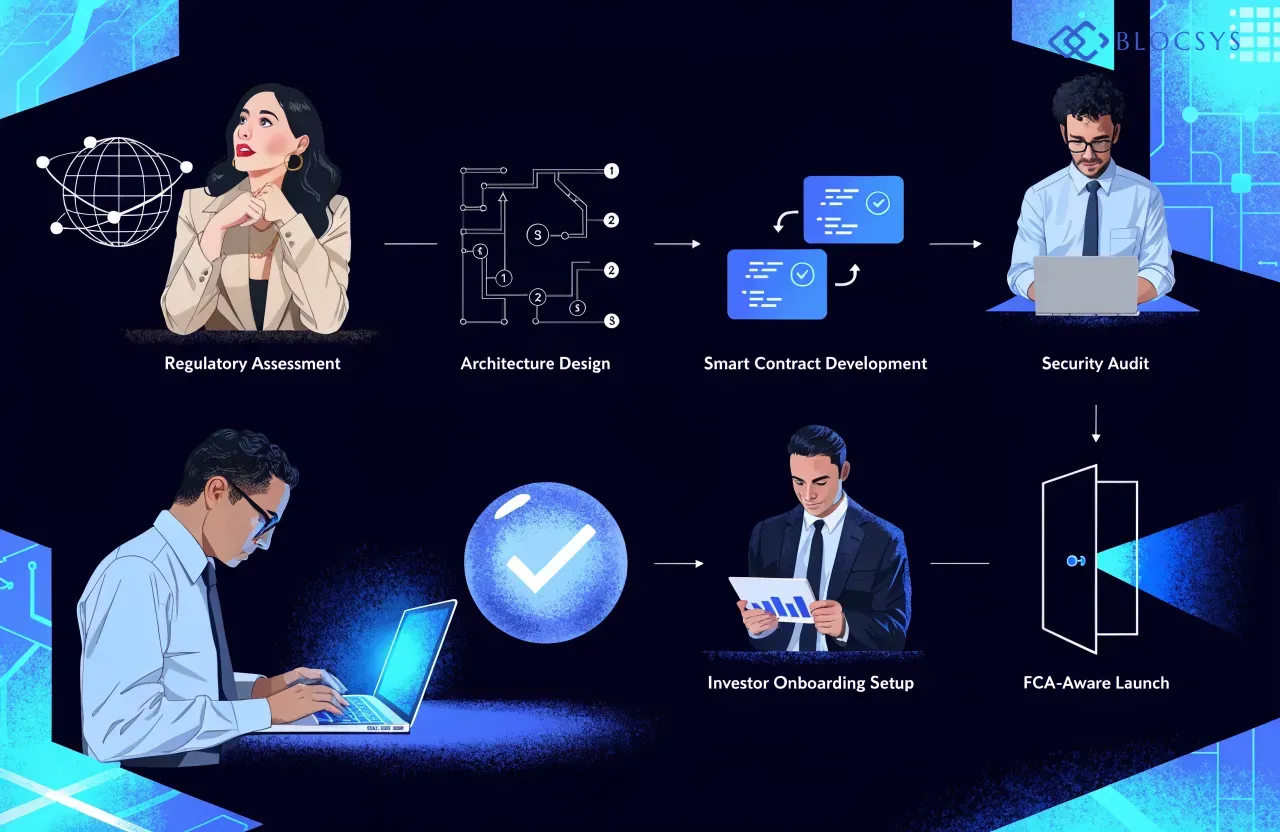
So, what does good practice actually look like? First, engage legal counsel early to confirm token classification. Second, design AML/KYC and transaction monitoring as core infrastructure, not bolt-ons. Third, choose a blockchain that supports permissioned transfers and programmable compliance logic.
Fourth, build governance frameworks with clear key management and upgrade procedures. Fifth, run independent smart contract audits before every major release. Finally, document everything — every compliance decision, every rule change, every access grant. Auditors and regulators reward platforms that can show their work.
Enterprises that follow this sequence tend to launch faster, not slower, because they avoid costly rebuilds. This is exactly the methodology we apply across enterprise blockchain development engagements at Blocsys, where regulatory alignment shapes the technical roadmap from day one.
Global Digital Asset Innovation and GIFT City
The UK isn’t operating in isolation. Jurisdictions like Singapore, Switzerland, the UAE, and India’s GIFT City are competing to attract tokenization innovation with clear regulatory frameworks. GIFT City, in particular, has become a notable hub for digital asset experimentation, offering streamlined licensing for fintech and blockchain firms.
This global competition actually benefits UK founders. The FCA has responded with sandbox programs and the Digital Securities Sandbox, designed to let firms test tokenized equity models under regulatory supervision before full authorization. Enterprises building cross-border platforms should watch these frameworks closely — a platform designed for FCA Compliance today can often extend into other jurisdictions with modest adjustments.
Comparing Regulatory Approaches
| Jurisdiction | Regulatory Body | Approach to Tokenized Equity |
|---|---|---|
| United Kingdom | FCA | Existing securities law + Digital Securities Sandbox |
| Singapore | MAS | Payment Services Act + capital markets licensing |
| Switzerland | FINMA | DLT Act with dedicated token categorization |
| UAE | VARA/DFSA | Dedicated virtual asset licensing regimes |
Future of Equity Tokenization in the UK
Where is this heading? Expect the FCA to formalize permanent frameworks as sandbox learnings mature. Institutional adoption is accelerating too — major custodians and exchanges are piloting tokenized securities settlement, and enterprise investors increasingly expect digital-native cap tables as standard practice.
Meanwhile, interoperability between traditional finance and blockchain rails will keep improving. Tokenized equity platforms that build compliant, well-governed infrastructure now will be positioned to scale as regulation solidifies. Waiting for perfect regulatory clarity, on the other hand, just means falling behind competitors already building.
Why Choose Blocsys
Blocsys designs and builds enterprise-grade equity tokenization platforms with FCA Compliance woven into the architecture, not layered on afterward. Our teams combine blockchain engineering, smart contract security, and regulatory-aware system design to help financial institutions, fintech companies, and startups launch tokenized equity platforms with confidence.
From cap table management and investor onboarding to custody infrastructure and audit-ready reporting, we build the full stack. We’ve also supported adjacent digital asset use cases, including Corporate Bond Tokenization Platform Development, Real World Asset Tokenization, and OTC Trading Platform Development — giving us a broad view of how compliance frameworks apply across different asset classes.
If you’re planning a tokenized equity platform in the UK, our Equity Tokenization Platform Development service is built specifically to help you launch without regulatory surprises.
CLARITY Act and Its Relevance to Equity Tokenization Compliance
The CLARITY Act is an important U.S. development for digital asset regulation, particularly for businesses involved in tokenized securities and blockchain-based financial markets. The proposed framework aims to provide clearer regulatory boundaries for digital assets and the roles of the SEC and CFTC. For equity tokenization platforms operating across the U.S. and UK, understanding these developments alongside FCA requirements can help businesses build more consistent compliance strategies, from asset classification and disclosures to platform operations and investor protection.
Frequently Asked Questions
Here are direct answers to the questions we hear most often about FCA Compliance for Equity Tokenization Platforms in the UK.
What is FCA compliance for equity tokenization platforms?
FCA compliance for equity tokenization platforms means meeting the Financial Conduct Authority’s rules for issuing, trading, and safeguarding tokenized shares under UK securities law. It covers authorization, financial promotions, AML/KYC, market conduct, and reporting obligations.
Because tokenized shares typically qualify as security tokens, platforms must treat them with the same regulatory rigor as traditional listed equity. This includes clear governance, audited smart contracts, and continuous transaction monitoring, not just a one-time registration step.
Does an equity tokenization platform need FCA authorization in the UK?
In most cases, yes. If your platform arranges deals in investments, operates a trading venue, or holds client assets, you’ll likely need specific FCA permissions under the Regulated Activities Order. Some limited models may qualify for exemptions, but this needs confirming with qualified legal counsel.
Trying to operate without proper authorization risks enforcement action, reputational damage, and forced platform shutdown. It’s far cheaper to get this assessment right before launch than to fix it afterward.
Are tokenized shares regulated by the FCA?
Yes. Tokenized shares that confer ownership rights, dividends, or voting power are treated as security tokens under existing UK securities legislation, primarily FSMA and the RAO. The technology wrapper doesn’t change the legal nature of the underlying asset.
This means tokenized equity platforms face the same prospectus, disclosure, and market conduct obligations as traditional equity issuers, plus additional considerations around custody and smart contract governance unique to blockchain-based assets.
What AML and KYC requirements apply to equity tokenization platforms?
Equity tokenization platforms must verify investor identity, screen against sanctions and PEP lists, assess source of funds, and monitor transactions continuously under UK Money Laundering Regulations. These obligations apply at onboarding and throughout the investor relationship.
Enterprise platforms typically integrate identity verification providers and automated transaction monitoring directly into onboarding workflows. Treating AML/KYC as core infrastructure, rather than an add-on, significantly reduces compliance risk and audit friction down the line.
How can businesses build an FCA-compliant equity tokenization platform?
Start with a legal opinion confirming token classification, then design AML/KYC, custody, and reporting as foundational infrastructure. Choose blockchain infrastructure that supports permissioned transfers and programmable compliance rules within smart contracts.
Partnering with an experienced enterprise blockchain development company helps align technical architecture with regulatory expectations from day one. This approach avoids costly rebuilds and positions your platform for smoother FCA engagement and faster institutional adoption.
Which blockchain is best for FCA-compliant digital securities platforms?
There’s no single “best” blockchain — the right choice depends on your governance model, transaction volume, and privacy needs. Permissioned or hybrid networks often suit regulated securities better than fully public chains, since they support identity-gated transfers.
What matters more than the specific chain is whether your smart contract layer supports compliance logic like transfer restrictions, jurisdictional controls, and audit trails. A knowledgeable blockchain consulting partner can help match infrastructure to your regulatory obligations.
What security features should an equity tokenization platform include?
Essential features include multi-signature custody, hardware security module key management, independent smart contract audits, and clear incident response protocols. Role-based access controls and upgrade governance are equally important for regulatory confidence.
Additionally, platforms need continuous monitoring for anomalous transaction patterns and clearly documented processes for pausing or upgrading contracts if vulnerabilities emerge. Security and compliance are deeply connected — weak security almost always becomes a compliance failure.
What are the biggest compliance challenges for tokenized equity platforms in the UK?
Common challenges include token misclassification, treating AML/KYC as secondary rather than foundational, skipping independent smart contract audits, and underestimating ongoing reporting obligations after launch.
Cross-border investor marketing also trips up many platforms, since financial promotion rules differ significantly by jurisdiction. Addressing these challenges early, with proper legal and technical planning, prevents expensive redesigns after a platform is already live.
How much does it cost to develop an FCA-compliant equity tokenization platform?
Costs vary widely based on scope — a basic MVP with core tokenization and KYC integration costs considerably less than a full enterprise platform with custody, secondary trading, and advanced reporting. Regulatory consulting and smart contract audits add to the budget too.
Generally, enterprises should budget for legal review, blockchain development, security audits, and ongoing compliance monitoring as separate line items. Getting a detailed scoping conversation with an experienced development partner gives you a far more accurate estimate than generic pricing guides.
How can Blocsys help businesses build secure and compliant equity tokenization platforms?
Blocsys builds enterprise equity tokenization platforms with regulatory awareness embedded into the architecture from the start, covering smart contracts, custody, investor onboarding, and audit-ready reporting. Our team has experience across tokenized equity, bonds, and real-world assets.
We work with financial institutions, fintechs, and startups to design platforms that align with FCA expectations while remaining flexible enough to expand into other jurisdictions. Reach out through our Equity Tokenization Platform Development service to discuss your project.
Conclusion
FCA Compliance isn’t a barrier to equity tokenization — it’s the framework that makes tokenized equity trustworthy at institutional scale. Platforms that treat compliance as core architecture, not an afterthought, launch faster and scale with far less risk. Whether you’re a startup issuing your first tokenized shares or an enterprise modernizing capital markets infrastructure, the fundamentals stay the same: classify correctly, build AML/KYC into the core, secure your smart contracts, and document everything.
Ready to build an FCA-aware equity tokenization platform? Talk to Blocsys about your project, or explore our Equity Tokenization Platform Development service to see how we turn regulatory requirements into working, enterprise-ready technology.
Ready to move beyond theory and build an intelligent platform that delivers real-world value? Blocsys Technologies specialises in engineering enterprise-grade AI and blockchain solutions for the fintech, Web3, and digital asset sectors. Connect with our experts today to discuss your vision and chart a clear path from concept to a secure, scalable reality.
