Tokenized Corporate Bonds as Collateral: How Institutions Could Use On-Chain Debt Assets in Digital Finance
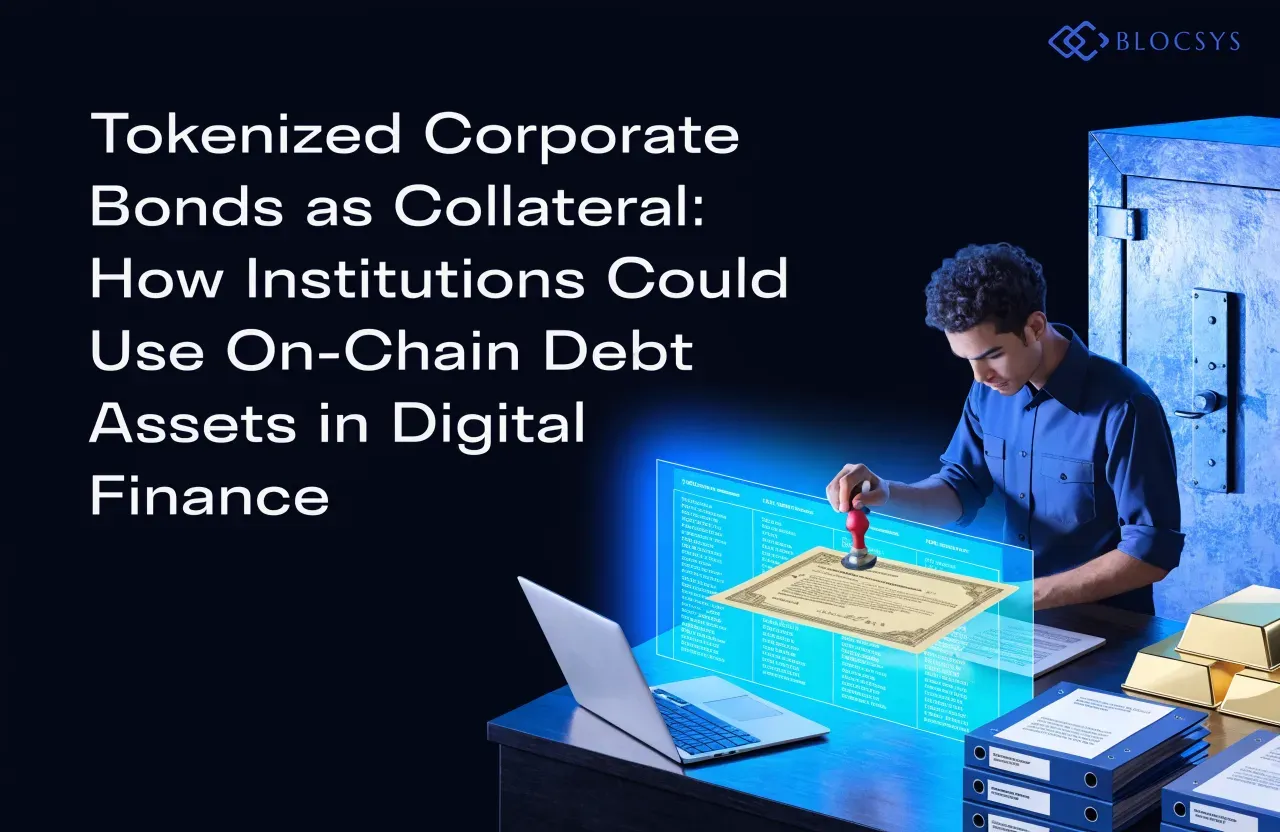
Tokenized Corporate Bonds as Collateral represent one of the more practical, near-term applications of blockchain in institutional finance. Rather than focusing on issuance alone, this concept asks a different question: once a corporate bond exists on-chain, can it actually secure financing? Banks, asset managers, and lending platforms are starting to explore this seriously, not as a speculative idea but as an operational upgrade to how collateral moves, gets verified, and settles. This article breaks down what tokenized bond collateral means in practice, how the collateral lifecycle could work on-chain, and where institutions still need off-chain infrastructure, legal agreements, and regulatory clarity before this becomes standard practice.
What Tokenized Corporate Bonds as Collateral Actually Means
Tokenized Corporate Bonds as Collateral refers to using a blockchain-based representation of a corporate debt instrument to secure a loan, repo transaction, or other financing arrangement. It’s a distinct concept from simply owning a tokenized bond. Ownership means holding the asset for yield or investment purposes. Using it as collateral means pledging, locking, or referencing that same token within a financing agreement so a lender has a claim against it if the borrower defaults.
Here’s the distinction that matters most: a tokenized corporate bond sitting in a wallet is just a digital security. It only becomes collateral once it’s connected to a legal agreement, a custody arrangement, and typically a smart contract that can restrict transfer or flag its status during the loan term. Without that layer, there’s no enforceable claim, just a token someone happens to hold.
This is also different from tokenized Treasuries, tokenized private credit, and tokenized equities used as collateral. Corporate bonds carry issuer-specific credit risk, coupon structures, and covenant terms that Treasuries don’t. That means eligibility criteria, haircuts, and valuation models look different. Additionally, this topic shouldn’t be confused with general corporate bond tokenization, which focuses on issuance and primary distribution rather than the secondary use of the asset in secured financing.
The real value of tokenized bond collateral isn’t that it’s on a blockchain. It’s that ownership, restrictions, and status can be checked in near real time instead of waiting on a custodian’s overnight batch file.
Traditional Corporate Bond Collateral vs Tokenized Bond Collateral
Traditional Corporate Bond Collateral relies on custodians, central securities depositories, and bilateral confirmations to verify ownership and settle pledges. This process can take a day or more, and reconciliation across multiple parties introduces friction. Tokenized Bond Collateral, by contrast, can reference a shared ledger where custody status and transfer restrictions are visible to permissioned parties instantly.
| Aspect | Traditional Bond Collateral | Tokenized Bond Collateral |
|---|---|---|
| Ownership verification | Custodian records, manual confirmation | On-chain ledger, permissioned visibility |
| Settlement time | T+1 or longer | Potentially near real-time, network dependent |
| Transfer restrictions | Enforced by custodian policy | Programmable via smart contract |
| Collateral monitoring | Periodic, often manual | Continuous, automatable |
| Cross-platform mobility | Limited by legacy rails | Improved where legal frameworks allow |
Even so, tokenized rails don’t remove the need for custodians, legal agreements, or valuation providers. They change how fast and how transparently these functions operate, not whether they’re needed at all.
Why Institutions Are Exploring On-Chain Collateral
Institutions aren’t chasing tokenized bond collateral for novelty. They’re looking at operational costs and settlement delays that have persisted in securities financing for decades. The global corporate bond market remains one of the largest fixed income segments, and even small efficiency gains in collateral mobility translate into real cost savings at scale.
According to the Bank for International Settlements, tokenization of financial assets has moved from experimental pilots toward broader institutional interest through 2024 and into 2025, with central banks and market infrastructure providers actively researching settlement and collateral use cases. The International Capital Market Association has also published guidance acknowledging that digital bonds and their use in repo-style transactions require distinct legal and operational consideration compared to traditional instruments.
What’s Actually Driving Institutional Interest
- Faster collateral substitution during market volatility
- Reduced reconciliation overhead between custodians and counterparties
- Potential for intraday, rather than end-of-day, collateral visibility
- Programmable eligibility checks that reduce manual compliance review
- Improved audit trails for regulators and internal risk teams
However, none of this happens automatically just because a bond is tokenized. Institutions still need collateral management platforms, legal frameworks, and custody arrangements built specifically for this purpose. That’s where a lot of firms get stuck, they underestimate the infrastructure required to make on-chain collateral actually work within existing risk and compliance systems.
How Tokenized Corporate Bonds Enter Collateral Workflows
Getting a tokenized bond into a usable collateral position involves several coordinated steps. First, the bond has to be issued or represented on a blockchain network, typically through a regulated issuance platform or custodian-backed wrapper. Second, the token needs to pass eligibility screening before any lender will accept it against a financing facility.
Eligibility isn’t automatic. Lenders and repo counterparties set criteria around issuer credit rating, bond tenor, liquidity, and jurisdiction. A tokenized bond from a highly rated issuer with active secondary market trading looks very different, from a collateral standpoint, than one from a thinly traded private placement. Institutional Bond Collateral programs typically maintain an eligibility schedule, and tokenization doesn’t override that schedule, it just changes how eligibility gets checked.
![Tokenized Corporate Bonds as Collateral — [Flow diagram showing collateral onboarding: Bond Tokenization → Eligibility Screening → Custody Verification → Valuation → Pledge Agreement → Smart Contract Lockup → Collateral Active Status]](https://s3.blocsys.com/blocsys/blog-images/1788393744097-0ab466065caa3fc7.webp)
Pledge, Lockup, and Transfer Restrictions
Once eligibility clears, the borrower pledges the token against the financing facility. On-chain, this often means the token gets locked or flagged within a smart contract so it can’t be transferred or double-pledged elsewhere while it’s serving as collateral. This programmable restriction is one of the more genuinely useful features of blockchain collateral management, it reduces the risk of the same asset being pledged twice across different platforms, a problem that has caused real losses in traditional markets.
Still, the smart contract only enforces what the legal agreement defines. The pledge agreement, governed by existing securities and contract law, remains the enforceable instrument. Consequently, legal counsel and compliance teams stay central to this process even when the mechanics run on-chain.
The Tokenized Bond Collateral Lifecycle
Understanding the full lifecycle helps clarify where blockchain adds value and where it doesn’t. This isn’t a single-step process, it’s a sequence with multiple checkpoints, each involving different parties and systems.
Key Lifecycle Stages
- Issuance and eligibility assessment: the bond token gets created and screened against collateral eligibility criteria.
- Ownership verification: custodians confirm the pledging party actually controls the asset.
- Valuation: pricing feeds determine current market value, often via independent valuation providers.
- Collateral allocation: the system matches available tokenized assets against exposure requirements.
- Pledge or lockup: the token gets restricted from transfer during the collateral period.
- Margin requirements and haircut application: risk teams apply a discount to the bond’s market value.
- Monitoring: collateral value and eligibility status get tracked continuously.
- Substitution: borrowers may swap one eligible asset for another under agreed terms.
- Margin calls: additional collateral gets requested if value falls below threshold.
- Settlement and release: collateral returns to the borrower once obligations are met.
- Liquidation: in default scenarios, the lender exercises rights over the pledged asset.
Smart contracts can automate several of these steps, particularly monitoring, margin calculation triggers, and status updates. But valuation still typically depends on external pricing providers, and liquidation in a default scenario usually requires legal enforcement, not just a contract execution. On-Chain Bond Collateral systems work best when they’re designed as a hybrid, automating the repetitive, data-driven steps while keeping human and legal oversight on the consequential ones.
Blockchain and Smart Contract Infrastructure for Bond Collateral
Smart contracts form the operational backbone of Blockchain Collateral Management, but it’s worth being precise about what they can and can’t do. They can automate eligibility checks against pre-defined criteria, restrict token transfers during a pledge period, calculate margin requirements based on live pricing feeds, and generate immutable audit trails for every collateral action.
What they can’t do is replace the legal agreements, custodial relationships, or regulatory frameworks that give the collateral arrangement enforceability. A smart contract can lock a token. It can’t, on its own, determine whether that lock is legally binding in a bankruptcy proceeding. That determination still depends on the jurisdiction’s securities and insolvency law.
What Can Be Automated vs What Still Requires Off-Chain Institutions
| Function | On-Chain Automation | Off-Chain Dependency |
|---|---|---|
| Eligibility screening | Rule-based checks via smart contract | Criteria set by risk/compliance teams |
| Ownership verification | Ledger-based confirmation | Custodian recordkeeping, legal title |
| Valuation | Price feed integration | Independent valuation providers |
| Transfer restriction | Programmable lockup | Enforceable pledge agreement |
| Margin calculation | Automated formula execution | Risk model design and approval |
| Liquidation | Trigger notification | Legal enforcement process |
This is where working with an experienced partner matters. Building this architecture requires more than deploying a token standard, it needs integration with custody providers, pricing oracles, and risk systems that institutions already trust. Smart contract development for collateral use cases has to account for these dependencies from the design stage, not bolt them on afterward.
Collateral Eligibility, Valuation, and Custody
Collateral Eligibility for tokenized corporate bonds typically mirrors traditional criteria, credit rating thresholds, issuer concentration limits, tenor restrictions, and liquidity requirements, while adding a few tokenization-specific factors. These include the maturity and legal standing of the token standard itself, the custodian’s regulatory status, and whether the underlying blockchain network meets institutional resilience and security expectations.
Valuation for Digital Bond Collateral generally follows the same pricing methodology as traditional bonds, referencing secondary market trades, dealer quotes, or evaluated pricing services. Tokenization doesn’t inherently improve pricing accuracy. What it can improve is the speed at which updated valuations get reflected in collateral positions, since a smart contract can pull from a pricing oracle more frequently than a manual overnight process.
Custody and Ownership Verification
Custody remains a foundational requirement. Regulated custodians, whether traditional trust companies or qualified digital asset custodians, hold legal responsibility for safeguarding the underlying asset and confirming who controls it. On-chain records can make ownership verification faster and more transparent to permissioned counterparties, but the custodian relationship itself doesn’t disappear.
For institutions, this means due diligence on custody providers stays just as important as it was before tokenization entered the picture. A well-designed platform will integrate custodial confirmations directly into the collateral workflow so that ownership status updates automatically rather than requiring separate manual reconciliation.
Margining, Risk Management, and Haircut Application
Margin management for tokenized bond collateral follows familiar risk principles with some added technical capability. Haircuts get applied based on credit quality, duration, and liquidity, generally consistent with how traditional Corporate Bond Collateral gets margined in repo and secured lending markets. A lower-rated or longer-duration bond typically receives a steeper haircut than a short-duration, investment-grade issue.
What changes is the monitoring cadence. Smart contracts can track collateral value against exposure continuously, rather than at fixed intervals. When value drifts below a set threshold, the system can automatically flag a margin call rather than waiting for a risk team to run an end-of-day report. This doesn’t eliminate the need for human review, someone still has to approve and execute the actual call, but it shortens the detection window considerably.
Illustrative Scenario: Automated Margin Monitoring
Consider a hypothetical scenario: an institutional lending platform accepts eligible tokenized corporate bonds as collateral for a secured financing facility. The platform’s smart contract continuously checks the token’s market value against an oracle-fed price feed. When the bond’s value drops below the maintenance margin threshold, the contract automatically generates a margin call notification to both parties, while the actual fulfillment, delivering additional collateral, still happens through an off-chain confirmed process. This is illustrative of how the technology could work, not a claim about any live deployment.
Secured Lending, Repo, and Institutional DeFi Applications
Secured lending and repo markets represent the most established use cases institutions are exploring for Tokenized Corporate Bonds as Collateral. In a repo transaction, one party sells a security with an agreement to repurchase it later, essentially borrowing cash against the bond. Tokenization could streamline this by allowing near-instant settlement of the initial leg and automated tracking of the repurchase obligation.
Established vs Emerging Applications
It’s important to separate what’s operationally proven from what’s still developmental. Secured lending against traditional securities is well established; applying that same structure to tokenized instruments is newer and depends heavily on jurisdiction-specific legal recognition of digital securities as valid collateral.
- More established: bilateral secured financing using tokenized bonds within regulated, permissioned platforms with existing legal frameworks.
- Emerging: cross-platform collateral mobility, where a tokenized bond pledged on one venue could be recognized on another without re-custody.
- Emerging: institutional DeFi applications, where tokenized bonds interact with on-chain lending protocols under permissioned, KYC-gated conditions.
- Hypothetical/developmental: fully automated repo markets settling entirely on-chain without any off-chain legal wrapper.
Institutional DeFi, in particular, remains an evolving space. Some platforms are testing permissioned pools where verified institutions can post tokenized debt as collateral for on-chain loans. These pilots matter for the future direction, but they shouldn’t be mistaken for mainstream repo market infrastructure today.
![Tokenized Corporate Bonds as Collateral — [Flow diagram showing repo transaction lifecycle with tokenized bonds: Bond Pledge → Cash Leg Settlement → Collateral Lockup Period → Valuation Monitoring → Repurchase Trigger → Collateral Release]](https://s3.blocsys.com/blocsys/blog-images/1788393747048-d3f434afe24bce17.webp)
Benefits and Limitations of Tokenized Debt as Collateral
The benefits of Tokenized Debt as Collateral are meaningful but bounded. Faster settlement, programmable restrictions, and continuous monitoring genuinely reduce operational friction compared to legacy processes. Additionally, improved audit trails give compliance teams a clearer record for regulatory reporting, something examiners increasingly expect as digital asset activity grows.
That said, limitations remain real and shouldn’t get glossed over. Liquidity for tokenized corporate bonds is still developing compared to traditional bond markets. Legal recognition of on-chain pledges varies by jurisdiction, and not every custodian or clearing provider currently supports tokenized collateral workflows. Interoperability between different blockchain networks and platforms also remains a practical hurdle for cross-platform collateral mobility.
Key Trade-offs to Weigh
- Speed gains depend on network reliability and oracle quality, not just tokenization itself.
- Programmability reduces manual errors but adds smart contract risk that needs its own audit process.
- Transparency benefits compliance teams but requires careful permissioning to protect sensitive counterparty data.
- Cross-platform mobility is promising but constrained by inconsistent legal treatment across jurisdictions.
None of this makes tokenized collateral a lesser option, it just means institutions need realistic expectations going in, rather than assuming blockchain automatically solves every friction point in securities financing.
Regulatory and Legal Considerations
Regulatory treatment of tokenized corporate bonds as collateral varies significantly by jurisdiction, and institutions shouldn’t assume automatic eligibility anywhere. In the United States, tokenized securities generally fall under existing SEC frameworks, and collateral arrangements need to satisfy the same securities law and UCC Article 9 requirements that apply to traditional pledges. The UK’s Financial Conduct Authority and the EU’s Markets in Crypto-Assets regulation, along with the Distributed Ledger Technology Pilot Regime, provide frameworks for digital securities activity, though specific collateral use cases still require case-by-case legal review.
Singapore’s Monetary Authority and jurisdictions like the UAE through frameworks such as the Dubai Financial Services Authority have shown active interest in digital securities infrastructure, supporting several tokenization pilots. Even so, legal enforceability of a smart contract pledge in a default or insolvency scenario depends entirely on how local law treats digital asset custody and transfer of title. This is a developing area, and institutions should treat it as such rather than assuming settled precedent exists everywhere.
Compliance Requirements That Don’t Go Away
KYC and AML obligations apply to all parties in a tokenized collateral transaction, same as they would in a traditional secured financing deal. Investor eligibility rules, particularly around accredited or qualified institutional buyer status, still govern who can hold and pledge these instruments. Recordkeeping requirements also remain in force, and in many cases, blockchain’s audit trail capability can actually help satisfy these obligations more efficiently than paper-based systems.
This article doesn’t constitute legal advice. Institutions evaluating tokenized bond collateral programs should engage qualified securities counsel familiar with both digital asset regulation and their specific jurisdiction’s collateral and insolvency law.
Technical Architecture and Development Considerations
Building infrastructure for Tokenized Corporate Bonds as Collateral requires several architectural layers working together. The token layer needs to comply with recognized security token standards and maintain compatibility with institutional custody systems. The collateral management layer needs to integrate eligibility rules, valuation feeds, and margin calculation logic. The settlement layer needs to connect to existing clearing infrastructure or, where applicable, blockchain-native settlement rails.
Core Architecture Components
- Token standard and smart contract layer: handles issuance, transfer restrictions, and lockup logic.
- Custody integration: connects to regulated custodians for ownership verification and safekeeping.
- Oracle and pricing feed layer: supplies valuation data for margin calculations.
- Risk and margining engine: applies haircuts, monitors thresholds, triggers margin calls.
- Compliance layer: enforces KYC/AML checks and investor eligibility rules.
- Reporting and audit layer: generates records for regulators, auditors, and internal risk teams.
Development teams evaluating this space should also plan for interoperability. A platform designed only for a single blockchain network limits future collateral mobility. Working with a team experienced in real world asset tokenization helps institutions avoid architecture decisions that look fine at pilot scale but create integration headaches later.
Challenges, Risks, and Cost Considerations
Beyond regulatory uncertainty, institutions face genuine technical and operational risks with tokenized bond collateral. Smart contract vulnerabilities remain a real concern, any code managing collateral logic needs rigorous auditing before production use. Oracle reliability is another risk point; if a pricing feed fails or gets manipulated, margin calculations become unreliable, potentially triggering incorrect margin calls or missed ones.
Operational risk also includes counterparty and custodian dependency. Even with blockchain infrastructure, institutions still rely on custodians to confirm legal ownership, and any failure or dispute at that layer can stall the entire collateral workflow. Market risk, meaning liquidity constraints for tokenized bonds in stressed conditions, remains an open question the industry hasn’t fully tested at scale.
Cost Considerations for Institutions
Cost varies widely depending on scope, whether an institution needs a full custody-integrated platform or a more limited pilot connecting to existing systems. Factors that influence cost include smart contract complexity, the number of custodian and oracle integrations required, compliance module depth, and whether the platform needs multi-jurisdiction support from day one. Rather than quoting a fixed figure that won’t reflect your specific requirements, institutions exploring this can get a more accurate estimate through the Blocsys Software Development Cost Estimator Tool, which accounts for these variables directly.
The Future of Tokenized Corporate Bonds as Collateral
Where does this go from here? The direction seems fairly clear even if the timeline isn’t. As more central securities depositories and clearing institutions pilot blockchain settlement rails, tokenized corporate bonds as collateral will likely gain broader institutional recognition, particularly in jurisdictions actively building regulatory frameworks for digital securities. Cross-platform interoperability standards are also developing, which should gradually ease the current fragmentation between different blockchain networks and custody providers.
That said, this remains an evolving space rather than a settled one. Institutions moving early gain operational familiarity and a head start on infrastructure, but they should do so with realistic expectations about legal enforceability, liquidity depth, and the continued need for off-chain institutional oversight. The technology handles the mechanics well; the market and legal frameworks are still catching up.
Why Businesses Need an Experienced Blockchain Development Partner
Building collateral infrastructure for tokenized corporate bonds isn’t a weekend project. It requires deep familiarity with securities regulation, custody integration, smart contract security, and institutional risk workflows, all working together without breaking under real transaction volume. Getting any one layer wrong, a poorly audited contract, a misconfigured oracle, an incomplete compliance module, creates operational and legal exposure that’s expensive to unwind later.
This is where working with a partner that understands both blockchain engineering and institutional finance becomes genuinely valuable. Blocsys has built experience across corporate bond tokenization, digital securities infrastructure, and enterprise blockchain systems designed to meet institutional compliance and custody requirements. Whether you’re exploring a pilot program or planning a full production platform, that combination of technical depth and financial-market understanding matters more than generic blockchain development experience.
Bringing Tokenized Corporate Bonds as Collateral Into Your Institution’s Roadmap
Tokenized Corporate Bonds as Collateral aren’t a distant concept anymore, they’re an active area of institutional exploration with real operational upside and equally real legal and technical considerations. Getting this right means treating it as infrastructure, not just a feature, one that needs custody integration, compliance design, risk modeling, and smart contract security working together from the start.
If your institution is evaluating how tokenized bond collateral, blockchain collateral management, or broader digital securities infrastructure could fit into your lending, repo, or treasury operations, Blocsys can help you scope the right architecture. Explore our Corporate Bond Tokenization Platform Development services to see how we approach this space, or connect with our dedicated blockchain engineering teams to start scoping your specific use case.
Frequently Asked Questions
Here are direct answers to the questions we hear most often about tokenized corporate bonds as collateral.
What are tokenized corporate bonds as collateral?
Tokenized corporate bonds as collateral are blockchain-based representations of corporate debt instruments pledged, locked, or referenced within a financing agreement to secure a loan or repo transaction. Unlike simply owning a tokenized bond, using it as collateral requires a legal pledge agreement, custody arrangement, and typically a smart contract that restricts transfer while the loan remains outstanding. This distinguishes it from general corporate bond tokenization or tokenized Treasuries.
How can tokenized corporate bonds be used as collateral?
Institutions pledge tokenized corporate bonds against secured financing by first passing eligibility screening based on credit quality, liquidity, and tenor. Once approved, the token gets locked via smart contract, a haircut gets applied, and the position gets monitored continuously against margin thresholds. The underlying legal pledge agreement, not the smart contract alone, makes the arrangement enforceable under securities and contract law.
What is tokenized bond collateral?
Tokenized bond collateral refers to digital bond tokens used to secure financing, distinct from traditional paper-based or book-entry bond collateral. It combines blockchain infrastructure, custody verification, and legal agreements to create an asset that can back a loan, repo, or margin facility. The token represents the debt instrument, while custodians and legal contracts confirm ownership and enforceability.
How does blockchain improve collateral management?
Blockchain improves collateral management by enabling near real-time ownership verification, programmable transfer restrictions, and continuous margin monitoring instead of periodic manual checks. Smart contracts automate eligibility screening and margin call triggers based on live pricing data. However, valuation, legal enforceability, and liquidation still depend on off-chain custodians, valuation providers, and legal frameworks.
Can tokenized corporate bonds be used for secured lending?
Yes, tokenized corporate bonds can be used for secured lending within permissioned platforms that maintain proper custody, legal agreements, and eligibility criteria. This application is more established in bilateral, regulated settings than in fully automated, on-chain repo markets, which remain an emerging and developing use case. Eligibility depends on issuer credit quality and jurisdiction-specific legal recognition of digital securities.
How are tokenized bonds valued as collateral?
Tokenized bonds get valued using the same methodologies as traditional bonds, secondary market trades, dealer quotes, or independent evaluated pricing services. Tokenization doesn’t change how pricing gets determined, but it can speed up how frequently updated valuations flow into collateral positions through oracle-fed smart contracts. Haircuts still apply based on credit rating, duration, and liquidity.
How do smart contracts manage tokenized collateral?
Smart contracts manage tokenized collateral by automating eligibility checks, restricting transfers during the pledge period, calculating margin requirements from pricing feeds, and generating audit trails. They can’t independently determine legal enforceability in a default or bankruptcy scenario, that depends on the underlying pledge agreement and jurisdiction-specific securities and insolvency law.
What are the risks of using tokenized corporate bonds as collateral?
Key risks include smart contract vulnerabilities, oracle reliability for pricing data, custodian and counterparty dependency, and limited secondary market liquidity compared to traditional bonds. Regulatory treatment also varies by jurisdiction, and legal enforceability of on-chain pledges in insolvency proceedings remains an evolving area. Institutions should conduct thorough technical audits and legal review before deploying capital.
Are tokenized corporate bonds eligible collateral for institutional financing?
Eligibility depends entirely on the lender’s criteria and the jurisdiction’s legal treatment of digital securities, tokenized corporate bonds aren’t automatically eligible collateral anywhere. Institutions typically apply the same credit rating, liquidity, and tenor standards used for traditional bonds, plus additional scrutiny of the custodian and token standard involved. Legal counsel should confirm enforceability before any facility gets structured.
How much does it cost to build a tokenized collateral platform?
Cost depends on scope, including smart contract complexity, number of custodian and oracle integrations, compliance depth, and multi-jurisdiction requirements. A limited pilot connecting to existing systems costs considerably less than a full production platform with multi-custodian support. Institutions can get a tailored estimate through the Blocsys Software Development Cost Estimator Tool based on their specific requirements.
Ready to move beyond theory and build an intelligent platform that delivers real-world value? Blocsys Technologies specialises in engineering enterprise-grade AI and blockchain solutions for the fintech, Web3, and digital asset sectors. Connect with our experts today to discuss your vision and chart a clear path from concept to a secure, scalable reality.