How Tokenization Could Improve Liquidity in Private Equity Markets
You can sell a listed share in seconds. A private equity stake is different, and you may wait years for an exit. That gap explains why Private Equity Tokenization is getting serious attention from fund managers, family offices and technology teams. However, a token alone doesn’t create a buyer. Below, we’ll explore where tokenization could help, where it can’t, and how India’s rules shape the picture. If you’re planning a build, our Equity Tokenization Platform Development page explains the technical side.
Introduction: Understanding Liquidity Challenges in Private Equity Markets
Public securities trade on recognised stock exchanges, with continuous prices and settled trades. Private equity works differently. Investors commit capital to a fund or a company, and that capital stays locked for years. Exits usually come through acquisitions, buybacks, listings or negotiated sales.
So what happens when an investor needs cash early? Finding an eligible buyer takes time. Pricing is contested, approvals pile up, and paperwork follows. Tokenization in Private Equity Markets is one proposed way to organise parts of that process. It targets administration and transfer workflows, not the underlying economics.
What Is Liquidity in Private Equity Markets?
Private equity liquidity is the ability to sell or transfer an investment at a fair price within a reasonable time. For listed shares, that’s routine. For private holdings, it’s uncertain.
Consider the difference. A listed share has thousands of buyers and a live quote. A stake in an unlisted company has a handful of possible buyers and no quote. Each deal needs negotiation, due diligence and agreed valuation, plus consent from the company or fund manager.
Digital representation isn’t the same as liquidity. You can put a holding on a blockchain and still have nobody willing to buy it. Remember that distinction, because it recurs throughout this article.
Why Do Private Equity Investments Face Liquidity Challenges?
Several structural factors combine here. Holding periods often run five to ten years. Eligible buyers are few. Shareholder agreements and fund documents restrict transfers. Valuations rest on models and judgment, not live prices.
Consider an Indian family office holding a stake in a mid-sized unlisted manufacturer. It needs funds after three years. The shareholders’ agreement may include a right of first refusal, so existing investors get the first chance to buy. The company may need to approve the new holder. Meanwhile, the buyer will want financial and legal diligence.
Each step takes weeks or months. Therefore, many sellers accept a discount or simply wait. We’ve seen that pattern repeatedly across private markets.
Three Perspectives on the Same Problem
Investors want a credible exit before the planned horizon. Private equity firms want to manage portfolios and investor requests without disrupting the fund. Companies, however, want control over who joins the register. Their goals overlap but don’t match, and any solution has to respect all three.
What Are Private Equity Secondary Transactions and How Do They Work?
A secondary transaction is a sale of an existing investor’s holding to another eligible buyer. The company doesn’t receive new money. The shares or fund interests simply change hands.
Compare this with a primary issuance, where a company or fund raises fresh capital by issuing new securities. Primary deals fund growth. Secondary deals provide exits. The Private Equity Secondary Market therefore serves existing holders, not the issuer’s balance sheet.
Participants include the seller, the buyer, the fund manager or company, and legal advisers. Valuation talks, due diligence, transfer approvals and documentation all shape the outcome. Secondaries can provide an exit in suitable circumstances. Nevertheless, they never guarantee a buyer will appear.

What Is Private Equity Tokenization and How Does It Work?
Private Equity Tokenization means using blockchain to create digital tokens that represent defined economic interests or rights linked to a private equity investment. The token is a record, not the investment itself.
Four layers matter. First, there’s the underlying investment, such as fund units or company shares. Second, there’s the legal ownership structure. Third comes the token. Finally, there are the official records kept by the issuer, fund, custodian or registrar. The token only carries legal weight if the structure says so.
Picture a fund manager issuing tokens for units held by verified investors. A platform handles onboarding, tracks holdings and records permitted transfers. Investors see their positions on a dashboard. Importantly, the token isn’t the legally recognised interest unless documents and law make it so.
How Could Tokenization Improve Liquidity in Private Equity Markets?
Tokenized Private Equity could improve how transactions run. That’s a narrower claim than “more liquid,” and it’s the honest one. Each benefit below answers a specific friction.
Cleaner Ownership Records
Slow diligence often traces back to scattered records. A shared digital ledger, linked to legal registers, could let authorised parties verify holdings faster. As a result, buyers might spend less time confirming who owns what.
Structured Transfer Workflows
Today, transfers move through emails and manual checks. A platform could encode steps instead: eligibility check, right-of-first-refusal window, company consent, then settlement. Consequently, fewer deals stall because someone missed a step.
Automated Conditions
Smart contracts can enforce predefined rules. For example, a transfer to an unverified wallet simply fails. Likewise, a lock-up period can block early sales. That reduces compliance errors, though it doesn’t replace legal sign-off.
Visibility and Lower Minimums
Authorised participants could see transaction status and holding information in one place. Additionally, smaller token units might lower minimum ticket sizes where law permits. That could widen the pool of eligible buyers.
Here’s the catch. Tokenization doesn’t create buyers, guarantee exits, ensure fair pricing or make interests freely tradable. Efficiency helps liquidity, but it doesn’t equal it.
“Tokenization fixes the paperwork, not the appetite. If nobody wants to buy at your price, a faster workflow just helps you discover that sooner.”
How Blockchain and Smart Contracts Support Private Equity Transactions
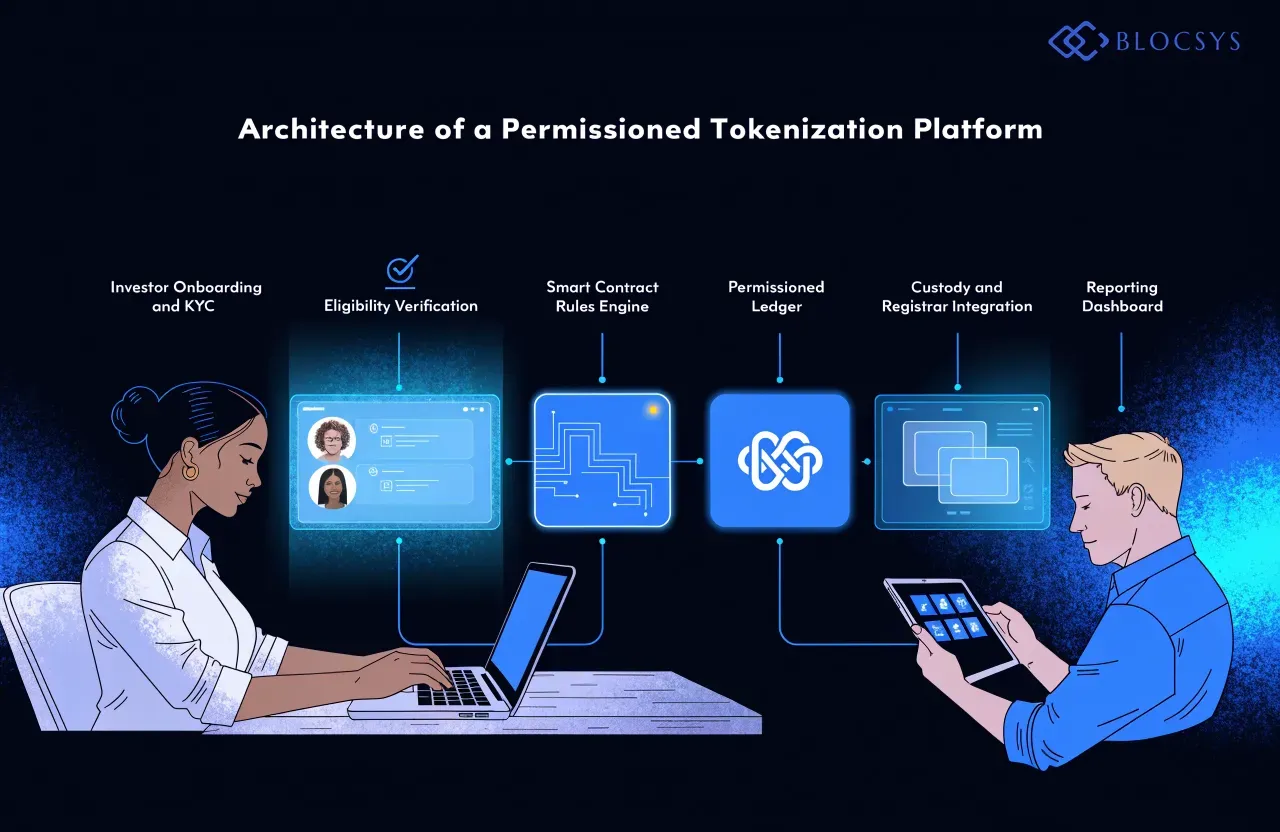
Blockchain in Private Equity Markets usually means a permissioned ledger. Only approved participants can view or transact. Every transfer leaves a time-stamped trace, which supports audits and dispute resolution.
Smart contracts then apply the rules. They can check investor eligibility flags, enforce holding periods and route approvals to the company or fund manager. They can also trigger settlement steps once conditions are met.
However, the chain can’t work alone. It must connect to identity verification, custody arrangements, statutory registers and banking rails. Moreover, it must operate within corporate and securities law. Blockchain doesn’t replace regulated intermediaries, statutory records or legal agreements. It sits alongside them.
How Tokenization Could Benefit Private Equity Investors
Eligible investors could gain more organised records and easier access to holding information. Transfers might also be coordinated more smoothly. Furthermore, where structures permit, smaller units could broaden participation.
Investors could monitor positions, review transaction history and manage documentation through one interface. For institutions juggling many private holdings, that’s a real administrative gain.
Still, you should understand the limits. Valuation stays uncertain. Buyer demand may be thin. Transfer restrictions still apply. Platforms carry operational risk, and the investment itself carries market risk. None of that disappears with a token.
How Tokenization Could Benefit Private Equity Firms and Private Companies
Private equity firms handle investor registers, capital calls, reporting and transfer requests. Digital records could consolidate this work. Automated workflows might also cut the manual effort behind permitted secondary transfers.
Private companies care about control. A well-designed platform lets them keep approval rights, so every transfer still needs their consent. Meanwhile, cap table management becomes easier to audit.
Don’t expect miracles, though. Tokenization doesn’t raise a valuation, reduce fundraising costs or attract investors on its own. It’s infrastructure, not demand.
Traditional Private Equity Transactions vs Tokenized Private Equity
The table summarises where the two approaches differ. Note that tokenized models still depend on conventional legal infrastructure.
- Ownership records: Traditional uses registers and spreadsheets. Tokenized adds a shared digital ledger linked to legal records.
- Onboarding: Traditional relies on manual KYC per deal. Tokenized can reuse verified eligibility status.
- Transfers: Traditional runs through emails and signatures. Tokenized can encode rules and approvals.
- Transaction history: Traditional is fragmented. Tokenized offers a traceable record.
- Still needed in both: Legal agreements, valuation, regulatory compliance and willing counterparties.
Tokenized Private Equity Investments aren’t automatically safer, more valuable or more liquid. They may be more operationally efficient, and that’s all we’d claim.
Can Tokenization Enable Fractional Ownership in Private Equity?
Tokenization can represent a large interest as smaller digital units, but that doesn’t create legally recognised fractional ownership by itself. The legal structure decides what each unit means.
Suppose a fund unit has a minimum investment of INR 1 crore. A platform could, in theory, divide an eligible interest into smaller units. Whether holders get enforceable rights depends on the fund documents, investor rules and custody setup.
Therefore, fractional tokens neither guarantee extra buyers nor open private equity to unrestricted retail investment. Eligibility checks, structuring and regulation still govern who can hold what.
Challenges and Risks of Private Equity Tokenization
Regulatory clarity comes first. Legal enforceability of token rights comes next. Beyond that, you’ll face custody questions, cybersecurity, smart contract bugs, interoperability gaps and slow market adoption.
A tokenized holding can remain illiquid. With few buyers and sellers, tokens just sit there. Valuation also stays hard, because digital records don’t produce better inputs for pricing an unlisted business.
Reliable issuer information, governance and investor protection matter just as much. Consequently, businesses should assess legal, financial, operational and technology needs before building anything.
“The hard part of tokenizing private equity isn’t the smart contract. It’s aligning the token with the shareholder agreement, the register and the regulator’s expectations.”
Regulatory and Compliance Considerations for Private Equity Tokenization in India
This section is general information, not legal advice. Rules change, so verify the current position with qualified counsel. As far as we know, India hasn’t established a dedicated framework for tokenized private equity or a regulated public secondary market for it.
The Companies Act, 2013 governs most company securities. Section 42 covers private placements. Section 56 deals with transfers, and private companies must restrict share transfers under their articles. Dematerialisation rules under the Companies (Prospectus and Allotment of Securities) Rules also apply to many unlisted companies. The Depositories Act, 1996 governs electronic holding through NSDL and CDSL.
SEBI regulates securities markets, while the Ministry of Corporate Affairs oversees company law. For funds, the SEBI (Alternative Investment Funds) Regulations, 2012 apply. Private company shares, public company securities and AIF units don’t get identical treatment. Legal treatment depends on the instrument, issuer, offer, investor category and transfer method.
Tokenization offers no exemption from securities law, placement rules, depository requirements or transfer restrictions. Don’t assume models allowed elsewhere work in India. Our work on Demat 2.0, Tokenization & CBDC Integration explores how digital infrastructure could sit alongside depository systems.
Real-World Applications and Industry Developments in Private Equity Tokenization
International activity is real but limited. In 2022, KKR tokenized a portion of its Health Care Strategic Growth Fund II through Securitize, giving eligible investors a digital feeder-style route into fund interests. Hamilton Lane has also offered tokenized share classes of some funds via Securitize. These are fund structures under US and offshore rules.
Such examples show that fund interests can be represented digitally under specific legal wrappers. They don’t prove that Indian private company equity can be tokenized the same way. Singapore’s Project Guardian, led by the Monetary Authority of Singapore, similarly tests tokenized assets in pilots.
Meanwhile, bodies like IOSCO and the BIS keep studying tokenization risks and benefits. Always separate pilots, operational platforms and announced plans, because they carry different weight.
Technology Infrastructure Required for a Private Equity Tokenization Platform
A solid platform combines several components. You’ll need blockchain architecture, token issuance and lifecycle management, and smart contracts. Onboarding, identity checks and eligibility controls sit on top. Ownership records, transaction monitoring, reporting, custody integrations and admin dashboards complete the stack.
Security, privacy, auditability and scalability matter from day one. So does integration with banks, registrars and depositories. Picking a blockchain network doesn’t establish compliance. Design and legal structure do.
Needs also vary. A simple issuance tool differs from a private investment management system, and both differ from a broader digital securities ecosystem. Our Asset Tokenization Platform overview shows how modular design supports those variations.
Private Equity Tokenization Platform Development Services Offered by Blocsys
Blocsys is a technology development company. It builds blockchain and digital asset platforms for businesses and financial institutions exploring tokenization. Its capabilities include custom blockchain development, smart contract development and token issuance infrastructure.
The team also builds investor-facing applications, backend systems, administrative dashboards, APIs and third-party integrations. Architecture follows the underlying investment structure, intended users, business model, security needs and regulatory framework. Blocsys doesn’t provide legal, brokerage, investment management or depository services, and it holds no regulatory approval to issue or trade tokenized securities.
For broader context, see the company’s work on Real World Asset Tokenization and permissioned blockchain infrastructure for post-trade operations. Bond-focused teams may prefer Corporate Bond Tokenization Platform Development, which is a distinct use case.
Why Choose Blocsys for Private Equity Tokenization Platform Development?
Private-market platforms need scalable, secure and business-led engineering. Blocsys offers experience across blockchain development, tokenization solutions, smart contracts, backend systems and web applications.
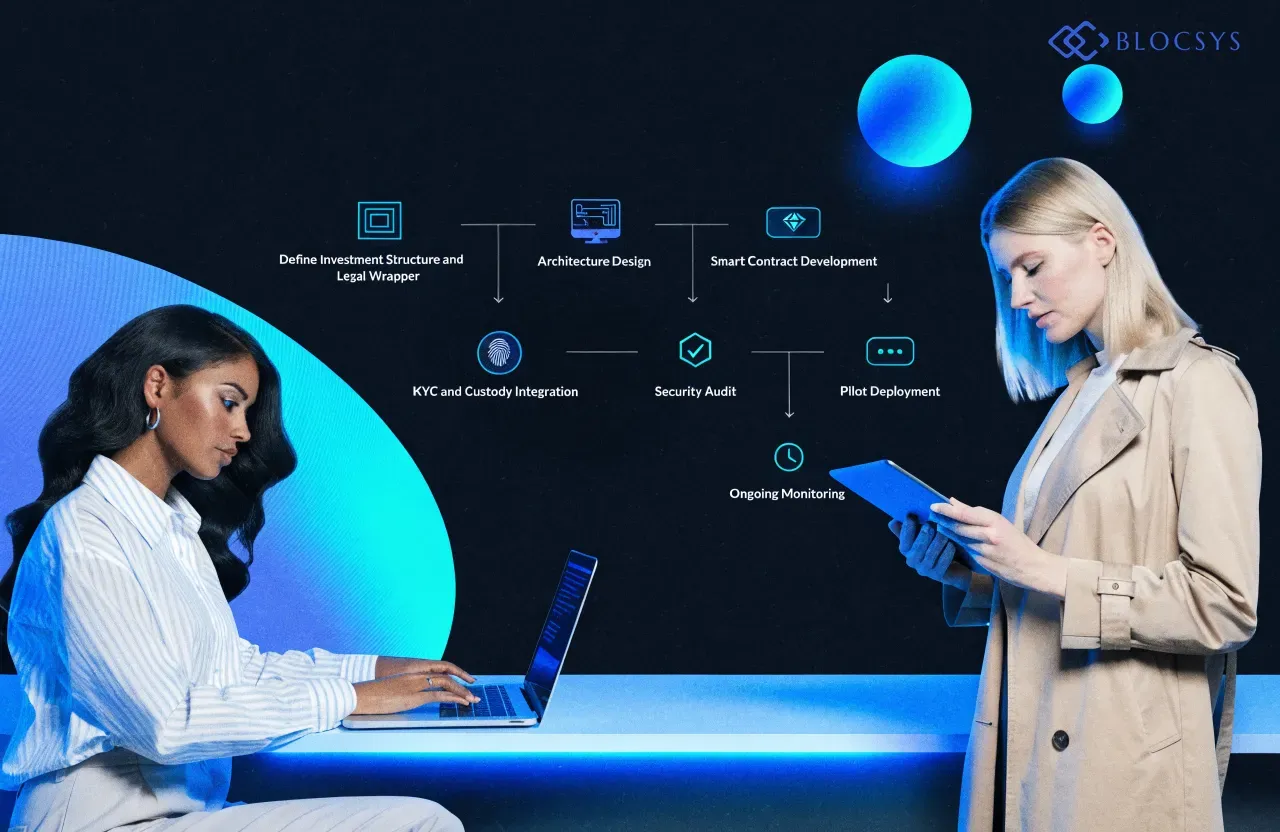
A customised approach matters because every structure differs. A fund-unit platform needs different workflows from a company-shareholder register. Therefore, Blocsys scopes each build around investor flows, transaction rules and integration needs, rather than forcing a template.
The Future of Private Equity Liquidity and Tokenization
Progress will likely be gradual. Regulatory clarity, custody infrastructure, investor protection and interoperable platforms all need to mature. Private equity firms, institutions, regulators, technology providers and market infrastructure bodies will each shape the outcome.
We could see more organised secondary-transfer systems and better ownership administration. Digital infrastructure may become a standard layer in private capital markets. Yet no one can promise approvals, adoption or improved liquidity, so plan with that uncertainty in mind.
Conclusion: Can Tokenization Improve Liquidity in Private Equity Markets?
Private equity liquidity is constrained by long holding periods, few eligible buyers, valuation uncertainty, transfer restrictions and heavy administration. Private Equity Tokenization could improve digital ownership representation, onboarding, transaction administration and permitted transfers.
It’s an enabling technology, not an automatic liquidity engine. Real liquidity needs buyers, sellers, credible pricing, legal permissions and reliable infrastructure. Even so, digital infrastructure may become a meaningful part of how private markets evolve.
Exploring private equity tokenization for your business? Connect with Blocsys to discuss your digital investment platform requirements, blockchain architecture, smart contract infrastructure and technology development approach. You can also review our equity tokenization platform development capabilities first.
Frequently Asked Questions
Here are direct answers to the questions we hear most often about private equity tokenization.
What is private equity tokenization?
It’s the use of blockchain tokens to represent defined interests linked to a private equity investment. The token records ownership or rights, but legal documents decide what those rights are.
Why are private equity investments considered illiquid?
They have long holding periods, few buyers, contractual transfer limits and subjective valuations. Selling usually needs negotiation, diligence and approvals.
How could tokenization improve liquidity in private equity markets?
It could streamline records, onboarding and transfer workflows, which may speed permitted secondary deals. It doesn’t create buyers by itself.
What is the difference between traditional private equity and tokenized private equity?
The investment is the same. The difference lies in recordkeeping and administration: tokenized models use digital ledgers and automated rules alongside legal records.
Can tokenized private equity be traded on secondary markets?
Only where law, issuer terms and platform rules permit. In India, we’re not aware of an established regulated public secondary market for tokenized private equity.
Does tokenization guarantee liquidity for private equity investors?
No. Liquidity depends on eligible buyers, pricing, legal permissions and market participation.
Can private equity investments be fractionally tokenized?
Technically yes, where the structure supports it. However, smaller tokens don’t automatically give legally recognised fractional ownership or unrestricted access.
Is private equity tokenization legally permitted in India?
It depends on the instrument, issuer, investor category and transfer method. The Companies Act, SEBI rules and the Depositories Act still apply. Take qualified legal advice.
What are the risks of tokenizing private equity investments?
Key risks include legal uncertainty, thin demand, valuation difficulty, smart contract flaws, cybersecurity threats, custody issues and platform failure.
How can a business develop a private equity tokenization platform?
Start with the legal structure and compliance advice. Then work with a technology partner to design architecture, smart contracts, onboarding and integrations around that structure.
Ready to move beyond theory and build an intelligent platform that delivers real-world value? Blocsys Technologies specialises in engineering enterprise-grade AI and blockchain solutions for the fintech, Web3, and digital asset sectors. Connect with our experts today to discuss your vision and chart a clear path from concept to a secure, scalable reality.