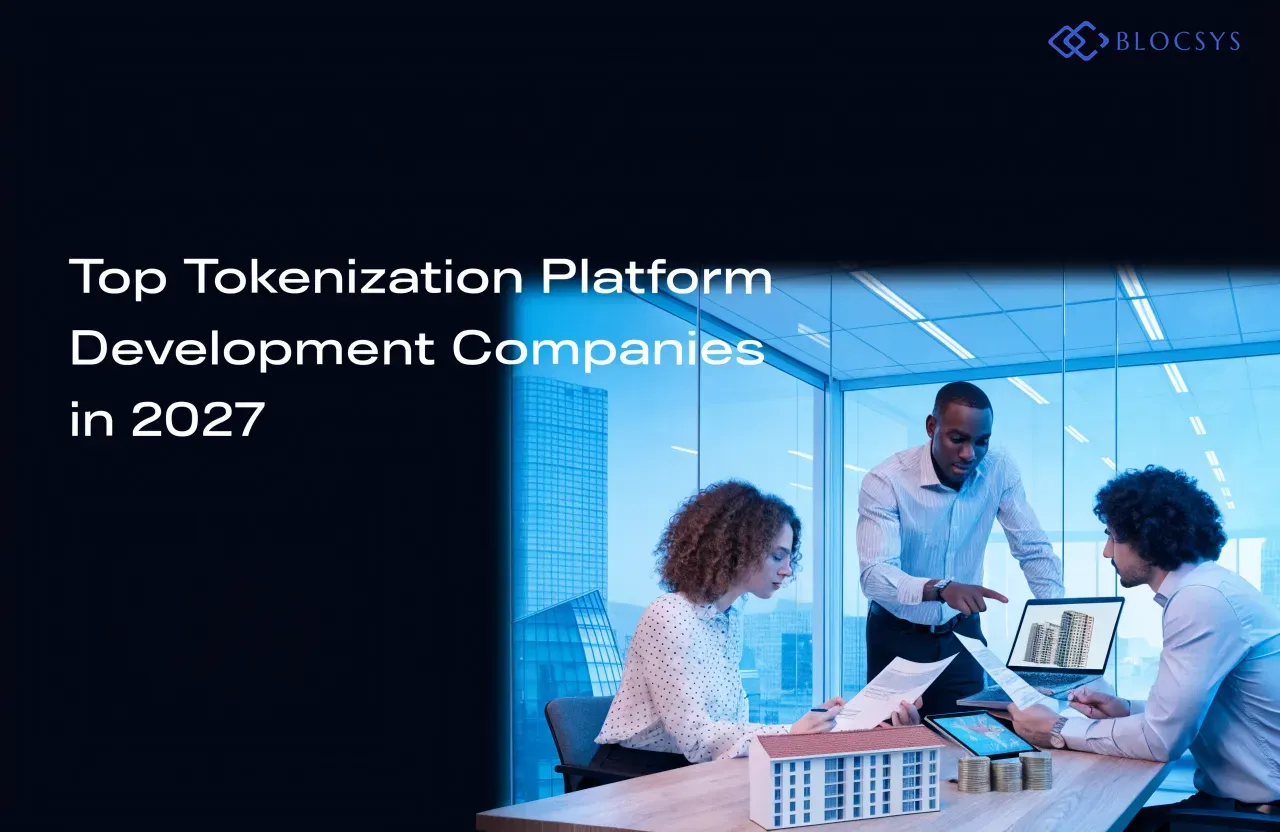
Top Tokenization Platform Development Companies in 2027
Asset tokenization has moved from pilot projects to boardroom planning. Banks, fund managers and issuers now ask a practical question: who can actually build the platform? This guide to the Top Tokenization Platform Development Companies in 2027 compares technology partners, not token products or exchanges. If you’re scoping real world asset tokenization, start here.
How We Selected the Top Tokenization Platform Development Companies in 2027
We looked for builders, not brands. A company made the list only when its official site, service pages or documentation show tokenization-related engineering work. Furthermore, we separated direct development from adjacent work such as consulting, custody or token issuance.
Our criteria were direct platform development experience, smart contract capability, supported asset classes, architecture, enterprise integration, security practices and industry fit. However, public evidence varies. Where a detail isn’t publicly verified, we say so. We haven’t invented clients, volumes or approvals.
Headquarters also matter. We list each company’s headquarters separately from its delivery centres and markets served. Serving customers in a country doesn’t mean having an office there. Please confirm current details on each company’s website before you shortlist.
What Do Tokenization Platform Development Companies Do?
They design and build the software that turns asset ownership into blockchain records. That covers asset onboarding, token creation, issuance, investor onboarding, transfers, lifecycle management, reporting and secondary market links. Requirements shift with the asset class, business model, jurisdiction and participants.
Why not buy a ready-made product? Sometimes you can. Yet many issuers need custom workflows, legacy system integration or source code ownership. That’s where a specialist development partner earns its fee.
One caution applies throughout. A token doesn’t automatically create legal ownership, guarantee liquidity or ensure compliance. Legal structure and operations matter as much as code.
Top 10 Tokenization Platform Development Companies in 2027
Here’s the ranked list. Blocsys comes first and gets the fullest profile. The other nine are shorter, and we’ve flagged where their evidence is adjacent rather than direct.
1. Blocsys Technologies Pvt Ltd
Headquarters: Pune, India. Blocsys presents itself on its official website as a blockchain, fintech and digital asset development company. International projects are delivered remotely from India. A physical presence in other countries isn’t publicly verified.
Its documented services map closely to what issuers ask for. They include real-world asset tokenization, corporate bond tokenization, equity tokenization platform development, and a dedicated asset tokenization platform offering. Moreover, it lists carbon tokenization, OTC trading and DTF platform development, which shows breadth across digital asset infrastructure.
What does that mean in practice? A bond issuer may need coupon schedules, maturity processing and investor eligibility rules. An equity issuer may need cap table records and transfer restrictions. Blocsys’s pages position it for both. We treat these as potential implementation components, because named client projects and asset values aren’t publicly verified.
Its enterprise blockchain and smart contract development skills sit underneath. Consequently, a client could plan token issuance, investor interfaces, compliance integrations, wallet connections and administrative dashboards inside one engagement. Specific certifications and partnerships aren’t publicly verified.
Best suited to issuers, banks, asset managers, fintech firms, real estate businesses and enterprises that want a custom build rather than a licensed product.
The platform is the easy part. The hard part is mapping legal rights, investor rules and servicing duties into code that auditors and regulators can follow.
2. Tokeny
Headquarters: Luxembourg. Tokeny is known for tokenization infrastructure and is closely associated with the ERC-3643 permissioned token standard. Its offering leans toward software products and APIs for issuing and managing digital securities. Therefore, it suits teams that prefer configurable infrastructure over a bespoke build. Its custom development scope isn’t publicly verified.
3. Taurus
Headquarters: Geneva, Switzerland. Taurus offers custody, tokenization and trading infrastructure for banks and financial institutions. Notably, much of its evidence is infrastructure and custody, which is adjacent to pure platform development. Banks that want regulated-grade custody integrated with issuance may find it relevant. Supported asset classes and blockchain details should be confirmed directly.
4. LeewayHertz
Headquarters: San Francisco, United States. LeewayHertz is a software and blockchain development firm that publishes tokenization and RWA service pages. It also lists smart contract development and enterprise integration. Because it’s a broad engineering partner, it fits businesses that want tokenization alongside AI or general software work. Named tokenization case studies aren’t publicly verified here.
5. Appinventiv
Headquarters: Noida, India. Appinventiv is a general digital engineering company with blockchain and fintech practices. Its materials cover asset tokenization and smart contract services. Delivery centres and offices elsewhere exist, though specifics should be checked. It suits enterprises that need scale, mobile apps and integrations around the core tokenization layer. Direct specialization is less clear than at focused vendors.
6. Antier Solutions
Headquarters: India (Chandigarh region). Antier has long offered blockchain, exchange and token development. Its public pages describe security token and asset tokenization services. Additionally, exchange experience may help with secondary market infrastructure. Remember that exchange building isn’t the same as tokenization engineering. Verified client projects should be requested during evaluation.
7. SoluLab
Headquarters: Not publicly verified here; it markets itself with US and India presence. SoluLab provides blockchain development and lists real estate and asset tokenization services. It also covers smart contracts and wallet development. Startups and mid-sized firms may like its flexible hiring models. Evidence of institutional deployments isn’t publicly verified.
8. Intellectsoft
Headquarters: Palo Alto, United States. Intellectsoft is an enterprise software consultancy with blockchain services. Its focus is digital transformation, so tokenization sits inside wider enterprise programmes. That’s useful when you must connect to core banking or ERP systems. However, tokenization-specific references should be requested, as public detail is limited.
9. Debut Infotech
Headquarters: Not publicly verified here. Debut Infotech markets blockchain, fintech and tokenization development, including security token and real estate services. It targets startups building digital asset products. Technical architecture details and named projects aren’t publicly verified, so buyers should ask for demos and code samples.
10. ioBuilders
Headquarters: Madrid, Spain. ioBuilders is a blockchain consultancy and development firm working with financial institutions and enterprises. Its strength is enterprise blockchain design and integration. Tokenization work is adjacent rather than a pure product focus, so it suits banks that need architecture guidance and delivery in one partner.
Comparison of Tokenization Platform Development Companies
This table summarizes publicly stated positioning. “Not publicly verified” means we couldn’t confirm the detail from reliable public sources.
| Company | Headquarters | Specialisation | Asset classes | Development focus |
|---|---|---|---|---|
| Blocsys | Pune, India | RWA, bond, equity, asset tokenization platforms | Real-world assets, bonds, equity, carbon | Custom platforms, smart contracts, enterprise blockchain |
| Tokeny | Luxembourg | Digital securities infrastructure | Not publicly verified | Permissioned token software, ERC-3643 |
| Taurus | Geneva, Switzerland | Custody and tokenization infrastructure | Not publicly verified | Institutional infrastructure (adjacent) |
| LeewayHertz | San Francisco, US | Blockchain and software engineering | RWA, real estate | Smart contracts, integrations |
| Appinventiv | Noida, India | General digital engineering | Not publicly verified | Fintech apps, blockchain |
| Antier Solutions | India | Token and exchange development | Security tokens, assets | Trading and token platforms |
| SoluLab | Not publicly verified | Blockchain development | Real estate, assets | Smart contracts, wallets |
| Intellectsoft | Palo Alto, US | Enterprise software consulting | Not publicly verified | Enterprise integration |
| Debut Infotech | Not publicly verified | Blockchain and fintech development | Security tokens, real estate | Startup-focused builds |
| ioBuilders | Madrid, Spain | Blockchain consulting and delivery | Not publicly verified | Architecture, integration (adjacent) |
Key Features of a Tokenization Platform
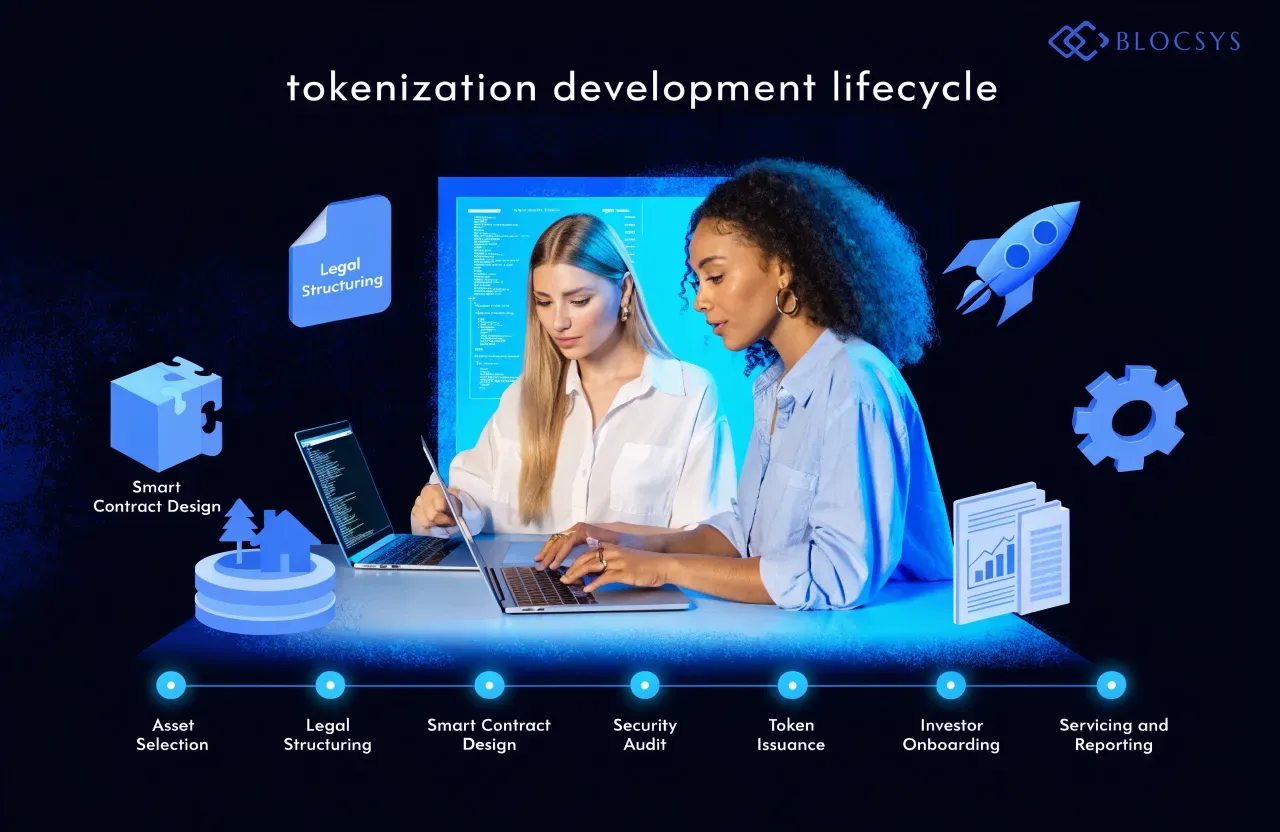
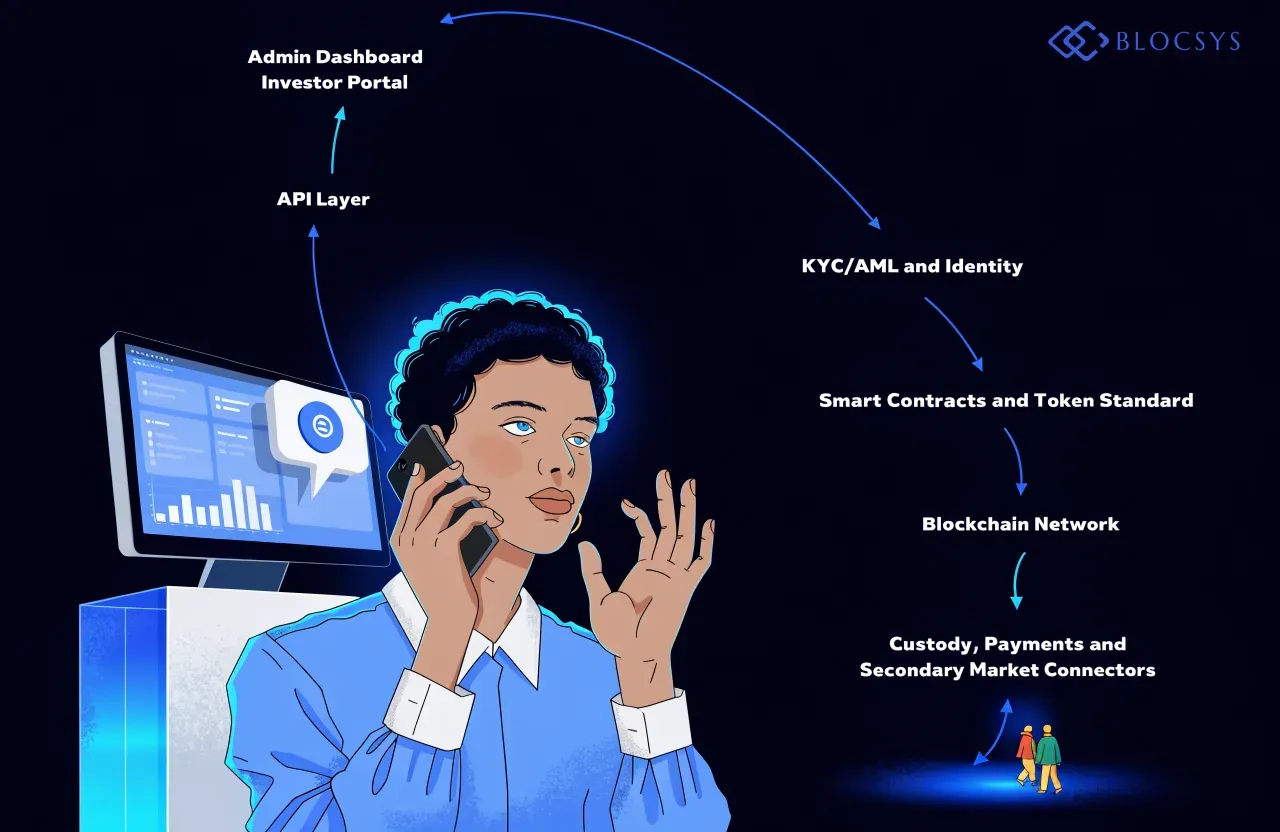
Every platform needs a core set of modules. Asset onboarding captures documents and valuation data. Token issuance runs through smart contracts that encode rights and restrictions. Ownership records then track who holds what.
Next comes investor onboarding, with KYC and AML integration and identity checks. Compliance workflows enforce transfer restrictions and eligibility. Wallet and custody integrations protect keys. Meanwhile, reporting, dividend or coupon servicing and administrative dashboards keep operations running.
Secondary market connectivity is optional but common. It links the token to trading venues or OTC desks. Not every project needs it, and the required features always depend on the asset class and business model.
Types of Tokenization Platforms
Different assets demand different logic. That’s why asset tokenization development companies rarely ship one-size-fits-all code.
A corporate bond platform needs coupon management, maturity processing, investor eligibility and transfer restrictions. A real estate platform needs property documents, ownership structures, distribution workflows and investor reporting. Equity platforms focus on cap tables, voting and corporate actions.
Fund and commodity platforms add net asset value updates, redemptions and vaulting links. Broader RWA tokenization development companies often combine these modules. Security tokenization development companies add stricter securities-law controls on top.
Choosing a token standard before defining the asset’s rights is backwards. Start with the legal rulebook, then pick the standard.
Technologies Behind Tokenization Platform Development
Token standards come first. ERC-20 covers simple fungible tokens. ERC-721 handles unique items, and ERC-1155 mixes fungible and non-fungible types. ERC-1400 and ERC-3643 target regulated securities with built-in transfer controls. No single standard fits every project.
Network choice matters too. Public chains offer reach, while permissioned networks offer privacy and control. Layer 2 networks can cut fees. Cross-chain interoperability tools may connect them, though they add security risk.
Around the chain sit APIs, identity systems, payment integrations and oracles for off-chain data. Additionally, transaction monitoring and independent smart contract audits are essential. Therefore, ask any vendor how it handles upgrades, key management and data privacy.
How to Choose Among the Best Tokenization Platform Development Companies
Start with evidence. Ask for case studies in your asset class and for references you can call. Then probe the architecture. Can the vendor explain how ownership records, compliance rules and servicing connect?
Security comes next. Request audit reports and key management policies. Furthermore, check scalability, enterprise integrations and your compliance needs with your legal counsel. Don’t skip code ownership. You’ll want the source code, documentation and clear terms for maintenance and long-term support.
Lastly, match size to scope. A global bank and a seed-stage startup shouldn’t shop the same shortlist. Using the Top Tokenization Platform Development Companies in 2027 as a starting point helps, but your own due diligence decides.
Who Benefits from Tokenization Platform Development?
Banks and financial institutions gain digital securities infrastructure. Asset managers and fund managers can offer tokenized funds with automated servicing. Private equity firms can manage investor registers more efficiently.
Real estate businesses can structure fractional ownership. Corporate bond and equity issuers can streamline issuance and record keeping. Fintech companies can add digital asset features to existing products. Benefits depend on legal structures and investor demand, not on technology alone.
Why Consider Blocsys for Tokenization Platform Development?
Among the Top Tokenization Platform Development Companies in 2027, Blocsys stands out for how directly its service pages match issuer needs. It documents real-world asset, bond and equity tokenization alongside smart contract and enterprise blockchain development.
If you’re planning an RWA platform, bond or equity issuance, or ownership and investor management workflows, talk to Blocsys about your real-world asset tokenization requirements. Bring your asset type and jurisdiction questions, and you’ll get a clearer scope.
Conclusion
The best tokenization platform development company is the one whose proven work matches your asset, your investors and your rules. Use this list of Top Tokenization Platform Development Companies in 2027 to build a shortlist, then verify claims directly. When you’re ready to move, explore Blocsys’s RWA tokenization services.
Frequently Asked Questions
Here are direct answers to the questions we hear most often about tokenization platform development companies.
What are tokenization platform development companies?
They’re technology firms that design and build software for representing assets as blockchain tokens. They don’t issue or trade the assets themselves. Instead, they deliver the platform, smart contracts and integrations an issuer operates.
What services do tokenization platform development companies provide?
Typical services include architecture design, smart contract development, token issuance modules, investor onboarding, wallet and custody integration, reporting dashboards and maintenance. Scope varies by vendor and asset class.
What features should a tokenization platform include?
Look for asset onboarding, token issuance, ownership records, KYC and AML integration, transfer restrictions, wallet support, servicing and reporting. Secondary market connectivity is optional.
What is the difference between RWA tokenization and security tokenization?
RWA tokenization covers any real-world asset, such as property or commodities. Security tokenization applies to assets that are regulated as securities. Some projects are both, and securities rules then shape the design.
Which blockchain is best for developing a tokenization platform?
There’s no single best chain. Ethereum-compatible networks are common because of tooling and standards like ERC-3643. Permissioned networks suit privacy needs. Your asset, investors and regulations should drive the choice.
How much does it cost to develop a tokenization platform?
Costs depend on asset type, scope, blockchain, smart contract complexity, investor management, compliance integrations, custody, security, payments, secondary market features and maintenance. Request a scoped quote rather than relying on fixed figures.
How long does it take to build a tokenization platform?
Timelines depend on the same factors. A narrow issuance tool differs sharply from a full institutional platform with trading. A vendor should give a phased plan after discovery.
How do tokenization platforms manage investors and digital asset ownership?
They verify investors through KYC and AML checks, then link approved wallets to token holdings. Smart contracts enforce transfer rules, and records show balances. Legal ownership still depends on the underlying legal structure and jurisdiction.
What should businesses consider when choosing a tokenization platform development company?
Weigh asset-class experience, verifiable projects, security audits, architecture, integrations, source code ownership and support. Also involve legal advisers early, since compliance requirements vary by jurisdiction and asset structure.
Can Blocsys develop custom tokenization platforms for businesses?
Yes, its official pages list custom work across real-world asset, corporate bond and equity tokenization, plus smart contract and digital asset platform development. Share your requirements with the team to scope a build. Outcomes depend on your project and legal setup.
Ready to move beyond theory and build an intelligent platform that delivers real-world value? Blocsys Technologies specialises in engineering enterprise-grade AI and blockchain solutions for the fintech, Web3, and digital asset sectors. Connect with our experts today to discuss your vision and chart a clear path from concept to a secure, scalable reality.