
The world of finance is undergoing a transformative shift as blockchain technology paves the way for decentralized finance (DeFi) to challenge the dominance of centralized finance (CeFi). A critical development in this shift is the tokenization of traditional financial assets, which brings the best of both CeFi and DeFi together. In this blog, we explore how tokenizing traditional financial instruments can bridge the gap between CeFi and DeFi, unlocking new opportunities for investors, institutions, and the broader financial ecosystem.
Understanding Tokenization in Finance
Introduction
The world of finance is undergoing a transformative shift as blockchain technology paves the way for decentralized finance (DeFi) to challenge the dominance of centralized finance (CeFi). A critical development in this shift is the tokenization of traditional financial assets, which brings the best of both CeFi and DeFi together. In this blog, we explore how tokenizing traditional financial instruments can bridge the gap between CeFi and DeFi, unlocking new opportunities for investors, institutions, and the broader financial ecosystem.
Understanding Tokenization in Finance
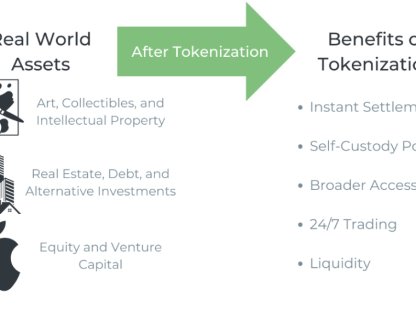
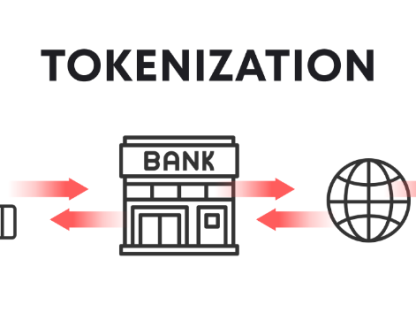
Tokenization refers to the process of converting real-world assets, such as stocks, bonds, or real estate, into digital tokens on a blockchain. These tokens represent ownership or rights to the underlying assets, enabling easier trading, fractional ownership, and increased liquidity. By tokenizing traditional financial assets, financial institutions can leverage the benefits of blockchain while maintaining compliance with existing regulations.
For instance, Polymath is a platform that facilitates the tokenization of securities, helping institutions issue blockchain-based tokens that represent equity, bonds, or other financial instruments.
Centralized Finance (CeFi) vs. Decentralized Finance (DeFi)
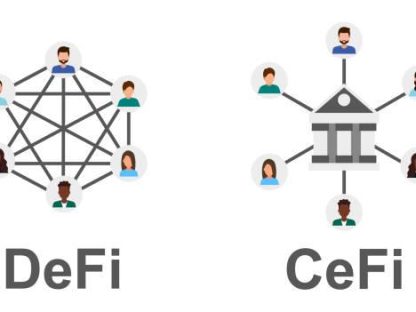
CeFi refers to the traditional financial system, where centralized institutions like banks and exchanges act as intermediaries for transactions. These institutions provide trust and security but often come with high fees, slower processes, and limited access, particularly for those in underserved markets.
On the other hand, DeFi eliminates intermediaries by using smart contracts on decentralized platforms. This allows for more direct peer-to-peer transactions, faster settlement times, and lower fees. DeFi platforms like Aave and Uniswap enable users to lend, borrow, and trade assets without relying on centralized entities.
While DeFi offers immense potential, it also comes with challenges, such as regulatory uncertainty, technical complexity, and risks of smart contract vulnerabilities. This is where tokenizing traditional finance can create a bridge between the security and regulatory frameworks of CeFi and the innovation of DeFi.
Bridging the Gap: The Role of Tokenization
Tokenizing traditional financial assets can merge the best aspects of both CeFi and DeFi. Here’s how:
Increased Liquidity for Illiquid Assets
Tokenization enables fractional ownership of traditionally illiquid assets like real estate or private equity. By breaking down these assets into smaller digital tokens, investors can buy and sell fractions of the asset on secondary markets, increasing liquidity. This opens up investment opportunities to a broader audience and allows institutions to unlock value from assets that were previously difficult to trade.
Enhanced Accessibility
DeFi platforms often operate on a 24/7 basis, providing global access to financial products that were previously limited by geographic and regulatory barriers. Tokenized assets can be traded on decentralized exchanges (DEXs), allowing users to access financial markets without needing a traditional broker or bank. For example, Synthetix is a DeFi platform that allows users to trade tokenized versions of traditional assets like commodities and indices.
Compliance and Regulatory Assurance
One of the main concerns around DeFi is regulatory compliance. By tokenizing assets through regulated CeFi platforms, institutions can ensure that their offerings adhere to legal frameworks while still taking advantage of blockchain’s transparency and efficiency. Projects like tZERO are already working to combine blockchain technology with regulatory compliance, creating a safer environment for both investors and issuers.
Smart Contracts for Automation and Efficiency
Tokenized assets can be managed using smart contracts, which automate processes like dividend payments, voting rights, and asset transfers. This reduces the need for intermediaries, speeds up transactions, and lowers operational costs. By integrating these smart contracts into traditional finance, institutions can offer more efficient services while retaining the security and trust of CeFi.
Real-World Examples of Tokenization in Finance
Several projects are already at the forefront of tokenizing traditional financial assets:
- Polymath: Facilitates the creation and issuance of security tokens, enabling companies to tokenize equity, debt, or other assets.
- tZERO: Provides a blockchain-powered alternative trading system for tokenized securities, combining compliance with the innovation of DeFi.
- Synthetix: A DeFi platform allowing users to trade synthetic assets, which represent real-world financial products such as stocks or commodities.
These examples demonstrate how tokenization is blurring the lines between CeFi and DeFi, creating a hybrid system that leverages the strengths of both models.
The Future of Tokenized Finance
As more institutions embrace blockchain technology, the tokenization of traditional financial assets is set to expand. This will not only democratize access to investment opportunities but also create a more efficient and transparent financial system. However, collaboration between regulators, financial institutions, and DeFi platforms will be key to ensuring that tokenized assets can be traded securely and within legal frameworks.
Conclusion
Tokenizing traditional financial assets is a promising approach to bridging the gap between centralized and decentralized finance. By leveraging blockchain technology, tokenized assets offer increased liquidity, accessibility, and automation while ensuring compliance with existing regulations. As the financial industry continues to evolve, tokenization will play a pivotal role in merging the security of CeFi with the innovation of DeFi, creating a more inclusive and efficient global financial system.
Our Services:
- AI Solutions
- RWA Tokenization
- Telegram Mini Apps
- DeFi/DApp Solutions
- NFT Marketplaces
- Launchpad
Why Choose Us? Industry Expertise | Global Reach | Rapid Time-to-Market
Let’s build the future together. www.blocsys.com
Frequently Asked Questions
What does tokenizing traditional finance actually mean?
Tokenizing traditional finance means representing financial assets such as stocks, bonds, real estate, or other instruments as digital tokens on a blockchain. These tokens can represent ownership or specific rights connected to an underlying asset. The approach can make traditionally complex financial processes more programmable and easier to transfer. Tokenization can also support fractional ownership, improve accessibility, and create opportunities for secondary-market trading. The key value is that blockchain infrastructure can introduce greater transparency and automation while traditional financial institutions continue to provide regulatory oversight, custody, and established financial controls. This creates a potential connection between the structured environment of centralized finance and the programmable capabilities of decentralized finance.
Why is tokenization considered a bridge between CeFi and DeFi?
Tokenization can combine important characteristics of both financial models. CeFi provides established institutions, regulatory structures, custody, and investor protections, while DeFi offers blockchain-based automation, peer-to-peer transactions, and programmable financial applications. By representing traditional assets as blockchain tokens, financial institutions can potentially bring regulated assets into digital environments where smart contracts and decentralized applications can interact with them. This does not mean that CeFi and DeFi become identical. Instead, tokenization creates an infrastructure layer where traditional financial assets can benefit from blockchain capabilities while remaining connected to established financial systems. The result can be a hybrid financial model that combines institutional oversight with greater automation, accessibility, and programmability.
Which traditional financial assets can benefit most from tokenization?
Several traditional assets can potentially benefit from tokenization, including stocks, bonds, real estate, private equity, commodities, and other financial instruments. Assets that are traditionally difficult to divide or transfer can particularly benefit from fractional ownership and blockchain-based settlement. For example, tokenized real estate can allow investors to access smaller portions of an asset, while tokenized bonds can support programmable transfers and automated payment processes. However, the benefits depend on the asset’s legal structure, market demand, custody arrangements, and regulatory requirements. Tokenization should therefore be designed around the characteristics of the underlying asset rather than simply applying the same model to every financial instrument.
Can tokenized assets improve liquidity in traditional markets?
Tokenization can potentially improve liquidity by making certain assets easier to divide, transfer, and access through digital markets. Fractional ownership can lower investment barriers for assets such as real estate or private equity, while blockchain-based marketplaces can support more efficient secondary trading. However, tokenization itself does not guarantee liquidity. Active buyers and sellers, market infrastructure, regulatory access, pricing mechanisms, and investor demand are still required. An asset can be represented on a blockchain and remain difficult to trade if there is limited market participation. Successful tokenization therefore requires more than creating digital tokens. Businesses need to consider the complete ecosystem, including issuance, custody, investor onboarding, marketplace infrastructure, compliance, and secondary-market participation.
How do smart contracts improve tokenized financial assets?
Smart contracts allow tokenized financial assets to operate according to predefined rules without requiring every process to be handled manually. They can automate activities such as asset transfers, dividend payments, voting rights, settlement, and other financial workflows. This can reduce administrative work, shorten processing times, and improve consistency across transactions. For example, a tokenized asset could distribute payments automatically to eligible holders according to rules programmed into a smart contract. However, smart contracts still need appropriate security, governance, and compliance controls. They also cannot independently verify information outside the blockchain. External data, legal agreements, custodians, and identity systems may therefore be required to connect blockchain-based assets with traditional financial infrastructure.
What role does regulation play in CeFi-DeFi tokenization?
Regulation is one of the most important considerations when connecting traditional financial assets with DeFi infrastructure. Tokenized securities may still be subject to existing financial regulations even when ownership or transaction records are represented on a blockchain. Institutions need to consider investor eligibility, KYC and AML requirements, custody, disclosures, transfer restrictions, data protection, and jurisdiction-specific rules. A regulated CeFi environment can provide the governance and controls needed to support compliant tokenized financial products, while blockchain infrastructure can provide additional transparency and automation. The objective is not to remove regulation through blockchain but to integrate blockchain technology into a framework where financial assets can benefit from digital infrastructure without abandoning necessary investor and institutional protections.
What are the biggest challenges of combining CeFi and DeFi?
The main challenges include regulatory uncertainty, interoperability, smart contract security, custody, identity management, liquidity, and differences in governance models. Traditional financial institutions typically operate through controlled processes and centralized intermediaries, while DeFi applications rely heavily on smart contracts and decentralized infrastructure. Connecting the two requires systems that can communicate across different technical and operational environments. Compliance is another major challenge because institutions need to maintain appropriate controls when assets move into blockchain-based applications. Businesses also need reliable infrastructure for wallets, identity, asset issuance, settlement, and monitoring. Successful CeFi-DeFi integration therefore requires more than tokenizing an asset; it requires a complete architecture that connects blockchain applications with established financial systems.
How can financial institutions use tokenization without fully moving to DeFi?
Financial institutions do not need to replace their existing systems with fully decentralized infrastructure to benefit from tokenization. They can begin by using blockchain for specific functions such as asset issuance, settlement, ownership records, or automated payment workflows while retaining traditional custody, compliance, and governance structures. This hybrid approach allows institutions to introduce blockchain gradually and test measurable improvements without rebuilding their entire financial infrastructure. For example, an institution could tokenize a specific financial instrument while continuing to manage investor verification and custody through existing systems. Over time, additional blockchain capabilities can be integrated as the institution gains confidence in the technology, regulatory model, security controls, and market demand.
What examples show the convergence of CeFi and DeFi?
The blog highlights several examples that demonstrate how tokenization is connecting traditional and decentralized finance. Polymath focuses on creating and issuing security tokens representing assets such as equity and debt. tZERO provides blockchain-based infrastructure for trading tokenized securities while maintaining a regulated approach. Synthetix demonstrates how blockchain-based applications can provide exposure to synthetic representations of traditional assets such as commodities and indices. These examples illustrate different approaches to combining traditional financial concepts with blockchain infrastructure. They also show that the CeFi-DeFi relationship does not require a single architecture. Depending on the use case, businesses can combine regulated issuance, blockchain-based trading, smart-contract automation, and decentralized financial applications in different ways.
What does the future look like for tokenized traditional finance?
Tokenized traditional finance is likely to become an increasingly important part of the broader digital financial ecosystem as institutions explore blockchain-based infrastructure. Tokenization can support more accessible investment models, automated financial processes, fractional ownership, and potentially more efficient settlement. However, future growth will depend on cooperation between financial institutions, regulators, technology providers, custodians, and DeFi platforms. Interoperability and compliance will be particularly important as tokenized assets move between traditional and blockchain-based environments. Rather than completely replacing centralized finance, tokenization may create a hybrid model where regulated institutions and decentralized technologies work together. This could allow financial markets to retain established safeguards while adopting greater programmability, transparency, and digital accessibility.
